Moss rose
Portulaca grandiflora. Family Portulacaceae. Annual.
Also called Rose moss, Sun plant, Eleven-o'clock.
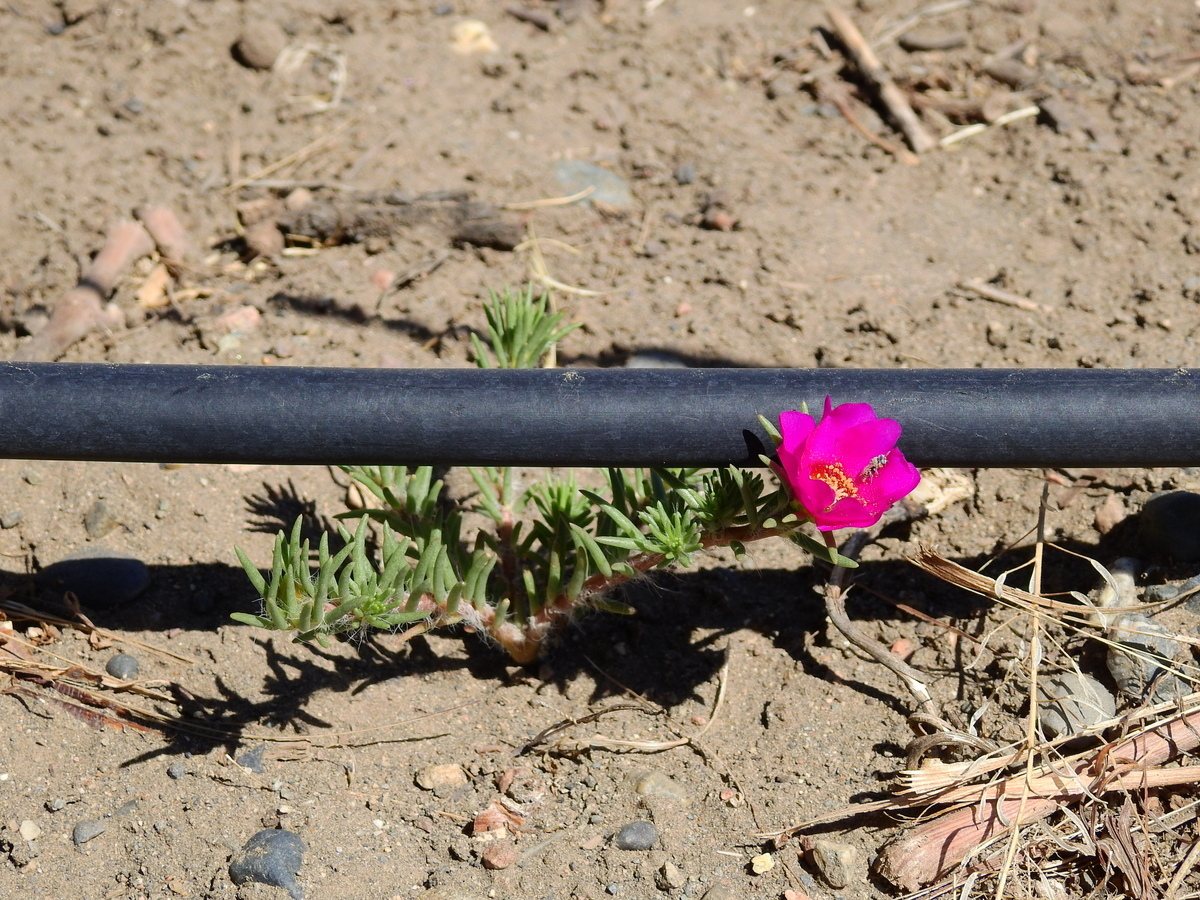
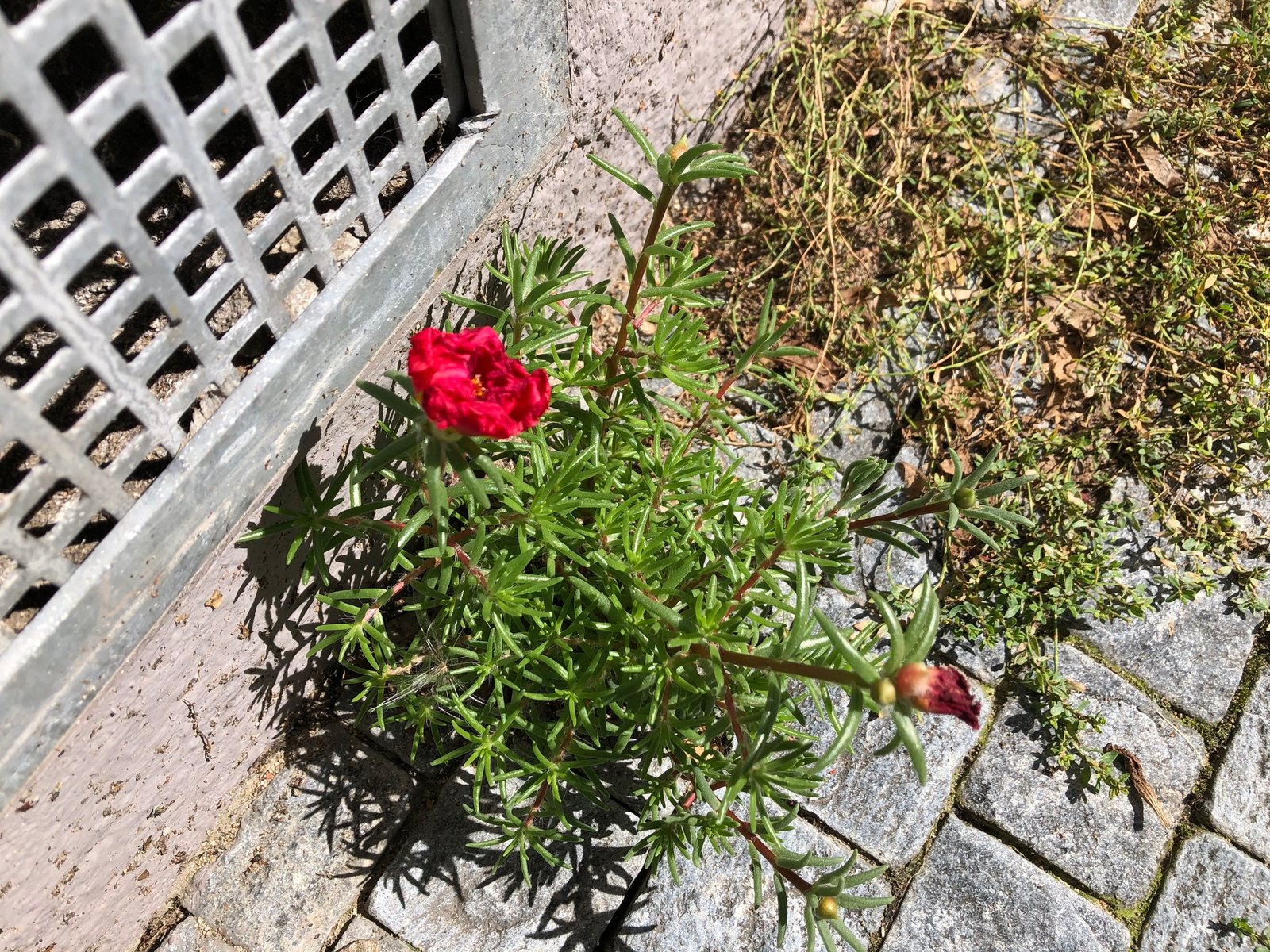
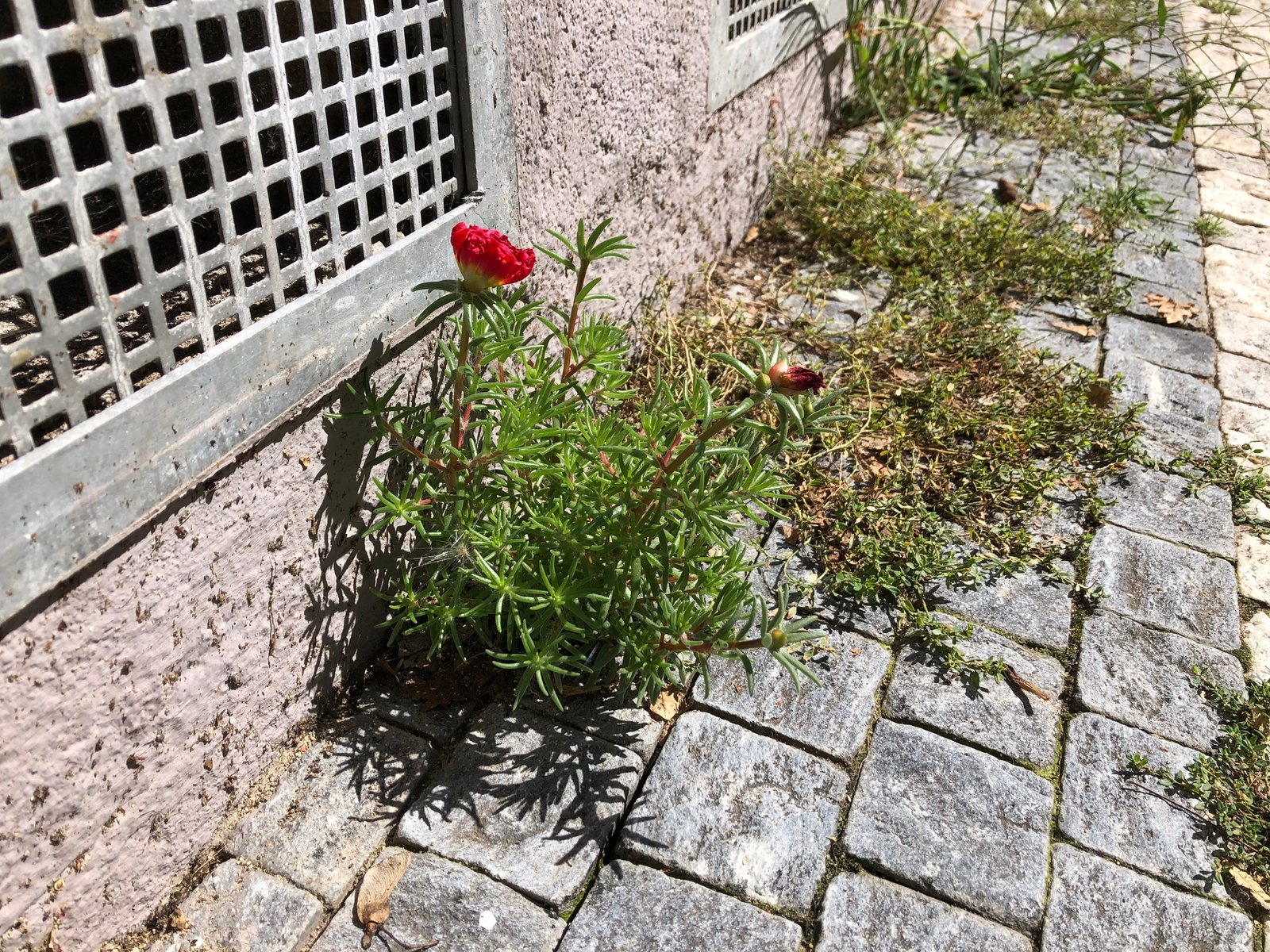
Moss rose is a low-growing, succulent plant grown as an annual for its bright, rose-like flowers through summer. It thrives in hot, sunny places with sharply drained soil, making it useful for pots, gravel gardens and dry border edges. Flowers usually open in sunshine and close at night or in dull weather.
At a glance
- Sun
- Full sun; flowering is poor in shade.
- Water
- Low once established. Water young plants regularly until rooted, then let the soil dry between waterings; containers need checking more often.
- Soil
- Sandy, gravelly or otherwise sharply drained soil. Tolerates poor soil but struggles in heavy, wet ground.
- Height
- 0.3-0.7 ft (0.1-0.2 m)
- Spread
- 0.5-1 ft (0.15-0.3 m)
- Flowers
- Summer to the first frost; single or double flowers in white, yellow, orange, pink, red and mixed colours.
- Foliage
- Small, fleshy, narrow, almost cylindrical green leaves on spreading, often reddish stems.
- Growth
- Fast in warm weather.
- Care needed
- Low
The year at a glance
- Pollinators
- Drought tolerant
- Heat tolerant
- Low allergen
| J | F | M | A | M | J | J | A | S | O | N | D | |
|---|---|---|---|---|---|---|---|---|---|---|---|---|
| Flowers | ||||||||||||
| Plant |
Northern hemisphere months. In Australia, shift them by six.
- Difficulty
- Easy
- Toughness
- Very tough
Will it suit your garden?
Pick your zone, country, light and whether you have pets.
Full sun is 6 or more hours of direct sun a day, part shade 3 to 6 hours, shade under 3.
How it grows
Planting day
0.5 ft (0.15 m)
After 1 year
0.5 ft (0.15 m)
full size
Full size in one season.
From a typical nursery size, at an average rate for this kind of plant. A rule of thumb, not a forecast.
Good to know
- Cats and dogs
- Toxic
- Growth rate
- Fast
Care
Jobs through the year
- WaterMay–Jun, Sep, every 14 days
- Water established ground plants only if soil is dry; water new plants more frequently.
- WaterJul–Aug, every 10 days
- Water during extended dry spells, then let soil dry; check containers more often.
- PruneJul–Aug
- Lightly shorten straggly stems above a leaf joint only if needed.
- ProtectMay–Jun
- Plant or direct-sow only after frost risk has passed and soil is warm.
- Plant out only after frost risk has passed and the soil has warmed.
- Space plants about 0.5-1 ft (0.15-0.3 m) apart in full sun.
- Water at soil level, then allow the soil to dry before watering again.
- Use containers with drainage holes and a free-draining potting mix.
- Feed sparingly; plants in ordinary garden soil usually need no extra fertiliser.
- Keep thick organic mulch away from the stems to reduce the risk of rot.
Pruning. No regular pruning is needed. In midsummer, lightly trim straggly stems just above a leaf joint to encourage branching; remove frost-killed plants at the end of the season.
Through the year
- Early spring
- Sow seed indoors about six to eight weeks before the last expected frost; press onto the surface and keep warm and bright.
- Late spring
- Harden off seedlings and plant outside once frost risk has passed and the soil is warm.
- Early summer
- Direct-sow outdoors in warm soil, or fill sunny containers with young plants.
- Summer
- Check containers for dryness and water thoroughly when needed; avoid keeping the compost constantly damp.
- Midsummer
- Lightly trim sprawling growth if plants become untidy.
- Autumn
- Collect ripe seed if wanted, then remove plants after frost; seedlings may differ from their parents.
In the garden
- Edge a sunny path or border with a low ribbon of summer colour.
- Plant in shallow bowls or window boxes where the stems can spill over the rim.
- Use in gravel gardens and rock gardens with small sedums and other drought-tolerant plants.
- Combine with annual vinca or dwarf zinnias in a hot, sunny summer display.
Garden styles it suits: Dry gravel garden, Desert / xeriscape, Mediterranean, Low-maintenance, Small-space and Hot border.
Plant it with: Annual vinca, Dwarf zinnia, Blanket flower, Blue fescue, Stonecrop and Dusty miller.
Wildlife: Open, single flowers provide pollen for visiting bees. Very double flowers offer less accessible pollen.
Problems to watch for
- Root or stem rot in wet soil: improve drainage, reduce watering and discard badly affected plants.
- Poor flowering in shade or cool weather: move containers into full sun; flowering improves with warmth.
- Aphids on soft shoots: rinse off with water or use insecticidal soap according to the label.
- Slugs and snails eating young plants: check after dark, remove pests and use labelled controls where necessary.
Safety
Toxic to cats, dogs and horses if eaten; leaves, stems and flowers contain soluble oxalates. Significant ingestion can cause weakness, tremors and kidney injury, so contact a veterinarian promptly. Human poisoning information is limited; do not treat it as an edible plant, and seek medical advice if a child eats a substantial amount.
Easily confused with
Common purslane (Portulaca oleracea)
Has broad, flat, spoon-shaped leaves and usually much smaller yellow flowers, rather than narrow, almost cylindrical leaves and large showy flowers.
Pink purslane (Portulaca pilosa)
Has conspicuous tufts of white hairs at the leaf joints and small pink flowers; moss rose generally has much larger flowers.
Hardy ice plant (Delosperma cooperi)
Forms a perennial mat with opposite leaves and daisy-like flowers made up of many narrow petals; moss rose has alternate leaves and broader petals.
The name
The species name grandiflora means large-flowered, while moss rose refers to its low, moss-like growth and rose-like blooms.
Propagation. Grow from seed sown on the surface of warm, moist seed compost; light helps germination. Soft stem cuttings also root readily in a free-draining mix during warm weather. It may self-seed, but named varieties do not reliably come true from seed.
Checked against open data
- Accepted botanical name
- Portulaca grandiflora
- In the US and Canada
- Introduced in the lower 48 states, Pacific Basin and Puerto Rico.
- Native range
- Argentina Northeast, Argentina Northwest, Argentina South, Bolivia, Brazil Northeast, Brazil South, Brazil Southeast, Brazil West-Central, Paraguay, Peru and Uruguay.
- Measured
- Average height 21 cm.
Sources: GBIF (CC BY 4.0), USDA PLANTS and Trefle (CC BY 4.0). The care and design notes are LandscapeGPT's own.
See it in your own yard.
Upload a photo of your yard and see it redesigned with plants that suit your climate, each checked against your zone.