Mottlecah
Eucalyptus macrocarpa. Family Myrtaceae. Shrub.
Also called Rose of the west, Mallee rose.
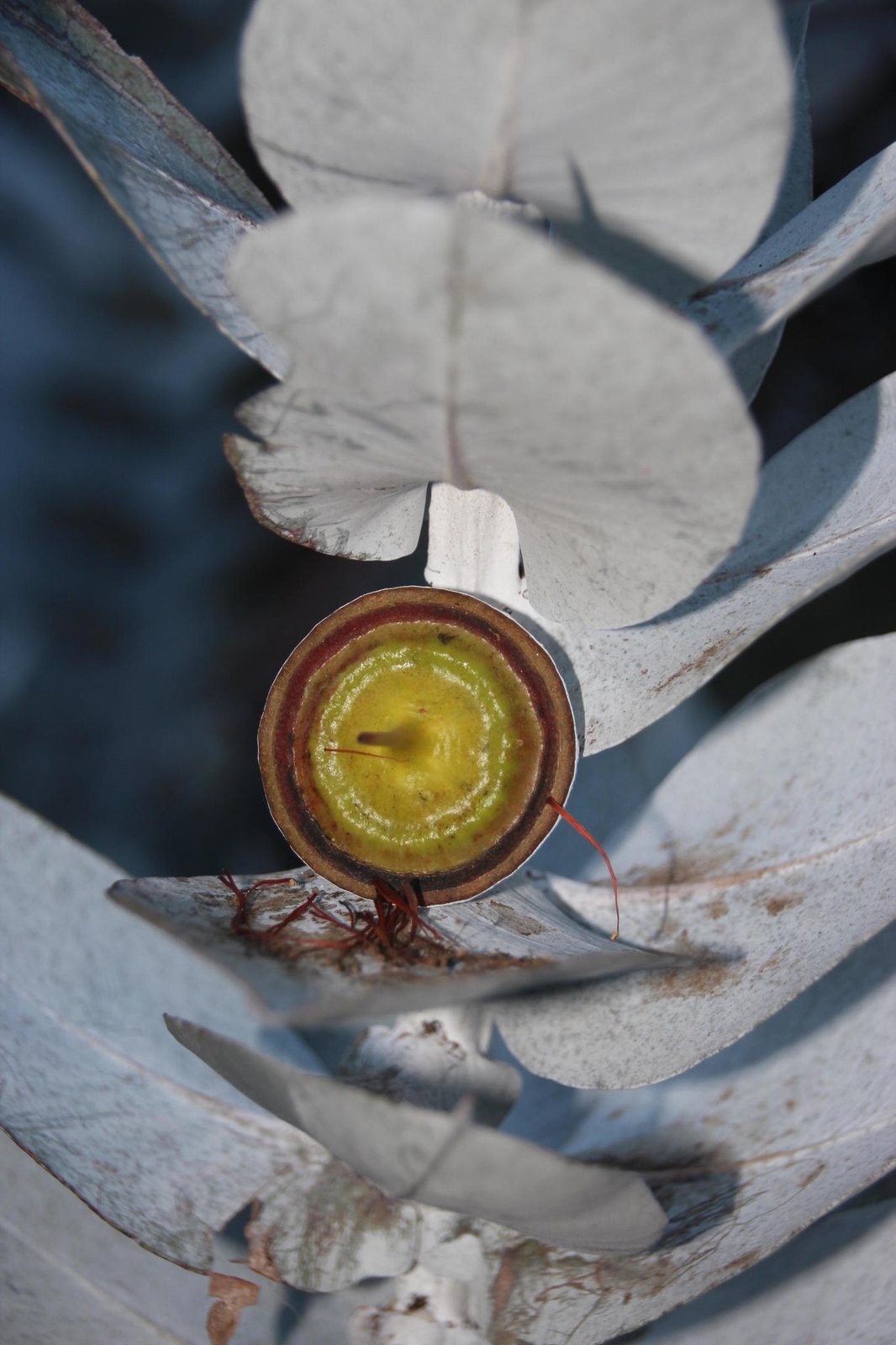
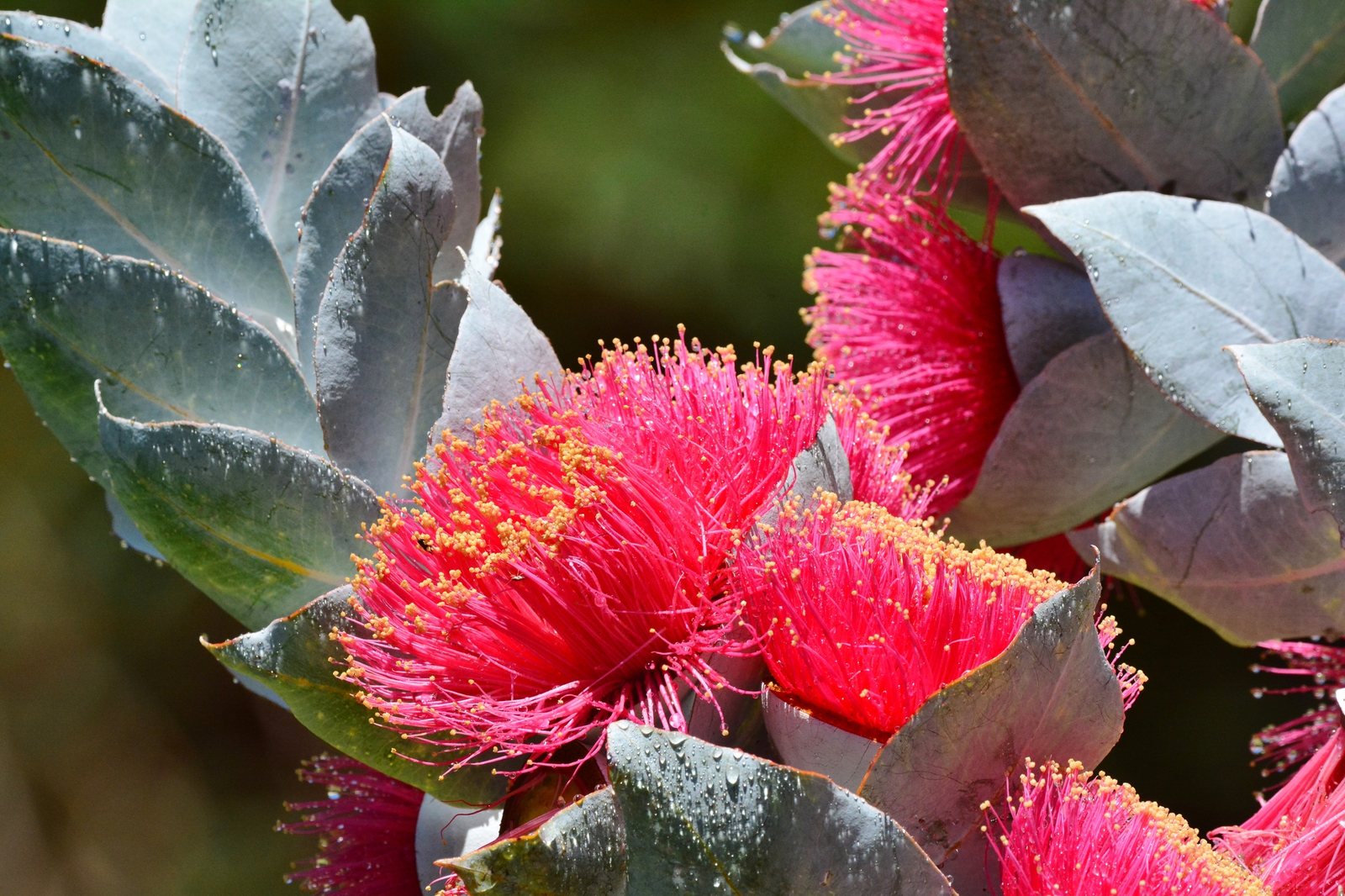
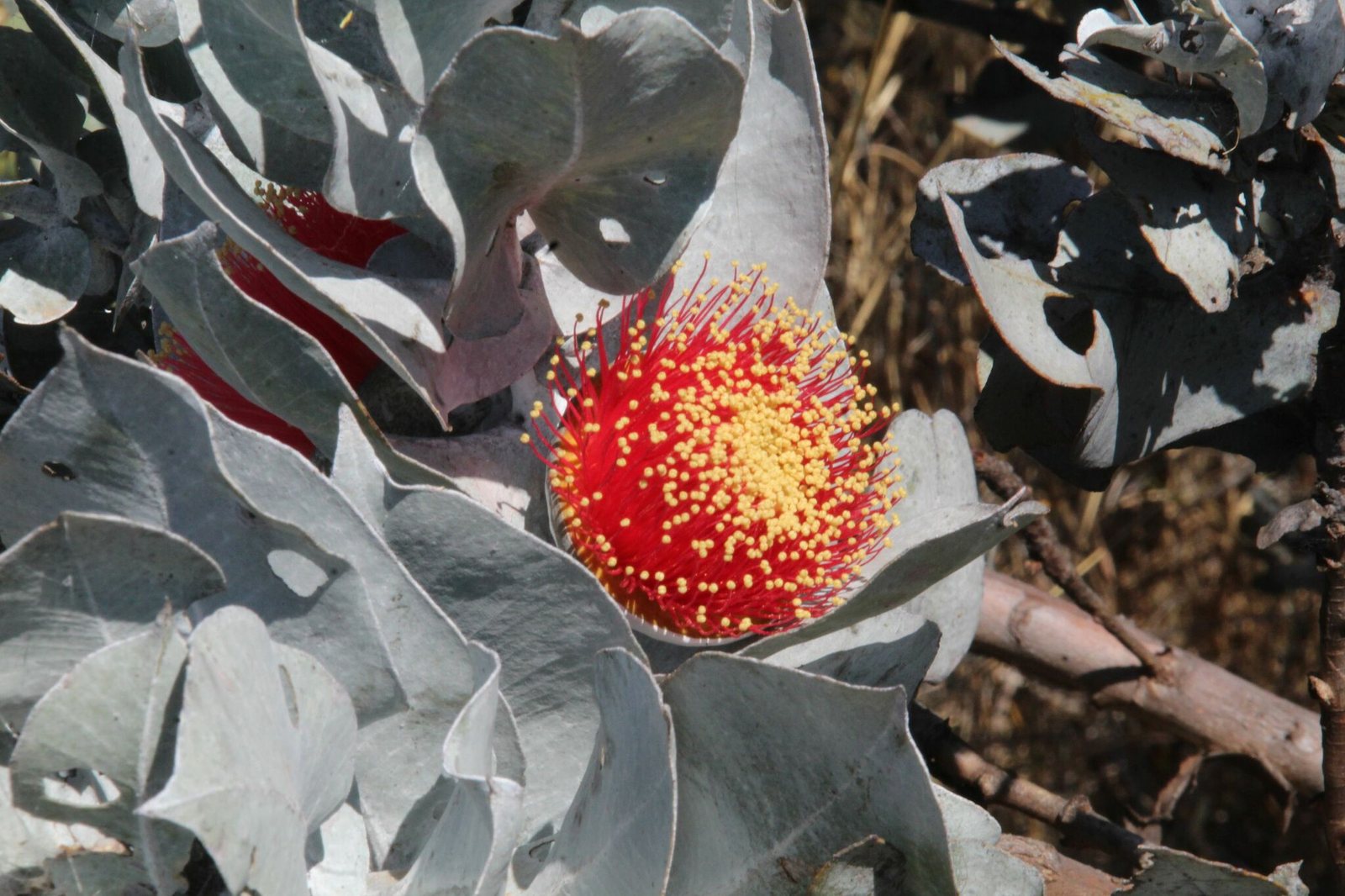
Mottlecah is a spreading evergreen mallee from southwestern Western Australia, grown for its large silver-grey leaves, enormous red flowers and conspicuous woody seed capsules. It needs strong sun, excellent drainage and a relatively dry climate; in most of the United Kingdom and Canada, it is a container specimen needing bright, frost-free winter shelter.
At a glance
- Sun
- Full sun; flowering and compact growth depend on strong light.
- Water
- Low once established. Water young plants deeply during dry spells, then allow the soil to dry between waterings; avoid frequent shallow irrigation.
- Soil
- Very freely draining sand, sandy loam or gravelly soil. Tolerates low fertility but struggles in waterlogged clay.
- Height
- 5-10 ft (1.5-3 m)
- Spread
- 6-12 ft (1.8-3.7 m)
- Flowers
- Huge flowers with mostly red to pink-red stamens and yellow anthers, mainly from late winter through spring and into summer; timing varies with climate.
- Foliage
- Evergreen. Large, opposite, stalkless leaves clasp the stems and carry a powdery silver-grey coating; young stems and flower buds are also silvery.
- Growth
- Moderate in warm, sunny conditions; slower in cool climates.
- Care needed
- Medium
The year at a glance
- Pollinators
- Drought tolerant
- Heat tolerant
- Wildlife
| J | F | M | A | M | J | J | A | S | O | N | D | |
|---|---|---|---|---|---|---|---|---|---|---|---|---|
| Flowers | ||||||||||||
| Fruit | ||||||||||||
| Plant |
Northern hemisphere months. In Australia, shift them by six.
- Difficulty
- Hard
- Toughness
- Needs looking after
Will it suit your garden?
Pick your zone, country, light and whether you have pets.
Full sun is 6 or more hours of direct sun a day, part shade 3 to 6 hours, shade under 3.
How it grows
Planting day
1.6 ft (0.5 m)
After 1 year
2.5 ft (0.77 m)
After 2 years
3 ft (1 m)
After 3 years
4 ft (1.3 m)
After 5 years
6 ft (1.8 m)
About 7 years to full size.
From a typical nursery size, at an average rate for this kind of plant. A rule of thumb, not a forecast.
Good to know
- Cats and dogs
- Toxic
- Native to
- Australia
- Growth rate
- Slow
Care
Jobs through the year
- WaterApr–May, Sep–Oct, every 28 days
- Water established ground-grown shrubs only if very dry; young plants and containers need more frequent checks.
- WaterJun–Aug, every 21 days
- Deep-water established ground-grown shrubs only during prolonged drought; let soil dry between soakings.
- FeedApr–May
- Feed only weak plants, sparingly, with low-phosphorus native-plant fertiliser.
- MulchMay
- Apply a light mulch layer, keeping damp material well away from stem bases.
- PruneJul–Aug
- Once flowering finishes, lightly shorten wayward stems and remove dead growth; avoid hard pruning.
- ProtectJan–Apr, Oct–Dec
- Not winter-hardy in zones 6–7; overwinter containers bright and frost-free, keeping roots relatively dry.
- Plant in the warmest sunny position available, with room for its broad, sometimes sprawling stems.
- Use a raised bed or mound where drainage is doubtful; do not leave the root ball sitting in a wet planting hole.
- Water deeply through the first dry season, letting the soil dry between applications; reduce watering once established.
- Avoid rich manure and high-phosphorus fertilisers; feed sparingly with a low-phosphorus native-plant fertiliser only if needed.
- Keep mulch clear of the stem bases and avoid packing damp organic material around the crown.
- Protect young plants from frost; move container plants into bright, frost-free shelter before freezing weather.
Pruning. After flowering, lightly shorten wayward stems and remove dead or damaged growth. Avoid routine hard pruning, which removes flowering wood and can spoil its natural shape.
Through the year
- Spring
- Plant after the risk of frost has passed in cooler districts; check that water drains freely from the planting area.
- Spring
- Check new growth for sap-sucking insects and feed lightly only if growth indicates a need.
- Summer
- Deep-water young plants during prolonged dry weather; allow established plants to dry between occasional waterings.
- Late summer
- If flowering has finished, lightly tidy awkward growth without shearing the whole shrub.
- Autumn
- Plant in mild, dry-summer climates where winters are reliably gentle and drainage is excellent.
- Winter
- Shelter container plants from frost and keep their compost on the dry side without allowing the root ball to dry out completely.
In the garden
- Use as a silver-leaved focal point in a sunny gravel garden, leaving space for its spreading habit.
- Combine with kangaroo paws and low-growing grevilleas in a dry Australian-native planting.
- Set against a dark wall or evergreen backdrop to highlight the pale foliage and red flowers.
- Grow in a large, freely draining container where winter shelter is practical.
Garden styles it suits: Australian native, Desert / xeriscape, Dry gravel garden, Architectural minimal, Mediterranean and Wildlife garden.
Plant it with: Kangaroo paws, Geraldton wax, Coastal rosemary, Emu bush and Low-growing grevilleas.
Wildlife: Flowers provide nectar and pollen for bees and other insects; in Australia they also attract nectar-feeding birds.
Problems to watch for
- Root rot and sudden decline in wet soil: improve drainage before planting, avoid standing water and reduce irrigation in cool weather.
- Frost damage to leaves and young stems: choose a sheltered position, cover small plants during brief frosts and keep containers frost-free.
- Poor flowering or weak, sprawling growth in shade: move container plants into full sun and avoid excessive feeding.
- Scale insects or lerps on leaves and stems: inspect regularly, encourage natural predators and remove heavily affected small shoots; use a locally approved treatment only for persistent infestations.
Safety
Do not let people, cats, dogs or horses eat the leaves or other plant material. Eucalyptus foliage contains oils that can cause poisoning, although species-specific toxicity information for mottlecah is limited. Concentrated eucalyptus oil is particularly hazardous and can cause serious poisoning if swallowed.
Easily confused with
Rose mallee (Eucalyptus rhodantha)
Also has opposite silver leaves and large red flowers, but its leaves are generally rounder and its flowers smaller; mottlecah has especially large, broad leaves and massive buds and capsules.
Large-fruited mallee (Eucalyptus youngiana)
Has similarly large flowers and woody capsules, but mature leaves are green, narrower and stalked rather than opposite, silver and stem-clasping.
The name
The species name macrocarpa means 'large-fruited', referring to its unusually large woody seed capsules.
Propagation. Usually grown from seed, sown shallowly in a freely draining seed mix in warm, bright conditions. No routine cold treatment is needed; pot seedlings on promptly and plant out while young to minimise root disturbance.
Checked against open data
- Accepted botanical name
- Eucalyptus macrocarpa
- Native range
- Western Australia.
Sources: GBIF (CC BY 4.0) and Trefle (CC BY 4.0). The care and design notes are LandscapeGPT's own.
See it in your own yard.
Upload a photo of your yard and see it redesigned with plants that suit your climate, each checked against your zone.