Mountain muhly
Muhlenbergia montana. Family Poaceae. Ornamental grass.
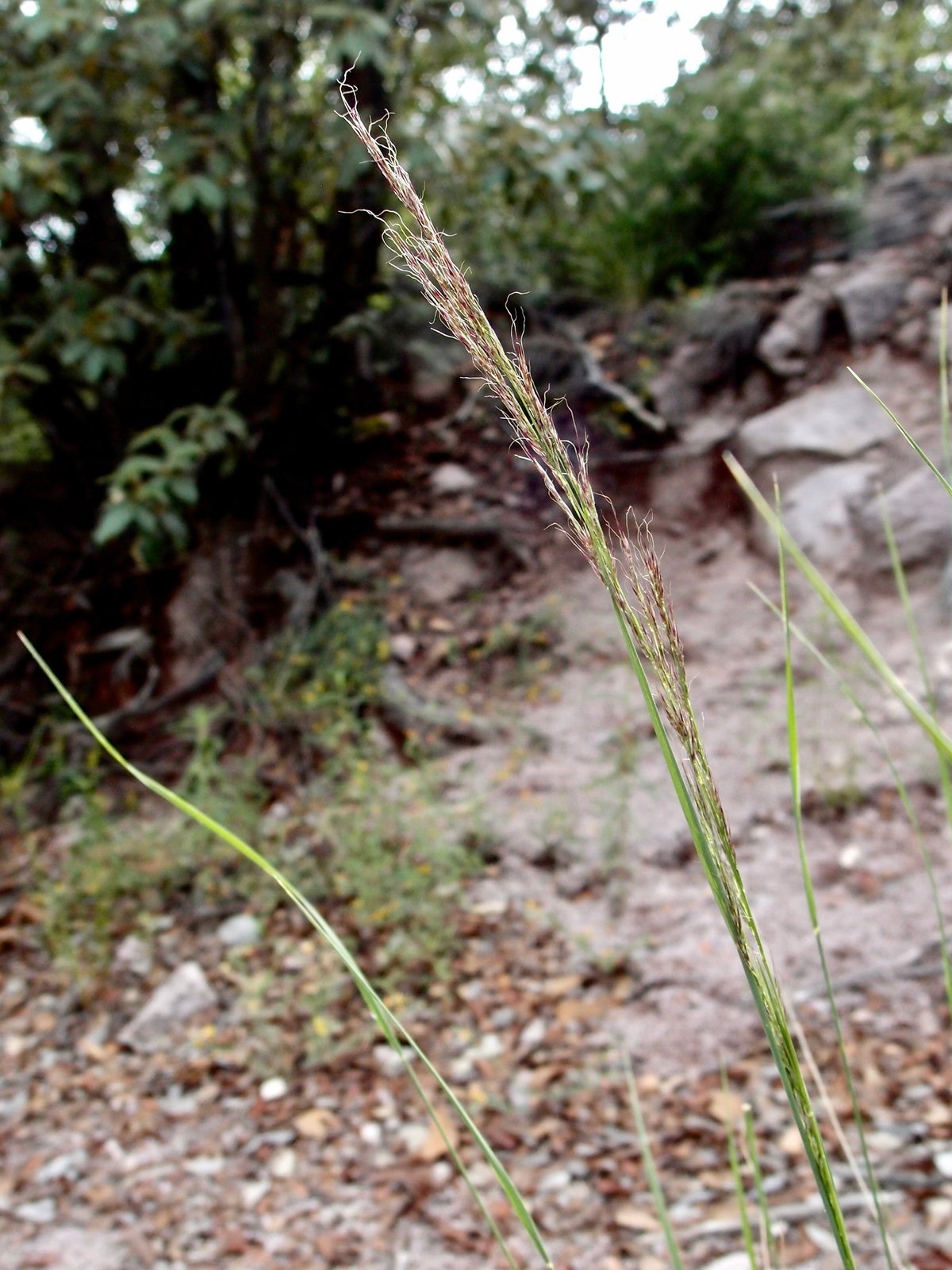
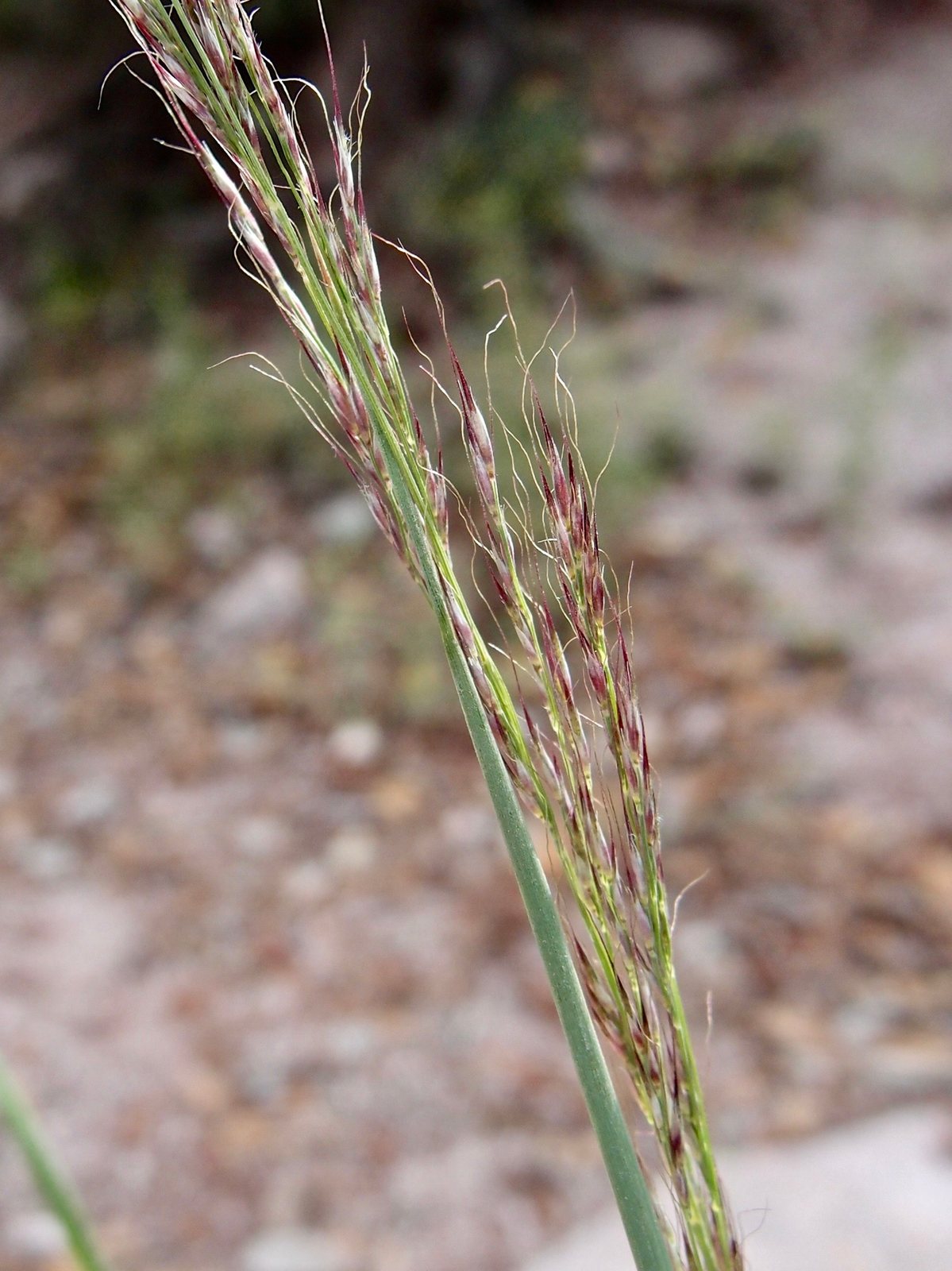
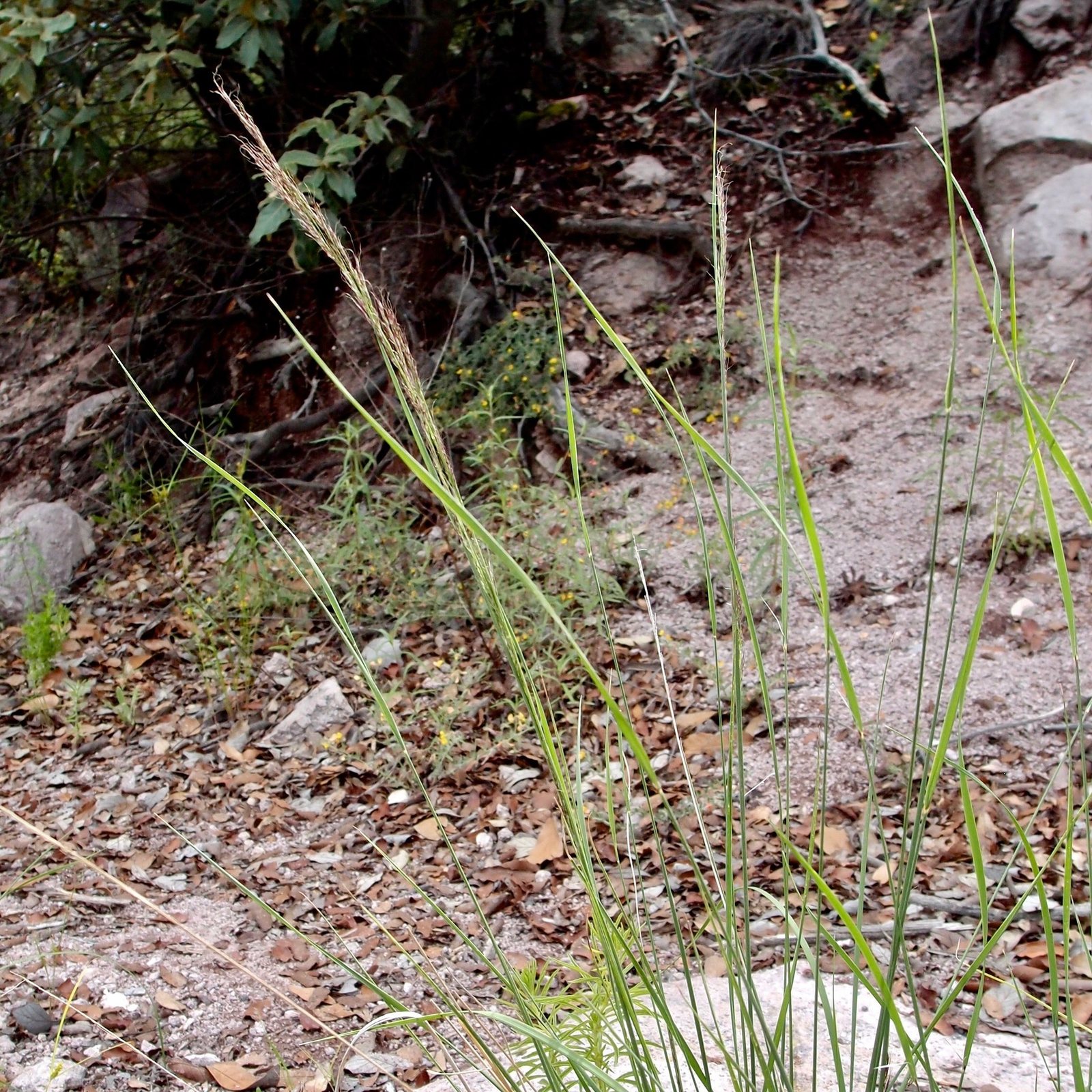
Mountain muhly is a compact, clump-forming grass native to uplands of the western United States and Mexico. Gardeners grow it for its fine leaves, airy bronze-purple flower heads and golden autumn colour. It is best suited to sunny, well-drained gardens, especially where summers are relatively dry.
At a glance
- Sun
- Full sun; light shade is tolerated, but flowering and upright growth are usually better in sun.
- Water
- Low once established. Water during establishment and occasionally during prolonged drought; avoid persistently damp soil.
- Soil
- Well-drained sandy, gravelly or rocky soil of low to moderate fertility. Avoid heavy, waterlogged ground, especially in winter.
- Height
- 1-2.5 ft (0.3-0.75 m), including flower stems
- Spread
- 1-2 ft (0.3-0.6 m)
- Flowers
- Summer to early autumn; loose, fine-textured panicles with purplish or bronze tones, fading to tan.
- Foliage
- Narrow, often rolled green to grey-green leaves form a dense basal tuft and turn straw-gold as they age.
- Growth
- Moderate during warm weather
- Care needed
- Low
The year at a glance
- Deer resistant
- Drought tolerant
- Cold hardy
- Wildlife
| J | F | M | A | M | J | J | A | S | O | N | D | |
|---|---|---|---|---|---|---|---|---|---|---|---|---|
| Flowers | ||||||||||||
| Fruit | ||||||||||||
| Plant |
Northern hemisphere months. In Australia, shift them by six.
- Difficulty
- Easy
- Toughness
- Very tough
Will it suit your garden?
Pick your zone, country, light and whether you have pets.
Full sun is 6 or more hours of direct sun a day, part shade 3 to 6 hours, shade under 3.
How it grows
Planting day
1.1 ft (0.35 m)
After 1 year
1.4 ft (0.42 m)
After 2 years
1.6 ft (0.49 m)
After 3 years
1.7 ft (0.53 m)
full size
About 3 years to full size.
From a typical nursery size, at an average rate for this kind of plant. A rule of thumb, not a forecast.
Good to know
- Cats and dogs
- Safe
- Native to
- the US
- Growth rate
- Moderate
Care
Jobs through the year
- WaterApr–May, Sep, every 21 days
- Water established clumps only during prolonged drought; newly planted clumps need more frequent watering.
- WaterJun–Aug, every 14 days
- Water deeply only during prolonged drought, allowing established clumps to dry between waterings.
- PruneFeb–Mar
- Cut old leaves and stems to 8–10 cm before fresh growth starts.
- DivideApr–May
- Divide only crowded or declining clumps as new growth begins, retaining healthy outer sections.
- MulchApr–May
- Use a light gravel mulch if needed, leaving the crown uncovered.
- ProtectJan–Feb, Nov–Dec
- Prevent standing water around crowns and leave upright seed heads for winter interest.
- Water newly planted clumps when the root zone begins to dry; reduce watering once established.
- Keep the crown at soil level and provide drainage that prevents winter saturation.
- Skip routine feeding; rich soil and excess nitrogen can produce loose, floppy growth.
- Use a light gravel mulch rather than piling organic mulch against the crown.
- Divide crowded or declining clumps in spring as fresh growth begins.
Pruning. In late winter or early spring, cut the old leaves and flower stems to about 3-4 in (8-10 cm) above the ground before new growth develops. Leave the dry stems standing through winter if they remain upright.
Through the year
- Late winter
- Enjoy standing seed heads, then remove old growth before fresh shoots emerge.
- Spring
- Plant or divide once the soil is workable and warming; water new clumps thoroughly.
- Late spring
- Weed around the clumps and check that mulch is clear of their crowns.
- Summer
- Water establishing plants during dry spells; give established plants water only during prolonged drought.
- Autumn
- Leave golden foliage and seed heads for seasonal structure, or collect ripe seed for propagation.
- Winter
- Check that runoff is not collecting around the crowns, particularly in heavy soil.
In the garden
- Plant small groups among rocks or gravel for fine texture without hiding the stone.
- Combine with blue grama and drought-tolerant wildflowers in a short, open meadow planting.
- Repeat along a sunny path or border edge to create a low, informal rhythm.
- Place where low autumn sunlight can shine through the flower heads.
Garden styles it suits: Mountain lodge, Desert / xeriscape, Dry gravel garden, Native meadow, New perennial (prairie) and Low-maintenance.
Plant it with: Blue grama, Prairie coneflower, Blanketflower, Pineleaf penstemon and Fringed sagebrush.
Wildlife: Seeds provide food for small birds, and the tufts offer shelter for insects. Like other grasses, it is wind-pollinated rather than a significant nectar source.
Problems to watch for
- Crown or root rot in wet soil: improve drainage or move the plant to raised, gravelly ground; avoid winter irrigation.
- Floppy growth in shade or rich soil: provide more sun and stop fertilising.
- Poor flowering in cool, damp summers: choose a warmer, sunnier position; flowering may remain sparse in unsuitable climates.
- Dead centres in older clumps: lift and divide in spring, retaining healthy outer sections.
Safety
Mountain muhly is not known to be toxic to people, cats, dogs or horses. No part is recognised as poisonous, although species-specific toxicity information is limited.
Easily confused with
Pink muhly grass (Muhlenbergia capillaris)
Usually forms larger clumps with a conspicuous cloud of pink flowers in autumn; mountain muhly has smaller, more subdued bronze-purple flower heads.
Deer grass (Muhlenbergia rigens)
Forms a much larger, coarser mound with long, narrow, spike-like flower heads rather than mountain muhly's small, open panicles.
The name
Muhlenbergia honours the American botanist Gotthilf Heinrich Ernst Muhlenberg, while montana means 'of mountains', referring to its upland habitat.
Propagation. Sow ripe seed shallowly in a free-draining seed mix in spring, keeping it lightly moist until established. Divide mature clumps in spring as active growth begins.
Checked against open data
- Accepted botanical name
- Muhlenbergia montana
- In the US and Canada
- Native in the lower 48 states.
- Native range
- Arizona, California, Colorado, Mexico Central, Mexico Northeast, Mexico Northwest, Mexico Southeast, Mexico Southwest, Montana, New Mexico, Texas and Utah.
- Measured
- Soil pH 6.5 to 7.5. Average height 38 cm.
Sources: GBIF (CC BY 4.0), USDA PLANTS and Trefle (CC BY 4.0). The care and design notes are LandscapeGPT's own.
See it in your own yard.
Upload a photo of your yard and see it redesigned with plants that suit your climate, each checked against your zone.