Mustard greens
Brassica juncea. Family Brassicaceae. Annual.
Also called Indian mustard, Brown mustard, Leaf mustard, Chinese mustard.
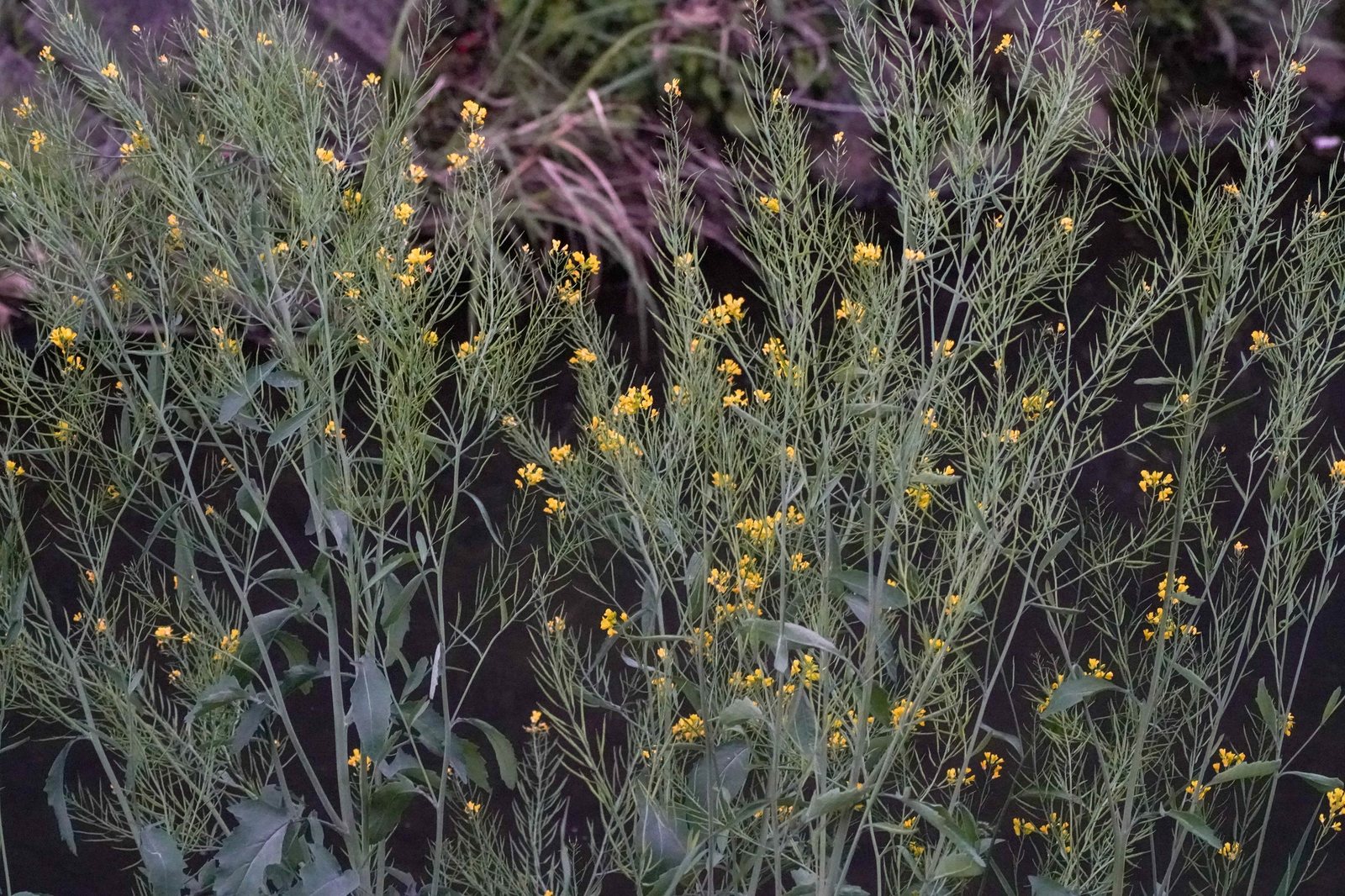
Mustard greens are grown as an annual for their peppery leaves, which can be eaten young in salads or cooked when larger. They grow quickly in cool weather, with varieties offering smooth, frilled or deeply curled leaves in green or purple.
At a glance
- Sun
- Full sun in cool weather; light afternoon shade can help in warmer conditions.
- Water
- Keep soil evenly moist but not waterlogged. Dry spells make leaves tougher and encourage early flowering.
- Soil
- Fertile, moisture-retentive, well-drained soil, ideally pH 6.0-7.5.
- Height
- 1-2 ft (0.3-0.6 m) in leaf; flowering stems can reach 3-5 ft (0.9-1.5 m)
- Spread
- 1-2 ft (0.3-0.6 m), depending on variety
- Foliage
- Broad or finely divided leaves, smooth to heavily curled, in green, reddish purple or purple with green veins; flavour ranges from mildly peppery to hot.
- Growth
- Fast; baby leaves are often ready in 3-4 weeks.
- Care needed
- Low
The year at a glance
- Low allergen
- Edible
| J | F | M | A | M | J | J | A | S | O | N | D | |
|---|---|---|---|---|---|---|---|---|---|---|---|---|
| Fruit | ||||||||||||
| Plant |
Northern hemisphere months. In Australia, shift them by six.
- Difficulty
- Easy
- Toughness
- Fairly tough
Will it suit your garden?
Pick your zone, country, light and whether you have pets.
Full sun is 6 or more hours of direct sun a day, part shade 3 to 6 hours, shade under 3.
How it grows
Planting day
0.5 ft (0.15 m)
After 1 year
1.5 ft (0.45 m)
full size
Full size in one season.
From a typical nursery size, at an average rate for this kind of plant. A rule of thumb, not a forecast.
Good to know
- Cats and dogs
- Mildly toxic: may upset a stomach
- Growth rate
- Fast
Care
Jobs through the year
- WaterMar–May, Sep–Nov, every 7 days
- Water established crops as surface soil dries; keep seedbeds and seedlings consistently moist.
- WaterJun, Aug, every 3 days
- Check soil frequently and water at soil level before roots dry; summer seedbeds may need daily watering.
- MulchApr–May, Sep
- Apply a thin mulch after seedlings establish, keeping it clear of stems.
- ProtectMar–Jun, Aug–Nov
- Seal fine insect mesh over crops from sowing; use fleece against hard frost in spring and autumn.
- HarvestApr–Jun, Sep–Nov, every 7 days
- Pick tender outer leaves while retaining the central growing point; replace plants once they bolt.
- Water at soil level whenever the surface begins to dry; do not let seedlings dry out.
- Mix mature compost into the bed before sowing.
- Thin plants to 6-12 in (15-30 cm) apart for full-sized leaves, following the variety's spacing guidance.
- Apply a thin mulch once seedlings are established to conserve moisture and reduce soil splash.
- Use insect mesh from sowing to keep flea beetles and cabbage butterflies off the crop.
- Rotate with non-brassica crops and remove old roots after harvest.
Pruning. No routine pruning is needed. Remove yellowing leaves and harvest regularly; once flower stems develop, replace plants unless you want flowers or seed.
Harvest
Cut baby leaves when they are about 3-6 in (8-15 cm) long, often 20-30 days after sowing. For larger leaves, usually ready in 40-60 days, pick the outer leaves while leaving the central growing point intact. Harvest before leaves become tough or plants begin flowering, when flavour usually becomes stronger.
Through the year
- Early spring
- Sow directly once the soil is workable; use a cloche or fleece where hard frosts remain likely.
- Mid-spring
- Thin seedlings, cover with insect mesh and begin picking baby leaves.
- Late spring
- Make a final spring sowing where summers are cool; remove plants that bolt.
- Late summer
- Sow the main autumn crop and keep the seedbed moist during germination.
- Autumn
- Harvest outer leaves regularly and protect crops from hard frost.
- Winter
- Continue harvesting in mild climates or under protection; clear frost-killed plants in colder areas.
In the garden
- Plant purple-leaved varieties beside green lettuce for contrasting blocks of edible foliage.
- Use frilled varieties along vegetable-bed edges where their texture is easy to see and harvest.
- Grow compact varieties in deep containers near the kitchen, alongside spring onions.
- Plant in orderly rows or repeated patches in a potager for quick seasonal colour and structure.
Garden styles it suits: Potager (kitchen garden), Edible landscape, Homestead, Cottage garden, Small-space and Family-friendly.
Plant it with: Lettuce, Spring onions, Beetroot, Carrots, Coriander and Calendula.
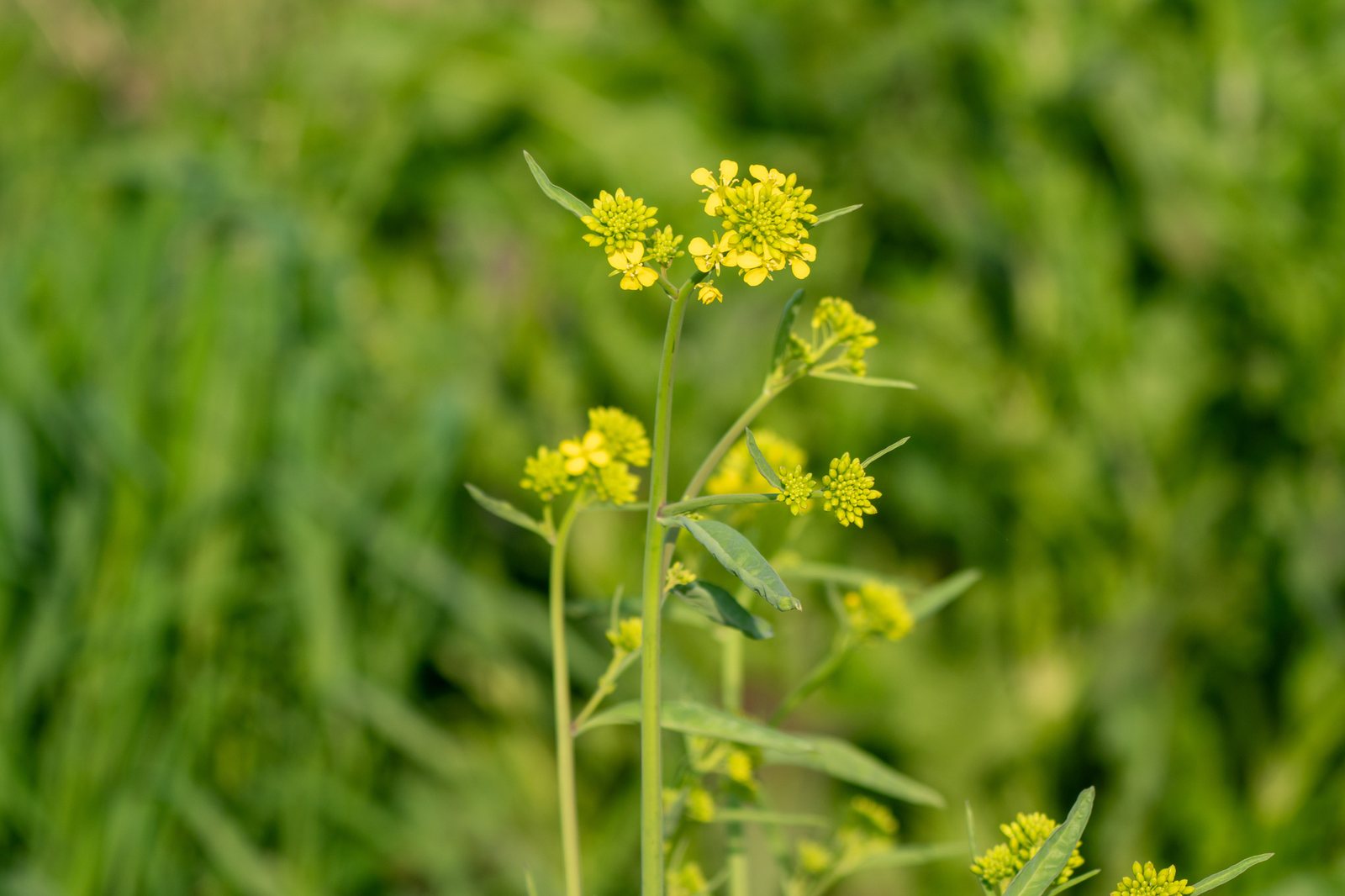
Wildlife: If allowed to flower, the yellow blooms provide nectar and pollen for bees and other insects. Leaves also feed cabbage-family caterpillars, so flowering plants are best kept separate from protected eating crops.
Problems to watch for
- Flea beetles leave small shot holes in young leaves: cover immediately after sowing with fine insect mesh, sealing the edges.
- Cabbage caterpillars chew large holes: inspect leaf undersides, remove eggs and caterpillars, and use insect mesh.
- Clubroot causes swollen roots and wilting: remove infected plants, improve drainage and avoid growing brassicas in affected soil; containers with clean compost are an alternative.
- Early bolting produces tough, strongly flavoured leaves: sow in cool seasons, water consistently and replace plants once flowering begins.
Safety
Leaves are edible for people in normal food quantities; mustard seed can cause serious reactions in people with mustard allergy. Small amounts of leaf are not generally considered poisonous to cats or dogs, but larger amounts and pungent seeds may cause digestive upset. Do not use it as unrestricted horse forage: heavy consumption of brassicas can cause serious digestive or blood disorders, and stressed plants may accumulate nitrates.
Easily confused with
Black mustard (Brassica nigra)
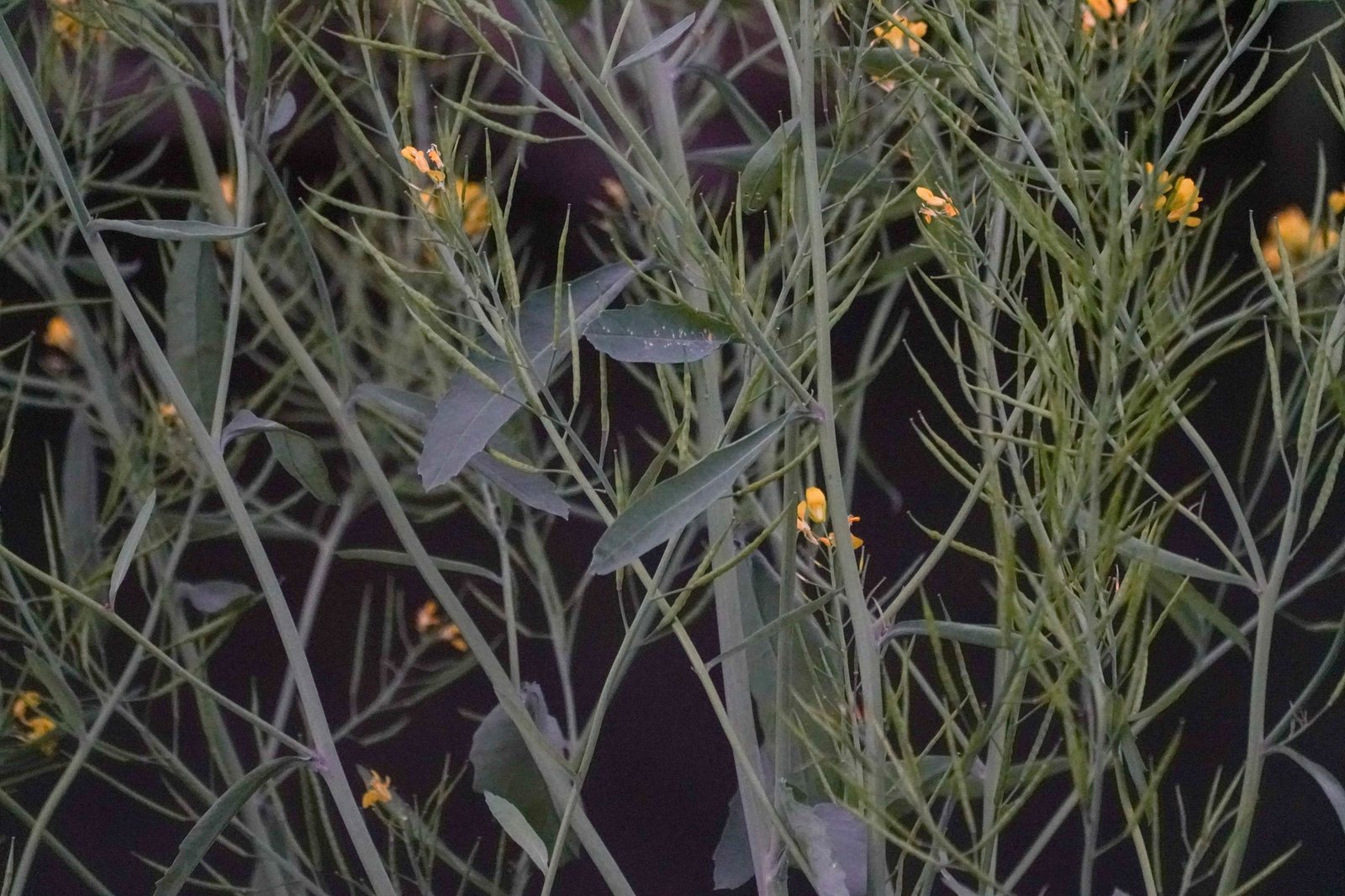
Mature black mustard has short seed pods held tightly against the flowering stem; brown mustard generally has longer pods that project away from it. Leaves alone can be difficult to distinguish.
White mustard (Sinapis alba)
White mustard is usually noticeably hairy and develops bristly seed pods with a broad, flattened beak; brown mustard pods are smooth and more slender.
Pak choi (Brassica rapa subsp. chinensis)
Pak choi usually forms a compact rosette with broad, fleshy white or pale green leaf stalks and mild leaves. Most mustard greens have thinner stalks and a distinctly peppery flavour, though leaf forms overlap.
The name
The species name juncea means rush-like, referring to the slender growth of the plant.
Propagation. Sow seed directly about 1/4 in (0.5 cm) deep in cool, moist soil. Sow small batches every 2-3 weeks during suitable weather; plants can self-seed if pods are allowed to ripen.
Checked against open data
- Accepted botanical name
- Brassica juncea
- In the US and Canada
- Introduced in Alaska, Canada, Hawaii, the lower 48 states, Puerto Rico and US Virgin Islands.
- Native range
- North Caucasus and Transcaucasus.
- Measured
- Soil pH 6 to 7.2. Average height 110 cm.
Sources: GBIF (CC BY 4.0), USDA PLANTS and Trefle (CC BY 4.0). The care and design notes are LandscapeGPT's own.
See it in your own yard.
Upload a photo of your yard and see it redesigned with plants that suit your climate, each checked against your zone.