Nanking cherry
Prunus tomentosa. Family Rosaceae. Shrub.
Also called Manchu cherry, Downy cherry.
Nanking cherry is a cold-hardy, deciduous shrub grown for its early spring blossom and small, tart red cherries. It makes an informal edible hedge or orchard-edge shrub, but flowers can be damaged by late frosts and reliable cropping usually requires two genetically different plants.
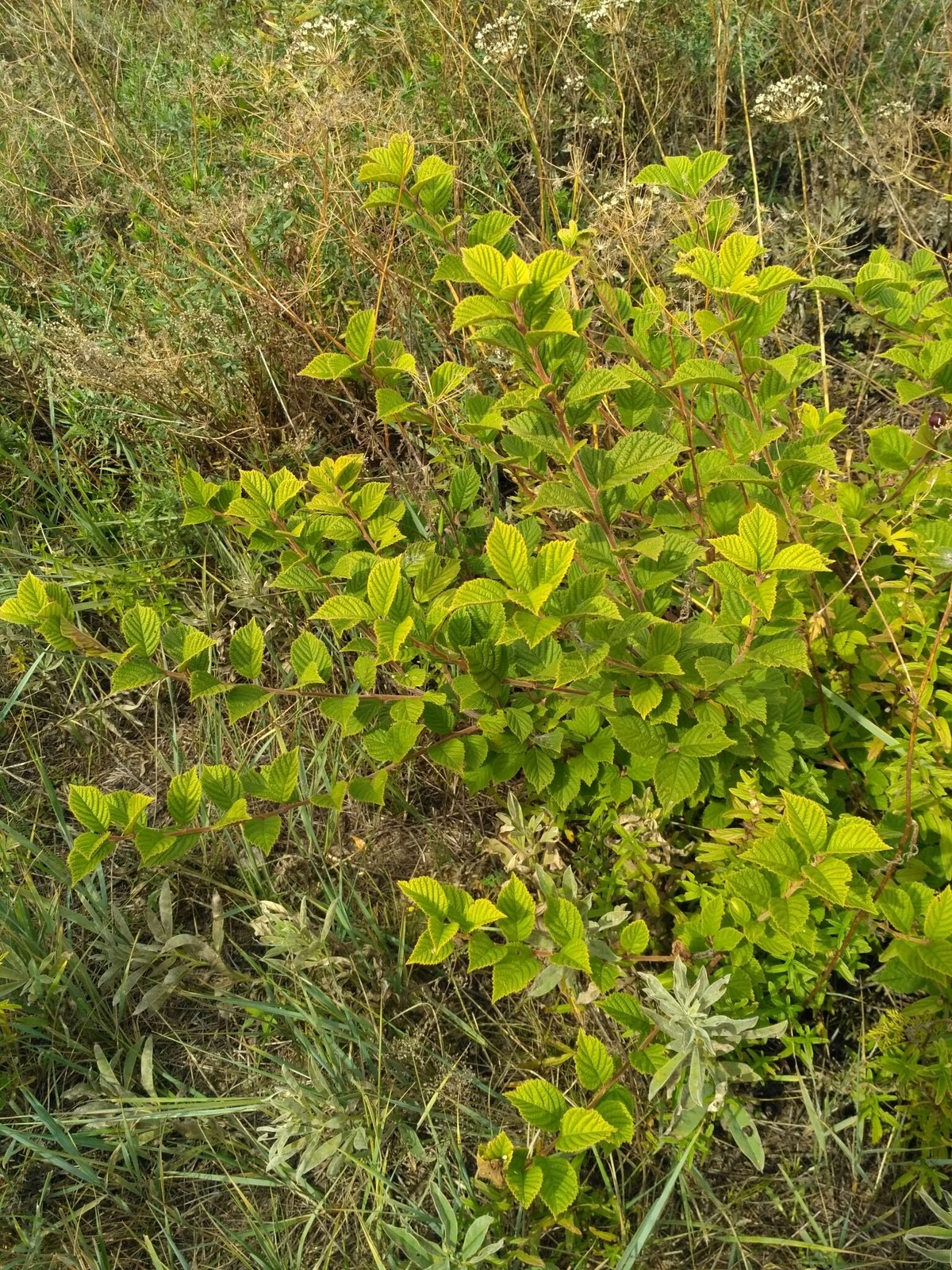
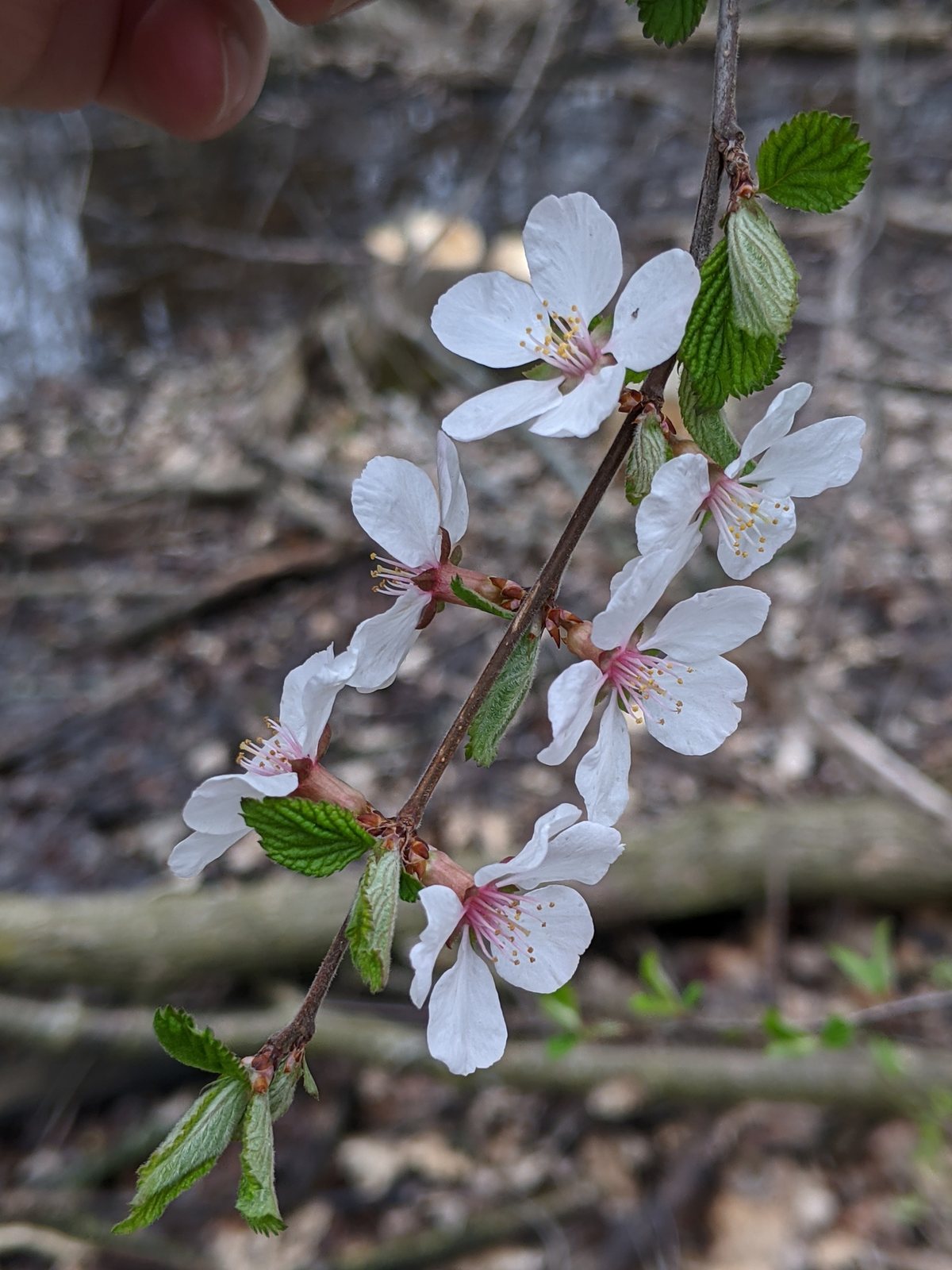
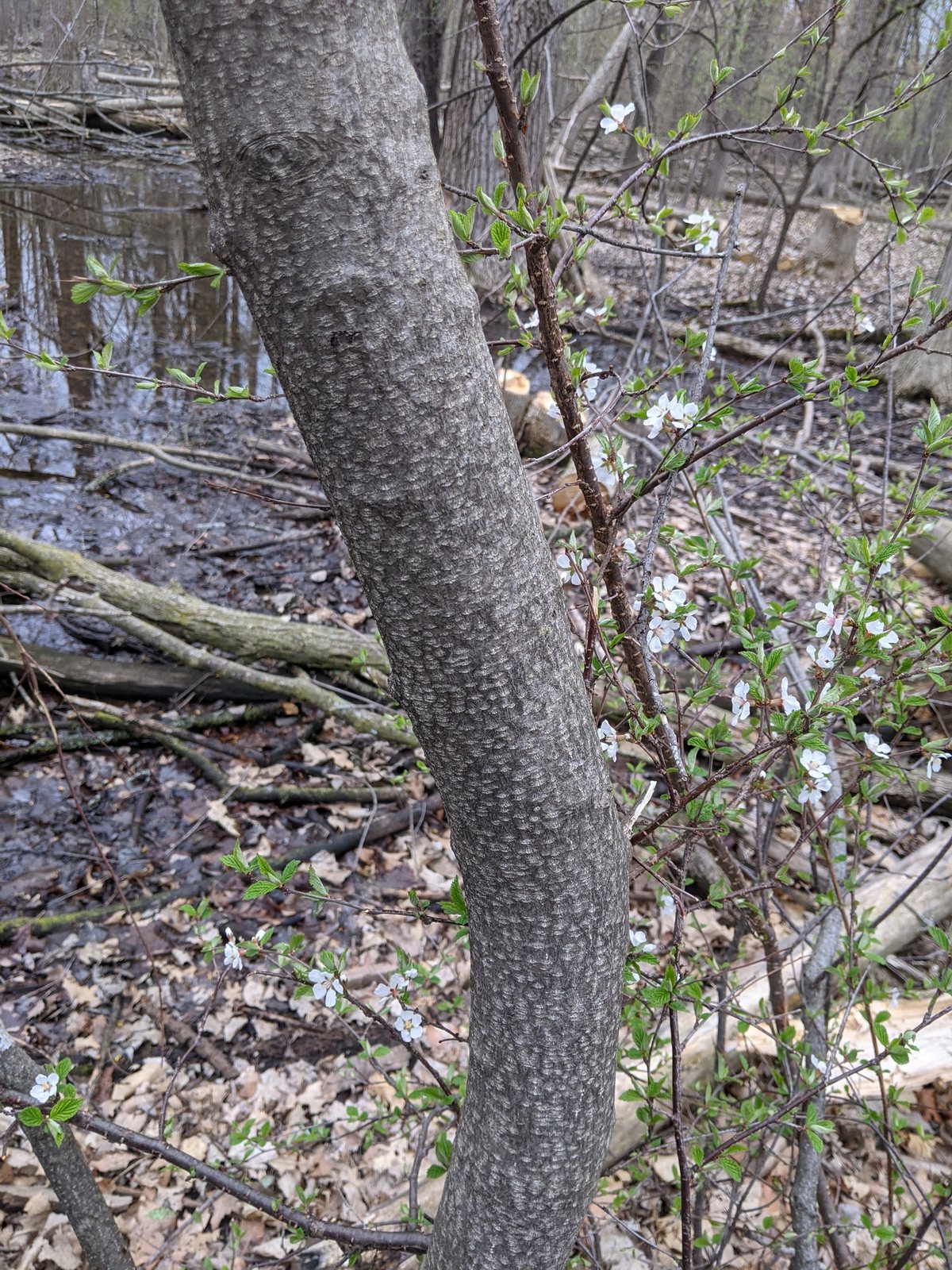
At a glance
- Sun
- Full sun for the best flowering and fruiting; tolerates light partial shade.
- Water
- Moderate; water regularly while establishing and during prolonged dry spells as fruit develops. Established shrubs tolerate some drought.
- Soil
- Well-drained loam or sandy soil; tolerates a fairly wide pH range but struggles in waterlogged ground.
- Height
- 6-10 ft (1.8-3 m)
- Spread
- 6-10 ft (1.8-3 m)
- Flowers
- Early spring, before or as leaves emerge; pink buds open to white or pale pink flowers.
- Foliage
- Small, oval green leaves with toothed edges and noticeably downy undersides; autumn colour is usually yellow and often modest.
- Growth
- Moderate to fast while young.
- Care needed
- Medium
The year at a glance
- Pollinators
- Drought tolerant
- Cold hardy
- Wildlife
- Low allergen
- Edible
| J | F | M | A | M | J | J | A | S | O | N | D | |
|---|---|---|---|---|---|---|---|---|---|---|---|---|
| Flowers | ||||||||||||
| Fruit | ||||||||||||
| Plant |
Northern hemisphere months. In Australia, shift them by six.
- Difficulty
- Moderate
- Toughness
- Fairly tough
Will it suit your garden?
Pick your zone, country, light and whether you have pets.
Full sun is 6 or more hours of direct sun a day, part shade 3 to 6 hours, shade under 3.
How it grows
Planting day
1.6 ft (0.5 m)
After 1 year
3 ft (0.98 m)
After 2 years
5 ft (1.5 m)
After 3 years
6 ft (1.9 m)
After 5 years
8 ft (2.4 m)
full size
About 4 years to full size.
From a typical nursery size, at an average rate for this kind of plant. A rule of thumb, not a forecast.
Good to know
- Cats and dogs
- Toxic
- Growth rate
- Fast
Care
Jobs through the year
- WaterApr–May, Sep, every 14 days
- Water established shrubs if soil is dry; young shrubs need more frequent watering for two seasons.
- WaterJun–Aug, every 7 days
- Water deeply during dry spells, especially while fruit swells; allow the soil surface to dry between waterings.
- MulchMar–Apr
- Top-dress with compost and apply 5–8 cm of organic mulch clear of stems.
- ProtectMay–Jul
- Before fruit colours, fit taut wildlife-safe netting over a frame and check daily.
- HarvestJun–Jul
- Pick red, juicy cherries after tasting for ripeness; refrigerate promptly and remove stones before processing.
- PruneJul–Aug
- After harvest in dry weather, remove dead or crowded branches and occasionally an old stem at the base.
- Plant two genetically different seedlings or compatible selections for reliable cross-pollination; two copies of the same clone may not suffice.
- Choose a sunny, well-drained position away from frost pockets.
- Water deeply during the first two growing seasons, allowing the soil surface to dry between waterings.
- Apply 2-3 in (5-8 cm) of organic mulch, keeping it clear of the stems.
- Top-dress with compost in spring; avoid heavy nitrogen feeding that encourages leafy growth rather than fruit.
- Protect ripening fruit with securely fitted wildlife-safe netting, checking it daily.
Pruning. Prune lightly after harvest in dry summer weather, removing dead, crossing or crowded branches and occasionally taking an old stem back to the base. Avoid routine winter pruning where silver leaf or bacterial canker is a concern, and do not shear plants intended for fruit.
Harvest
Pick cherries in early to midsummer when fully red, juicy and pleasantly tart rather than sharply sour; taste a few because colour alone is not a perfect guide. Handle gently, as the thin-skinned fruit bruises easily and keeps poorly, and remove stones before cooking or preserving. Healthy, well-pollinated plants commonly give their first useful crop about 2-3 years after planting.
Through the year
- Autumn
- Plant in mild climates while soil is workable; in very cold regions, plan for spring planting instead.
- Early spring
- Plant in cold climates, refresh mulch and add a light compost top-dressing.
- Spring
- Watch blossom for frost damage and avoid insecticides while pollinating insects are visiting.
- Late spring
- Water during dry weather as fruit swells and fit bird protection before cherries colour.
- Early to midsummer
- Harvest ripe cherries frequently and refrigerate or process them promptly.
- Summer
- After harvest, thin crowded growth in dry weather and remove any shrivelled fruit.
In the garden
- Plant as an informal edible hedge, allowing room for its naturally spreading branches.
- Use along a home orchard edge with currants and gooseberries for a layered fruit garden.
- Place near a frequently used path to enjoy the early blossom and make picking convenient.
- Combine with low thyme and chives in an edible border, keeping the immediate root area clear while plants establish.
Garden styles it suits: Cottage garden, Native hedgerow, Backyard orchard, Edible landscape, Homestead and Wildlife garden.
Plant it with: Chives, Creeping thyme, Yarrow, Redcurrant and Gooseberry.
Wildlife: Early flowers provide pollen and nectar for bees when weather permits them to fly. Birds eat the cherries, and dense branching offers shelter.
Problems to watch for
- Poor fruit set: plant a genetically different pollination partner nearby; late frost, cold wet flowering weather or too much shade can also reduce crops.
- Bird damage: protect fruit before it ripens with taut, wildlife-safe netting on a frame.
- Brown rot: remove rotten and mummified fruit, thin crowded branches and avoid wetting flowers and fruit when watering.
- Cankers and branch dieback: prune affected wood back to healthy growth in dry summer weather, clean tools between cuts and improve drainage.
Safety
The ripe fruit flesh is edible. Leaves, stems and the kernels inside the stones contain cyanogenic compounds and can cause serious poisoning in people, cats, dogs and horses if chewed and eaten; wilted leaves are a particular livestock hazard. Do not eat the kernels or leave prunings where animals can reach them.
Easily confused with
Sour cherry (Prunus cerasus)
Usually forms a small tree with smoother leaves and larger cherries hanging on conspicuous stalks; Nanking cherry is bushier, with downy leaves and fruit held close to the branches.
Sand cherry (Prunus pumila)
Has narrower, largely hairless leaves and typically dark purple-black ripe fruit, rather than the broad, downy leaves and usually red fruit of Nanking cherry.
The name
Nanking is an older English spelling of the Chinese city Nanjing, while tomentosa means densely woolly or downy, referring to the plant's hairs.
Propagation. Grow from cleaned seed given a moist cold period before sowing; seedlings vary and are useful as genetically distinct pollination partners. Softwood cuttings taken in early summer can preserve a selected plant, although rooting success varies.
Checked against open data
- Accepted botanical name
- Prunus tomentosa
- In the US and Canada
- Introduced in Canada and the lower 48 states.
- Native range
- China North-Central, China South-Central, Manchuria, Qinghai, Sakhalin and Tibet.
- Measured
- Soil pH 5.7 to 7.2. Average height 244 cm.
Sources: GBIF (CC BY 4.0), USDA PLANTS and Trefle (CC BY 4.0). The care and design notes are LandscapeGPT's own.
See it in your own yard.
Upload a photo of your yard and see it redesigned with plants that suit your climate, each checked against your zone.