Narrowleaf cottonwood
Populus angustifolia. Family Salicaceae. Tree.
Also called Narrow-leaved cottonwood, Willowleaf cottonwood.
A fast-growing deciduous tree native to streams and river valleys in western North America, narrowleaf cottonwood has slender leaves, an open crown and yellow autumn colour. It suits large, moist landscapes and streamside restoration, but suckering roots, falling twigs and cottony seed make it a poor choice near buildings or in small gardens.
At a glance
- Sun
- Full sun.
- Water
- Moderate to high; best with consistent moisture and access to deep soil water. Established trees tolerate some seasonal dryness, but this is not a dry-garden tree.
- Soil
- Deep, moist alluvial soil, including sand, gravel and loam; tolerates periodic flooding. Avoid shallow, compacted soil and sites that dry out completely.
- Height
- 40-60 ft (12-18 m)
- Spread
- 20-40 ft (6-12 m), with suckers potentially forming a much wider colony
- Flowers
- Early spring, before the leaves; male trees bear reddish catkins and female trees greenish catkins, followed by cottony seeds.
- Foliage
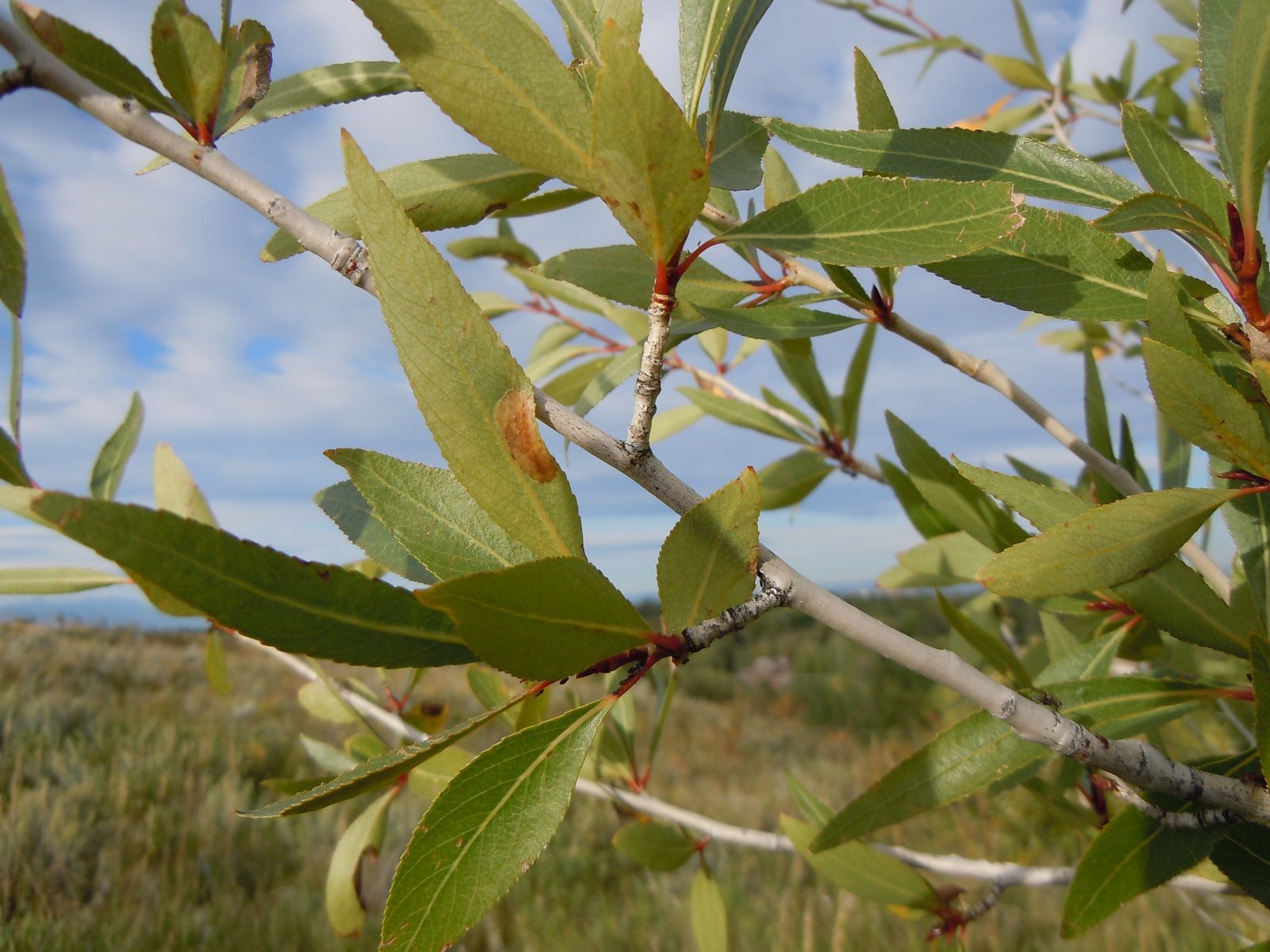
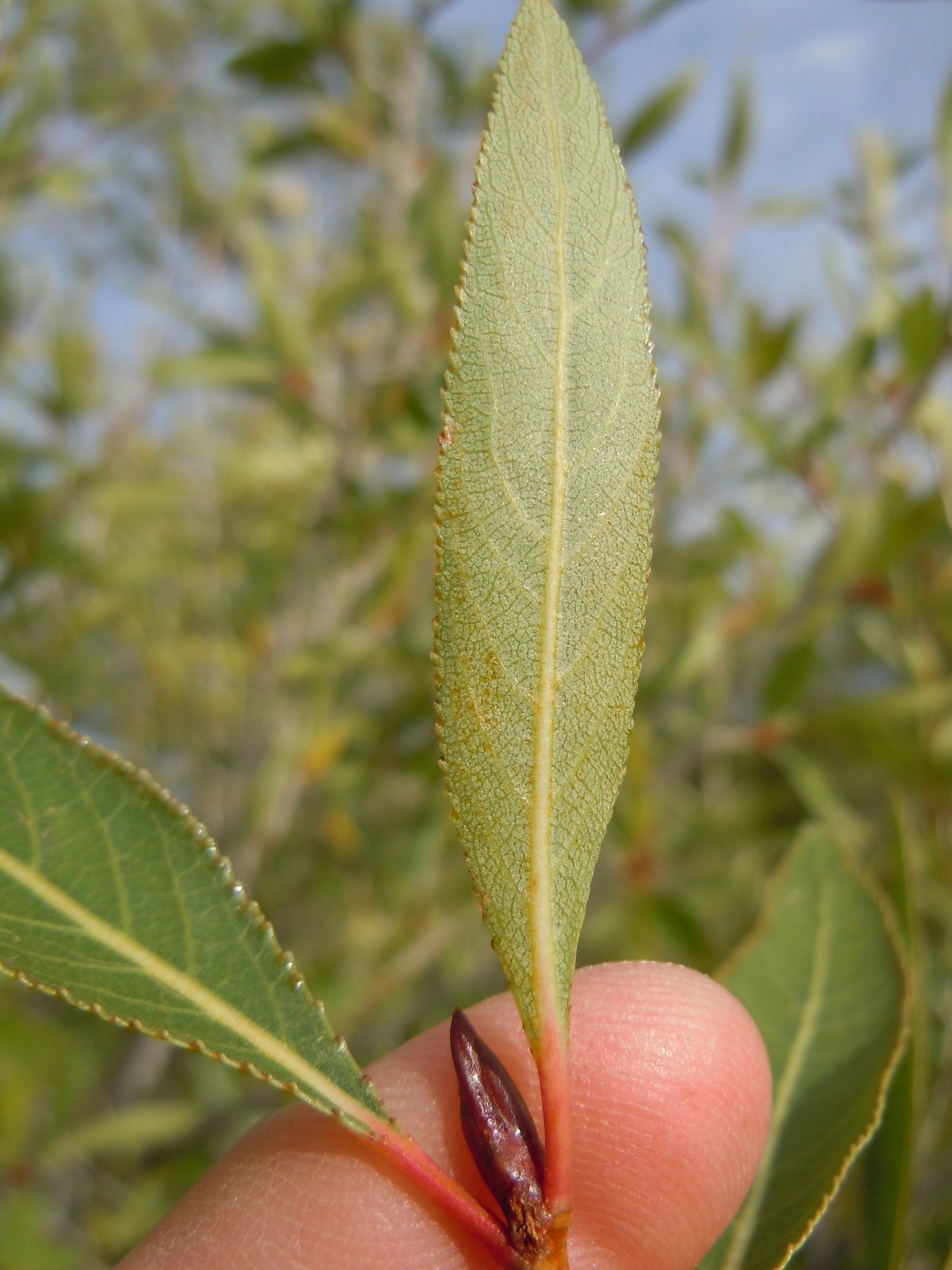
- Narrow, lance-shaped green leaves with finely toothed edges and paler undersides; turns yellow in autumn.
- Growth
- Fast where roots have reliable moisture.
- Care needed
- High
The year at a glance
- Cold hardy
- Wildlife
| J | F | M | A | M | J | J | A | S | O | N | D | |
|---|---|---|---|---|---|---|---|---|---|---|---|---|
| Flowers | ||||||||||||
| Fruit | ||||||||||||
| Plant |
Northern hemisphere months. In Australia, shift them by six.
- Difficulty
- Hard
- Toughness
- Fairly tough
Will it suit your garden?
Pick your zone, country, light and whether you have pets.
Full sun is 6 or more hours of direct sun a day, part shade 3 to 6 hours, shade under 3.
How it grows
Planting day
7 ft (2 m)
After 1 year
10 ft (3 m)
After 2 years
13 ft (4 m)
After 3 years
16 ft (5 m)
After 5 years
23 ft (7 m)
About 13 years to full size.
From a typical nursery size, at an average rate for this kind of plant. A rule of thumb, not a forecast.
Good to know
- Cats and dogs
- Mildly toxic: may upset a stomach
- Native to
- the US and Canada
- In the garden
- Spreads vigorously: plan to contain it.
- Growth rate
- Fast
Care
Jobs through the year
- WaterApr–May, Sep–Oct, every 14 days
- Deep-water established trees if the root zone is drying; keep young trees consistently moist for three years.
- WaterJun–Aug, every 7 days
- Water deeply during dry weather unless roots have reliable groundwater; young trees need closer monitoring.
- MulchMar–Apr
- Maintain 5–8 cm of organic mulch over the root zone, clear of the trunk.
- PruneFeb
- Train young trees and remove damaged or crossing branches; use an arborist for mature-tree work.
- PruneMay–Sep, every 30 days
- Remove unwanted suckers at their origin without damaging major roots.
- ProtectJan, Nov–Dec
- Inspect branch attachments and storm damage; have hazardous defects assessed by an arborist.
- Plant well away from buildings, paving, drains and buried services; roots are extensive and can exploit leaking pipes.
- Water deeply during dry spells for the first two or three growing seasons, keeping the root zone moist rather than giving frequent light sprinklings.
- Spread 2-3 in (5-8 cm) of organic mulch over the root zone, keeping it clear of the trunk.
- Do not routinely fertilise; feed only if soil testing identifies a deficiency.
- Remove unwanted root suckers promptly and inspect for damaged branches after storms.
Pruning. Prune in late winter while dormant, developing a sound main framework when the tree is young and removing dead, crossing or poorly attached branches. Avoid topping or large pruning wounds; use a qualified arborist for work on mature trees.
Through the year
- Late winter
- Prune young trees for structure and remove dead or damaged branches.
- Early spring
- Plant while dormant where the soil is workable, then water thoroughly.
- Spring
- Refresh mulch and check new shoots for aphids or leaf damage.
- Summer
- Water young trees deeply during dry weather and remove unwanted suckers.
- Autumn
- Collect fallen leaves from paths and check that the tree has enough space for its expanding roots and crown.
- Winter
- Inspect branch attachments and storm damage when the crown is bare.
In the garden
- Use in large streamside plantings where roots can spread without disturbing paving or buildings.
- Plant in naturalistic groves with native willows and moisture-loving shrubs.
- Use as a fast-growing canopy tree in spacious wildlife landscapes within its native range.
- Place against darker conifers to highlight its fine-textured foliage and yellow autumn colour.
Garden styles it suits: Woodland, Wildlife garden, Rewilded, Mountain lodge, Autumn colour and Modern rustic.
Plant it with: Red-osier dogwood, Coyote willow, Golden currant, Woods' rose, Tufted hair grass and Baltic rush.
Wildlife: Supports leaf-feeding insects, including caterpillars, and provides nesting and shelter for birds. Beavers browse the bark and stems. Old trees can develop valuable wildlife cavities, although these need careful assessment near people and property.
Problems to watch for
- Root suckers and surface roots: allow a generous unpaved area, cut unwanted suckers at their origin and avoid digging through major roots.
- Cankers and branch dieback: reduce drought stress, prune affected branches back to healthy wood and have trunk cankers assessed by an arborist.
- Leaf rust and leaf spots: collect badly affected fallen leaves, avoid overhead watering and maintain airflow; established trees often tolerate light infection.
- Borers: stressed trees are most vulnerable; maintain soil moisture and seek an arborist's assessment if you find holes, sawdust-like debris or dying branches.
Safety
Not generally known to be poisonous to people, cats, dogs or horses under ordinary garden exposure. Bark, buds and leaves contain salicylate compounds, so do not use them as home remedies or encourage pets or livestock to eat large quantities; the risk from substantial ingestion is not well established.
Where it spreads. Can spread aggressively by root suckers on moist sites, including within its native range in the western United States and western Canada, and may form colonies beyond the intended planting area.
Easily confused with
Black cottonwood (Populus trichocarpa)
Usually has much broader, egg-shaped leaves rather than the consistently narrow, lance-shaped leaves of narrowleaf cottonwood.
Plains cottonwood (Populus deltoides subsp. monilifera)
Has broad, triangular leaves with coarser teeth and flattened leaf stalks; narrowleaf cottonwood has slender leaves and more rounded stalks.
Peachleaf willow (Salix amygdaloides)
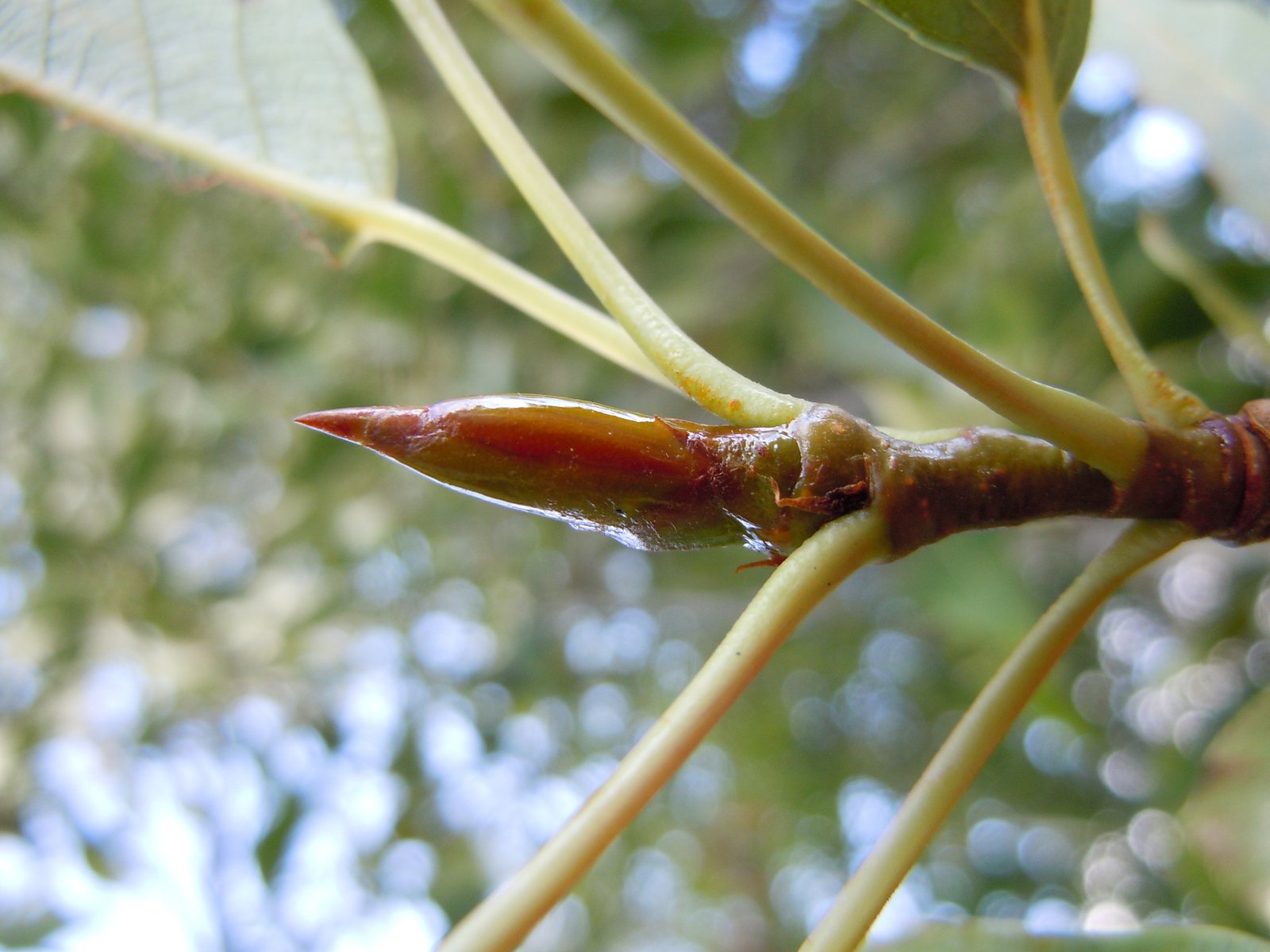
Has similar narrow leaves, but its buds have a single cap-like scale; cottonwood buds have several overlapping scales and are often sticky.
The name
The species name angustifolia means narrow-leaved, while cottonwood refers to the cottony hairs that carry the seeds.
Propagation. Take hardwood cuttings during dormancy or transplant rooted suckers while dormant, with permission where required. Fresh seed must be sown promptly on a continuously moist surface because it loses viability quickly; seedlings may be hybrids where other cottonwoods grow nearby.
Checked against open data
- Accepted botanical name
- Populus angustifolia
- In the US and Canada
- Native in Canada and the lower 48 states.
- Native range
- Alberta, Arizona, Colorado, Idaho, Mexico Northeast, Mexico Northwest, Montana, Nebraska, Nevada, New Mexico, Saskatchewan and South Dakota.
- Measured
- Soil pH 6 to 7.5. Average height 1890 cm.
Sources: GBIF (CC BY 4.0), USDA PLANTS and Trefle (CC BY 4.0). The care and design notes are LandscapeGPT's own.
See it in your own yard.
Upload a photo of your yard and see it redesigned with plants that suit your climate, each checked against your zone.