Native frangipani
Hymenosporum flavum. Family Pittosporaceae. Tree.
Also called Australian frangipani, Sweetshade.
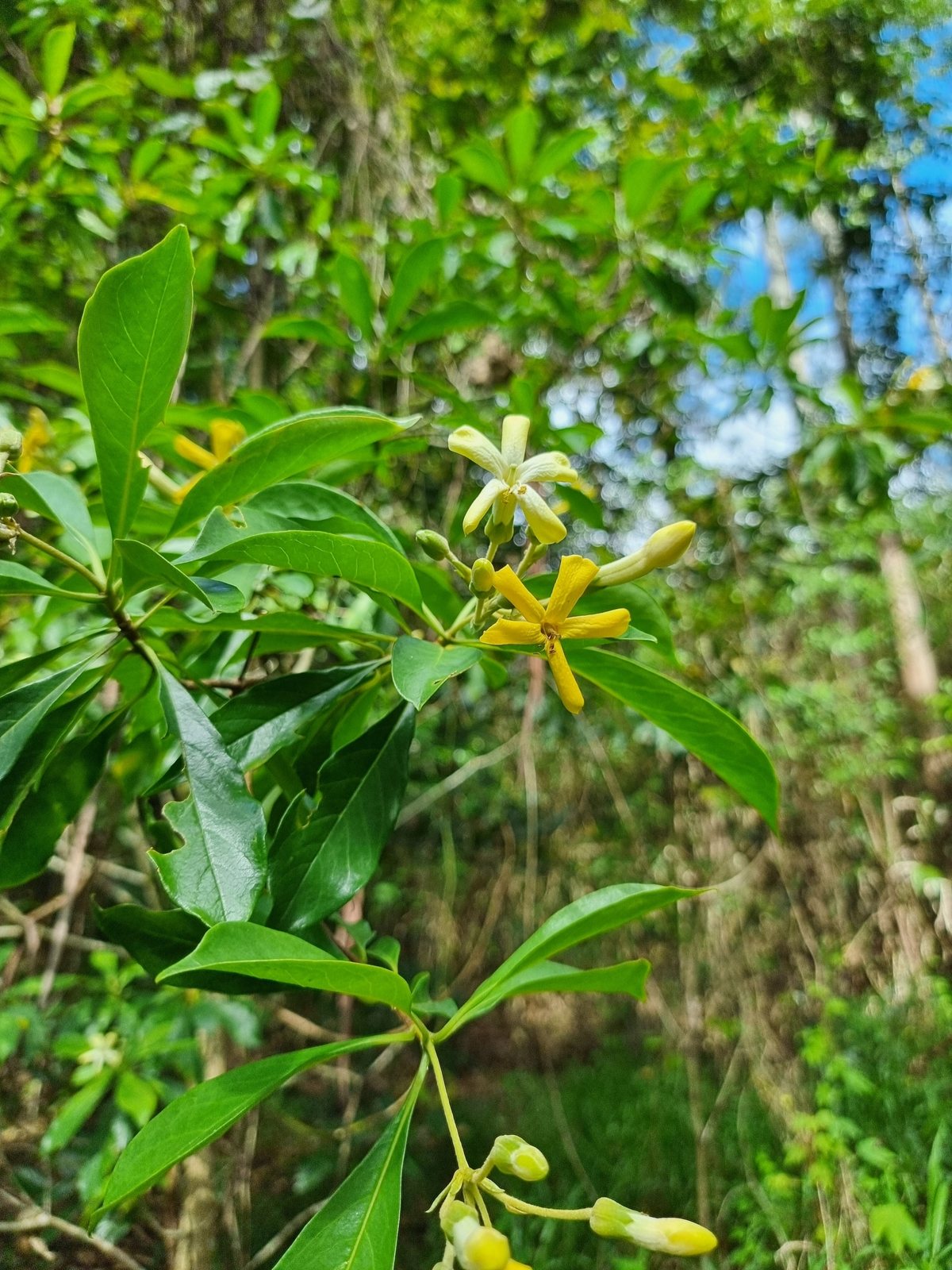
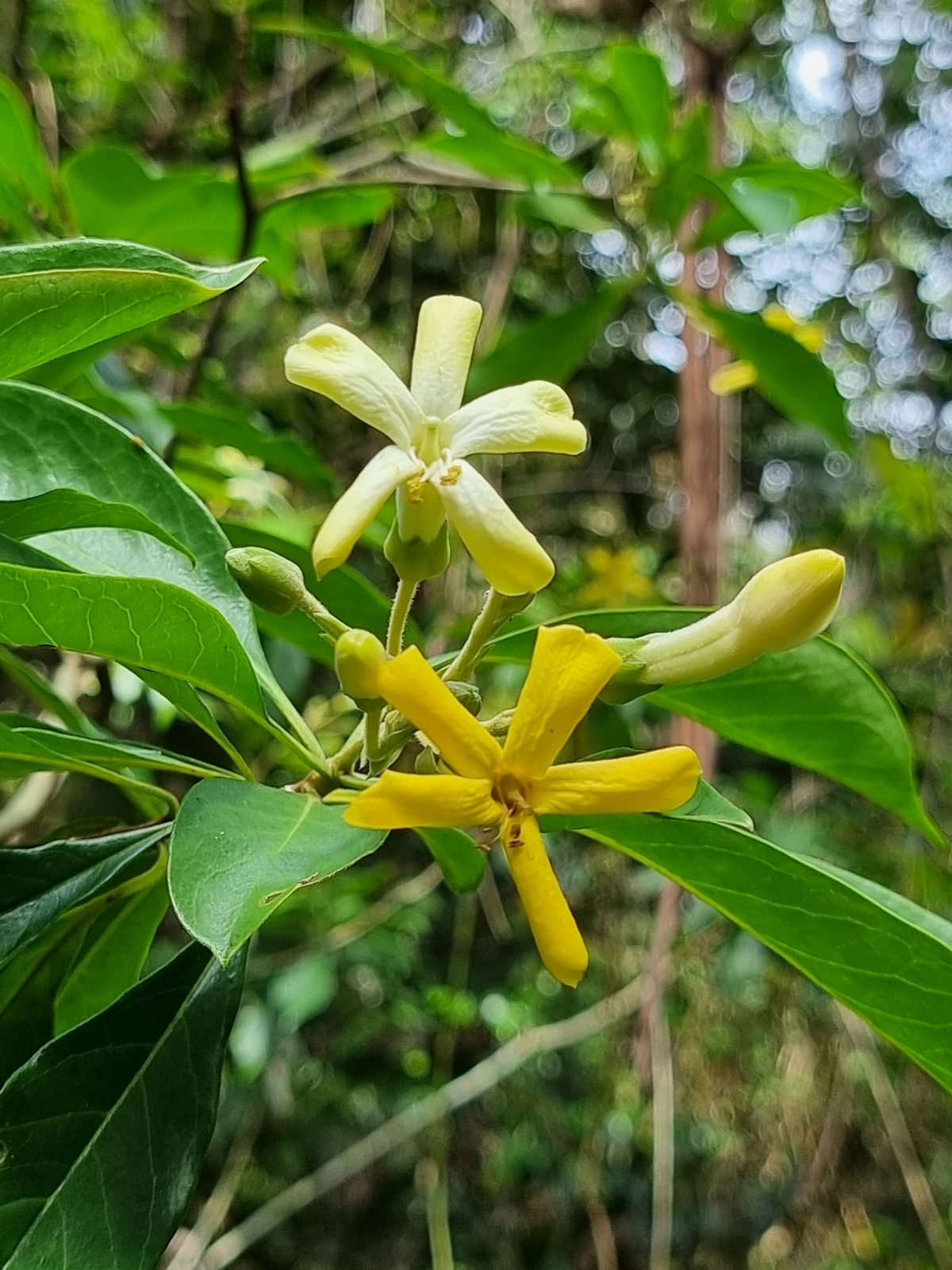
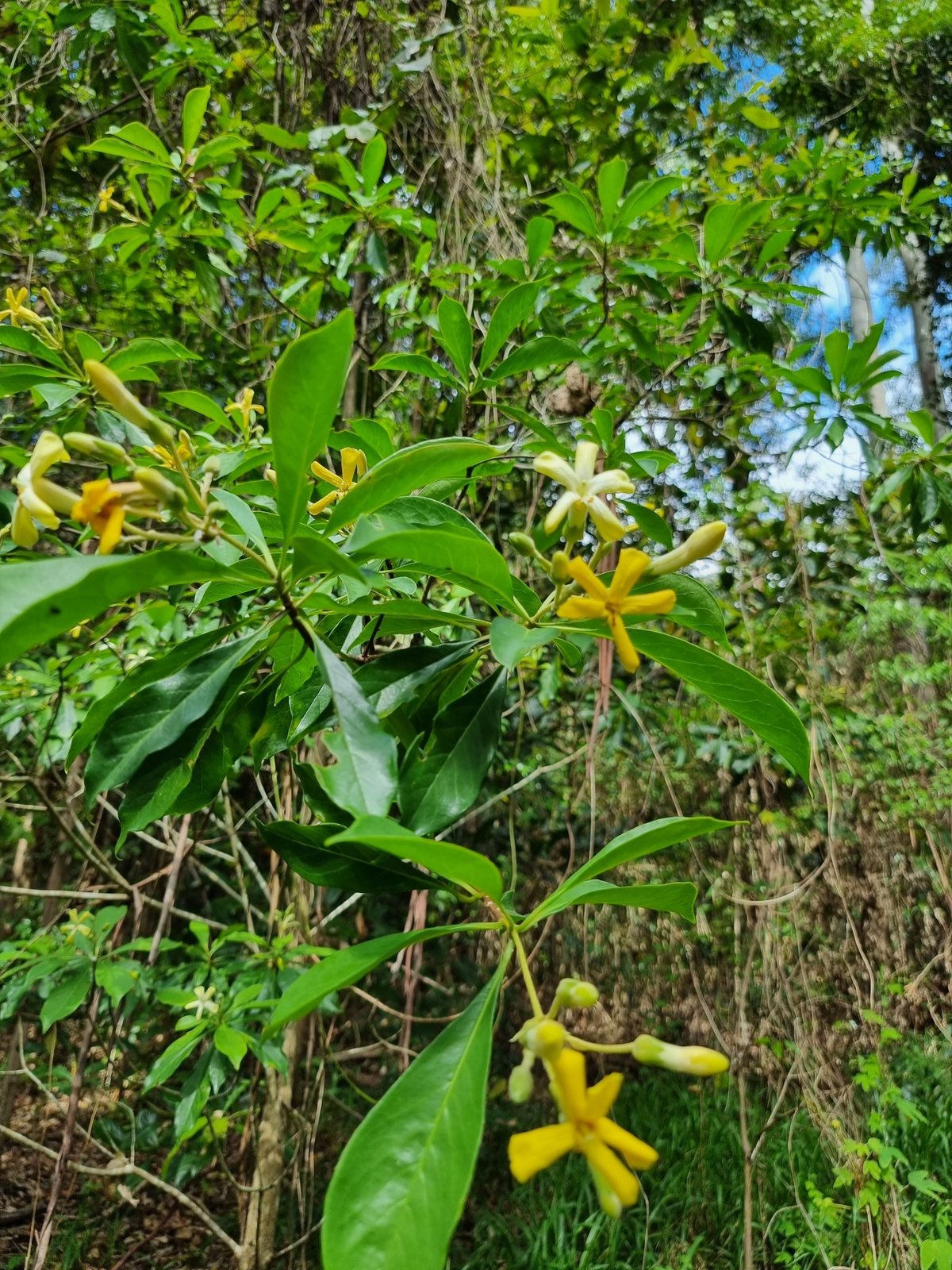
An evergreen tree native to eastern Australia and New Guinea, grown for its glossy leaves and fragrant flowers that open cream and deepen to yellow. It makes a useful shade or specimen tree in mild climates, but needs protection from hard frost and cold, drying winds; it is not a true frangipani.
At a glance
- Sun
- Full sun to partial shade; flowering is usually best with plenty of sun. Choose a sheltered position.
- Water
- Water regularly while establishing. Established trees tolerate short dry spells, but grow and flower better with deep watering during prolonged dry weather.
- Soil
- Well-drained soil enriched with organic matter; tolerates sandy soil and loam, and clay that drains freely. Avoid waterlogged ground.
- Height
- 20-40 ft (6-12 m) in gardens; potentially much taller in rainforest conditions
- Spread
- 10-20 ft (3-6 m)
- Flowers
- Spring to early summer; fragrant tubular flowers open creamy white and age to golden yellow.
- Foliage
- Evergreen. Glossy, dark green, oblong leaves with paler undersides, carried on spreading branches.
- Growth
- Moderate to fast in warm conditions with adequate moisture
- Care needed
- Low
The year at a glance
- Pollinators
- Heat tolerant
- Wildlife
- Low allergen
- Fragrant
| J | F | M | A | M | J | J | A | S | O | N | D | |
|---|---|---|---|---|---|---|---|---|---|---|---|---|
| Flowers | ||||||||||||
| Fruit | ||||||||||||
| Plant |
Northern hemisphere months. In Australia, shift them by six.
- Difficulty
- Hard
- Toughness
- Needs looking after
Will it suit your garden?
Pick your zone, country, light and whether you have pets.
Full sun is 6 or more hours of direct sun a day, part shade 3 to 6 hours, shade under 3.
How it grows
Planting day
7 ft (2 m)
After 1 year
8 ft (2.4 m)
After 2 years
9 ft (2.9 m)
After 3 years
11 ft (3.3 m)
After 5 years
14 ft (4.2 m)
About 16 years to full size.
From a typical nursery size, at an average rate for this kind of plant. A rule of thumb, not a forecast.
Good to know
- Cats and dogs
- Safe
- Native to
- Australia
- Growth rate
- Fast
Care
Jobs through the year
- ProtectJan–Apr, Oct–Dec
- Not hardy outdoors in zones 6–7; grow in a movable container and overwinter in bright, frost-free shelter.
- WaterApr–May, Sep–Oct, every 7 days
- Check sheltered container plants and water when surface compost dries; never leave standing in water.
- WaterJun–Aug, every 3 days
- Check containers frequently and water deeply when the surface dries; ground-grown trees need less.
- WaterJan–Mar, Nov–Dec, every 14 days
- Check overwintering plants and water sparingly as compost dries; do not let roots dry out completely.
- MulchMay
- Apply organic mulch over roots without covering the trunk base.
- FeedApr–May
- Apply a modest balanced slow-release feed if growth is weak or soil is poor.
- PruneJun–Jul
- After flowering, remove damaged or crossing branches and shape lightly; avoid hard pruning.
- Water deeply through the first two growing seasons, allowing the surface soil to dry slightly between waterings.
- Spread organic mulch over the root area, keeping it clear of the trunk.
- Apply a modest amount of balanced, slow-release fertiliser in spring if growth is weak or the soil is poor.
- Protect young trees from frost with horticultural fleece and shelter them from strong winds.
- Stake only if the root ball moves in the wind; use flexible ties and remove the support once roots hold firmly.
Pruning. Prune lightly after flowering to remove damaged or crossing branches and guide the shape of young trees. Avoid regular hard pruning or topping, which spoils the natural framework.
Through the year
- Spring
- Plant once damaging frosts have passed, then water thoroughly and mulch.
- Spring
- Check new growth and feed lightly if the tree is struggling in poor soil.
- Early summer
- After flowering, remove damaged branches and make any light shaping cuts.
- Summer
- Water young trees deeply during dry spells and check that ties are not rubbing the bark.
- Autumn
- Remove unwanted seedlings and check mulch depth without piling it against the trunk.
- Winter
- Protect young plants during frosts and check that the root area is not remaining waterlogged.
In the garden
- Use as a flowering specimen in a sheltered lawn or mixed border, allowing room for its mature canopy.
- Place near a terrace or frequently used path where the flower scent can be enjoyed, without crowding paving or buildings.
- Combine with evergreen shrubs and shade-tolerant groundcovers for a layered subtropical planting.
- Use as a light shade tree in an Australian native garden with an understorey of lomandra and native violet.
Garden styles it suits: Australian native, Modern tropical, Woodland, Sensory garden, Luxury resort and Tropical.
Plant it with: Lomandra, Native violet, Kangaroo paw, Bird's nest fern, Clivia and Dianella.
Wildlife: The scented flowers attract bees and other nectar-feeding insects. The evergreen canopy provides shelter for small birds.
Problems to watch for
- Frost damage: young leaves and shoots may blacken; protect young trees and wait until spring growth begins before removing damaged wood.
- Root rot in wet soil: improve drainage before planting and avoid frequent watering where the soil remains wet.
- Scale insects: inspect stems and leaf undersides; treat small infestations with horticultural oil according to the label.
- Sparse growth or poor flowering in deep shade: choose a brighter position and avoid excessive nitrogen feeding.
Safety
Not known to be toxic to people, cats, dogs or horses, although species-specific safety information is limited. It is not an edible plant; discourage chewing of leaves, bark or seeds.
Where it spreads. Has naturalised outside its native range in south-western Western Australia, where it can escape into bushland. Remove unwanted seedlings near natural vegetation.
Easily confused with
Frangipani (Plumeria rubra)
True frangipani has thick, succulent branches, milky sap and broad, waxy flowers. Native frangipani has slender woody branches, smaller tubular flowers and no milky sap.
Sweet pittosporum (Pittosporum undulatum)
Sweet pittosporum has conspicuously wavy leaf margins, smaller cream flowers and orange capsules containing sticky seeds. Native frangipani has larger flowers that turn yellow and dry capsules containing winged seeds.
The name
Hymenosporum refers to the membranous wings of the seeds, flavum means yellow, and native frangipani refers to the flowers' resemblance in scent to those of true frangipani.
Propagation. Sow fresh seed in a warm, well-drained propagation mix. Semi-ripe cuttings taken in summer can also root with warmth and humidity, though success is variable.
Checked against open data
- Accepted botanical name
- Hymenosporum flavum
- Native range
- New Guinea, New South Wales and Queensland.
Sources: GBIF (CC BY 4.0) and Trefle (CC BY 4.0). The care and design notes are LandscapeGPT's own.
See it in your own yard.
Upload a photo of your yard and see it redesigned with plants that suit your climate, each checked against your zone.