Needle palm
Rhapidophyllum hystrix. Family Arecaceae. Shrub.
Also called Porcupine palm.
Needle palm (Rhapidophyllum hystrix) is a slow-growing, clumping evergreen palm native to the southeastern United States. Gardeners grow it for its broad fan leaves and exceptional cold tolerance among palms, although young plants need shelter near its cold limit. Long, sharp needles around the base make careful siting essential.
At a glance
- Sun
- Partial shade is ideal; tolerates deep shade and, with adequate moisture, full sun. In cool climates, choose a warm, sheltered position.
- Water
- Keep evenly moist while establishing. Established plants tolerate short dry spells but grow best with regular moisture.
- Soil
- Humus-rich, moisture-retentive soil with drainage; tolerates clay and a range of soil pH levels. Avoid stagnant, waterlogged conditions, especially in winter.
- Height
- 3-6 ft (0.9-1.8 m)
- Spread
- 4-8 ft (1.2-2.4 m)
- Flowers
- Late spring to early summer; small cream to yellow-brown flowers clustered low among the leaf bases, often hidden.
- Foliage
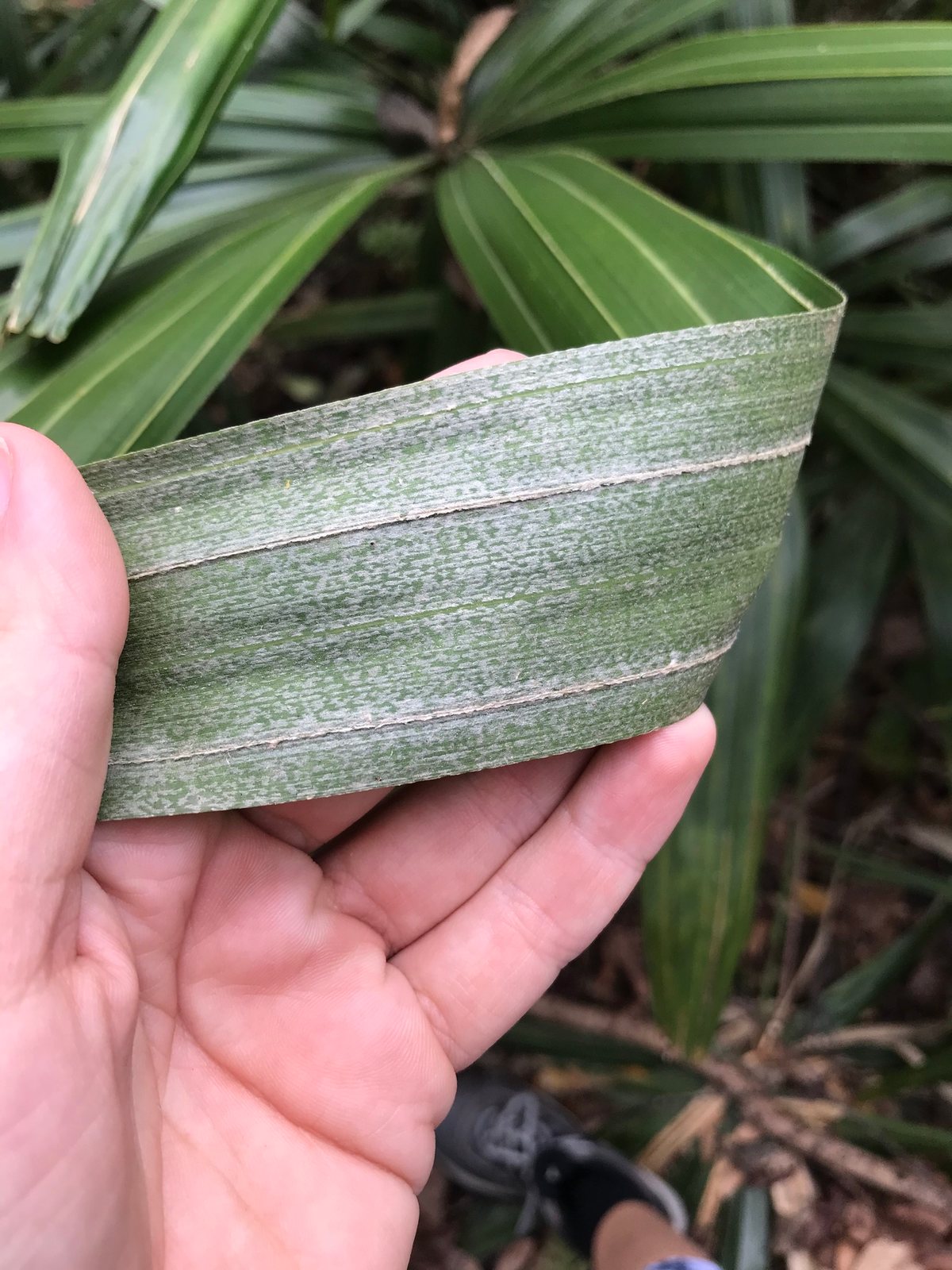
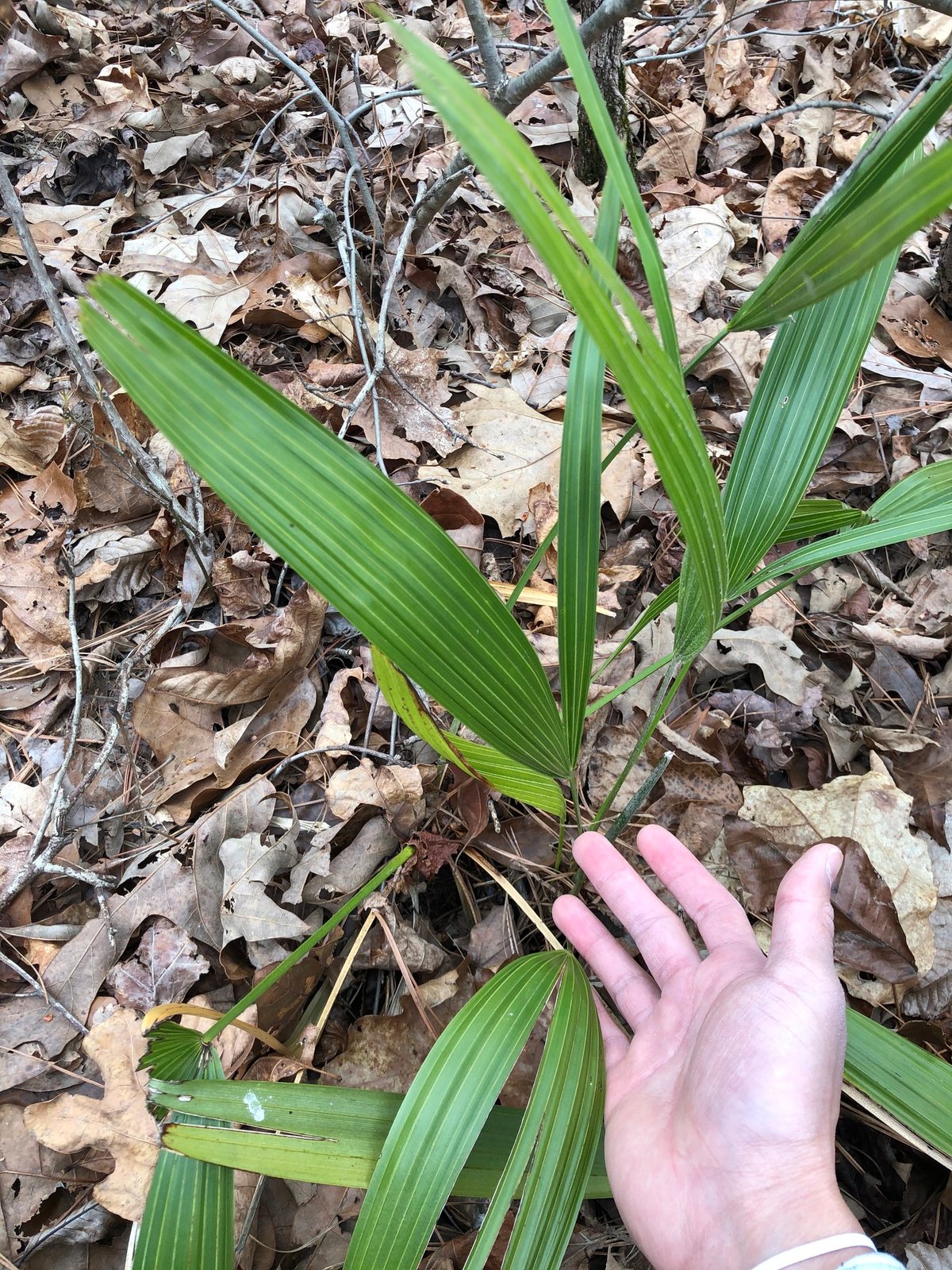
- Evergreen. Large, deeply divided, dark green fan leaves with silvery undersides; usually held above a short, densely clumping base.
- Growth
- Slow
- Care needed
- Low
The year at a glance
- Pollinators
- Deer resistant
- Heat tolerant
- Wildlife
| J | F | M | A | M | J | J | A | S | O | N | D | |
|---|---|---|---|---|---|---|---|---|---|---|---|---|
| Flowers | ||||||||||||
| Fruit | ||||||||||||
| Plant |
Northern hemisphere months. In Australia, shift them by six.
- Difficulty
- Moderate
- Toughness
- Fairly tough
Will it suit your garden?
Pick your zone, country, light and whether you have pets.
Full sun is 6 or more hours of direct sun a day, part shade 3 to 6 hours, shade under 3.
How it grows
Planting day
1.6 ft (0.5 m)
After 1 year
2 ft (0.61 m)
After 2 years
2.3 ft (0.71 m)
After 3 years
2.7 ft (0.82 m)
After 5 years
3 ft (1 m)
About 8 years to full size.
From a typical nursery size, at an average rate for this kind of plant. A rule of thumb, not a forecast.
Good to know
- Cats and dogs
- Safe
- Growth rate
- Slow
Care
Jobs through the year
- WaterApr–May, Sep–Oct, every 14 days
- Water established plants if the root zone is drying; maintain even moisture around young plants.
- WaterJun–Aug, every 7 days
- During dry weather, soak established roots; young plants and sunny sites may need more frequent watering.
- MulchApr
- Apply 5–8 cm of organic mulch over roots, keeping the central crown clear.
- FeedMay
- Use a light dose of slow-release palm fertilizer only if growth is weak or soil is poor.
- PruneMay–Jun
- Remove fully brown or badly damaged leaves only; protect the crown and wear thick gloves and eye protection.
- ProtectJan–Mar, Nov–Dec
- Protect young crowns from severe freezes and drying winds with breathable insulation; uncover in mild weather.
- Plant in spring in colder regions, allowing a full growing season for roots to establish.
- Water deeply during dry spells for the first two growing seasons; do not leave newly planted roots dry.
- Apply 2-3 in (5-8 cm) of organic mulch, keeping it clear of the central crown.
- Feed lightly in spring with a slow-release palm fertilizer if growth is weak or soil is poor; avoid heavy feeding.
- Shelter young plants from drying winter winds and protect the crown during severe cold near the lower end of its range.
- Wear thick gloves and eye protection when working near the needle-covered base.
Pruning. In late spring, remove completely brown or badly damaged leaves by cutting their stalks without cutting into the crown. Keep healthy green leaves and never cut out the central growing points.
Through the year
- Spring
- Plant once the soil begins to warm, choosing a sheltered position away from paths.
- Spring
- Refresh mulch and apply a light feed only if needed.
- Late spring
- Remove dead leaves after winter damage is clear.
- Summer
- Water young plants deeply during dry weather and check shaded foliage for scale insects.
- Autumn
- Clear accumulated debris from around the plant and check that water drains away freely.
- Winter
- Protect young crowns during severe freezes with breathable insulation; remove temporary covers during mild weather.
In the garden
- Use as an evergreen focal point beneath open-canopied trees, contrasting its fan leaves with ferns.
- Plant in a sheltered courtyard for palm foliage without the height of a trunk-forming palm.
- Group with broad-leaved woodland shrubs for a dense, layered understory.
- Use in a southeastern US native woodland garden, set well back from paths and play areas.
Garden styles it suits: Woodland, Modern tropical, Architectural minimal, Southern, Green on green and Winter interest.
Plant it with: Christmas fern, Autumn fern, Cast-iron plant, Oakleaf hydrangea, Fetterbush and Dwarf palmetto.
Wildlife: Dense evergreen clumps provide shelter for small animals. Flowers attract insects, and wildlife may eat the fruits; fruiting generally requires male and female plants nearby.
Problems to watch for
- Winter leaf scorch: choose shelter from cold winds, mulch the root zone and protect young plants during severe freezes.
- Crown or root rot in stagnant soil: improve drainage and keep mulch out of the crown.
- Scale insects: inspect leaf undersides and treat confirmed infestations with horticultural oil according to the label.
- Poor establishment in dry soil: water the root ball thoroughly and maintain even moisture while roots spread.
Safety
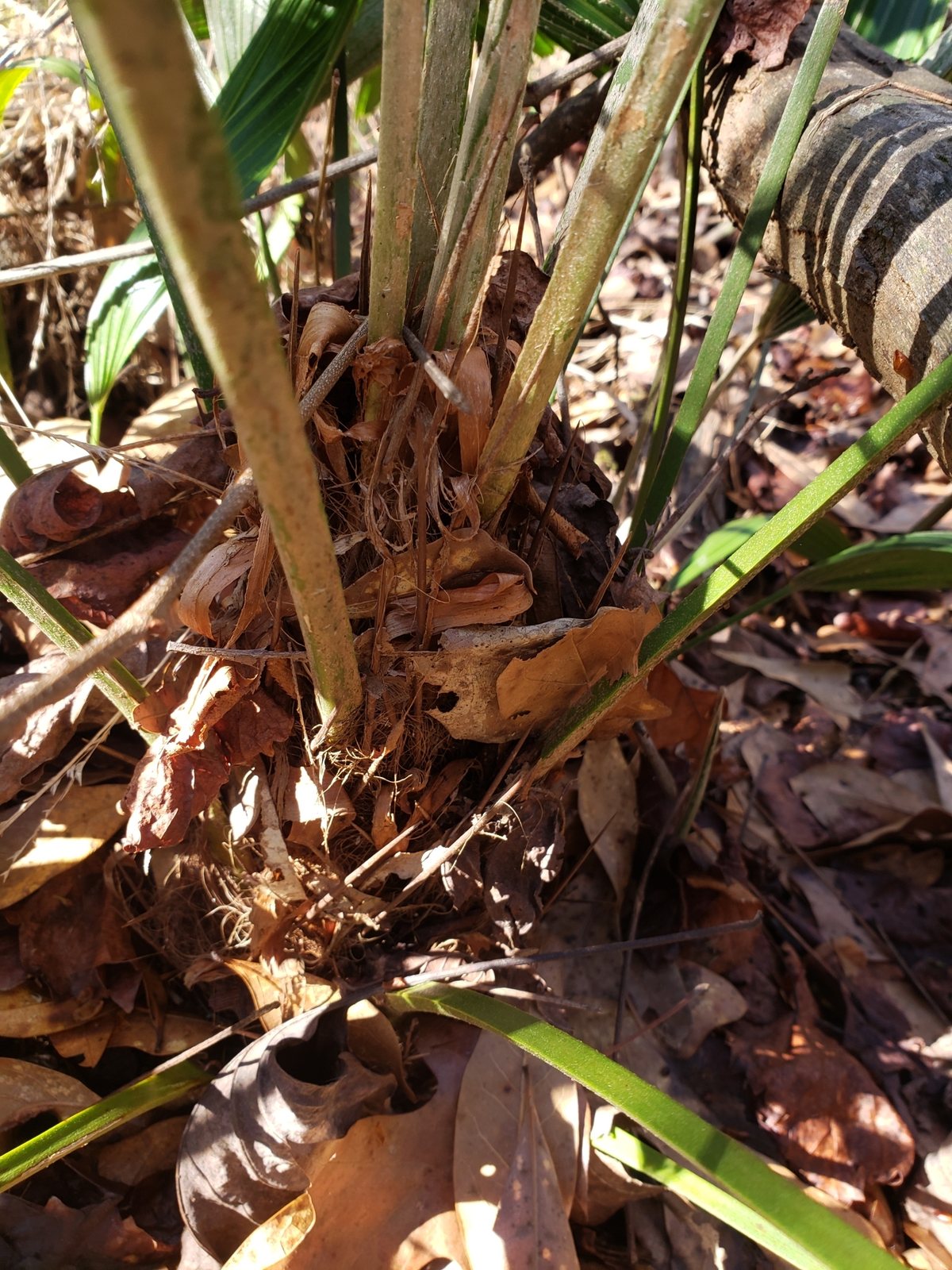
Not known to be toxic to people, cats, dogs or horses, although specific toxicity information is limited. Do not treat the fruits as food. The long needles at the base can cause serious puncture wounds, particularly to eyes, hands and animal faces.
Easily confused with
Dwarf palmetto (Sabal minor)
Also forms low fans, but lacks the dense cluster of long needles around the base; its leaves have a more pronounced central extension of the stalk into the blade.
Saw palmetto (Serenoa repens)
Has conspicuously saw-toothed leaf stalks and often creeping stems, rather than needle palm's relatively smooth stalks and basal needles.
The name
Rhapidophyllum means 'needle leaf' and hystrix means 'porcupine', referring to the long, sharp needles surrounding the plant's base.
Propagation. Usually grown from fresh seed, which can take many months or longer to germinate. Division of well-rooted suckers is possible but difficult, hazardous because of the needles, and liable to set plants back.
Checked against open data
- Accepted botanical name
- Rhapidophyllum hystrix
- Native range
- Alabama, Florida, Georgia, Mississippi and South Carolina.
Sources: GBIF (CC BY 4.0) and Trefle (CC BY 4.0). The care and design notes are LandscapeGPT's own.
See it in your own yard.
Upload a photo of your yard and see it redesigned with plants that suit your climate, each checked against your zone.