NSW Christmas bush
Ceratopetalum gummiferum. Family Cunoniaceae. Tree.
Also called New South Wales Christmas bush, Christmas bush.
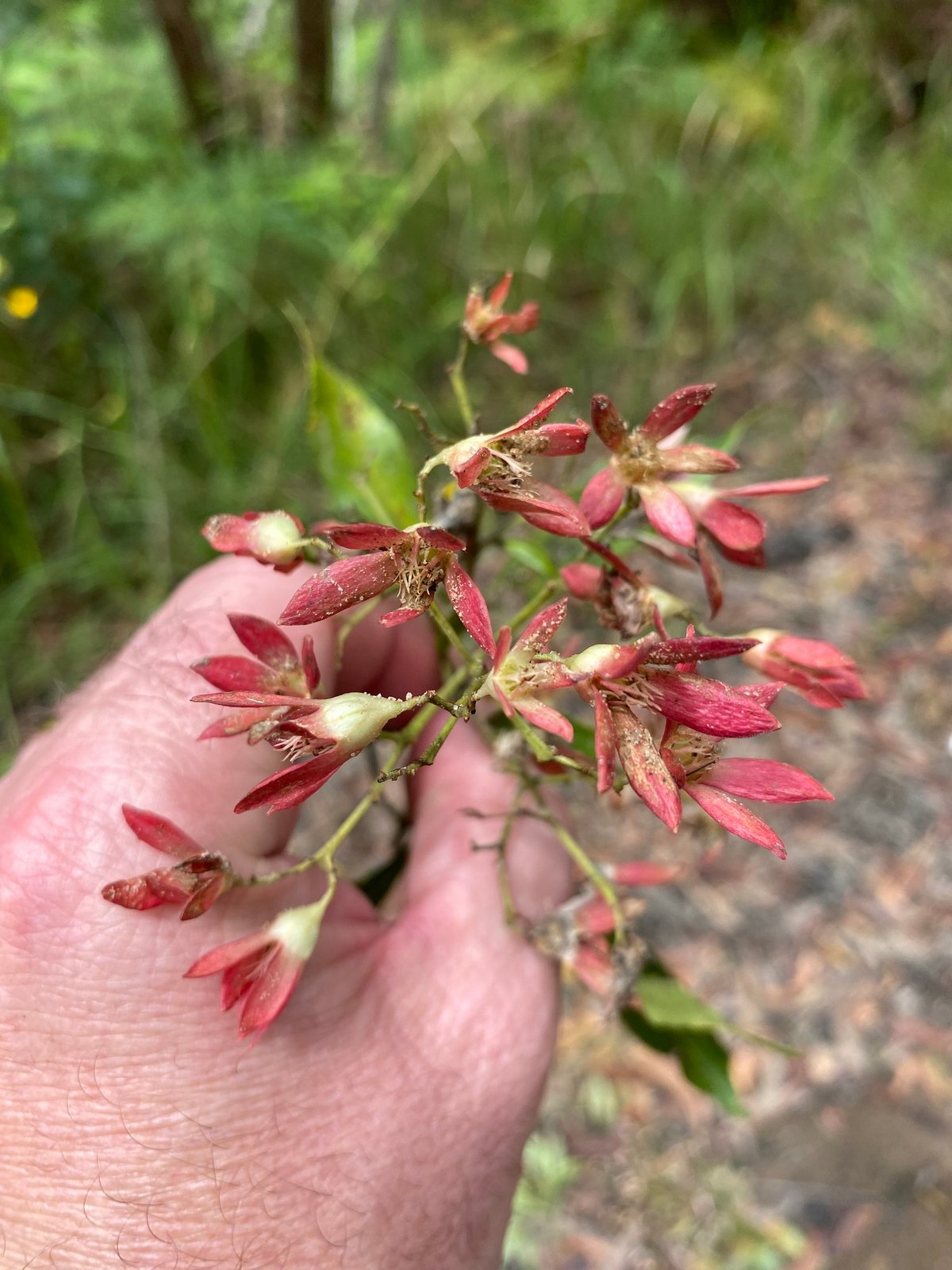
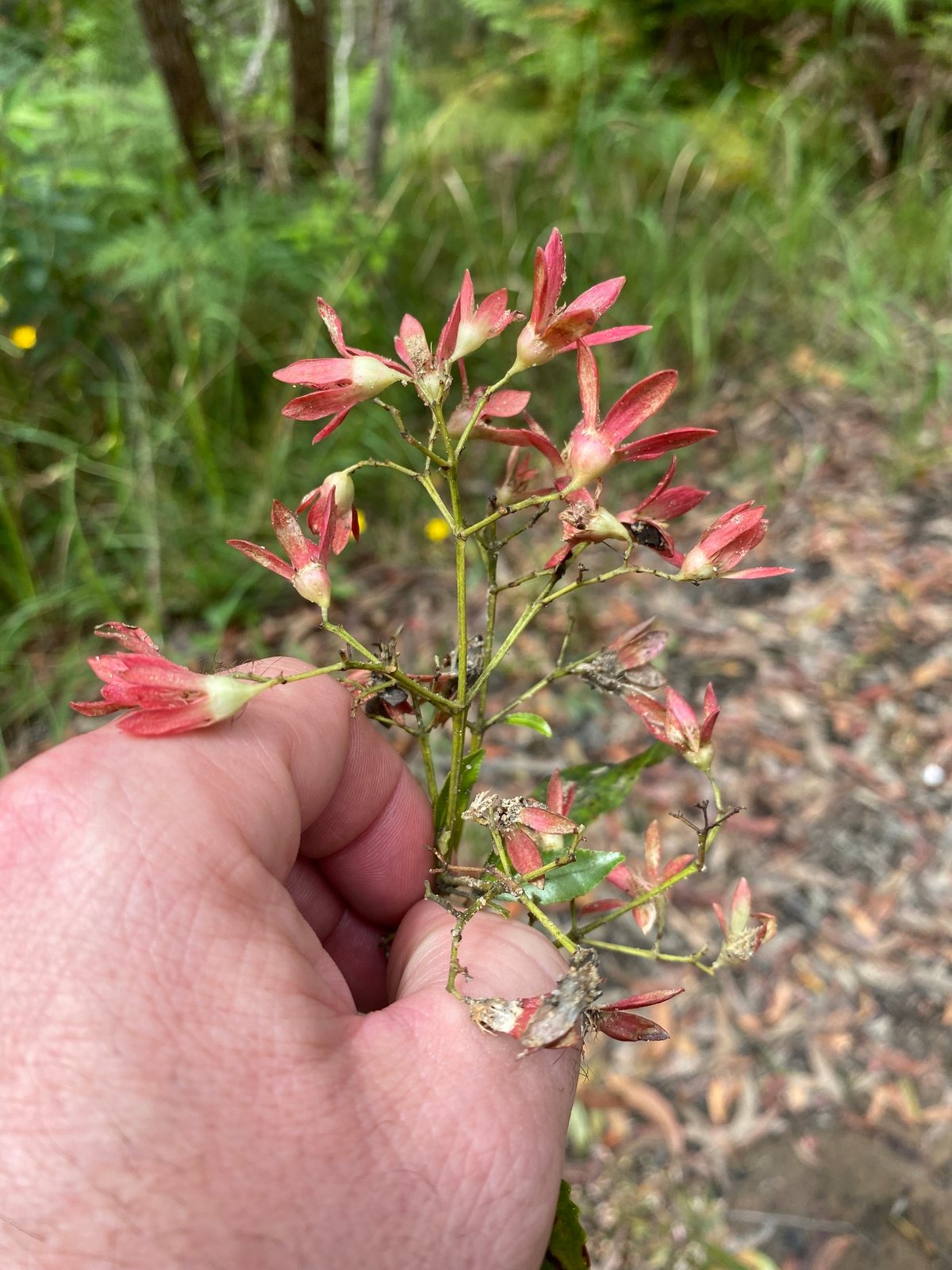
This evergreen shrub or small tree from eastern Australia is grown for its summer display of pink to red sepals, which enlarge around the developing fruits after the small white flowers fade. The display often coincides with Christmas in Australia; it needs a mild climate, acidic soil and reliable moisture.
At a glance
- Sun
- Full sun to partial shade; the strongest red display usually develops in good sun. Shelter from cold winds and exposed coastal conditions.
- Water
- Keep the root zone evenly moist but not waterlogged. Water deeply during dry spells, especially while young and during flowering.
- Soil
- Acidic, well-drained soil enriched with organic matter. Avoid limestone soils, heavy waterlogged clay and strongly alkaline irrigation water.
- Height
- 10-25 ft (3-7.5 m), occasionally taller in favourable conditions
- Spread
- 6-15 ft (1.8-4.5 m)
- Flowers
- Small white flowers in late spring to early summer, followed by enlarged pink to red sepals lasting through summer. In Australia, the coloured display commonly peaks around December.
- Foliage
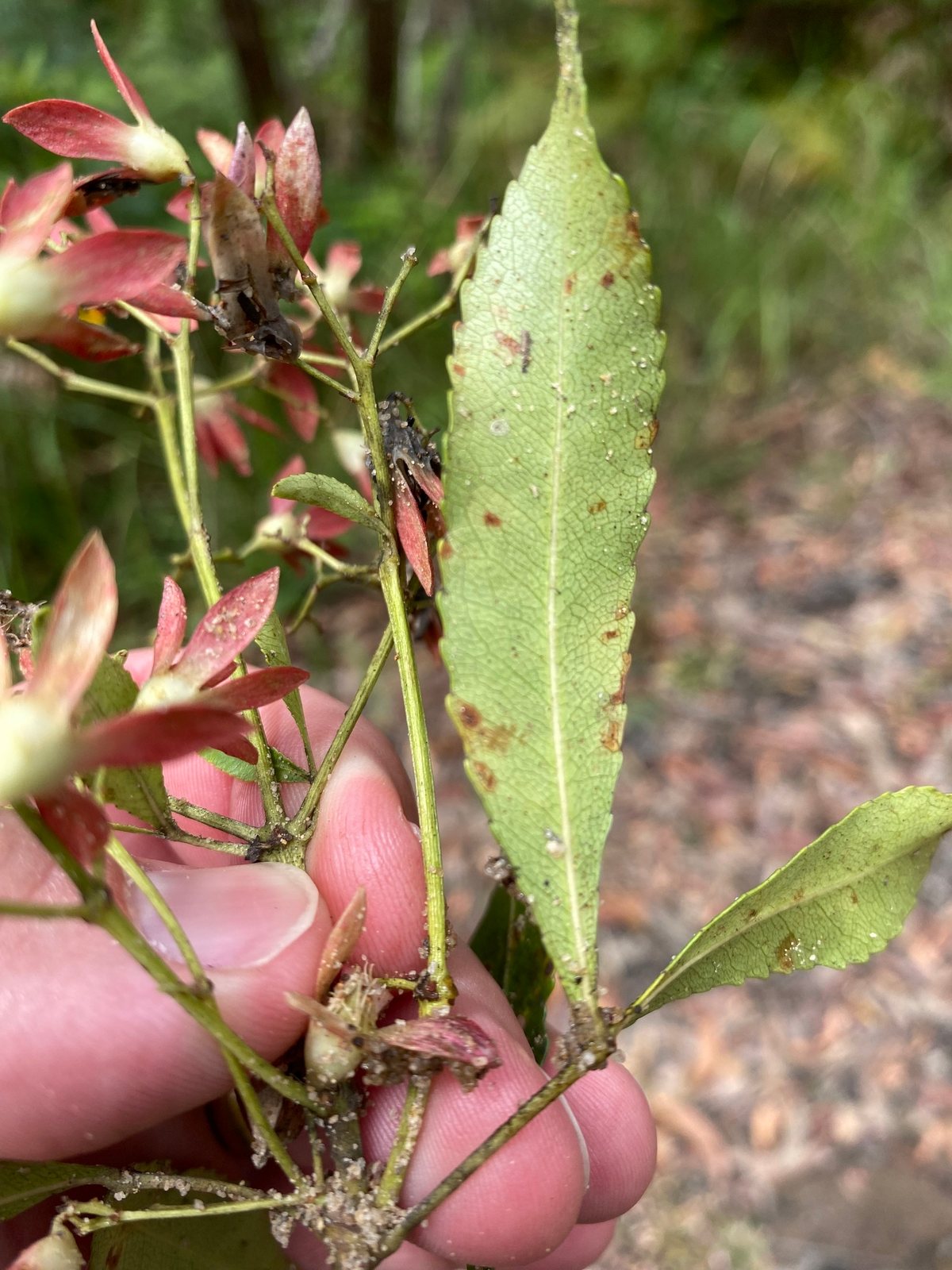
- Evergreen. Glossy green leaves divided into three narrow, toothed leaflets; new growth is often bronze or reddish.
- Growth
- Moderate with adequate moisture; slower in cool climates or poor soil.
- Care needed
- Medium
The year at a glance
- Pollinators
- Heat tolerant
- Wildlife
- Low allergen
| J | F | M | A | M | J | J | A | S | O | N | D | |
|---|---|---|---|---|---|---|---|---|---|---|---|---|
| Flowers | ||||||||||||
| Fruit | ||||||||||||
| Plant |
Northern hemisphere months. In Australia, shift them by six.
- Difficulty
- Hard
- Toughness
- Needs looking after
Will it suit your garden?
Pick your zone, country, light and whether you have pets.
Full sun is 6 or more hours of direct sun a day, part shade 3 to 6 hours, shade under 3.
How it grows
Planting day
7 ft (2 m)
After 1 year
7 ft (2.1 m)
After 2 years
7 ft (2.3 m)
After 3 years
8 ft (2.4 m)
After 5 years
9 ft (2.6 m)
About 26 years to full size.
From a typical nursery size, at an average rate for this kind of plant. A rule of thumb, not a forecast.
Good to know
- Cats and dogs
- Safe
- Native to
- Australia
- Growth rate
- Slow
Care
Jobs through the year
- WaterApr–May, Sep–Oct, every 7 days
- Maintain even moisture in established ground plants; young plants and pots need closer checks.
- WaterJun–Aug, every 7 days
- Water deeply when needed, avoiding drought during flowering and the coloured-sepal display.
- FeedApr–May
- If growth is weak, apply a light dose of low-phosphorus native-plant fertiliser.
- MulchMay
- Refresh organic mulch over the roots, keeping it away from the trunk.
- PruneAug–Sep
- Lightly shorten shoots after the coloured sepals fade; avoid hard cuts into bare wood.
- ProtectJan–Apr, Oct–Dec
- In zones 6–7, overwinter in a bright, frost-free container position and keep slightly moist.
- Water deeply through dry weather; do not let newly planted specimens dry out.
- Apply an organic mulch over the root zone, keeping it clear of the trunk.
- Feed lightly in spring with a low-phosphorus fertiliser suitable for Australian native plants.
- Protect young plants from frost and cold, drying winds.
- In colder regions, grow in a large container of acidic potting mix and overwinter in a bright, frost-free place.
Pruning. Lightly shorten shoots after the coloured sepals fade to maintain a bushy shape. Establish the main framework while young and avoid routine hard cutting into old, bare wood.
Through the year
- Spring
- Plant after frost risk has passed, water thoroughly and mulch.
- Spring
- Apply a light feed of low-phosphorus fertiliser if growth is weak.
- Late spring
- Maintain steady moisture as flower buds and flowers develop.
- Summer
- Water during dry spells and enjoy the coloured sepals; cut a few stems for indoor arrangements if wanted.
- Late summer
- Lightly prune once the coloured display has finished.
- Autumn
- Move container plants under cover before cold nights in frost-prone areas.
- Winter
- Protect young outdoor plants during frosts; keep sheltered container plants slightly moist rather than wet.
In the garden
- Use as a small specimen tree beside a lawn or terrace, where the summer colour can be seen closely.
- Plant in a loose screen with other acid-soil shrubs, allowing room for its natural branching.
- Combine with lomandra and native ferns in a sheltered Australian woodland-style planting.
- Grow in a large container in a sheltered courtyard where winter protection is practical.
Garden styles it suits: Australian native, Woodland, Coastal, Modern courtyard, Wildlife garden and Traditional.
Plant it with: Lomandra, Bird's nest fern, Native violet, Camellia and Azalea.
Wildlife: The small flowers attract bees and other insects. Dense foliage provides shelter for small birds.
Problems to watch for
- Yellow leaves with green veins often indicate alkaline soil or water: test the soil, address the pH problem and use an appropriate chelated iron treatment if needed.
- Root rot can develop in persistently wet soil: improve drainage, avoid standing water and replace badly affected plants.
- Scale insects may cause sticky honeydew and sooty mould: inspect stems and leaf undersides, encourage predators and use horticultural oil according to the label if necessary.
- Drought and hot, drying winds can scorch leaves or spoil the coloured display: water deeply, maintain mulch and provide shelter.
Safety
Not known to be toxic to people, cats, dogs or horses, but reliable species-specific safety information is limited. Do not treat the leaves, flowers or fruits as edible.
Easily confused with
Coachwood (Ceratopetalum apetalum)
A related tree with simple leaves rather than leaves divided into three leaflets; it lacks the conspicuous red summer display.
Victorian Christmas bush (Prostanthera lasianthos)
Has opposite, simple, aromatic leaves and white to pale mauve, two-lipped flowers, rather than three-part leaves and enlarged red sepals.
New Zealand Christmas tree (Metrosideros excelsa)
Has thick, simple leaves with pale, felted undersides and brush-like red flowers made conspicuous by long stamens.
The name
Ceratopetalum refers to horn-like petals, gummiferum means gum-bearing, and Christmas bush refers to the red sepal display around Christmas in New South Wales.
Propagation. Take semi-ripe cuttings in late summer using a free-draining propagation mix and gentle bottom heat if available. Seed can also be used, but seedlings may vary in the strength and timing of their coloured display.
Checked against open data
- Accepted botanical name
- Ceratopetalum gummiferum
- Native range
- New South Wales.
- Measured
- Average height 800 cm.
Sources: GBIF (CC BY 4.0) and Trefle (CC BY 4.0). The care and design notes are LandscapeGPT's own.
See it in your own yard.
Upload a photo of your yard and see it redesigned with plants that suit your climate, each checked against your zone.