October Skies aster
Symphyotrichum oblongifolium 'October Skies'. Family Asteraceae. Perennial.
Also called October Skies aromatic aster, Aster oblongifolius 'October Skies'.
'October Skies' is a compact, bushy selection of a North American native aster, grown for its abundant lavender-blue daisies in autumn. Its aromatic foliage and tolerance of dry, well-drained soil make it useful for sunny borders, gravel gardens and late-season pollinator planting.
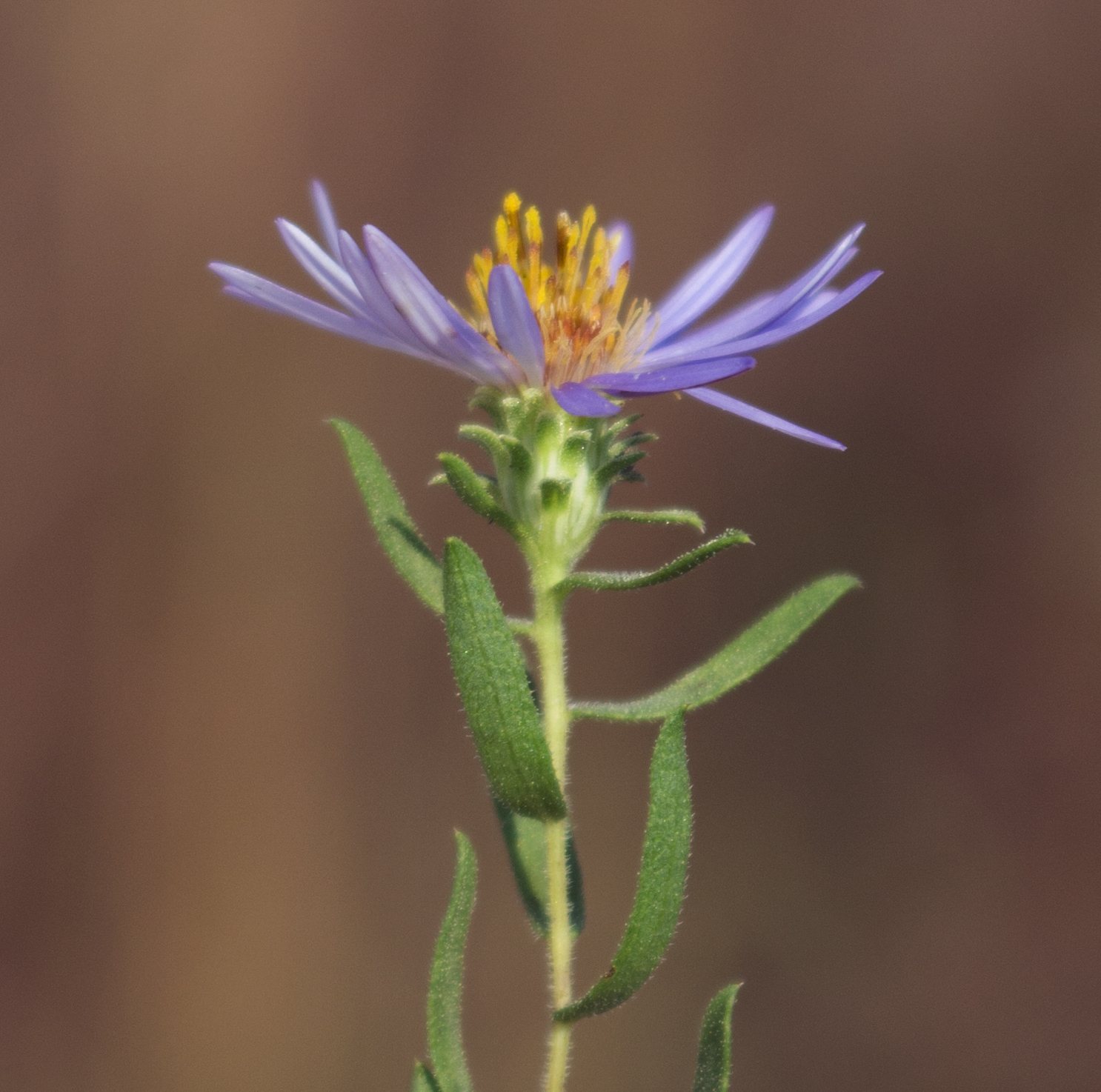
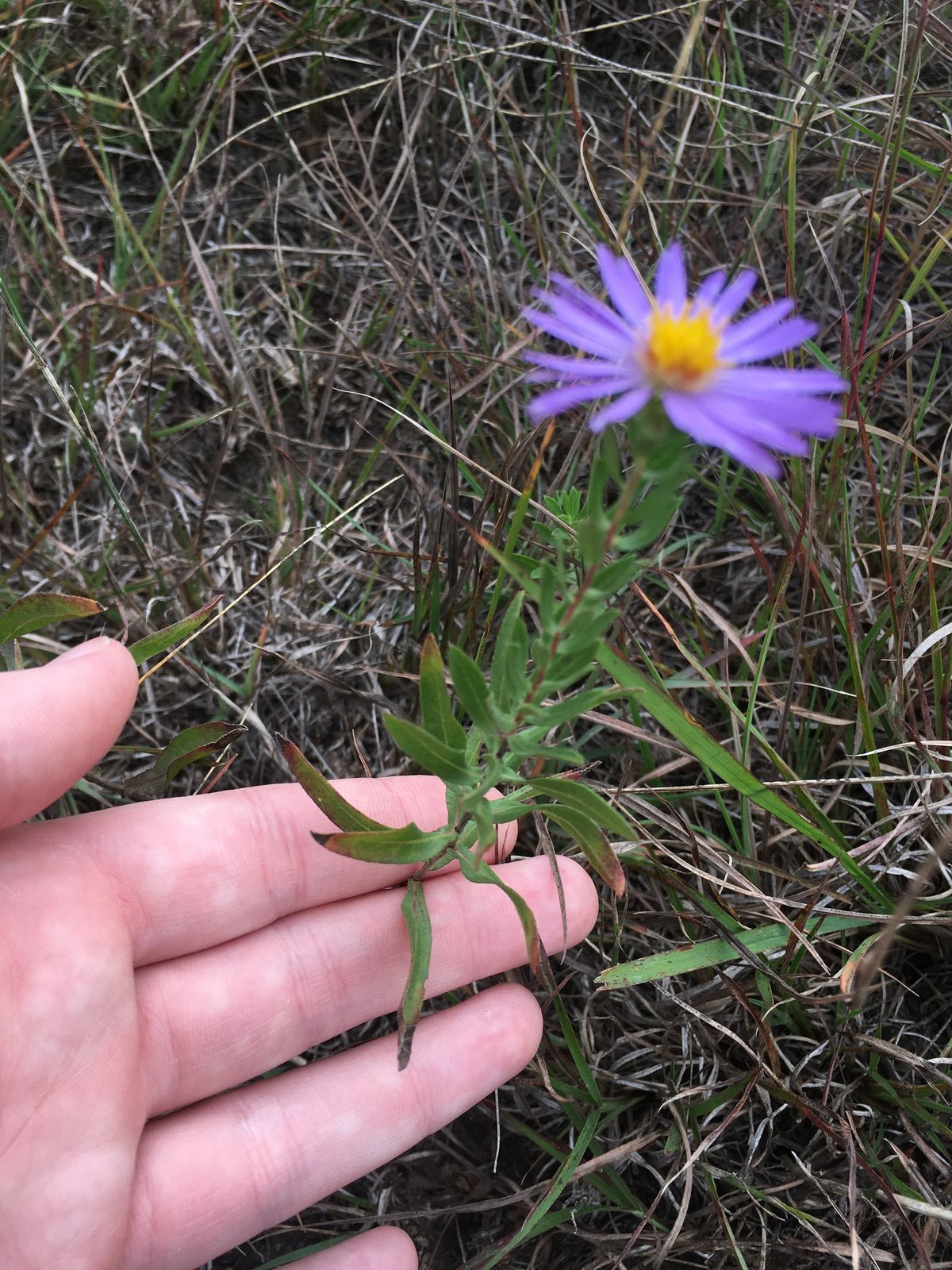
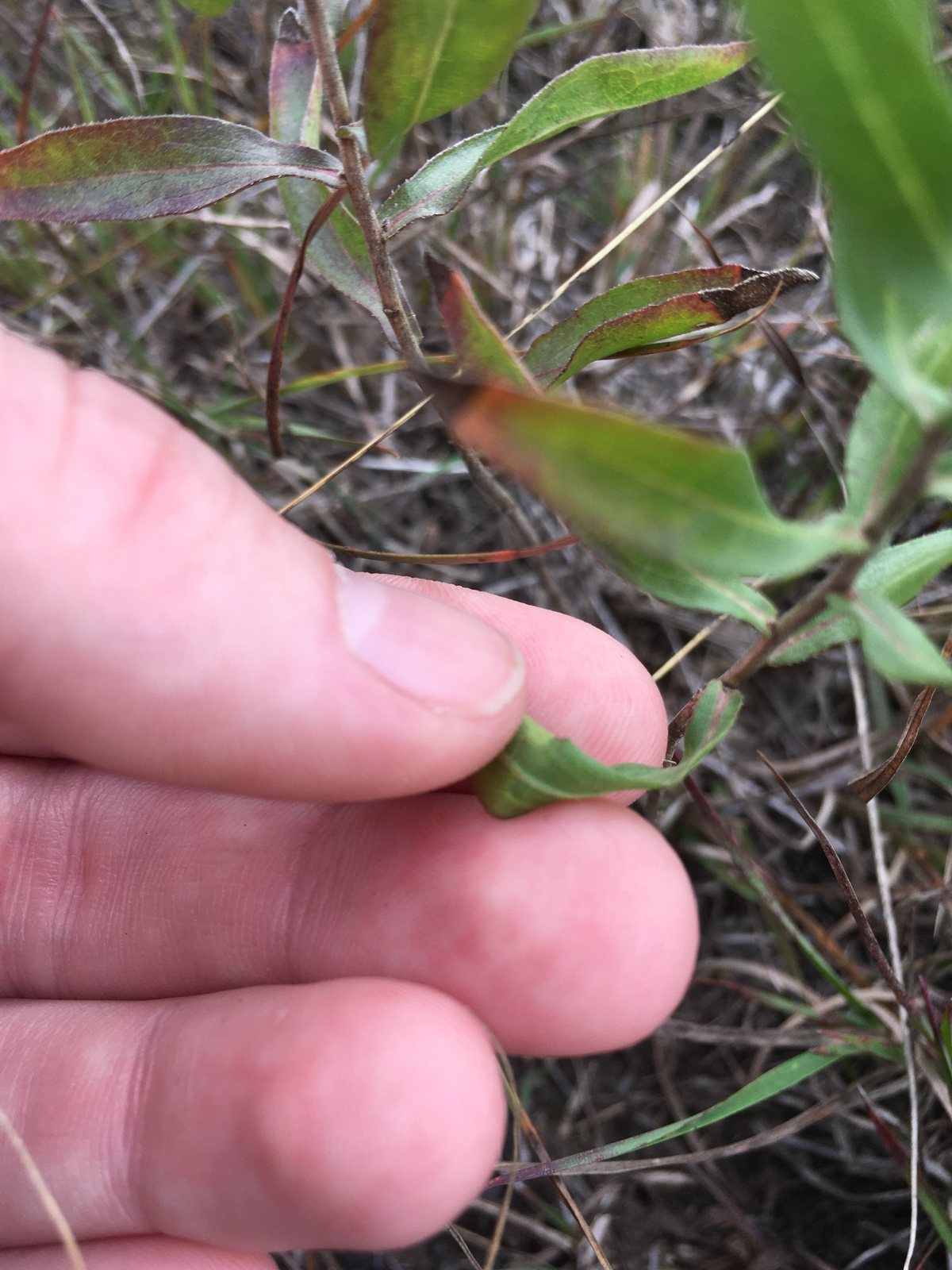
At a glance
- Sun
- Full sun gives the best flowering and strongest growth; light shade is tolerated but can produce looser stems.
- Water
- Water regularly during establishment. Once established, water during prolonged drought; avoid persistently wet soil.
- Soil
- Well-drained sandy, gravelly or loamy soil, including relatively poor soil. Tolerates clay if drainage is good; avoid wet winter ground.
- Height
- 1.5-2 ft (0.45-0.6 m)
- Spread
- 2-3 ft (0.6-0.9 m)
- Flowers
- Late summer to autumn, usually September-October in the Northern Hemisphere; lavender-blue daisies with yellow centres that darken with age.
- Foliage
- Small, narrow-oblong green leaves with a noticeable aromatic scent when crushed; leafy, branching stems die back in winter.
- Growth
- Moderate; forms a broad clump and gradually spreads by short rhizomes.
- Care needed
- Low
The year at a glance
- Pollinators
- Deer resistant
- Drought tolerant
- Cold hardy
- Wildlife
- Low allergen
- Fragrant
| J | F | M | A | M | J | J | A | S | O | N | D | |
|---|---|---|---|---|---|---|---|---|---|---|---|---|
| Flowers | ||||||||||||
| Fruit | ||||||||||||
| Plant |
Northern hemisphere months. In Australia, shift them by six.
- Difficulty
- Easy
- Toughness
- Very tough
Will it suit your garden?
Pick your zone, country, light and whether you have pets.
Full sun is 6 or more hours of direct sun a day, part shade 3 to 6 hours, shade under 3.
How it grows
Planting day
1 ft (0.3 m)
After 1 year
1.2 ft (0.37 m)
After 2 years
1.5 ft (0.45 m)
After 3 years
1.7 ft (0.53 m)
full size
About 3 years to full size.
From a typical nursery size, at an average rate for this kind of plant. A rule of thumb, not a forecast.
Good to know
- Cats and dogs
- Safe
- Native to
- the US
- Growth rate
- Moderate
Care
Jobs through the year
- WaterApr–May, Sep–Oct, every 14 days
- Water established plants only during prolonged drought; water new plants more frequently.
- WaterJun–Aug, every 10 days
- Check established plants and soak deeply during extended dry spells; skip after useful rain.
- MulchMar–Apr
- Apply a light compost mulch if needed, keeping it away from the crown.
- PruneFeb–Mar
- Cut last year's dead stems just above ground level before new growth.
- PruneMay
- Optionally shorten stems by one-third for a denser mound; do not cut in late summer.
- DivideMar–Apr
- Divide congested clumps every 3–4 years or when flowering declines.
- Water deeply through the first growing season, allowing the soil surface to dry between waterings.
- Avoid routine heavy feeding; rich soil and excess nitrogen encourage loose, floppy growth.
- Apply a light compost mulch in spring if needed, keeping it away from the crown.
- Divide congested clumps in spring every three to four years, or when flowering declines.
- Give plants room for air circulation; staking is rarely needed in full sun.
Pruning. Cut dead stems to just above ground level in late winter or early spring. If a shorter, denser mound is wanted, trim stems back by about one-third in late spring; avoid late-summer cutting, which removes developing flowers.
Through the year
- Late winter
- Cut down last year's stems before new shoots emerge.
- Early spring
- Plant or divide clumps in well-drained soil, allowing for their mature spread.
- Late spring
- Optionally shorten stems by one-third to encourage a denser mound.
- Summer
- Water new plants during dry spells and check that neighbouring plants are not crowding them.
- Autumn
- Enjoy the flowers; leave some seedheads standing for wildlife, or remove them to limit seedlings.
In the garden
- Plant along the front or middle of a sunny border for a broad mound of autumn colour.
- Repeat in drifts among little bluestem and other fine-textured grasses for a prairie-style planting.
- Combine with goldenrods and black-eyed Susans for contrasting blue and yellow flowers.
- Use in a well-drained gravel garden where its late flowers extend the season after many drought-tolerant perennials finish.
Garden styles it suits: Cottage garden, Native meadow, New perennial (prairie), Pollinator garden, Dry gravel garden and Autumn colour.
Plant it with: Little bluestem, Prairie dropseed, Butterfly weed, Black-eyed Susan, Showy goldenrod and Purple coneflower.
Wildlife: The late flowers provide nectar and pollen for bees, butterflies and other insects. Retained seedheads may feed small birds, while standing stems offer shelter for overwintering invertebrates.
Problems to watch for
- Powdery mildew can occur, especially in crowded planting: provide full sun and airflow, and remove badly affected foliage.
- Root or crown rot can develop in waterlogged soil: improve drainage or move the plant to a raised, freer-draining position.
- Lace bugs may cause pale stippling on leaves: check leaf undersides and use insecticidal soap on affected foliage if damage is substantial, avoiding open flowers and visiting insects.
- Floppy stems or sparse flowering usually indicate too much shade or rich feeding: move to stronger sun, stop high-nitrogen fertiliser and trim lightly in late spring if needed.
Safety
Not known to be toxic to cats, dogs, horses or people; no part is recognised as a significant poisoning hazard. It is an ornamental plant, not a recommended food plant.
Easily confused with
Raydon's Favorite aromatic aster (Symphyotrichum oblongifolium 'Raydon's Favorite')
Usually forms a taller mound, about 2-3 ft (0.6-0.9 m), whereas 'October Skies' is typically shorter and broader. Their flowers and aromatic foliage are very similar, so a reliable label is the best confirmation.
New England aster (Symphyotrichum novae-angliae)
Usually much taller, with hairy stems and leaves whose bases clasp the stems. October Skies has a low, spreading habit and small aromatic leaves.
Smooth aster (Symphyotrichum laeve)
Has smooth, often blue-green leaves, with upper leaves clasping the stems. October Skies has smaller, rougher-textured green leaves that release an aromatic scent when crushed.
The name
The species name oblongifolium refers to its oblong leaves, while 'October Skies' evokes the blue flowers and their autumn flowering season.
Propagation. Divide in spring or take softwood cuttings from young shoots in late spring. These methods preserve the cultivar; seedlings may differ from the parent. Remove unwanted spreading shoots at the edge of the clump.
Checked against open data
- Accepted botanical name
- Symphyotrichum oblongifolium
- In the US and Canada
- Native in the lower 48 states.
- Native range
- Alabama, Arkansas, Colorado, Illinois, Indiana, Iowa, Kansas, Kentucky, Maryland, Mexico Northeast, Minnesota and Mississippi.
- Measured
- Average height 43 cm.
Sources: GBIF (CC BY 4.0), USDA PLANTS and Trefle (CC BY 4.0). The care and design notes are LandscapeGPT's own.
See it in your own yard.
Upload a photo of your yard and see it redesigned with plants that suit your climate, each checked against your zone.