Organ pipe cactus
Stenocereus thurberi. Family Cactaceae. Succulent.
Also called Pitaya dulce, Sweet pitaya.
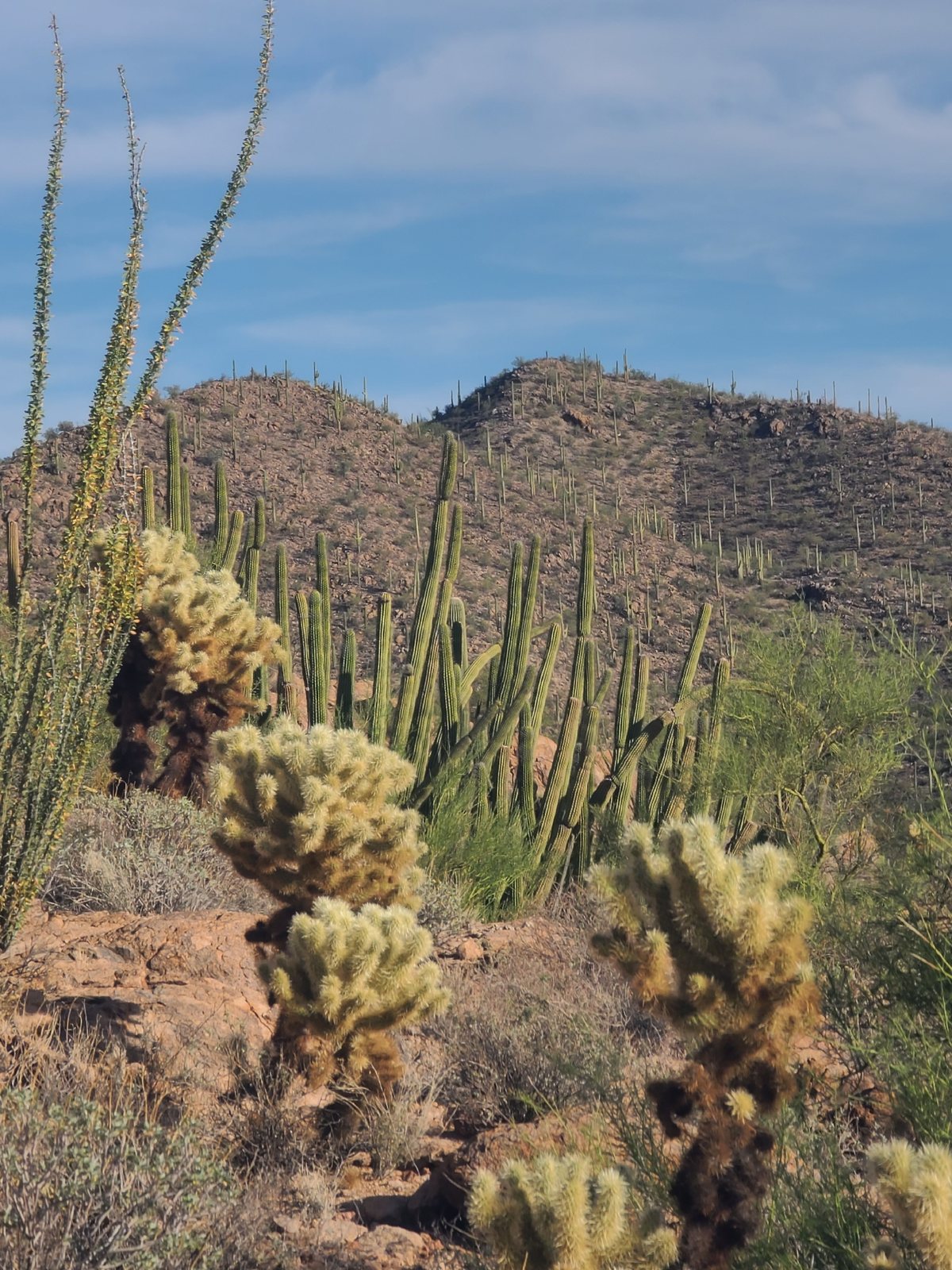
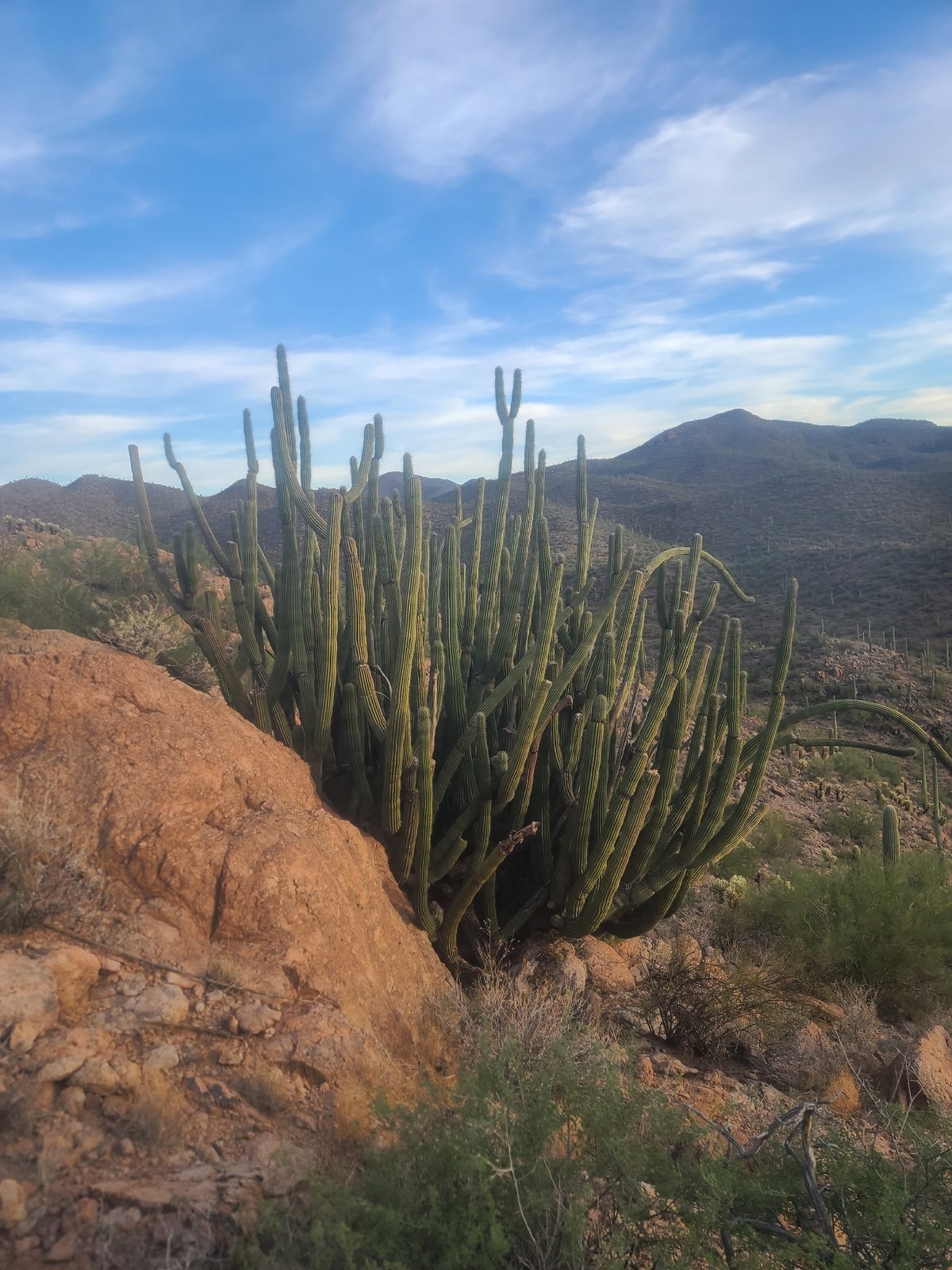
Organ pipe cactus is a large, slow-growing Sonoran Desert cactus with many upright, ribbed stems branching near ground level. Gardeners grow it for its sculptural shape and white, night-opening flowers. It needs a hot, dry position; in the United Kingdom, Canada and colder parts of the United States and Australia, grow young plants in containers under frost-free cover.
At a glance
- Sun
- Full sun; gradually acclimatise plants raised indoors to strong outdoor sunlight.
- Water
- Low once established. Water deeply but infrequently during warm growth, letting the soil dry completely between waterings; keep almost dry in winter.
- Soil
- Very sharply drained sandy or gravelly soil. For containers, use a gritty cactus mix and a pot with unobstructed drainage holes.
- Height
- 15-25 ft (4.6-7.6 m)
- Spread
- 10-20 ft (3-6 m)
- Flowers
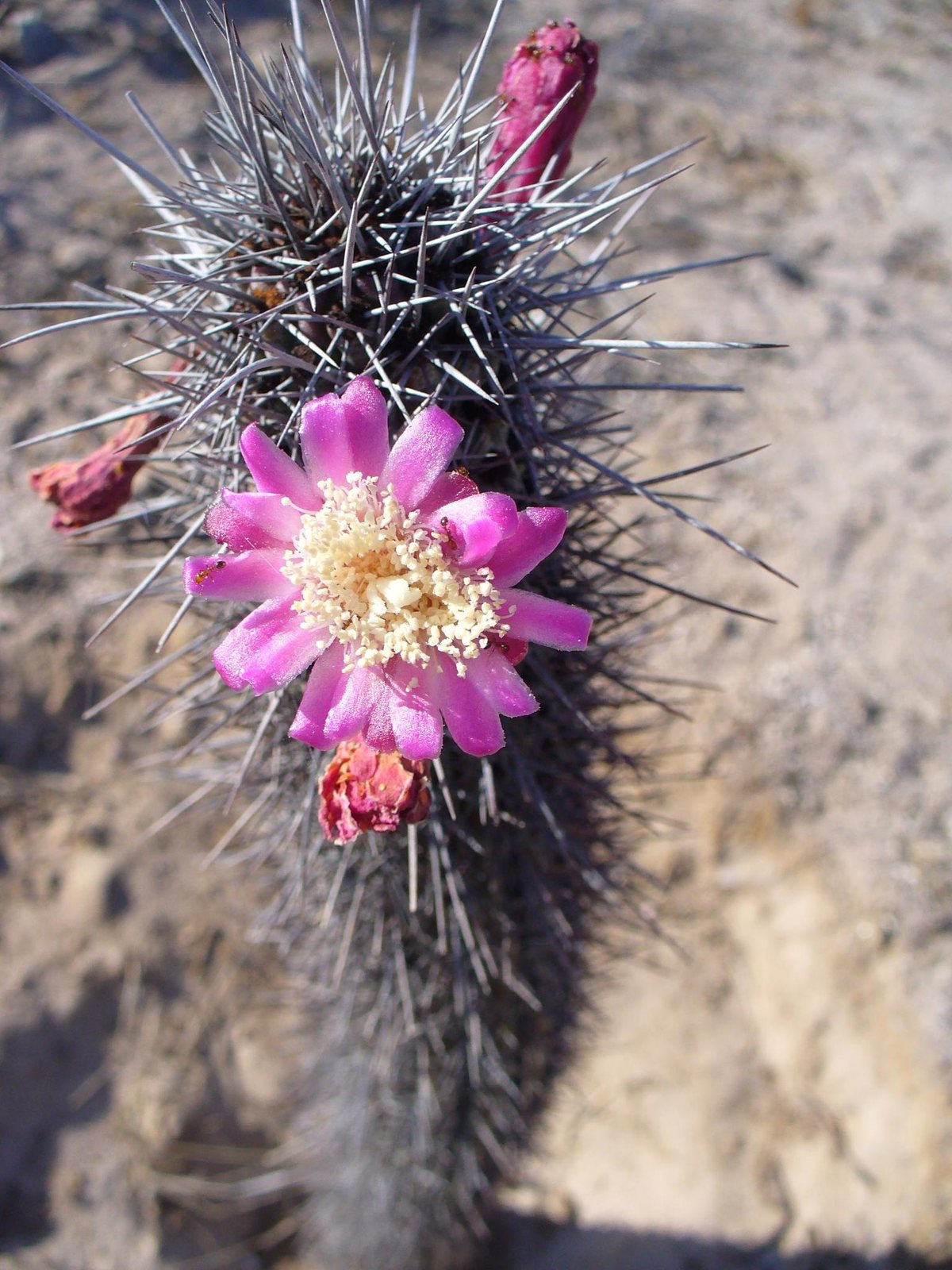
- White to pale pink flowers open at night in late spring and summer, usually closing the following morning; flowering generally begins only on older, substantial plants.
- Foliage
- No conspicuous leaves; evergreen green stems have prominent vertical ribs and clusters of grey to dark spines.
- Growth
- Slow, especially when young; mature size takes decades.
- Care needed
- Low
The year at a glance
- Drought tolerant
- Heat tolerant
- Low allergen
| J | F | M | A | M | J | J | A | S | O | N | D | |
|---|---|---|---|---|---|---|---|---|---|---|---|---|
| Flowers | ||||||||||||
| Fruit | ||||||||||||
| Plant |
Northern hemisphere months. In Australia, shift them by six.
- Difficulty
- Hard
- Toughness
- Needs looking after
Will it suit your garden?
Pick your zone, country, light and whether you have pets.
Full sun is 6 or more hours of direct sun a day, part shade 3 to 6 hours, shade under 3.
How it grows
Planting day
2.4 ft (0.73 m)
After 1 year
4 ft (1.3 m)
After 2 years
6 ft (1.9 m)
After 3 years
8 ft (2.4 m)
After 5 years
12 ft (3.5 m)
About 10 years to full size.
From a typical nursery size, at an average rate for this kind of plant. A rule of thumb, not a forecast.
Good to know
- Cats and dogs
- Safe
- Native to
- the US
- Growth rate
- Slow
Care
Jobs through the year
- WaterMay, Sep, every 30 days
- Water established plants only in warm conditions when the root zone is completely dry.
- WaterJun–Aug, every 21 days
- Water deeply only after complete drying; containers may dry sooner, but never water damp soil.
- FeedJun
- Give container plants one light application of low-nitrogen cactus fertilizer.
- ProtectJan–May, Sep–Dec
- Not hardy outdoors here; keep in a bright, frost-free greenhouse, almost dry during winter.
- ProtectJun
- Move containers outdoors only in reliably warm weather and acclimatise gradually to full sun.
- PruneJun–Aug
- Only remove dead or rotting stems in dry weather; use professional help for heavy stems.
- Plant on a raised mound or slope if drainage is uncertain; never leave the roots in standing water.
- Water only when the root zone has dried, and withhold routine watering during cool winter weather.
- Feed container plants lightly with a low-nitrogen cactus fertiliser once or twice during spring and summer.
- Keep gravel mulch clear of the stem bases and avoid moisture-holding organic mulch against the plant.
- Protect from frost, especially while young; use a frost-free greenhouse for containers in cold or wet-winter climates.
- Leave ample space around mature plants and keep spiny stems away from paths, doors and play areas.
Pruning. Routine pruning is unnecessary. Remove dead, damaged or rotting stems during warm, dry weather with a clean saw, using professional help for heavy stems and allowing cut surfaces to remain dry.
Through the year
- Spring
- Check for winter damage and resume watering cautiously as temperatures rise and growth starts.
- Late spring
- Plant or repot when conditions are warm, using sharply drained soil; gradually acclimatise sheltered plants to outdoor sun.
- Summer
- Water deeply only after the soil has dried completely; give container plants a light feed if needed.
- Summer
- Look for night-opening flowers on mature plants and inspect stems for scale insects or mealybugs.
- Autumn
- Reduce watering as nights cool and move containers under cover before frost.
- Winter
- Keep sheltered plants bright, frost-free and almost dry; protect outdoor plants from frost and prolonged rain.
In the garden
- Use as a tall focal point in a spacious desert garden, with low-growing succulents around its base.
- Set against a plain wall where the repeated upright stems cast strong shadows.
- Combine with agaves, yuccas and gravel for a planting with contrasting shapes and little irrigation.
- Grow a young specimen in a substantial container on a sunny courtyard or terrace, with room to move it under cover.
Garden styles it suits: Desert modern, Architectural minimal, Desert / xeriscape, Southwestern, Mexican hacienda and Dry gravel garden.
Plant it with: Desert spoon, Red yucca, Parry's agave, Golden barrel cactus, Brittlebush and Fairy duster.
Wildlife: In its native range, the night-opening flowers feed nectar-feeding bats, while birds and other animals eat the fruit. These wildlife relationships may not occur where it is grown outside the Sonoran Desert.
Problems to watch for
- Root or stem rot in wet soil: stop watering, improve drainage and remove affected tissue where practical; extensive basal rot may kill the plant.
- Frost damage causing soft, dark patches: protect before cold nights and remove dead tissue once damage is clear and warm, dry weather returns.
- Scale insects or mealybugs: inspect ribs and stem joints, remove small infestations carefully and use a treatment labelled for cacti if needed.
- Sunburn after moving outdoors: introduce stronger sunlight gradually; existing pale or corky scars will not turn green again.
Safety
Not known to be toxic to people, cats, dogs or horses. The ripe fruit pulp is edible, but the spines on stems and fruit can cause painful punctures and eye injuries; keep children and animals away from them.
Easily confused with
Saguaro (Carnegiea gigantea)
Usually develops a single substantial trunk with arms branching well above ground, rather than a cluster of similar upright stems arising near the base.
Senita cactus (Lophocereus schottii)
Has fewer, broader ribs and conspicuous bristly grey hair around the flowering tips of mature stems.
Mexican fence post cactus (Pachycereus marginatus)
Has fewer, broader ribs, with neat, closely spaced rows of short pale spines along their edges.
The name
The common name describes the clustered stems resembling organ pipes, while thurberi honours the American botanist George Thurber.
Propagation. Raise from seed in a warm, bright position using a fine, well-drained cactus mix; seedlings grow slowly. Stem cuttings can root after the cut end has dried and callused thoroughly, but large stems are heavy and hazardous to handle.
Checked against open data
- Accepted botanical name
- Stenocereus thurberi
- In the US and Canada
- Native in the lower 48 states.
- Native range
- Arizona, Mexico Northeast and Mexico Northwest.
Sources: GBIF (CC BY 4.0), USDA PLANTS and Trefle (CC BY 4.0). The care and design notes are LandscapeGPT's own.
See it in your own yard.
Upload a photo of your yard and see it redesigned with plants that suit your climate, each checked against your zone.