Pacific madrone
Arbutus menziesii. Family Ericaceae. Tree.
Also called Pacific madrona, Arbutus, Madrona.
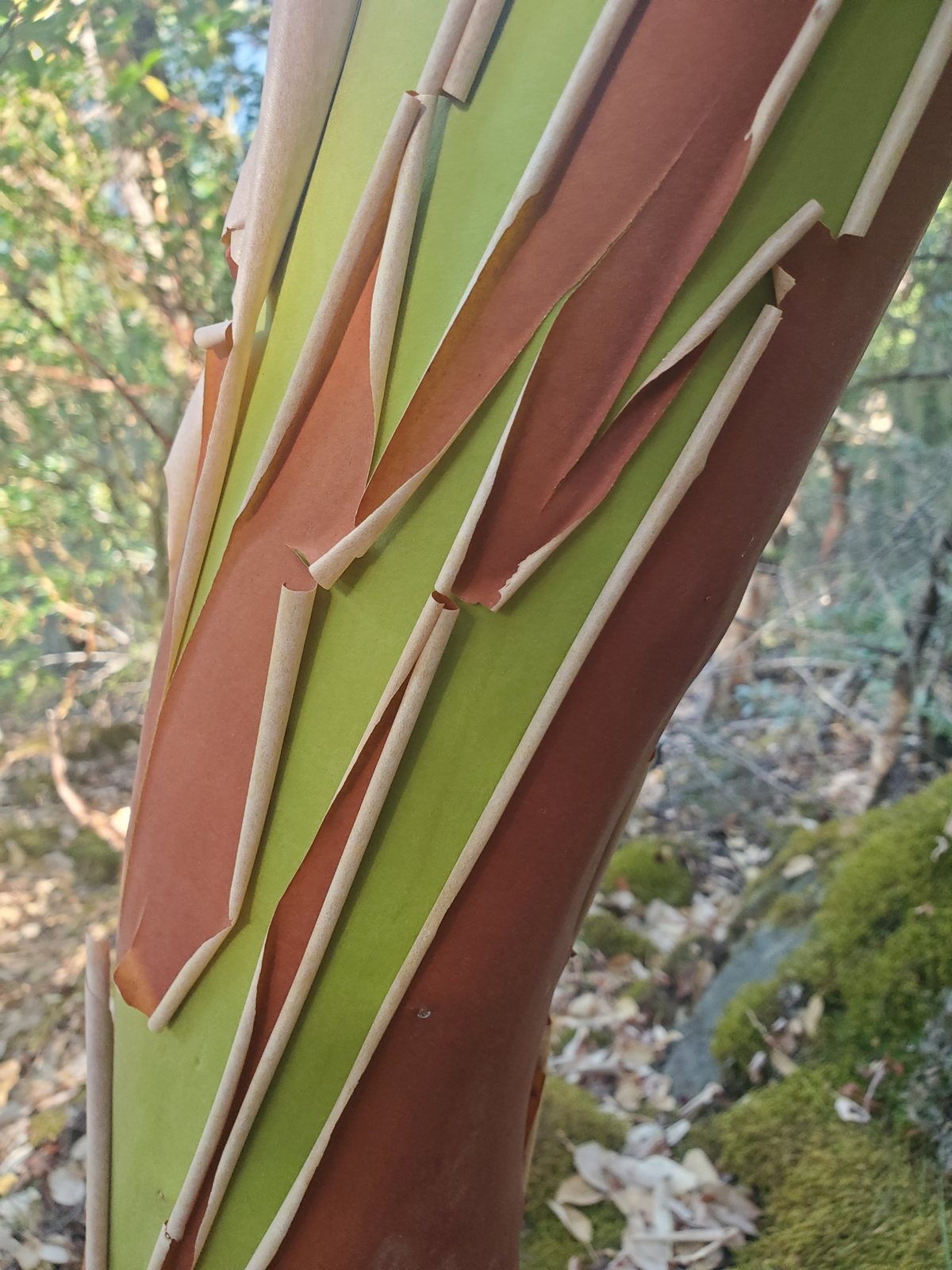
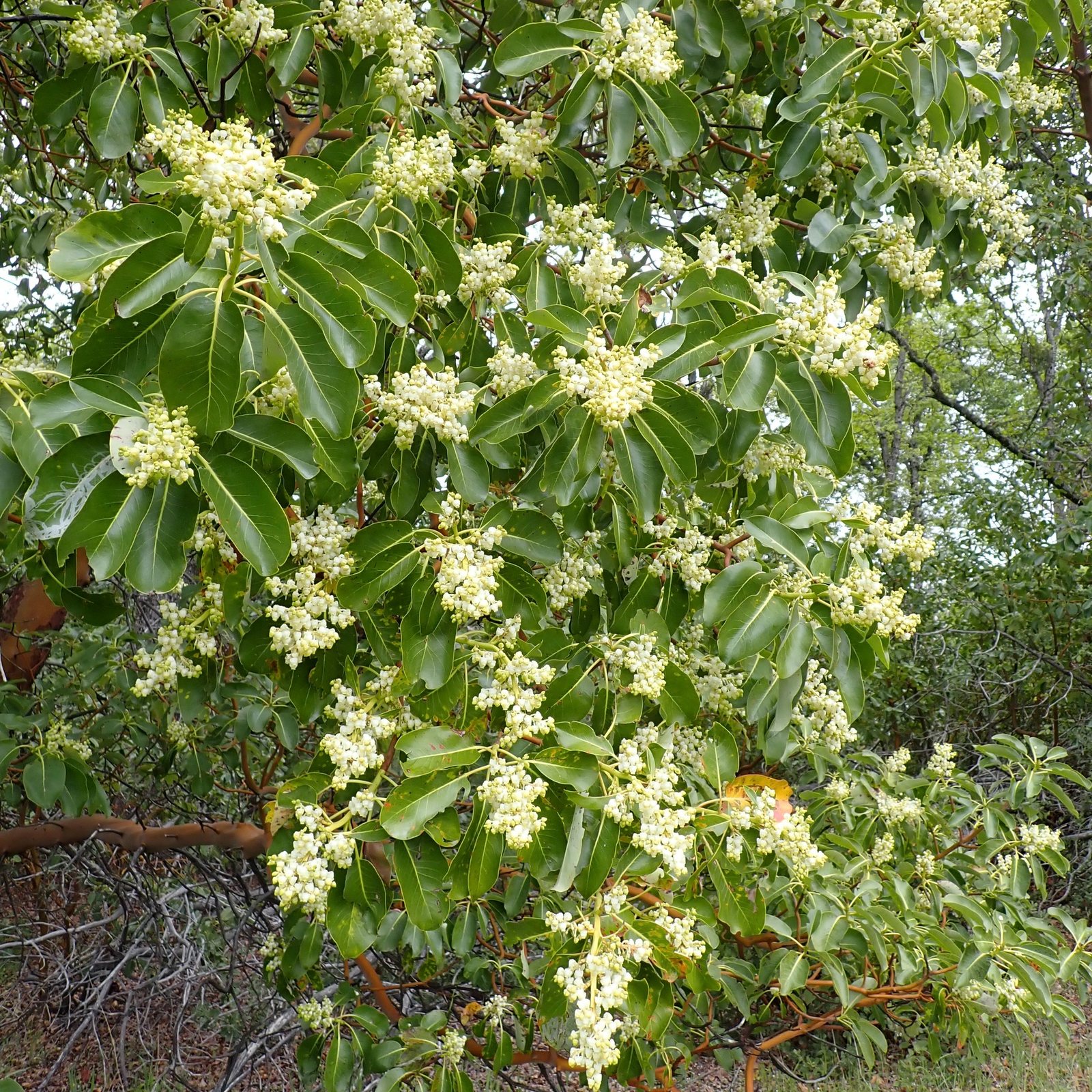
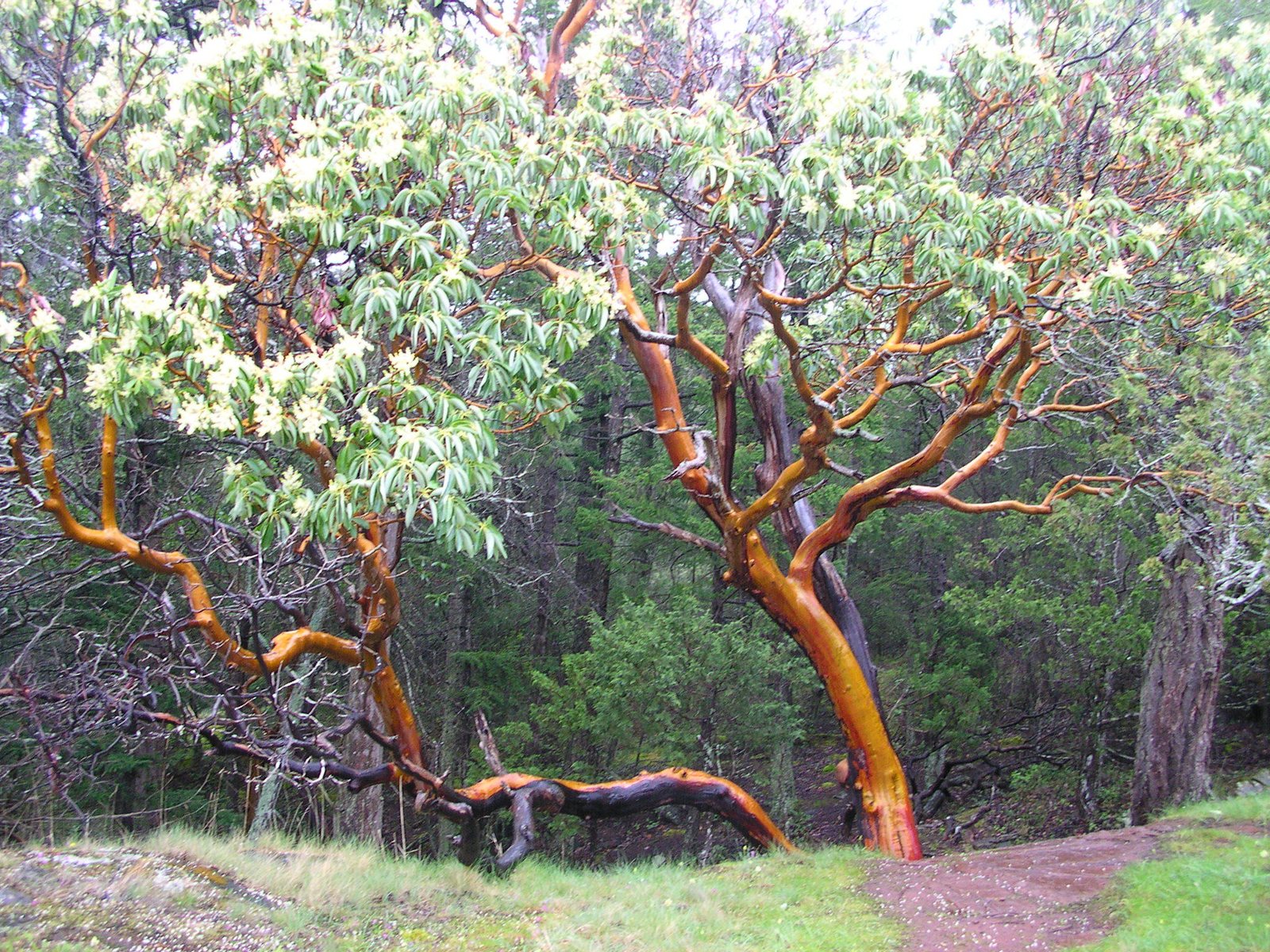
Pacific madrone is an evergreen tree native to western North America, grown for its twisting branches, peeling cinnamon-red bark, white spring flowers and orange-red berries. It makes a striking specimen in a spacious, well-drained garden with dry summers, but dislikes transplanting, waterlogged soil and regular summer lawn irrigation.
At a glance
- Sun
- Full sun to partial shade; an open, sunny position generally produces the best crown and bark display.
- Water
- Water deeply but infrequently while establishing, allowing the soil to dry between waterings. Established trees usually need little or no summer irrigation in suitable climates.
- Soil
- Well-drained, preferably acidic to neutral soil; tolerates rocky, relatively poor ground. Avoid heavy, waterlogged soil and irrigated lawns.
- Height
- 30-80 ft (9-24 m)
- Spread
- 20-50 ft (6-15 m)
- Flowers
- Spring; hanging clusters of small, creamy-white, urn-shaped flowers.
- Foliage
- Evergreen. Leathery, glossy, dark green oval leaves with paler undersides; older leaves shed mainly in late spring and summer.
- Growth
- Moderate once established; often slow initially and variable with the site.
- Care needed
- Medium
The year at a glance
- Pollinators
- Drought tolerant
- Wildlife
- Low allergen
| J | F | M | A | M | J | J | A | S | O | N | D | |
|---|---|---|---|---|---|---|---|---|---|---|---|---|
| Flowers | ||||||||||||
| Fruit | ||||||||||||
| Plant |
Northern hemisphere months. In Australia, shift them by six.
- Difficulty
- Hard
- Toughness
- Needs looking after
Will it suit your garden?
Pick your zone, country, light and whether you have pets.
Full sun is 6 or more hours of direct sun a day, part shade 3 to 6 hours, shade under 3.
How it grows
Planting day
7 ft (2 m)
After 1 year
8 ft (2.6 m)
After 2 years
10 ft (3.1 m)
After 3 years
12 ft (3.7 m)
After 5 years
16 ft (4.8 m)
About 26 years to full size.
From a typical nursery size, at an average rate for this kind of plant. A rule of thumb, not a forecast.
Good to know
- Cats and dogs
- Mildly toxic: may upset a stomach
- Native to
- the US and Canada
- Growth rate
- Slow
Care
Jobs through the year
- WaterApr–May, Sep, every 28 days
- Established trees rarely need water; irrigate only in exceptional drought, allowing soil to dry between soakings.
- WaterJun–Aug, every 28 days
- Normally skip established trees; water young trees deeply as needed and keep routine irrigation away.
- MulchApr
- Retain a light leaf-litter or coarse mulch layer, clear of the trunk; do not dig beneath the canopy.
- PruneJul–Aug
- In dry weather, remove only small dead, damaged or poorly attached branches.
- ProtectJan–Mar, Nov–Dec
- Keep roots freely drained and young trees sheltered from severe frost; avoid unprotected zone 6 sites.
- Plant a small, container-grown tree in its permanent position; avoid disturbing or teasing out the roots.
- Water deeply during dry spells through the first few summers, then gradually reduce irrigation.
- Keep lawn sprinklers and regularly watered beds away from the root zone.
- Leave a light layer of leaf litter or coarse organic mulch over the roots, keeping it clear of the trunk.
- Do not routinely fertilize, dig beneath the canopy or change the soil level around established trees.
Pruning. Prune sparingly in dry summer weather, removing dead, damaged or poorly attached branches while cuts are still small. Avoid topping, heavy crown reduction and unnecessary removal of healthy limbs.
Through the year
- Autumn
- Plant small trees while the soil is still warm, provided the site drains freely.
- Winter
- Check for standing water around young trees and keep the trunk base clear of wet mulch.
- Spring
- Check young trees for winter damage and inspect new growth for leaf spots or shoot dieback.
- Late spring
- Expect older leaves to yellow and fall; retain a light litter layer unless leaves are heavily diseased.
- Summer
- Deep-water establishing trees only when needed, letting the soil dry between applications.
- Summer
- Remove small dead or damaged branches during a dry spell; leave healthy bark to peel naturally.
In the garden
- Use as a specimen on a sunny slope where its branching structure and peeling bark are visible.
- Place at the edge of a dry woodland with Oregon grape and drought-tolerant native shrubs.
- Combine with manzanitas and native bunchgrasses in a summer-dry planting without lawn irrigation.
- Allow room in a large wildlife garden for its broad crown, berries and natural leaf litter.
Garden styles it suits: Pacific Northwest woodland, California native, Woodland, Wildlife garden, Mediterranean and Winter interest.
Plant it with: Tall Oregon grape, Salal, Hairy manzanita, California fescue and Roemer's fescue.
Wildlife: Flowers provide nectar and pollen for bees and other insects. Birds eat the berries, and the evergreen crown provides shelter and nesting cover.
Problems to watch for
- Root rot: saturated soil and frequent summer irrigation can cause decline or death. Choose a freely drained site and keep irrigation away from established roots.
- Leaf spots and blight: wet weather can cause spotting and premature leaf fall. Improve airflow, avoid overhead watering and remove heavily affected fallen leaves.
- Branch cankers and dieback: avoid bark wounds and heavy pruning; remove affected small branches in dry weather and seek an arborist's advice for major limb damage.
- Transplant failure: root disturbance is poorly tolerated. Start with a small plant, handle the root ball gently and avoid moving established trees.
Safety
Not known to be toxic to people, cats, dogs or horses, although species-specific information for pets and horses is limited. The ripe berries are edible to people but can cause digestive upset if eaten in quantity; do not encourage pets or livestock to browse the tree.
Easily confused with
Strawberry tree (Arbutus unedo)
Usually smaller, with noticeably toothed leaves, rougher persistent bark and larger, knobbly strawberry-like fruits; flowers mainly in autumn.
Greek strawberry tree (Arbutus andrachne)
Also has smooth, peeling reddish bark, but is generally smaller and has smaller, rounder leaves; distinguishing young trees can be difficult.
Manzanita (Arctostaphylos spp.)
Most are shrubs with much smaller leaves and small apple-like fruits rather than madrone's clusters of orange-red berries.
The name
Arbutus is the classical Latin name for the strawberry tree, menziesii honours Scottish naturalist Archibald Menzies, and madrone comes from the Spanish madroño, meaning strawberry tree.
Propagation. Usually grown from seed cleaned from ripe berries and given a cold, moist period before sowing. Raise seedlings in individual deep containers and plant out while young; cuttings are difficult and unreliable.
Checked against open data
- Accepted botanical name
- Arbutus menziesii
- In the US and Canada
- Native in Canada and the lower 48 states.
- Native range
- British Columbia, California, Mexico Northwest, Oregon and Washington.
- Measured
- Soil pH 4.5 to 7.4. Average height 2190 cm.
Sources: GBIF (CC BY 4.0), USDA PLANTS and Trefle (CC BY 4.0). The care and design notes are LandscapeGPT's own.
See it in your own yard.
Upload a photo of your yard and see it redesigned with plants that suit your climate, each checked against your zone.