Pagoda dogwood
Cornus alternifolia. Family Cornaceae. Tree.
Also called Alternate-leaved dogwood.
Pagoda dogwood is a small deciduous tree native to eastern North America, grown for its distinctive tiers of horizontal branches. Creamy-white flower clusters, blue-black fruits on reddish stalks and reddish-purple autumn leaves add interest through the growing season. It suits cool woodland gardens better than hot, dry or exposed sites.
At a glance
- Sun
- Partial shade is ideal, especially afternoon shade in warmer areas. Full sun is suitable where summers are cool and the soil stays moist.
- Water
- Keep the root zone evenly moist but not waterlogged; water deeply during dry spells, especially while establishing.
- Soil
- Moist, well-drained, humus-rich soil, preferably acidic to neutral. Avoid drought-prone sand, compacted ground and persistently wet soil.
- Height
- 15-25 ft (4.6-7.6 m)
- Spread
- 20-30 ft (6.1-9.1 m)
- Flowers
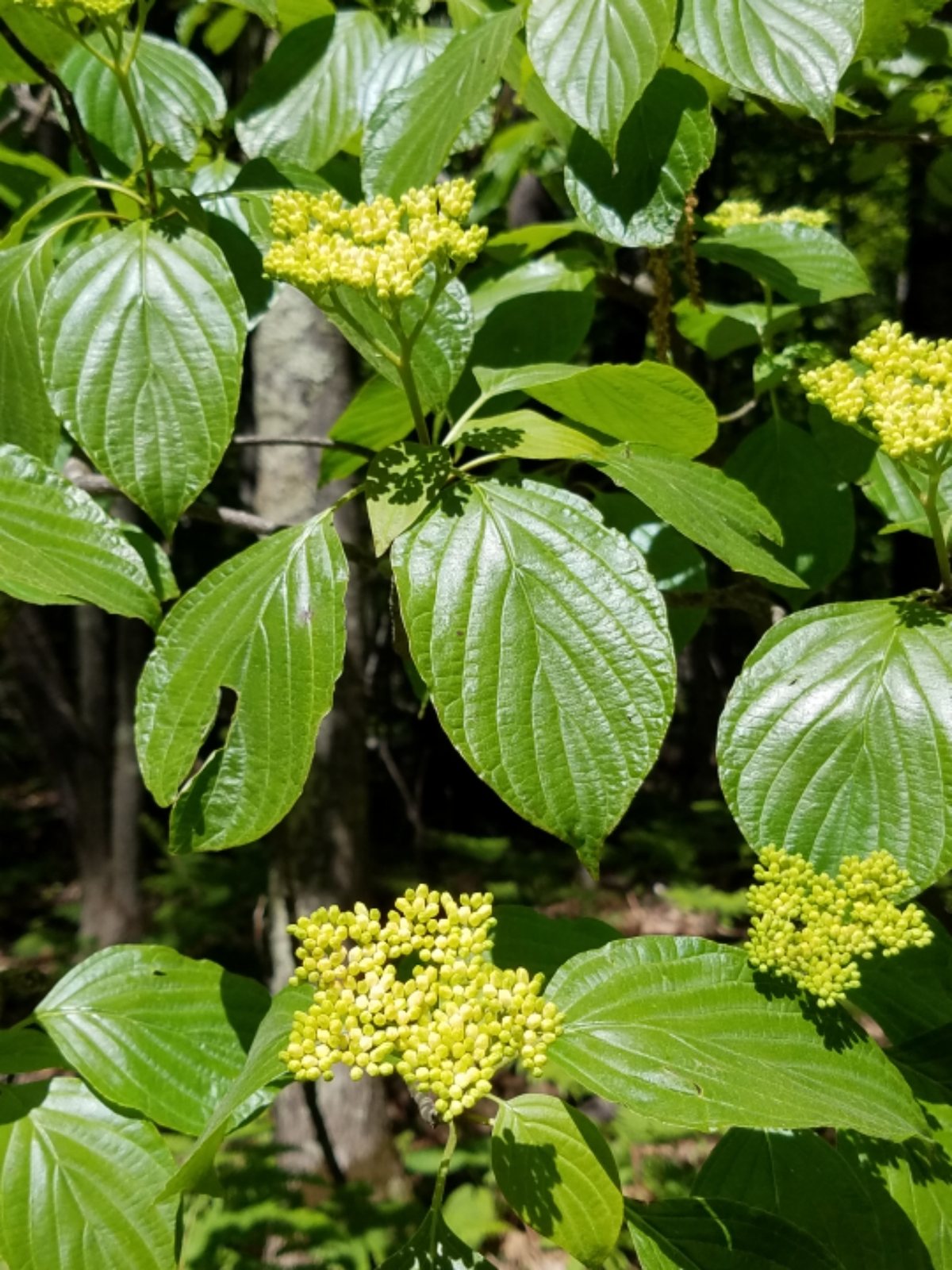
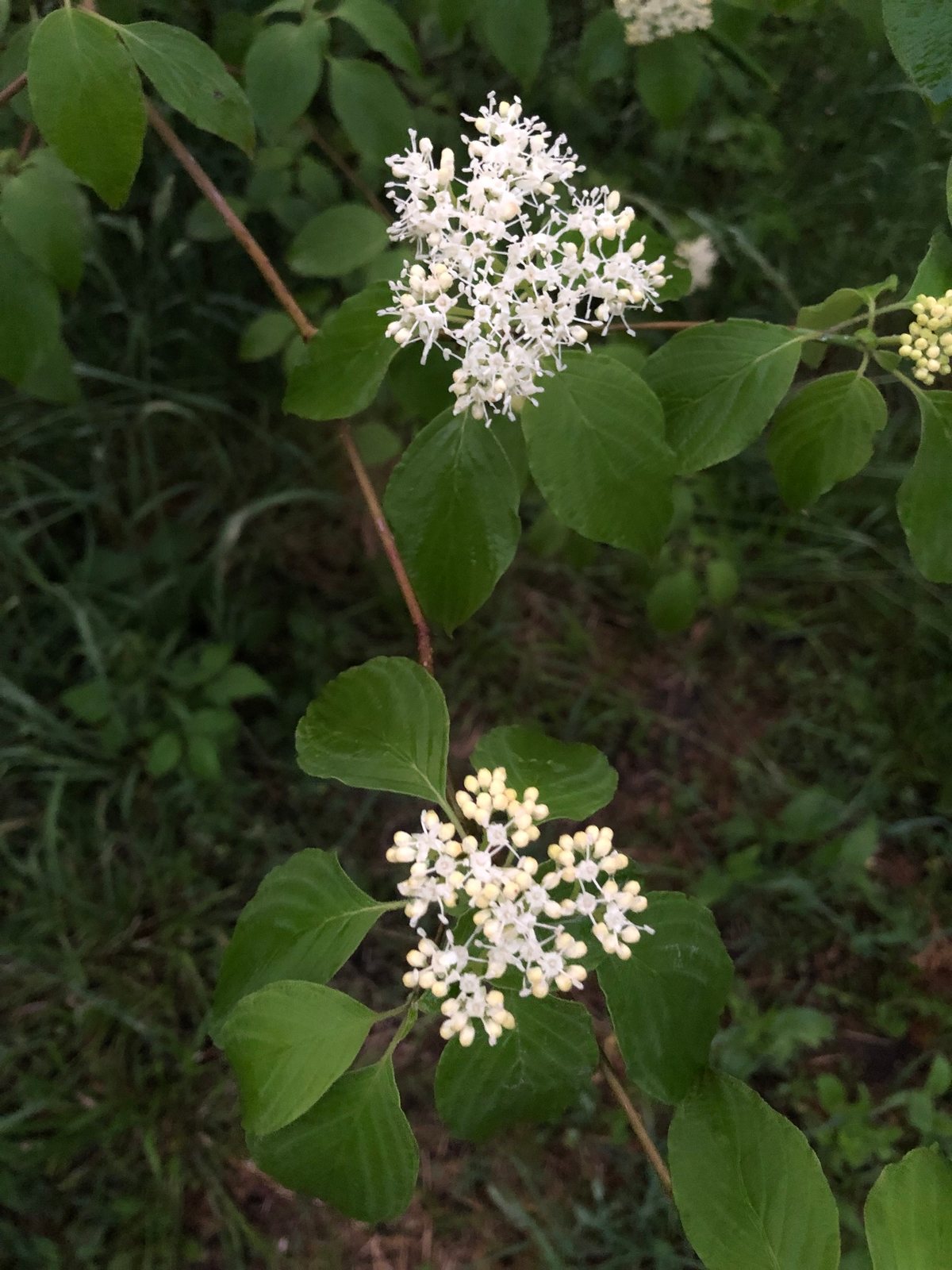
- Flat clusters of small creamy-white flowers in late spring to early summer; unlike flowering dogwood, these have no large showy bracts.
- Foliage
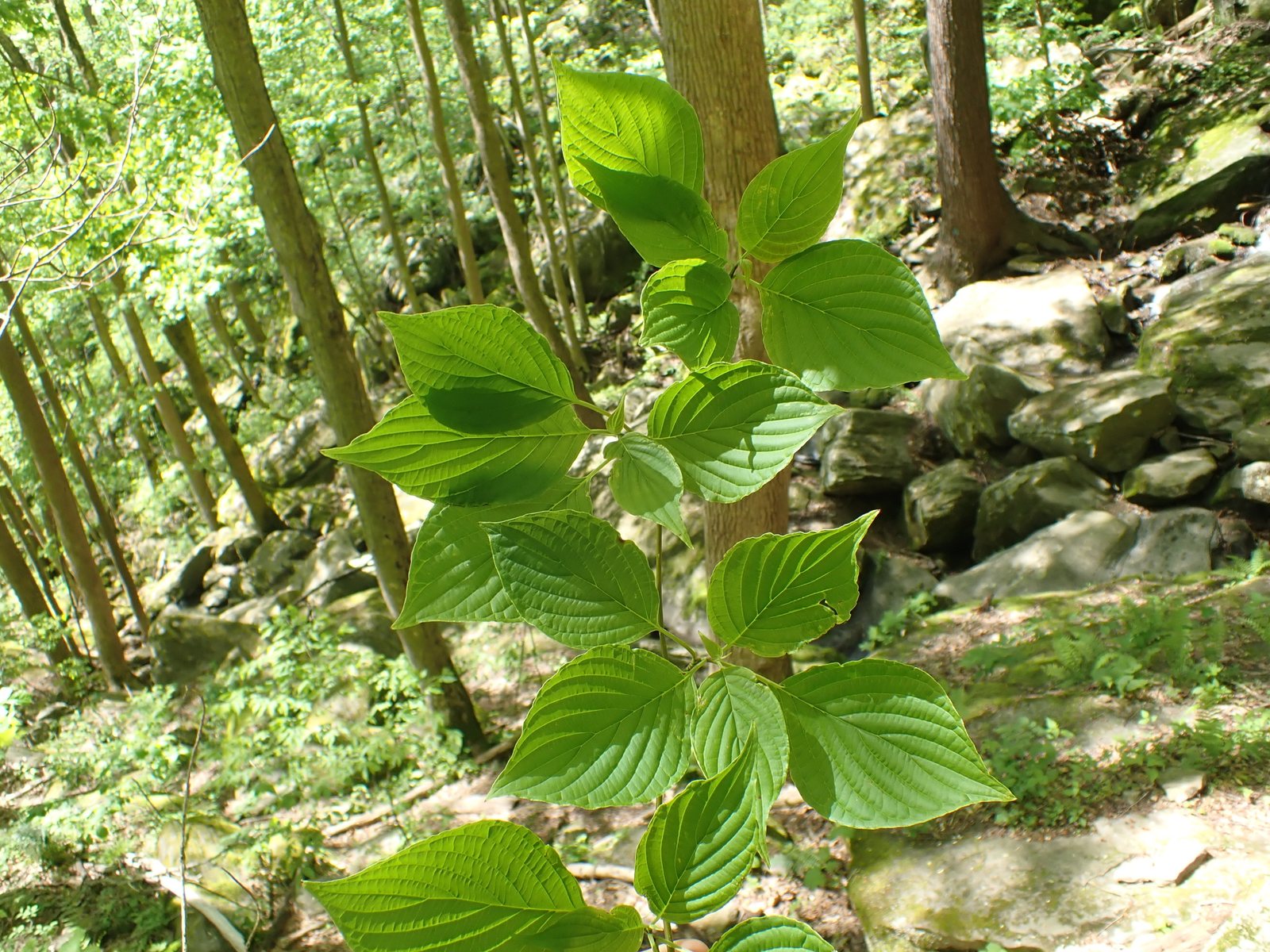
- Broad, pointed green leaves with curved veins, arranged alternately along the stems; autumn colour ranges from red to reddish-purple.
- Growth
- Moderate
- Care needed
- Medium
The year at a glance
- Pollinators
- Cold hardy
- Wildlife
- Low allergen
| J | F | M | A | M | J | J | A | S | O | N | D | |
|---|---|---|---|---|---|---|---|---|---|---|---|---|
| Flowers | ||||||||||||
| Fruit | ||||||||||||
| Plant |
Northern hemisphere months. In Australia, shift them by six.
- Difficulty
- Moderate
- Toughness
- Fairly tough
Will it suit your garden?
Pick your zone, country, light and whether you have pets.
Full sun is 6 or more hours of direct sun a day, part shade 3 to 6 hours, shade under 3.
How it grows
Planting day
7 ft (2 m)
After 1 year
7 ft (2.2 m)
After 2 years
8 ft (2.4 m)
After 3 years
9 ft (2.6 m)
After 5 years
10 ft (3 m)
About 20 years to full size.
From a typical nursery size, at an average rate for this kind of plant. A rule of thumb, not a forecast.
Good to know
- Cats and dogs
- Mildly toxic: may upset a stomach
- Native to
- the US and Canada
- Growth rate
- Moderate
Care
Jobs through the year
- WaterApr–May, Sep–Oct, every 14 days
- Water established trees deeply when soil begins drying; check young trees more often for their first two seasons.
- WaterJun–Aug, every 7 days
- Water deeply during dry weather, keeping the root zone moist but never waterlogged.
- MulchMar–Apr
- Maintain 5-8 cm of leaf mould or composted bark, keeping the trunk and root flare clear.
- PruneFeb–Mar
- On a dry day, lightly remove crossing branches and basal shoots while preserving horizontal tiers.
- ProtectApr–Sep, every 30 days
- Check for yellow-orange cankers or dieback; remove affected branches into healthy wood in dry weather and disinfect tools.
- ProtectOct–Nov
- Clear badly affected fallen foliage without digging among the shallow roots.
- Water deeply during dry weather for the first two growing seasons, then during prolonged drought.
- Spread 2-3 in (5-8 cm) of leaf mould or composted bark over the root zone, keeping it clear of the trunk.
- Protect the tree from hot afternoon sun and drying winds.
- Avoid digging beneath the canopy, where shallow roots are easily damaged.
- Feed only if growth is weak or a soil test shows a deficiency; avoid heavy nitrogen feeding.
Pruning. Prune lightly in late winter on a dry day, removing crossing branches and unwanted basal shoots while preserving the horizontal tiers. Remove dead or cankered branches promptly in dry weather, cutting back into healthy wood and disinfecting tools between cuts.
Through the year
- Autumn
- Plant while the soil is workable, water thoroughly and mulch the root zone.
- Late winter
- Check the branch structure and lightly remove crossing branches or unwanted basal shoots.
- Spring
- Refresh mulch without piling it against the trunk; check for yellowed or dying branches.
- Late spring
- Leave flower clusters intact to provide nectar and develop fruit for birds.
- Summer
- Water deeply during dry spells and check exposed leaves for scorch.
- Early summer
- Take softwood cuttings from healthy, non-flowering shoots if you want to propagate it.
In the garden
- Use as an understorey tree beneath taller deciduous trees, where its layered branches remain visible.
- Place beside a shaded patio or path, allowing enough space for its broad mature canopy.
- Combine with ferns, foamflowers and woodland perennials for a naturalistic planting.
- Set against a dark evergreen background to highlight the pale flowers and autumn foliage.
Garden styles it suits: Woodland, Wildlife garden, Japanese, Arts and Crafts, Autumn colour and New England.
Plant it with: Christmas fern, Foamflower, Wild ginger, Solomon's seal, Hosta and Oakleaf hydrangea.
Wildlife: Flowers attract bees, flies and other pollinating insects. Birds eat the blue-black fruits, and the branches provide cover and nesting sites.
Problems to watch for
- Golden canker causes yellow-orange bark, branch dieback and sometimes tree death. Cut affected branches back into healthy wood in dry weather, disinfect tools between cuts and reduce drought stress.
- Leaf scorch causes brown leaf edges in heat, wind or dry soil. Water deeply, maintain mulch and provide afternoon shade.
- Leaf spots and powdery mildew can mark foliage. Improve air circulation without heavy pruning, water at soil level and clear badly affected fallen leaves.
- Root rot and decline can follow waterlogging or deep planting. Keep the root flare at soil level and correct drainage rather than adding more water.
Safety
Not known to be toxic to people, cats, dogs or horses, although species-specific information is limited. The fruits are not regarded as a food crop; discourage eating them because they may cause stomach upset.
Easily confused with
Giant dogwood (Cornus controversa)
Also has alternate leaves and tiered branches, but usually becomes a substantially larger tree with larger leaves and broader flower clusters.
Flowering dogwood (Cornus florida)
Has opposite leaves, conspicuous white or pink flower bracts and red fruits; pagoda dogwood has alternate leaves, small unbracted flowers and blue-black fruits.
Gray dogwood (Cornus racemosa)
Usually forms a suckering shrub with opposite leaves and white fruits on red stalks, rather than a distinctly tiered tree with alternate leaves and blue-black fruits.
The name
The common name refers to its pagoda-like tiers of branches, while alternifolia means alternate-leaved, describing its unusual leaf arrangement among dogwoods.
Propagation. Take softwood cuttings in early summer and root them in a humid, sheltered propagator. Seed is slower and may need a warm period followed by cold stratification, sometimes taking two seasons to germinate; seedlings may differ from the parent.
Checked against open data
- Accepted botanical name
- Cornus alternifolia
- In the US and Canada
- Native in Canada, the lower 48 states and St. Pierre and Miquelon.
- Native range
- Alabama, Arkansas, Connecticut, Delaware, District of Columbia, Florida, Georgia, Illinois, Indiana, Iowa, Kentucky and Maine.
- Measured
- Average height 297 cm.
Sources: GBIF (CC BY 4.0), USDA PLANTS and Trefle (CC BY 4.0). The care and design notes are LandscapeGPT's own.
See it in your own yard.
Upload a photo of your yard and see it redesigned with plants that suit your climate, each checked against your zone.