Panda plant
Kalanchoe tomentosa. Family Crassulaceae. Succulent.
Also called Pussy ears, Chocolate soldier.
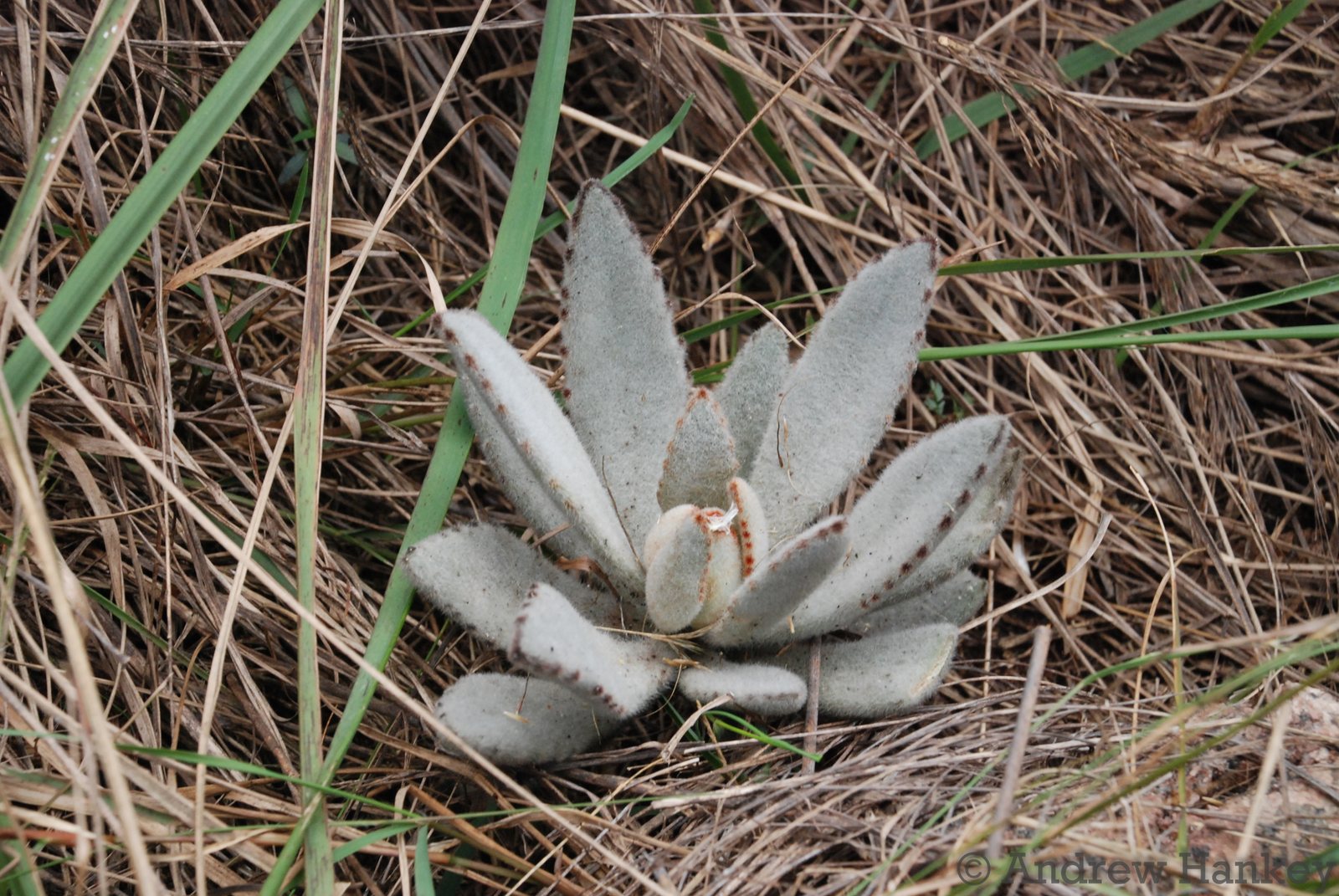
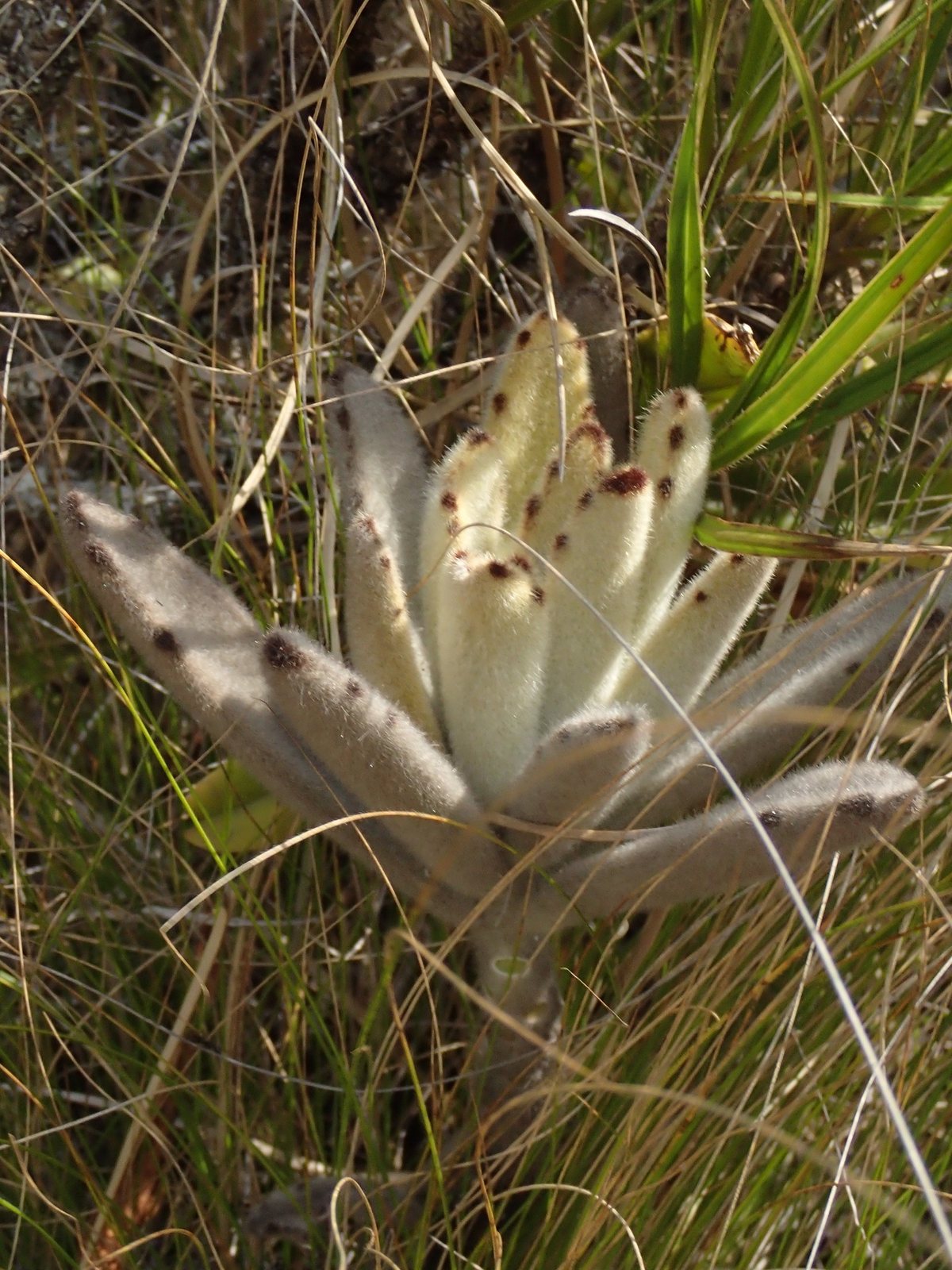
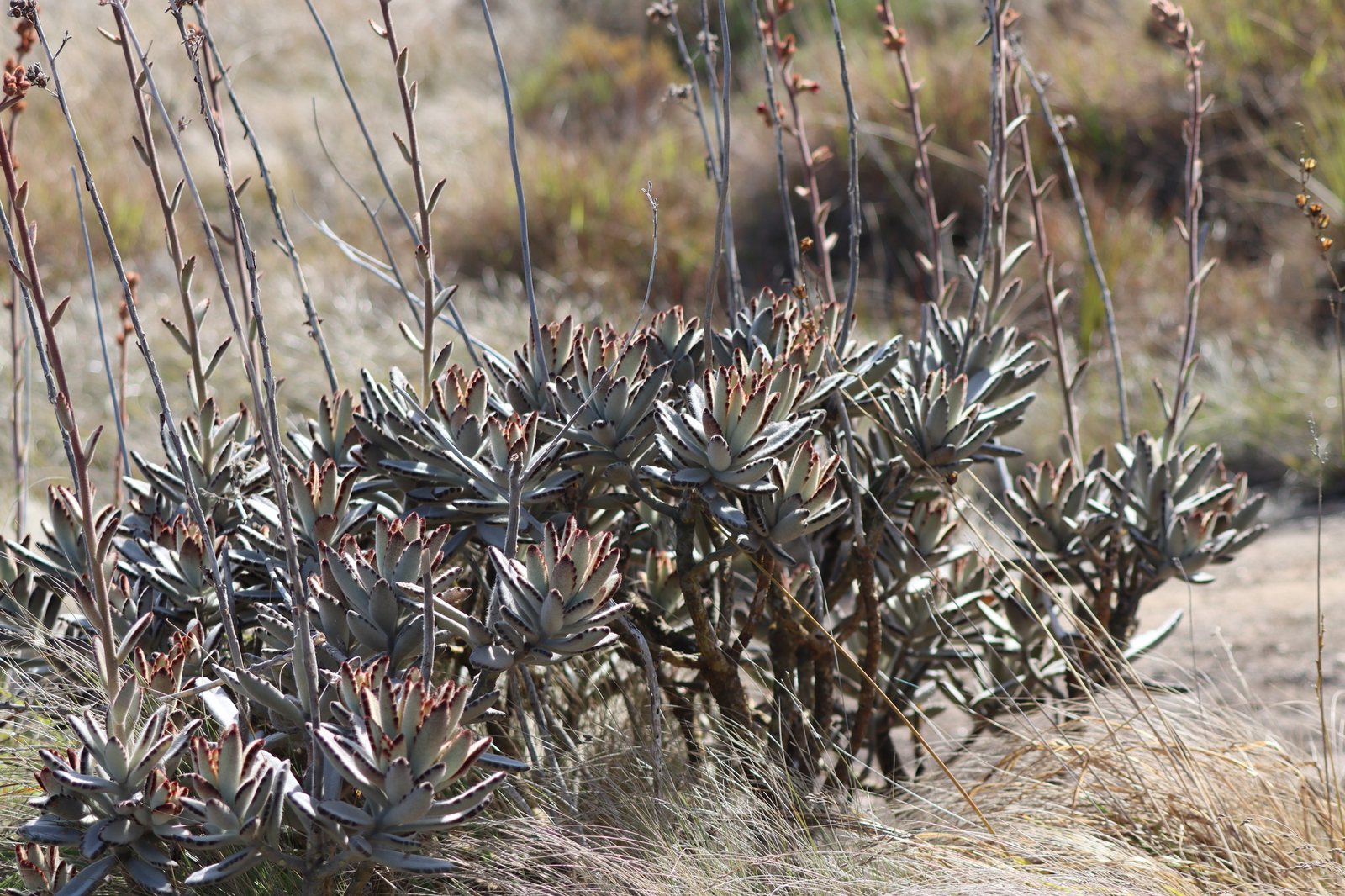
Panda plant is a slow-growing succulent from Madagascar, grown for its softly felted, silver-green leaves with brown markings along the tips. It makes a compact houseplant or container specimen; plant it outdoors permanently only in warm, frost-free areas with excellent drainage.
At a glance
- Sun
- Bright light indoors, including some direct sun. Outdoors, give morning sun and light afternoon shade in very hot climates; introduce stronger sun gradually.
- Water
- Let the potting mix dry throughout before watering thoroughly, then drain completely. Water much less in winter, especially in cool conditions.
- Soil
- Gritty, free-draining cactus and succulent mix in a pot with drainage holes. Outdoors, use sandy or gravelly soil that does not stay wet.
- Height
- 1-3 ft (0.3-0.9 m)
- Spread
- 1-2 ft (0.3-0.6 m)
- Foliage
- Evergreen. Thick, elongated silver-green leaves covered in fine hairs, with rusty-brown spots or edging near the tips; older stems become woody.
- Growth
- Slow
- Care needed
- Low
The year at a glance
- Drought tolerant
- Heat tolerant
- Low allergen
| J | F | M | A | M | J | J | A | S | O | N | D | |
|---|---|---|---|---|---|---|---|---|---|---|---|---|
| Plant |
Northern hemisphere months. In Australia, shift them by six.
- Difficulty
- Easy
- Toughness
- Very tough
Will it suit your garden?
Pick your zone, country, light and whether you have pets.
Full sun is 6 or more hours of direct sun a day, part shade 3 to 6 hours, shade under 3.
How it grows
Planting day
0.8 ft (0.25 m)
After 1 year
0.9 ft (0.29 m)
After 2 years
1.1 ft (0.32 m)
After 3 years
1.2 ft (0.36 m)
After 5 years
1.4 ft (0.43 m)
About 10 years to full size.
From a typical nursery size, at an average rate for this kind of plant. A rule of thumb, not a forecast.
Good to know
- Cats and dogs
- Toxic
- Growth rate
- Slow
Care
Jobs through the year
- WaterApr–May, Sep–Oct, every 21 days
- For established pots, check the entire mix is dry before watering thoroughly; drain completely.
- WaterJun–Aug, every 14 days
- Check established pots and water only when dry throughout; never leave standing water.
- WaterJan–Mar, Nov–Dec, every 35 days
- Indoors, water sparingly only when the mix is completely dry; delay if still moist.
- FeedMay, Jul
- Give one half-strength balanced liquid feed in each month if actively growing.
- PruneApr–Jun
- Shorten leggy stems above a leaf pair and remove dead or damaged growth.
- ProtectMay–Jun
- Move pots outside only when nights stay above 10°C; acclimatise gradually to sun.
- ProtectJan–Apr, Sep–Dec
- Keep indoors below 10°C in bright light; shelter outdoor pots from prolonged rain.
- Check that the mix is dry below the surface before watering; never leave the pot standing in water.
- Feed once or twice during spring and summer with a balanced liquid fertilizer at half strength.
- Repot in spring only when roots crowd the pot, moving up just one pot size.
- Keep frost-free and shelter outdoor pots from prolonged rain.
- Rotate indoor pots regularly so growth stays even.
Pruning. In spring or early summer, shorten leggy stems just above a leaf pair to encourage branching. Remove dead leaves gently and use clean tools to cut away damaged growth.
Through the year
- Spring
- Check roots and repot if crowded; begin watering more often as active growth resumes.
- Late spring
- Move indoor plants outside only after nights are consistently warm, acclimating them gradually to brighter light.
- Summer
- Check soil moisture regularly and give a light feed if growth is active.
- Summer
- Take stem or leaf cuttings and let cut surfaces dry before placing them in gritty mix.
- Autumn
- Bring pots indoors before nights fall below about 50°F (10°C), checking first for mealybugs.
- Winter
- Keep in the brightest available position and water sparingly; do not feed.
In the garden
- Use a single plant in a simple pot where its felted leaves and dark markings can be seen close up.
- Combine with echeverias and small aloes in a well-drained succulent container for contrasting leaf shapes.
- Place in a raised gravel bed in frost-free climates, sheltered from persistent rain.
- Group on a bright windowsill with other compact succulents that need soil to dry between waterings.
Garden styles it suits: Desert modern, Contemporary minimal, Small-space, Dry gravel garden, Desert / xeriscape and Low-maintenance.
Plant it with: Echeveria, Zebra haworthia, Jade plant, Golden barrel cactus and Lace aloe.
Wildlife: Offers little wildlife value as a houseplant. Outdoor plants occasionally flower, but flowering is uncommon in containers and it is not a dependable pollinator plant.
Problems to watch for
- Mealybugs: inspect leaf bases and stem joints, isolate affected plants, and treat with a product labelled for indoor succulents; test a small area first because sprays can mark the foliage.
- Root or stem rot: stop watering, remove rotten tissue, and repot sound roots in fresh gritty mix; take healthy stem cuttings if the base has collapsed.
- Leggy growth: move gradually into brighter light and shorten stretched stems during active growth.
- Sun scorch: pale or brown dry patches follow sudden exposure to strong sun; move to filtered light and acclimate gradually, as damaged leaves will not recover.
Safety
Toxic if eaten by cats and dogs; keep it away from horses and other grazing animals as well. Kalanchoe tissues contain cardiac glycosides, so treat all parts, including leaves and flowers, as unsafe to ingest. Poisoning can cause vomiting and diarrhoea and, in serious cases, abnormal heart rhythms. It is not edible for people; seek medical or veterinary advice after ingestion.
Easily confused with
Snow white panda plant (Kalanchoe eriophylla)
Usually smaller and lower-growing, with much whiter woolly leaves that lack the panda plant's conspicuous brown-spotted margins.
Millot kalanchoe (Kalanchoe millotii)
Has broader, greener, softly hairy leaves with rounded scalloped edges rather than elongated leaves with dark brown tips.
The name
The species name tomentosa means densely covered with soft hairs, referring to the felted leaves.
Propagation. Take stem or whole-leaf cuttings in spring or summer. Let wounds dry and callus for several days, then set them in barely moist, gritty propagation mix in bright indirect light; stem cuttings usually establish faster than leaves.
Checked against open data
- Accepted botanical name
- Kalanchoe tomentosa
- Native range
- Madagascar.
Sources: GBIF (CC BY 4.0) and Trefle (CC BY 4.0). The care and design notes are LandscapeGPT's own.
See it in your own yard.
Upload a photo of your yard and see it redesigned with plants that suit your climate, each checked against your zone.