Jade plant
Crassula ovata. Family Crassulaceae. Succulent.
Also called Money plant, Money tree, Lucky plant.
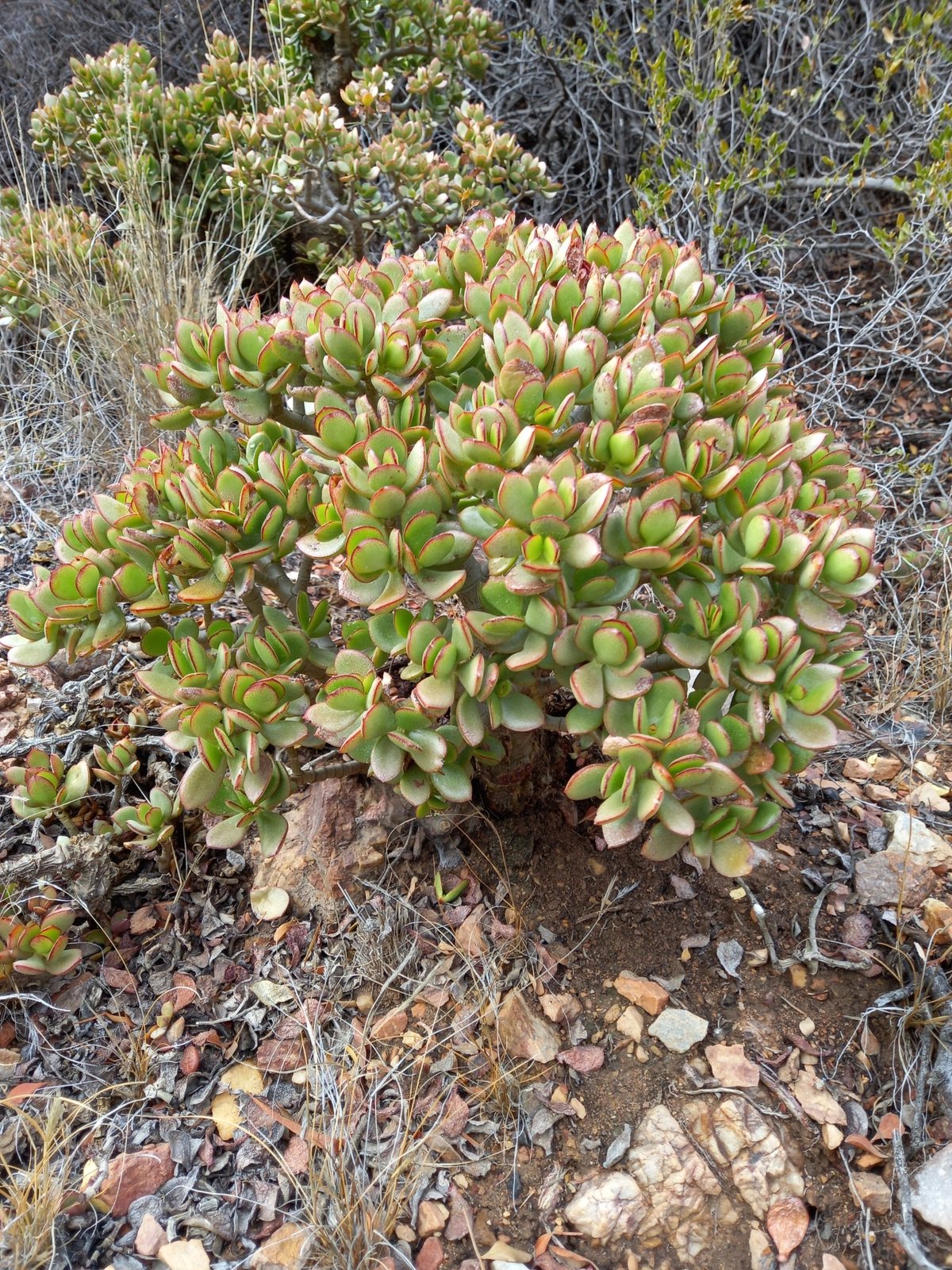
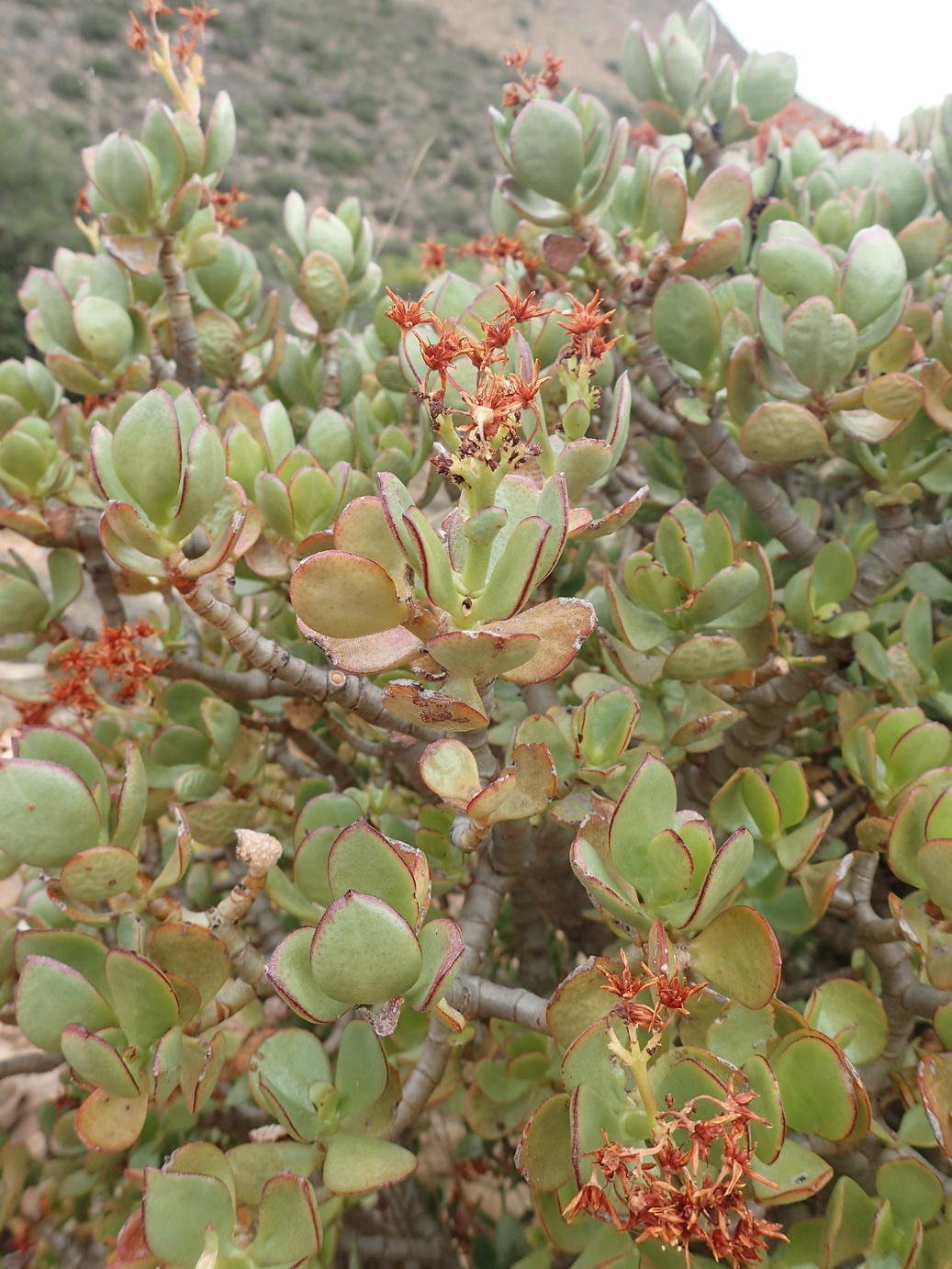
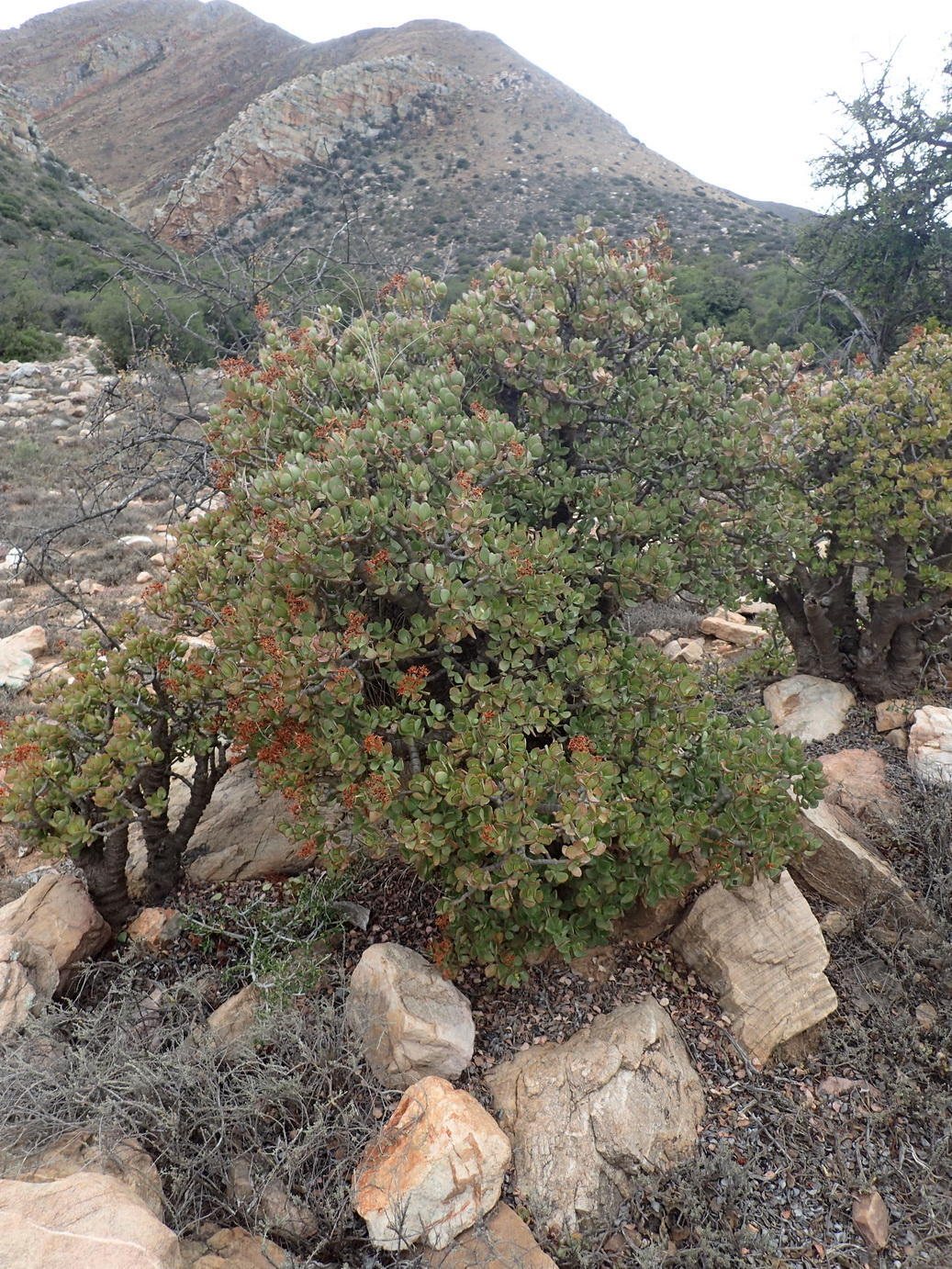
Jade plant is an evergreen succulent shrub with thick, oval leaves and woody, branching stems. Gardeners grow it for its rounded, tree-like shape in containers and frost-free gardens; in colder climates, keep it indoors over winter.
At a glance
- Sun
- Full sun to partial shade outdoors; bright light with several hours of direct sun indoors. Introduce strong sun gradually, and provide afternoon shade in very hot climates.
- Water
- Low water needs. Water thoroughly, let excess drain away, then allow the potting mix to dry before watering again. Water much less in winter.
- Soil
- Sharply drained, sandy or gritty soil. In containers, use a free-draining cactus mix and a pot with drainage holes.
- Height
- 3-6 ft (0.9-1.8 m)
- Spread
- 2-4 ft (0.6-1.2 m)
- Flowers
- Small clusters of white to pale pink, star-shaped flowers in late winter to spring, mainly on mature plants. Indoor plants may not flower.
- Foliage
- Evergreen. Fleshy, glossy green, oval leaves held in opposite pairs; leaf edges may turn red in strong light.
- Growth
- Slow to moderate in warm, bright conditions.
- Care needed
- Low
The year at a glance
- Drought tolerant
- Heat tolerant
- Low allergen
| J | F | M | A | M | J | J | A | S | O | N | D | |
|---|---|---|---|---|---|---|---|---|---|---|---|---|
| Flowers | ||||||||||||
| Plant |
Northern hemisphere months. In Australia, shift them by six.
- Difficulty
- Easy
- Toughness
- Fairly tough
Will it suit your garden?
Pick your zone, country, light and whether you have pets.
Full sun is 6 or more hours of direct sun a day, part shade 3 to 6 hours, shade under 3.
How it grows
Planting day
0.8 ft (0.25 m)
After 1 year
1.3 ft (0.39 m)
After 2 years
1.7 ft (0.53 m)
After 3 years
2.2 ft (0.67 m)
After 5 years
3 ft (0.96 m)
About 8 years to full size.
From a typical nursery size, at an average rate for this kind of plant. A rule of thumb, not a forecast.
Good to know
- Cats and dogs
- Toxic
- Growth rate
- Slow
Care
Jobs through the year
- WaterApr–May, Sep–Oct, every 21 days
- Water established ground plants only when dry; check container compost and let it dry fully first.
- WaterJun–Aug, every 14 days
- Water thoroughly only after soil dries; pots may dry faster, and saucers must be emptied.
- WaterJan–Mar, Nov–Dec, every 35 days
- Check frost-free pots and water sparingly only when compost is thoroughly dry.
- FeedMay, Jul
- Give a half-strength balanced liquid feed if actively growing; do not feed dry or stressed plants.
- PruneApr–Jun
- Trim leggy stems above paired leaves and remove damaged growth without heavy pruning.
- ProtectMay–Jun
- Use containers locally and introduce outdoor sun gradually after all frost risk passes.
- ProtectSep–Oct
- Bring pots into a bright, cool, frost-free room before frost and reduce watering.
- Check that the potting mix has dried before watering; never leave the pot standing in water.
- Feed lightly with a balanced liquid fertiliser at half strength once or twice during spring and summer.
- Move plants under cover before frost; a bright, cool, frost-free room suits winter growth.
- Acclimatise indoor plants to outdoor sun over one to two weeks to prevent scorched leaves.
- Repot in spring only when crowded, using a stable pot and fresh, free-draining mix.
Pruning. Prune in spring or early summer, cutting leggy stems just above a pair of leaves to encourage branching. Remove dead or damaged growth with clean tools and avoid taking off large amounts at once.
Through the year
- Spring
- Check roots and repot if crowded; begin watering more often as active growth resumes.
- Late spring
- Once frost risk has passed, gradually introduce container plants to outdoor light.
- Early summer
- Prune long stems and take cuttings; give a light feed if growth is healthy.
- Summer
- Check soil moisture regularly, but let it dry between waterings; watch for sun scorch during heatwaves.
- Autumn
- Stop feeding, reduce watering as growth slows, and bring pots indoors before frost.
- Winter
- Keep in bright, frost-free conditions and water sparingly; inspect leaf joints for mealybugs.
In the garden
- Use a mature specimen in a heavy container beside a sunny entrance for a small, tree-like focal point.
- Group with aloes and echeverias in a frost-free gravel bed for contrasting leaf shapes.
- Place in simple terracotta or plain contemporary pots on a sheltered courtyard terrace.
- Grow on a bright windowsill or in a conservatory where its branching outline can be seen clearly.
Garden styles it suits: Architectural minimal, Modern courtyard, Desert modern, Mediterranean, Desert / xeriscape and Small-space.
Plant it with: Aloe vera, Echeveria, Zebra haworthia, Elephant bush and Blue chalksticks.
Wildlife: Outdoor flowers can attract bees and other small insects. It offers little wildlife value when grown indoors.
Problems to watch for
- Root and stem rot: soft stems, yellowing leaves and collapse usually follow prolonged wetness. Remove rotten tissue, retain healthy cuttings if necessary, and improve drainage and watering intervals.
- Mealybugs: inspect leaf joints and stems for white cottony clusters. Isolate affected plants, remove small infestations by hand, and use a labelled treatment suitable for succulents if needed.
- Sun scorch: pale or brown patches can develop after a sudden move into strong sun. Provide temporary shade and increase exposure gradually; damaged leaves will not recover.
- Leggy growth and leaf drop: improve light if stems stretch; also check for overwatering, severe drought or cold draughts before changing care.
Safety
Toxic to cats and dogs if eaten; leaves and stems can cause vomiting, lethargy and poor coordination. Seek veterinary advice after ingestion. Reliable information on horse toxicity is limited, so prevent access. In people, ingestion may cause stomach upset and sap may irritate skin; keep away from young children and do not eat any part.
Easily confused with
Elephant bush (Portulacaria afra)
Usually has smaller, rounder leaves and slender reddish stems; jade plant has larger, thicker, oval leaves and heavier branches.
Silver jade plant (Crassula arborescens)
Has rounder, blue-grey leaves, often with red margins, rather than the usually glossy green, oval leaves of jade plant.
Baby rubber plant (Peperomia obtusifolia)
Has flatter, less fleshy leaves arranged alternately along softer stems, and produces thin flower spikes rather than clusters of star-shaped flowers.
The name
Crassula comes from the Latin for thick, referring to the fleshy leaves, ovata means egg-shaped, and jade refers to the green leaf colour.
Propagation. Take stem or individual leaf cuttings in spring or summer. Let cut surfaces dry and callus for several days, then place in a gritty propagation mix and water sparingly until rooted. Stem cuttings produce a substantial plant sooner.
Checked against open data
- Accepted botanical name
- Crassula ovata
- In the US and Canada
- Introduced in Hawaii.
- Native range
- Cape Provinces, KwaZulu-Natal and Mozambique.
Sources: GBIF (CC BY 4.0), USDA PLANTS and Trefle (CC BY 4.0). The care and design notes are LandscapeGPT's own.
See it in your own yard.
Upload a photo of your yard and see it redesigned with plants that suit your climate, each checked against your zone.