Pawpaw
Asimina triloba. Family Annonaceae. Tree.
Also called American pawpaw, Common pawpaw, Indiana banana.
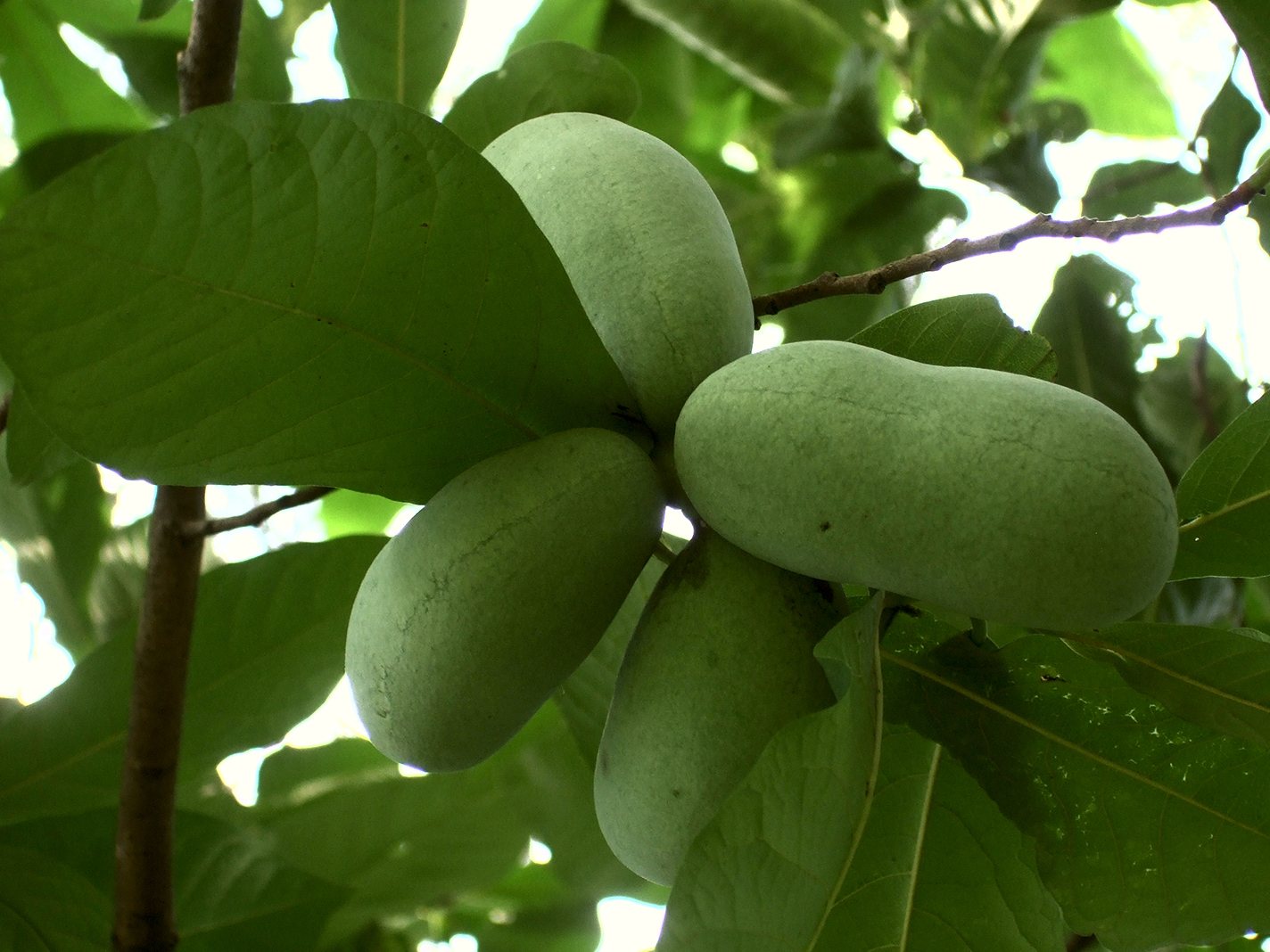
Pawpaw is a deciduous tree native to eastern North America, grown for its large leaves, yellow autumn colour and soft, custard-like fruit. It tolerates woodland shade, but crops best in sun with two genetically different trees nearby. Fruit ripening needs a sufficiently warm summer, so crops can be unreliable in cool parts of the UK and Canada.
At a glance
- Sun
- Full sun to partial shade; shade young trees from strong afternoon sun for their first two growing seasons.
- Water
- Keep the root zone consistently moist but not waterlogged, especially during establishment and fruit development.
- Soil
- Deep, fertile, well-drained soil, preferably slightly acidic to neutral; avoid shallow, drought-prone ground and standing water.
- Height
- 15-30 ft (4.6-9.1 m)
- Spread
- 10-20 ft (3-6.1 m), wider if suckers form a colony
- Flowers
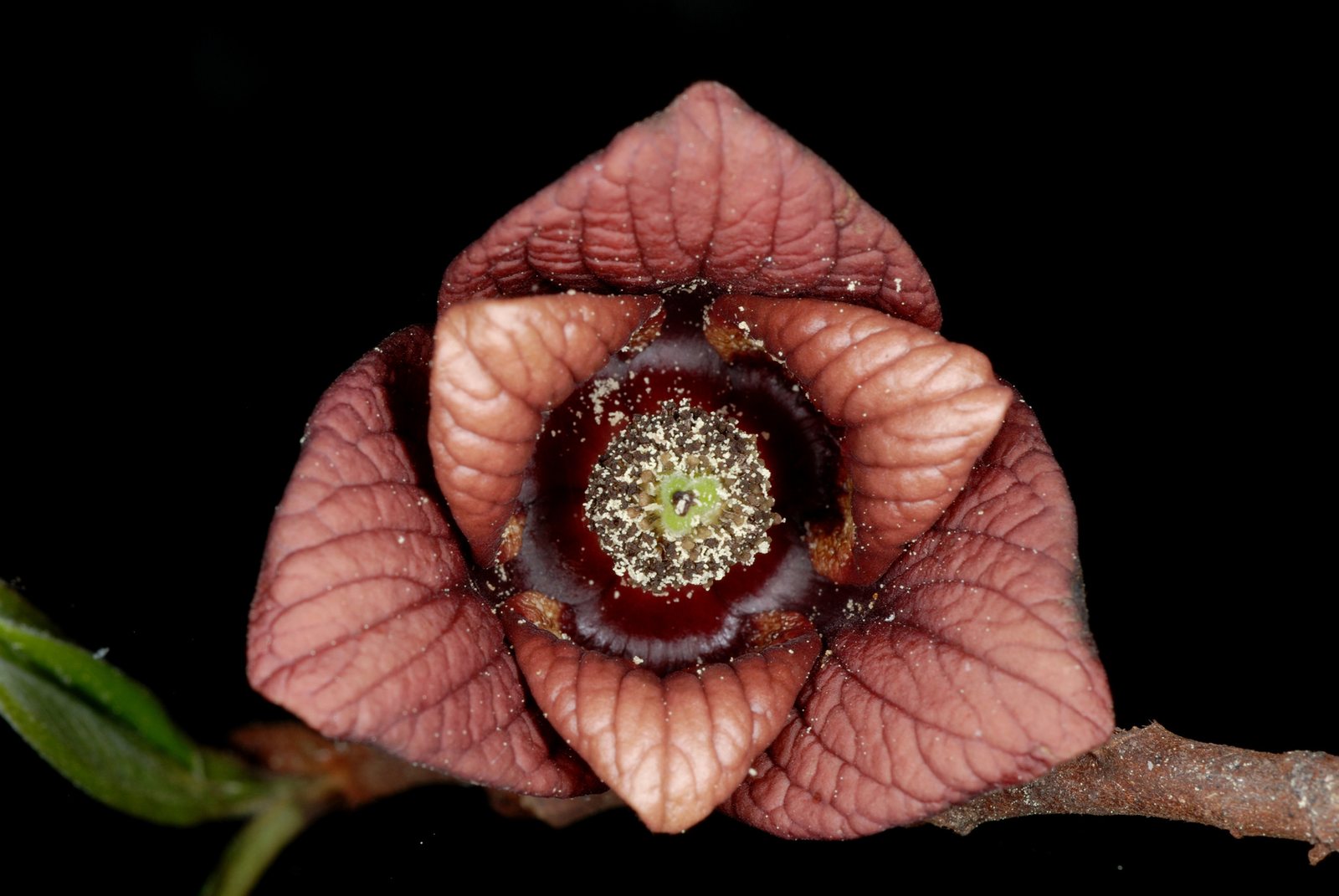
- Spring, before or as the leaves emerge; hanging, dark maroon flowers.
- Foliage
- Large, drooping, oblong green leaves give a lush appearance; usually yellow in autumn.
- Growth
- Slow during establishment, then moderate in suitable conditions.
- Care needed
- Medium
The year at a glance
- Pollinators
- Deer resistant
- Heat tolerant
- Disease resistant
- Wildlife
- Low allergen
- Edible
| J | F | M | A | M | J | J | A | S | O | N | D | |
|---|---|---|---|---|---|---|---|---|---|---|---|---|
| Flowers | ||||||||||||
| Fruit | ||||||||||||
| Plant |
Northern hemisphere months. In Australia, shift them by six.
- Difficulty
- Moderate
- Toughness
- Fairly tough
Will it suit your garden?
Pick your zone, country, light and whether you have pets.
Full sun is 6 or more hours of direct sun a day, part shade 3 to 6 hours, shade under 3.
How it grows
Planting day
7 ft (2 m)
After 1 year
7 ft (2.2 m)
After 2 years
8 ft (2.4 m)
After 3 years
8 ft (2.6 m)
After 5 years
10 ft (2.9 m)
About 26 years to full size.
From a typical nursery size, at an average rate for this kind of plant. A rule of thumb, not a forecast.
Good to know
- Cats and dogs
- Toxic
- Native to
- the US and Canada
- Growth rate
- Slow
Care
Jobs through the year
- WaterApr–May, Sep–Oct, every 10 days
- Water established trees when rain is insufficient to keep roots moist; young trees need closer checks.
- WaterJun–Aug, every 7 days
- Soak established trees during dry weather, especially as fruit swells; avoid waterlogging.
- MulchMar–Apr
- Apply 5–8 cm of organic mulch, keeping it away from the trunk.
- FeedApr
- Feed lightly only if growth is weak; avoid heavy nitrogen applications.
- PruneFeb–Mar
- Remove damaged or crossing branches and unwanted suckers; retain fruiting wood.
- ProtectMay–Aug
- Shade young trees from strong afternoon sun for their first two growing seasons.
- HarvestAug–Oct
- Pick aromatic fruit that yields gently and detaches easily; cool promptly.
- Plant young, container-grown trees carefully; the fleshy roots resent disturbance and drying.
- Plant two genetically different trees for reliable pollination; two grafted trees of the same cultivar are not sufficient.
- Water deeply during dry spells, particularly while trees establish and fruit swells.
- Apply 2-3 in (5-8 cm) of organic mulch, keeping it away from the trunk.
- Feed lightly in spring if growth is weak; avoid heavy nitrogen feeding.
- Remove unwanted root suckers while small if you want a single tree rather than a thicket.
Pruning. Prune lightly in late winter while dormant, removing dead, damaged or crossing branches and retaining a well-spaced framework. Avoid heavy pruning, which removes potential fruiting wood.
Harvest
Pick ripe pawpaw fruit in late summer to autumn: usually August–October in the US, September–October in Canada and the UK, and February–April in Australia, depending on variety and climate. Fruit is ready when it yields gently to pressure, smells fruity and detaches easily; skin colour alone is unreliable.
Through the year
- Late winter
- Prune lightly and remove unwanted suckers.
- Spring
- Plant young trees with minimal root disturbance and renew mulch.
- Spring
- If fruit set has been poor, transfer pollen between genetically different trees with a small brush as flowers open.
- Summer
- Water during dry weather and protect young trees from scorching afternoon sun.
- Late summer to autumn
- Check fruit frequently; harvest when slightly soft and aromatic, then eat promptly or refrigerate.
- Autumn
- Collect fallen fruit and remove tree guards that have become tight.
In the garden
- Plant a small group in an edible landscape, allowing access around each tree for harvesting.
- Use at a woodland edge with shade-tolerant groundcover for a layered planting.
- Include in a food forest where its broad leaves contrast with smaller-leaved fruit trees and shrubs.
- Allow a suckering colony in a spacious naturalistic garden for screening and autumn colour.
Garden styles it suits: Woodland, Food forest, Backyard orchard, Edible landscape, Wildlife garden and Autumn colour.
Plant it with: Wild ginger, Christmas fern, Foamflower, Woodland phlox and Serviceberry.
Wildlife: Flowers attract small flies and beetles that provide pollination. In its native range, the leaves feed zebra swallowtail caterpillars, while ripe fallen fruit is eaten by mammals.
Problems to watch for
- Little or no fruit: provide a genetically different pollination partner, improve sunlight and try hand-pollination; cool summers may still prevent ripening.
- Leaf scorch or drought stress: shade young trees from intense sun, mulch and water deeply without saturating the soil.
- Pawpaw peduncle borer in eastern North America: larvae damage flowers and reduce fruit set; remove affected flowers when practical, though control is rarely needed in home gardens.
- Poor establishment or root decline: avoid disturbing roots when planting and correct drainage problems; established trees transplant poorly.
Safety
Only the ripe flesh is normally eaten; discard the seeds and skin. Seeds, bark and leaves contain potentially harmful compounds and should not be eaten by people or pets. Ripe flesh can cause nausea or allergic reactions in some people, and frequent or heavy consumption is best avoided because it contains annonacin, whose long-term dietary risk remains uncertain. Specific toxicity and safe doses for cats, dogs and horses are poorly documented; keep them from chewing the plant or eating seeds and fallen fruit.
Easily confused with
Papaya (Carica papaya)
Also called pawpaw in Australia, but it is a frost-tender plant with deeply lobed leaves clustered near the top of a usually unbranched trunk; Asimina has simple, unlobed leaves on woody branches.
Cucumber tree (Magnolia acuminata)
Has somewhat similar large leaves, but upright yellow-green flowers and cone-like fruits rather than hanging maroon flowers and fleshy pawpaw fruits.
The name
The common name pawpaw is thought to be an alteration of papaya, while triloba refers to the flower's three-lobed arrangement of petals.
Propagation. Grow from fresh seed kept moist and given about 90-120 days of cold stratification before sowing in deep pots. Do not let seed dry out. Seedlings vary and take several years to fruit; named cultivars are propagated by grafting.
Checked against open data
- Accepted botanical name
- Asimina triloba
- In the US and Canada
- Native in Canada and the lower 48 states.
- Native range
- Alabama, Arkansas, Delaware, District of Columbia, Florida, Georgia, Illinois, Indiana, Iowa, Kansas, Kentucky and Louisiana.
- Measured
- Soil pH 4.7 to 7.2. Average height 430 cm.
Sources: GBIF (CC BY 4.0), USDA PLANTS and Trefle (CC BY 4.0). The care and design notes are LandscapeGPT's own.
See it in your own yard.
Upload a photo of your yard and see it redesigned with plants that suit your climate, each checked against your zone.