Pickling cucumber
Cucumis sativus 'Boston Pickling'. Family Cucurbitaceae. Annual.
Also called Boston Pickling cucumber.
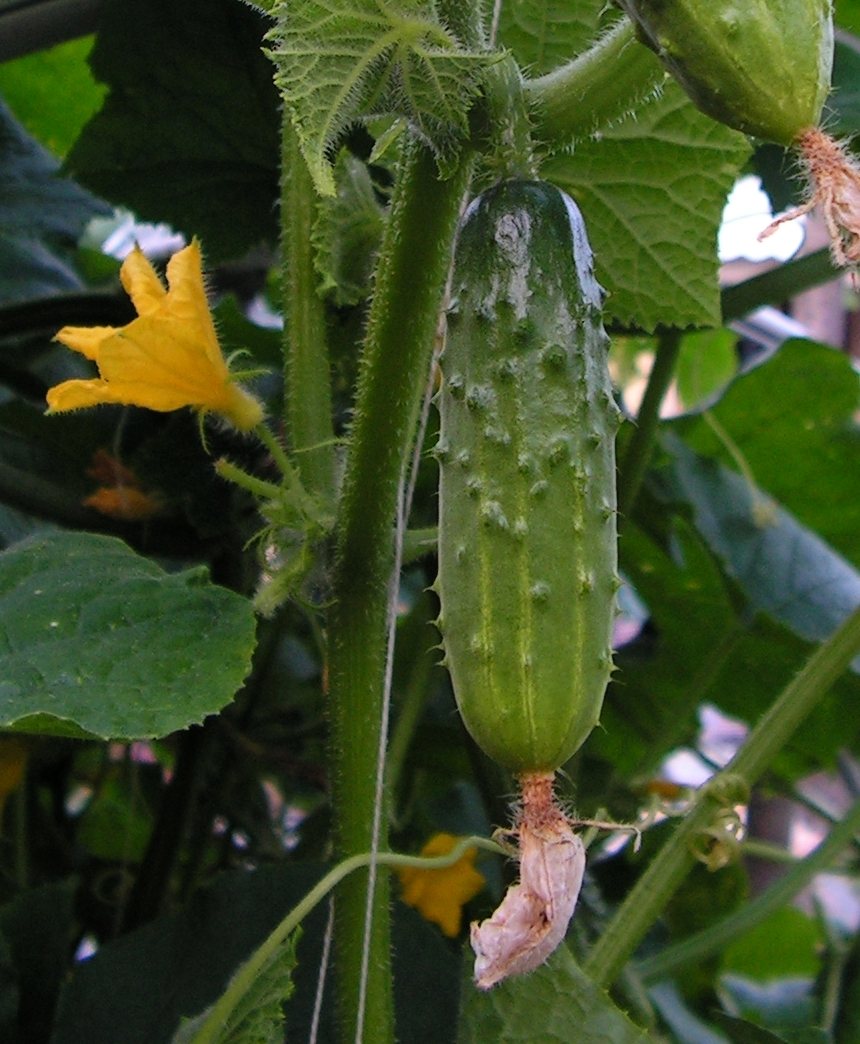
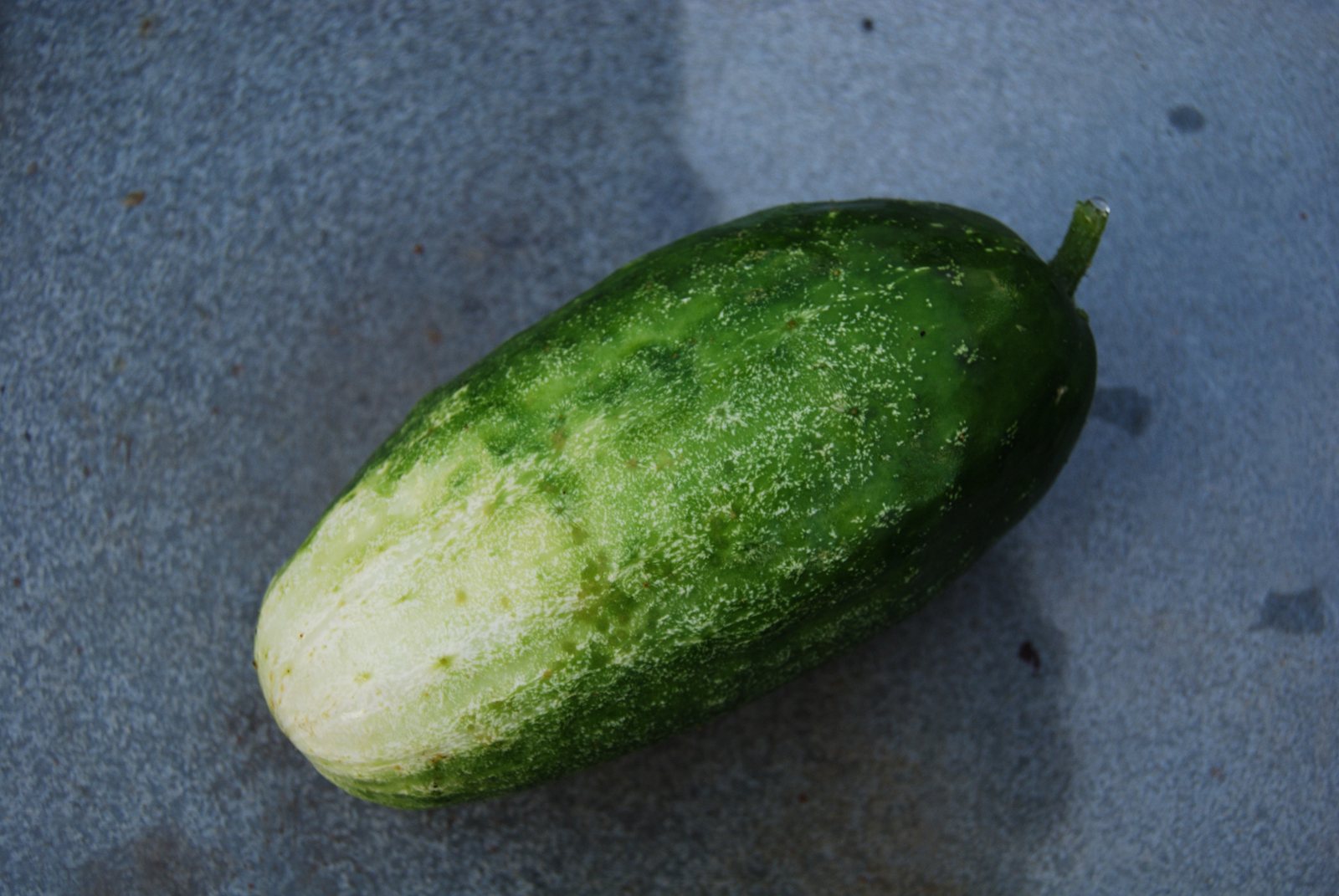
Cucumis sativus 'Boston Pickling' is a vigorous, vining cucumber grown as an annual for its short, green fruits, usually picked young for pickling. It needs warm weather, regular watering and insect pollination, and can trail over a bed or climb a trellis.
At a glance
- Sun
- Full sun; light afternoon shade can help in very hot climates.
- Water
- Keep the root zone evenly moist, especially during flowering and fruiting. Water deeply when the soil surface begins to dry, without leaving the soil waterlogged.
- Soil
- Fertile, moisture-retentive but well-drained soil enriched with compost; ideally pH 6.0-7.0.
- Height
- 6-12 in (0.15-0.3 m) trailing; 4-6 ft (1.2-1.8 m) on a trellis
- Spread
- 3-6 ft (0.9-1.8 m) trailing; allow 1-2 ft (0.3-0.6 m) between trellised plants
- Flowers
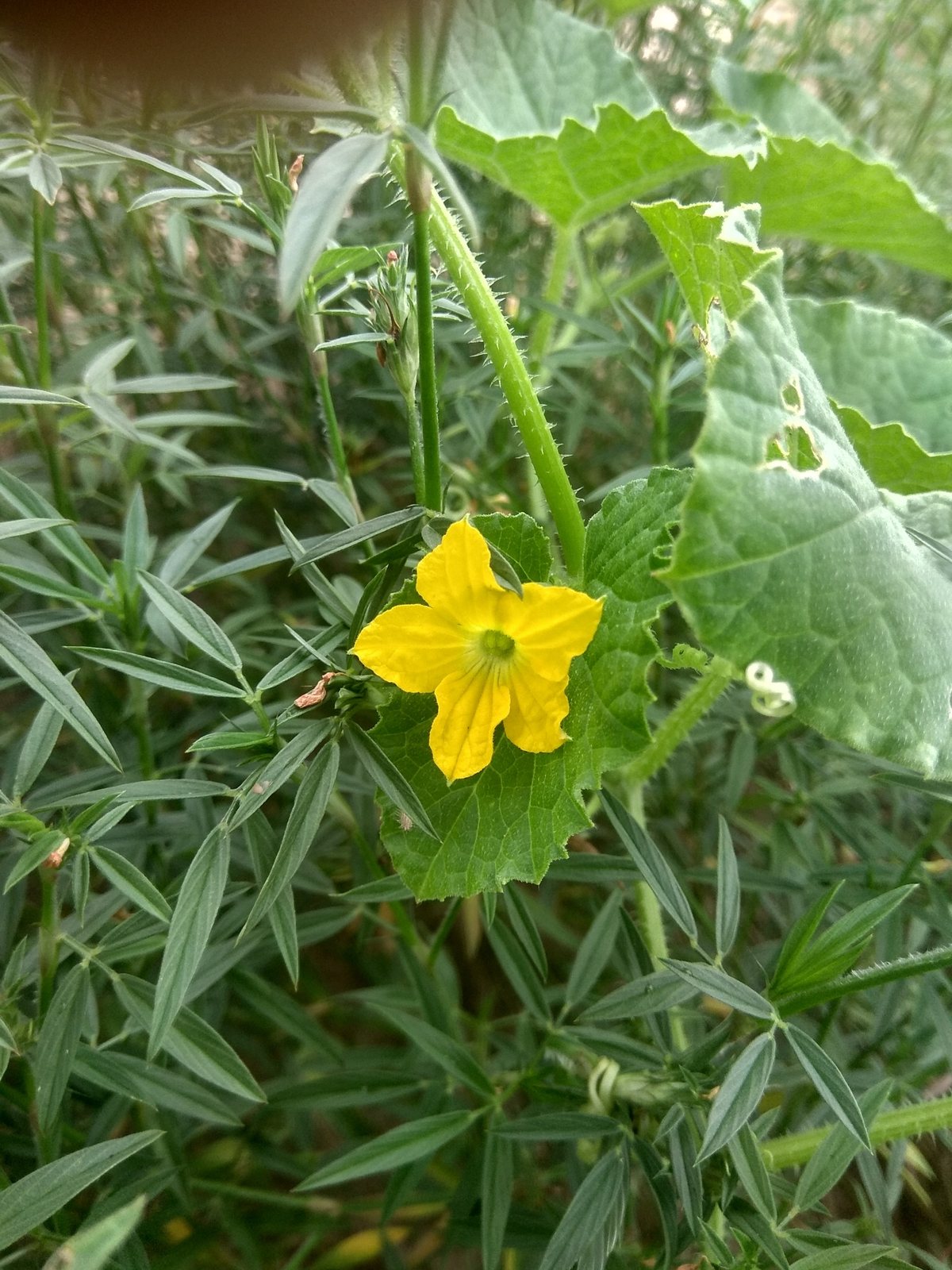
- Yellow flowers from early summer until autumn, depending on sowing time and climate.
- Foliage
- Large, rough, green leaves with shallow lobes; bristly stems carry curling tendrils.
- Growth
- Fast in warm weather
- Care needed
- Medium
The year at a glance
- Pollinators
- Heat tolerant
- Low allergen
- Edible
| J | F | M | A | M | J | J | A | S | O | N | D | |
|---|---|---|---|---|---|---|---|---|---|---|---|---|
| Flowers | ||||||||||||
| Fruit | ||||||||||||
| Plant |
Northern hemisphere months. In Australia, shift them by six.
- Difficulty
- Moderate
- Toughness
- Needs looking after
Will it suit your garden?
Pick your zone, country, light and whether you have pets.
Full sun is 6 or more hours of direct sun a day, part shade 3 to 6 hours, shade under 3.
How it grows
Planting day
0.5 ft (0.15 m)
After 1 year
0.7 ft (0.22 m)
full size
Full size in one season.
From a typical nursery size, at an average rate for this kind of plant. A rule of thumb, not a forecast.
Good to know
- Cats and dogs
- Safe
- Growth rate
- Fast
Care
Jobs through the year
- WaterMay, Sep, every 7 days
- Water established plants deeply if rain is insufficient; check seedlings more frequently.
- WaterJun–Aug, every 3 days
- Water established plants at soil level as needed to maintain even moisture, especially during fruiting.
- FeedMay–Jun
- Apply balanced vegetable fertiliser at planting, following the label.
- FeedJul–Aug, every 21 days
- Feed cropping plants if needed, following product directions and avoiding excessive nitrogen.
- MulchJun
- Mulch once soil is warm, keeping material clear of stems.
- ProtectMay–Jun
- Use insect mesh against cucumber beetles where present; remove it when flowering begins.
- HarvestJul–Sep
- Check daily in peak season; cut firm green fruits at 5–15 cm before they swell or yellow.
- Plant outside after all frost risk has passed and soil has warmed to at least 65°F (18°C).
- Water at soil level and avoid repeated drying out while fruits are developing.
- Mulch once the soil is warm, keeping mulch clear of the stem.
- Apply a balanced vegetable fertiliser according to the label; avoid excessive nitrogen.
- Install a sturdy trellis at planting and guide young shoots onto it.
- Keep insect netting or row covers off flowering plants so bees can reach the flowers.
Pruning. Routine pruning is unnecessary. During growth, guide vines onto their support and remove badly diseased leaves with clean tools; avoid heavy cutting that exposes fruits to strong sun.
Harvest
Begin checking for fruit roughly 55-65 days after sowing in warm conditions, allowing longer in cool weather. Pick firm, green cucumbers about 2-6 in (5-15 cm) long, choosing smaller fruits for whole pickles and harvesting before they swell or turn yellow. Cut the stalk with scissors and check plants daily or every other day to keep them cropping.
Through the year
- Spring
- Prepare a sunny bed with compost and put supports in place.
- Mid spring
- For an early start, sow indoors in individual pots 3-4 weeks before the expected planting-out date.
- Late spring
- Harden off seedlings and plant out after frost, or direct-sow once the soil is warm.
- Early summer
- Mulch warm soil, guide vines onto supports and allow pollinators access to flowers.
- Summer
- Water consistently, feed as needed and harvest frequently.
- Autumn
- Remove spent vines when production ends or frost kills them; clean supports and discard badly diseased material.
In the garden
- Train up a trellis along the sunny edge of a vegetable bed to save ground space.
- Use a simple frame in a potager to add seasonal height among lower edible crops.
- Grow in a large container with a sturdy support on a sunny patio, where watering is easy.
- Let vines trail through a dedicated mulched bed, leaving paths clear for frequent harvesting.
Garden styles it suits: Potager (kitchen garden), Cottage garden, Farmhouse, Edible landscape, Homestead and Small-space.
Plant it with: Dill, Nasturtiums, Calendula, Lettuce and Radishes.
Wildlife: Bees visit the flowers and are needed for reliable fruit set. Flowers of nearby dill and calendula also provide food for beneficial insects.
Problems to watch for
- Powdery mildew: space plants for airflow, use a trellis and remove heavily affected leaves; late-season infections may not justify treatment.
- Cucumber beetles, especially in North America: protect young plants with insect mesh, remove it for flowering and hand-pick beetles; promptly remove plants that collapse from suspected bacterial wilt.
- Aphids: inspect shoot tips and leaf undersides, wash colonies off with water and preserve ladybirds and other predators.
- Poor fruit set or misshapen fruit: allow bees access, keep watering even and hand-pollinate female flowers with fresh pollen from male flowers if bee activity is low.
Safety
Not known to be toxic to cats, dogs, horses or people; the normal, non-bitter fruits are edible. Discard any unusually bitter cucumber rather than eating or pickling it, because high levels of cucurbitacins can cause serious stomach upset. Do not eat foliage or other parts as a substitute for the fruit.
Easily confused with
Slicing cucumber (Cucumis sativus)
The vines look much the same, but slicing varieties generally produce longer fruits. Fruit appearance alone cannot reliably confirm 'Boston Pickling'; use labelled seed.
Courgette or zucchini (Cucurbita pepo)
Usually has a bushier habit, thicker stems and much larger yellow flowers; its developing fruits lack the typical cucumber's prickly surface.
The name
The cultivar name 'Boston Pickling' refers to Boston and its traditional use as a cucumber harvested young for pickling.
Propagation. Sow seed in warm conditions, preferably about 70-85°F (21-29°C), in individual pots or directly into warm soil. This open-pollinated cultivar can be saved from fully mature fruit, but seed may not come true if other cucumber varieties flower nearby.
Checked against open data
- Accepted botanical name
- Cucumis sativus
- In the US and Canada
- Introduced in Hawaii, the lower 48 states, Pacific Basin and Puerto Rico.
- Native range
- Assam, Bangladesh, China South-Central, China Southeast, East Himalaya, Myanmar, Nepal, Thailand and West Himalaya.
- Measured
- Average height 200 cm.
Sources: GBIF (CC BY 4.0), USDA PLANTS and Trefle (CC BY 4.0). The care and design notes are LandscapeGPT's own.
See it in your own yard.
Upload a photo of your yard and see it redesigned with plants that suit your climate, each checked against your zone.