Pin oak
Quercus palustris. Family Fagaceae. Tree.
Also called Swamp oak, Water oak.
Pin oak is a large, deciduous oak native to eastern and central North America, grown for its straight trunk, orderly branching and red to bronze autumn foliage. Its lower branches naturally droop, so give it a broad lawn or park-like setting rather than a narrow verge. It needs acidic soil; alkaline ground commonly causes persistent yellowing and poor growth.
At a glance
- Sun
- Full sun; tolerates light shade but develops a better crown in an open position.
- Water
- Moderate to high; prefers consistently moist ground and tolerates seasonal flooding once established, but not prolonged drought.
- Soil
- Acidic, moisture-retentive soil, ideally around pH 5.0-6.5. Tolerates clay and periodically wet ground; avoid chalk, limestone and alkaline fill.
- Height
- 50-70 ft (15-21 m), occasionally taller
- Spread
- 25-40 ft (7.6-12 m)
- Flowers
- Spring: inconspicuous yellow-green male catkins and tiny female flowers.
- Foliage
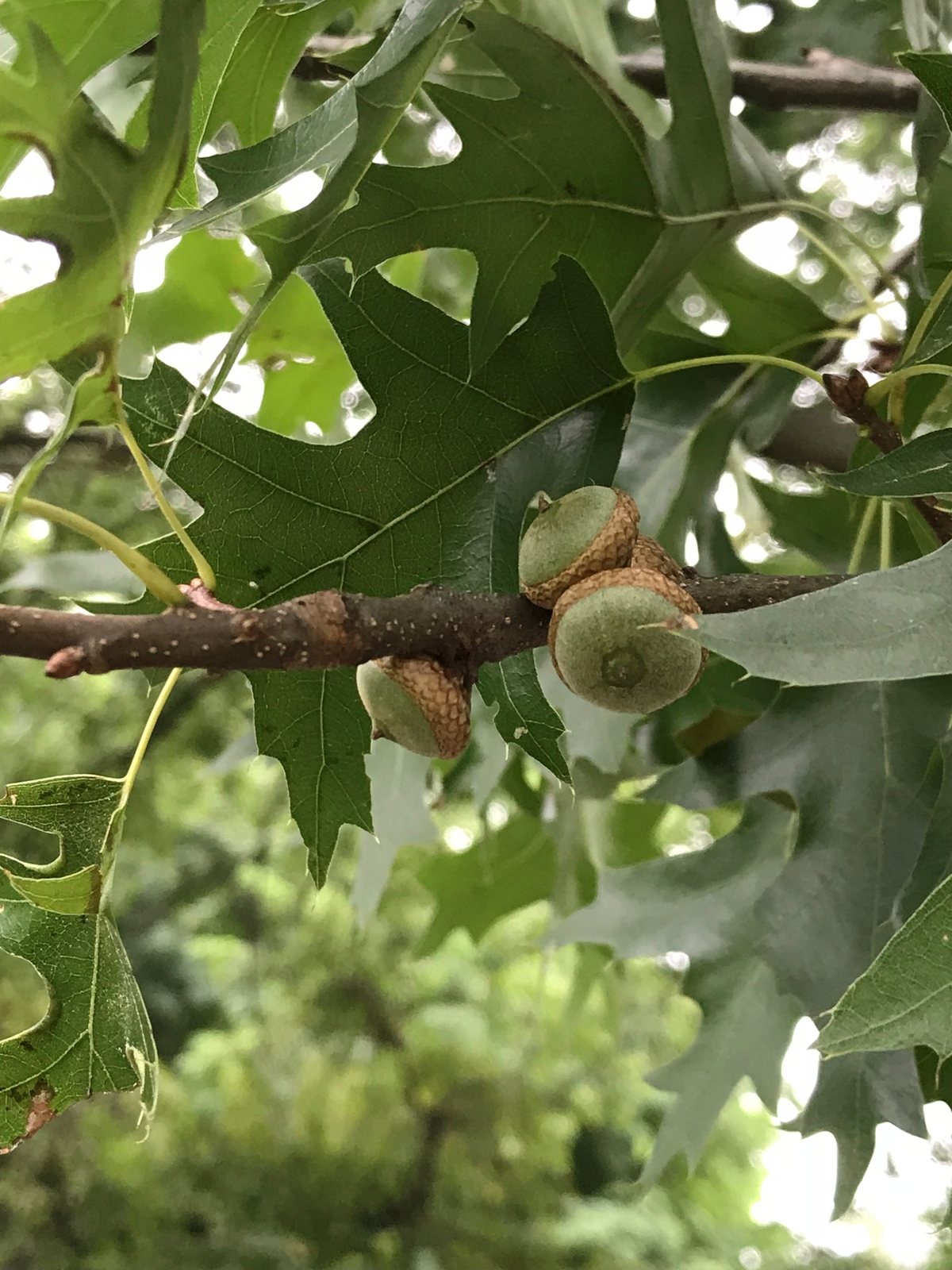
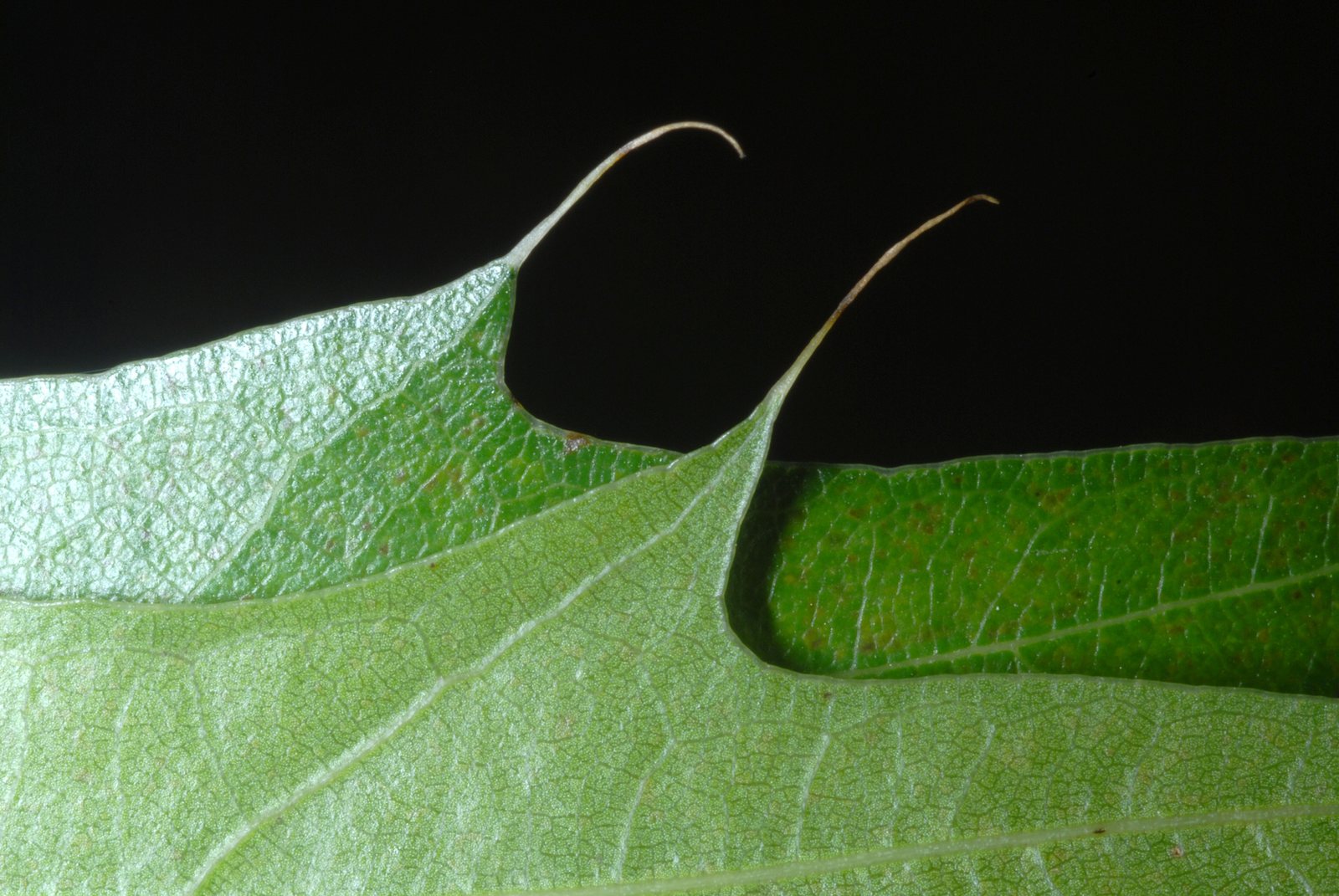
- Glossy green leaves with deep, rounded sinuses and pointed, bristle-tipped lobes. Autumn colour ranges from bronze to scarlet; young trees may retain brown leaves through winter.
- Growth
- Moderate to fast when young, commonly 1-2 ft (0.3-0.6 m) a year in suitable conditions.
- Care needed
- Medium
The year at a glance
- Cold hardy
- Wildlife
| J | F | M | A | M | J | J | A | S | O | N | D | |
|---|---|---|---|---|---|---|---|---|---|---|---|---|
| Flowers | ||||||||||||
| Fruit | ||||||||||||
| Plant |
Northern hemisphere months. In Australia, shift them by six.
- Difficulty
- Moderate
- Toughness
- Fairly tough
Will it suit your garden?
Pick your zone, country, light and whether you have pets.
Full sun is 6 or more hours of direct sun a day, part shade 3 to 6 hours, shade under 3.
How it grows
Planting day
7 ft (2.2 m)
After 1 year
10 ft (3.2 m)
After 2 years
14 ft (4.1 m)
After 3 years
17 ft (5.1 m)
After 5 years
23 ft (7.1 m)
About 16 years to full size.
From a typical nursery size, at an average rate for this kind of plant. A rule of thumb, not a forecast.
Good to know
- Cats and dogs
- Toxic
- Native to
- the US and Canada
- Growth rate
- Fast
Care
Jobs through the year
- WaterApr–May, Sep–Oct, every 14 days
- Deep-water established trees during dry spells; check young root balls more frequently.
- WaterJun–Aug, every 7 days
- Water deeply when rainfall is insufficient to keep the root zone moist.
- MulchMar–Apr
- Maintain 5–8 cm of organic mulch over roots, leaving the trunk clear.
- PruneJan–Feb
- Train young trees to one leader; follow local oak-wilt pruning restrictions.
- Test soil pH before planting; choose another tree if the ground is alkaline rather than relying on repeated iron treatments.
- Water deeply during dry spells for the first two to three growing seasons, keeping the root ball moist but not continuously saturated.
- Spread a 2-3 in (5-8 cm) layer of organic mulch over the root area, leaving the trunk clear.
- Plant with the root flare visible at soil level; allow room for the mature crown and drooping lower branches.
- Avoid routine feeding unless a soil test identifies a deficiency.
- Stake only if the root ball moves in wind, and remove supports after establishment.
Pruning. Prune young trees during winter dormancy to retain one main leader and gradually establish any necessary clearance beneath the crown. Where oak wilt occurs, follow local restrictions on pruning dates, avoid spring and early-summer pruning, and use a qualified arborist for large limbs.
Through the year
- Autumn
- Plant while the soil is workable and moist; in very cold regions, plant in early spring instead.
- Winter
- Check the young tree's structure and remove competing leaders or damaged branches during suitable dormant weather.
- Spring
- Refresh mulch without piling it against the trunk; check ties and remove unnecessary stakes.
- Late spring
- Inspect new leaves for yellowing between green veins, especially where soil may be alkaline.
- Summer
- Water young trees deeply during dry weather and keep machinery off the root area.
- Late autumn
- Collect fallen acorns where horses graze or pets repeatedly eat them; compost or shred leaves for mulch.
In the garden
- Use as a specimen on a large lawn, allowing its lower branches to sweep naturally toward the ground.
- Plant in spacious avenues where there is enough room for roots and the mature crown.
- Place in the upper margins of a large rain garden or seasonally wet landscape with acidic soil.
- Combine with moisture-loving shrubs and woodland-edge planting for layered autumn colour.
Garden styles it suits: Grand estate, Traditional, Woodland, Wildlife garden, Autumn colour and English manor.
Plant it with: Sweet pepperbush, Virginia sweetspire, Winterberry, Red chokeberry, Cinnamon fern and Tussock sedge.
Wildlife: Acorns feed squirrels, jays, deer and other wildlife. The foliage supports many moth and butterfly caterpillars within its native range, and mature trees provide nesting and shelter.
Problems to watch for
- Iron chlorosis: leaves turn yellow between green veins on alkaline soil. Confirm soil pH; arborist-applied treatments may help temporarily, but replacement with a soil-suited tree is often the lasting solution.
- Oak wilt: can cause rapid wilting and death in affected parts of North America. Seek prompt local diagnosis, observe pruning restrictions and do not move potentially infected firewood.
- Leaf scorch during drought: brown leaf edges can follow dry soil and heat. Water deeply, mulch and protect roots from compaction.
- Leaf and twig galls: usually cosmetic. Leave minor infestations alone; have extensive twig dieback assessed rather than spraying routinely.
Safety
Acorns and leaves contain tannins and can poison horses, dogs, cats and people if enough is eaten, causing digestive upset and potentially kidney damage. Horses are particularly at risk with sustained access to fallen acorns or young foliage. Acorns also pose a choking or intestinal blockage risk to pets; do not treat raw acorns as edible nuts.
Easily confused with
Northern pin oak (Quercus ellipsoidalis)
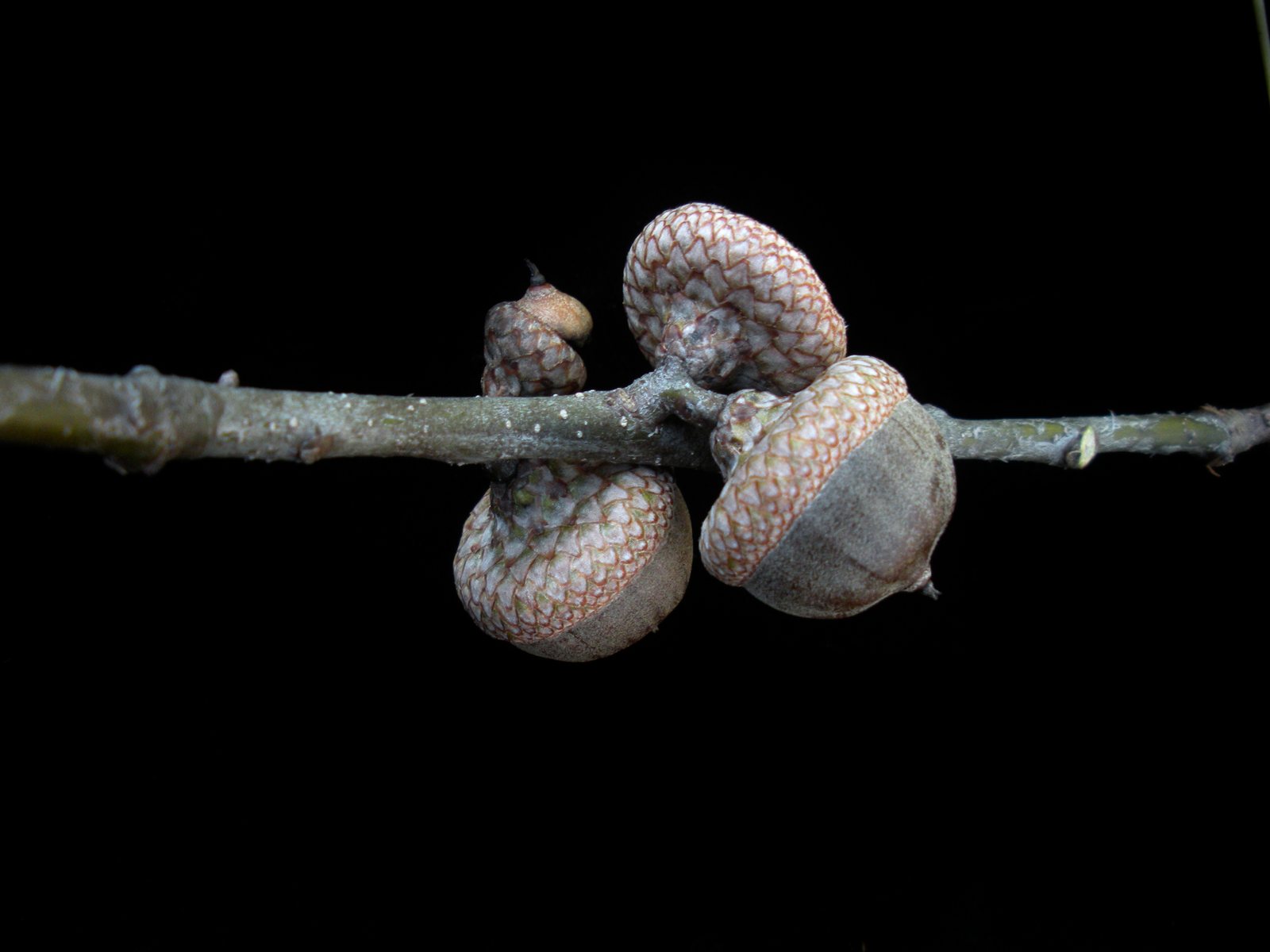
Has similarly deeply cut leaves but generally favours dry, sandy ground; its acorns are more elongated than pin oak's rounded acorns.
Scarlet oak (Quercus coccinea)
Often has broader leaves and larger acorns with deeper cups; the acorn tip commonly shows concentric rings. It lacks pin oak's consistently drooping lower branches.
Northern red oak (Quercus rubra)
Leaves have much shallower cuts between the lobes, and the larger acorns sit in broad, shallow, saucer-like cups.
The name
Quercus is the Latin name for oak, palustris means 'of marshes', and 'pin oak' refers to the short, pin-like dead branchlets often retained on the trunk.
Propagation. Grow from fresh, sound acorns. Keep them moist and protected from rodents through a cold winter, either outdoors in deep pots or under controlled cold, moist conditions, then allow them to germinate in spring. Seedlings vary in autumn colour.
Checked against open data
- Accepted botanical name
- Quercus palustris
- In the US and Canada
- Native in Canada and the lower 48 states.
- Native range
- Alabama, Arkansas, Connecticut, Delaware, District of Columbia, Illinois, Indiana, Iowa, Kansas, Kentucky, Maryland and Masachusettes.
- Measured
- Average height 2500 cm.
Sources: GBIF (CC BY 4.0), USDA PLANTS and Trefle (CC BY 4.0). The care and design notes are LandscapeGPT's own.
See it in your own yard.
Upload a photo of your yard and see it redesigned with plants that suit your climate, each checked against your zone.