Pindo palm
Butia capitata. Family Arecaceae. Tree.
Also called Jelly palm.
A slow-growing, evergreen palm with arching, blue-green fronds and yellow to orange fruit used for jelly. Most garden palms sold as Butia capitata are actually Butia odorata; true B. capitata comes from inland Brazil and is less cold-hardy, so check the identification before planting in a frost-prone garden.
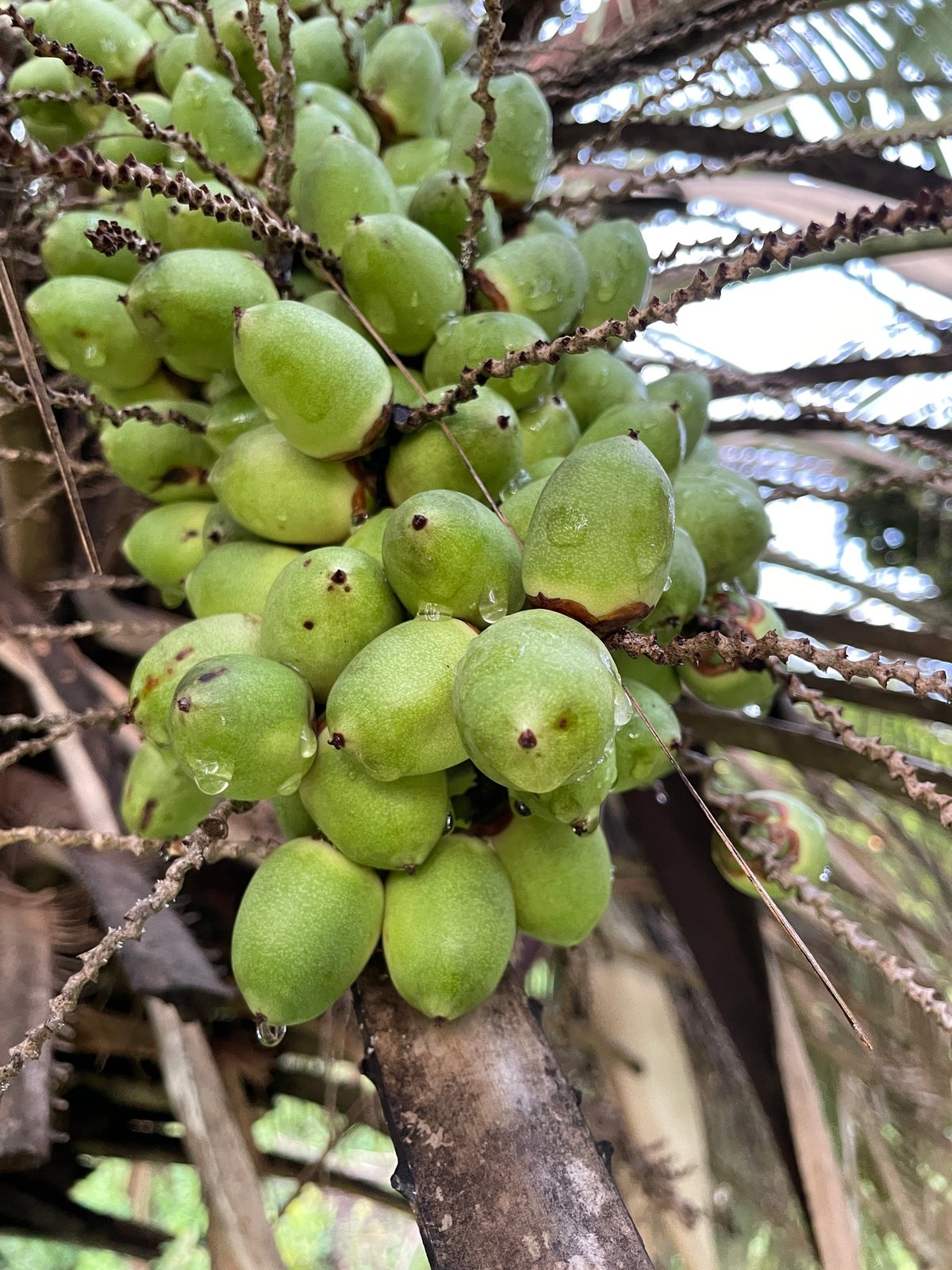
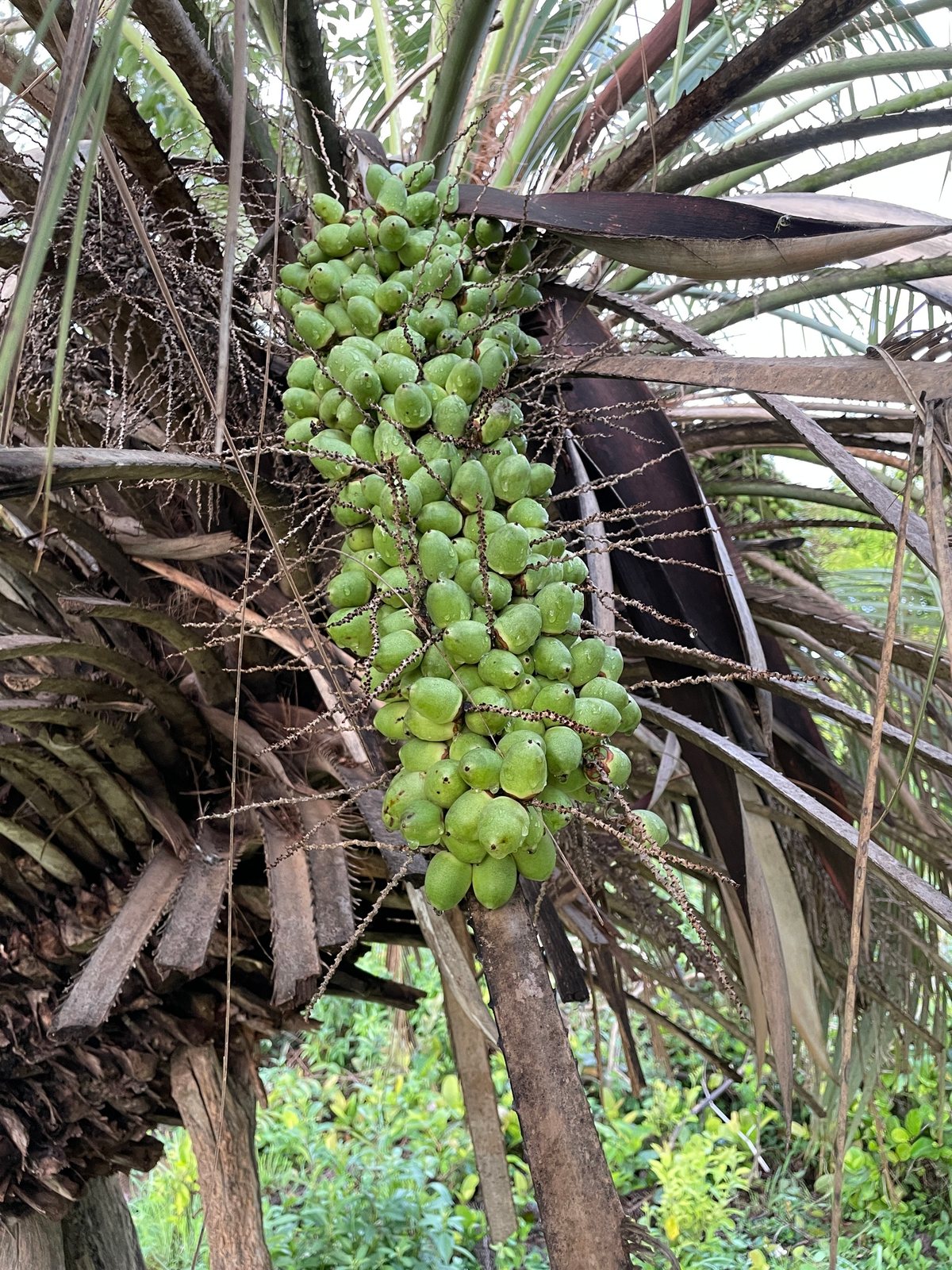
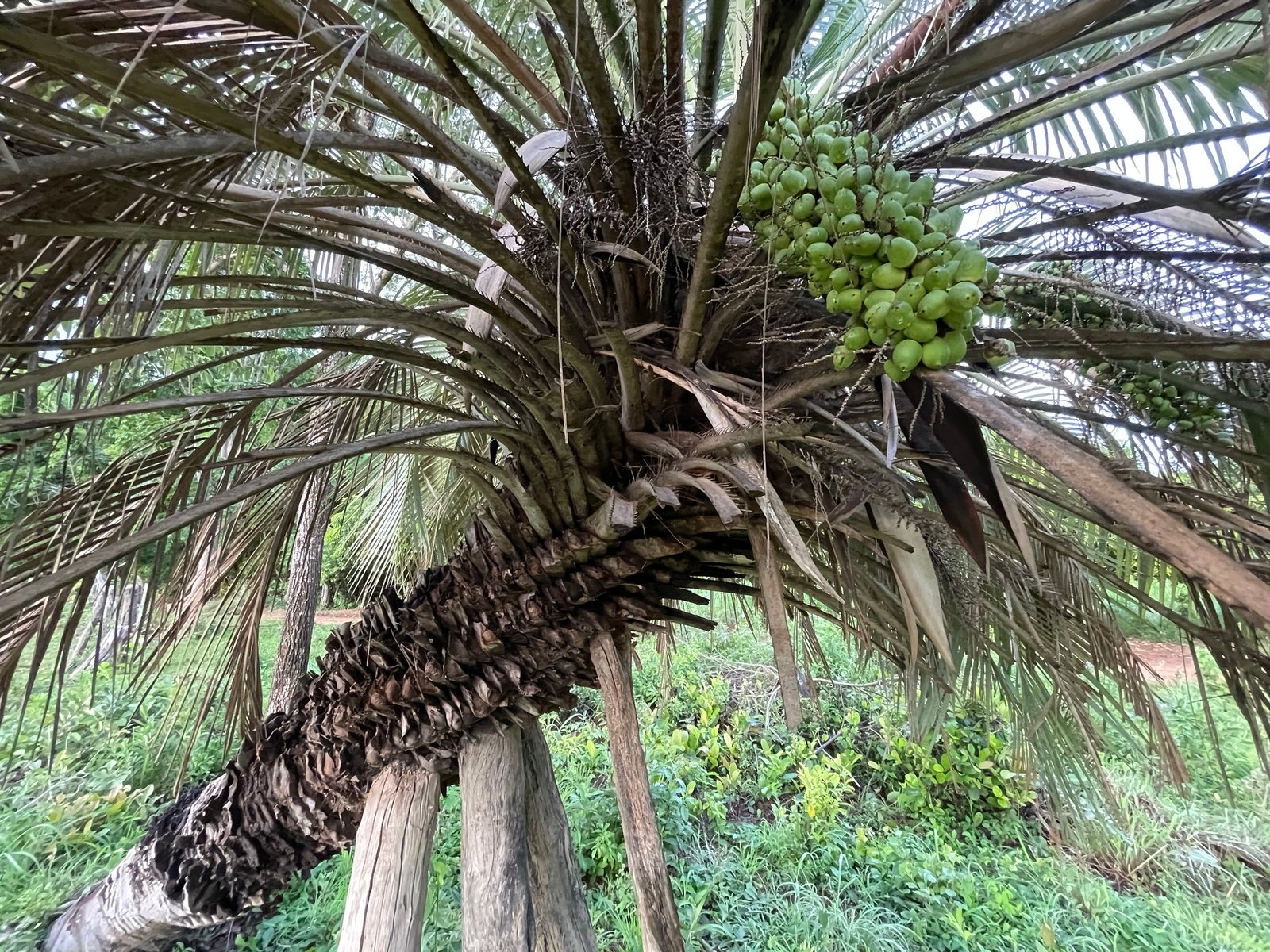
At a glance
- Sun
- Full sun; tolerates light shade but develops a denser crown in sun.
- Water
- Water regularly while establishing, allowing the surface soil to dry between waterings. Established palms tolerate dry spells but grow better with occasional deep watering.
- Soil
- Well-drained sandy or loamy soil; tolerates acidic to mildly alkaline conditions. Avoid waterlogged ground, especially in winter.
- Height
- 10-20 ft (3-6 m)
- Spread
- 10-15 ft (3-4.6 m)
- Flowers
- Cream to yellow flowers on branched stalks among the lower leaves, usually in late spring or summer; flowering varies with climate.
- Foliage
- Evergreen. Long, arching, feather-shaped fronds with stiff, blue-green to grey-green leaflets and spiny leaf stalks.
- Growth
- Slow
- Care needed
- Medium
The year at a glance
- Pollinators
- Drought tolerant
- Heat tolerant
- Wildlife
| J | F | M | A | M | J | J | A | S | O | N | D | |
|---|---|---|---|---|---|---|---|---|---|---|---|---|
| Flowers | ||||||||||||
| Fruit | ||||||||||||
| Plant |
Northern hemisphere months. In Australia, shift them by six.
- Difficulty
- Hard
- Toughness
- Needs looking after
Will it suit your garden?
Pick your zone, country, light and whether you have pets.
Full sun is 6 or more hours of direct sun a day, part shade 3 to 6 hours, shade under 3.
How it grows
Planting day
7 ft (2 m)
After 1 year
7 ft (2.1 m)
After 2 years
7 ft (2.2 m)
After 3 years
7 ft (2.2 m)
After 5 years
8 ft (2.4 m)
About 32 years to full size.
From a typical nursery size, at an average rate for this kind of plant. A rule of thumb, not a forecast.
Good to know
- Cats and dogs
- Safe
- Growth rate
- Slow
Care
Jobs through the year
- WaterApr–May, Sep–Oct, every 14 days
- Water established outdoor palms only if dry; young palms and containers need more frequent checks.
- WaterJun–Aug, every 7 days
- Water deeply during dry weather, allowing the surface to dry; keep irrigation out of the crown.
- WaterJan–Mar, Nov–Dec, every 21 days
- Check sheltered containers and water sparingly to keep compost only slightly moist.
- FeedMay, Jul
- On poor soil or in containers, apply slow-release palm feed with magnesium and micronutrients at label rates.
- PruneMay–Jul
- Remove only fully brown fronds with gloves; retain green leaves and never cut the central spear.
- MulchMay
- Mulch the root zone without piling material against the trunk.
- ProtectJan–Apr, Oct–Dec
- Not reliably hardy in zones 6–7; overwinter containers in bright frost-free shelter.
- Plant in a sunny, sheltered position with the root ball at its original depth; do not bury the trunk.
- Water deeply through the first two growing seasons, without keeping the root zone constantly wet.
- On poor or sandy soils, apply a slow-release palm fertiliser with magnesium and micronutrients during active growth, following the label.
- Mulch the root zone, keeping mulch clear of the trunk.
- Protect young palms from frost and cold wind; move container-grown plants into a bright, frost-free space where winters are cold.
- Collect fallen fruit near paths before it becomes slippery.
Pruning. In late spring or summer, remove fully brown fronds and unwanted flower or fruit stalks using clean tools and heavy gloves. Keep green fronds and never cut the central growing spear or top the trunk.
Through the year
- Spring
- Plant once the soil has warmed and the risk of damaging frost has passed.
- Late spring
- Remove dead fronds and apply palm fertiliser if soil fertility is poor.
- Summer
- Water young palms deeply during dry weather and check leaf undersides for scale insects.
- Late summer
- Harvest fully coloured, fragrant fruit as it ripens; timing varies with local conditions.
- Autumn
- Clear fallen fruit and check that water drains freely around the roots.
- Winter
- Protect young palms during cold spells and keep container compost only slightly moist under cover.
In the garden
- Use as a specimen in a sunny lawn or gravel bed, leaving room for the broad, arching crown.
- Combine with agaves, yuccas and low grasses for contrasting leaf shapes in a dry-climate garden.
- Place beside a terrace for an overhead canopy, but keep spiny leaf stalks and falling fruit away from seating and paths.
- Grow a young plant in a large container where it can be sheltered for winter.
Garden styles it suits: Architectural minimal, Modern Mediterranean, Modern tropical, Coastal, Dry gravel garden and Edible landscape.
Plant it with: Spineless yucca, Foxtail agave, Lomandra, Society garlic, Rosemary and African lily.
Wildlife: Flowers attract bees and other insects. Ripe fruit is eaten by birds and mammals and may also attract rodents if left on the ground.
Problems to watch for
- Cold injury: fronds scorch and the central spear may rot after severe frost. Choose a sheltered site, protect young plants and avoid cutting damaged leaves until the extent of injury is clear.
- Root or crown rot: poorly drained soil and prolonged wet conditions can cause decline. Improve drainage before planting and keep irrigation out of the crown.
- Potassium or magnesium deficiency: older fronds develop spotting, yellow margins or premature browning. Use a balanced palm fertiliser containing these nutrients rather than removing affected green leaves.
- Scale insects: inspect leaf undersides and stalks; treat small infestations with a horticultural oil labelled for palms, avoiding hot sun and following label directions.
Safety
Not known to be toxic to people, cats, dogs or horses, although animal-specific safety information is limited. Ripe fruit flesh is edible; the hard stones can cause choking or intestinal blockage if swallowed, and the spiny leaf stalks can puncture skin.
Easily confused with
Pindo palm (Butia odorata)
The usual cultivated pindo palm, often incorrectly labelled B. capitata. It generally has rounder fruit and rounder seed stones, while true B. capitata tends to have more elongated ones;
Guadalupe palm (Brahea edulis)
Has fan-shaped leaves rather than the feather-shaped fronds of Butia.
Queen palm (Syagrus romanzoffiana)
Usually grows much taller, with a slimmer, smoother trunk and greener, more feathery-looking fronds.
The name
Butia comes from an Indigenous Brazilian name for these palms, while jelly palm refers to the use of the fruit in preserves.
Propagation. Grow from fresh seed after removing the fruit pulp. Sow in a deep pot of free-draining compost and keep warm; germination is erratic and may take many months or longer than a year. This solitary palm cannot be divided.
Checked against open data
- Accepted botanical name
- Butia capitata
- In the US and Canada
- Introduced in the lower 48 states.
- Native range
- Brazil Northeast, Brazil Southeast and Brazil West-Central.
- Measured
- Average height 250 cm.
Sources: GBIF (CC BY 4.0), USDA PLANTS and Trefle (CC BY 4.0). The care and design notes are LandscapeGPT's own.
See it in your own yard.
Upload a photo of your yard and see it redesigned with plants that suit your climate, each checked against your zone.