Pineapple lily
Eucomis comosa. Family Asparagaceae. Bulb.
Also called Pineapple flower, Tufted pineapple lily.
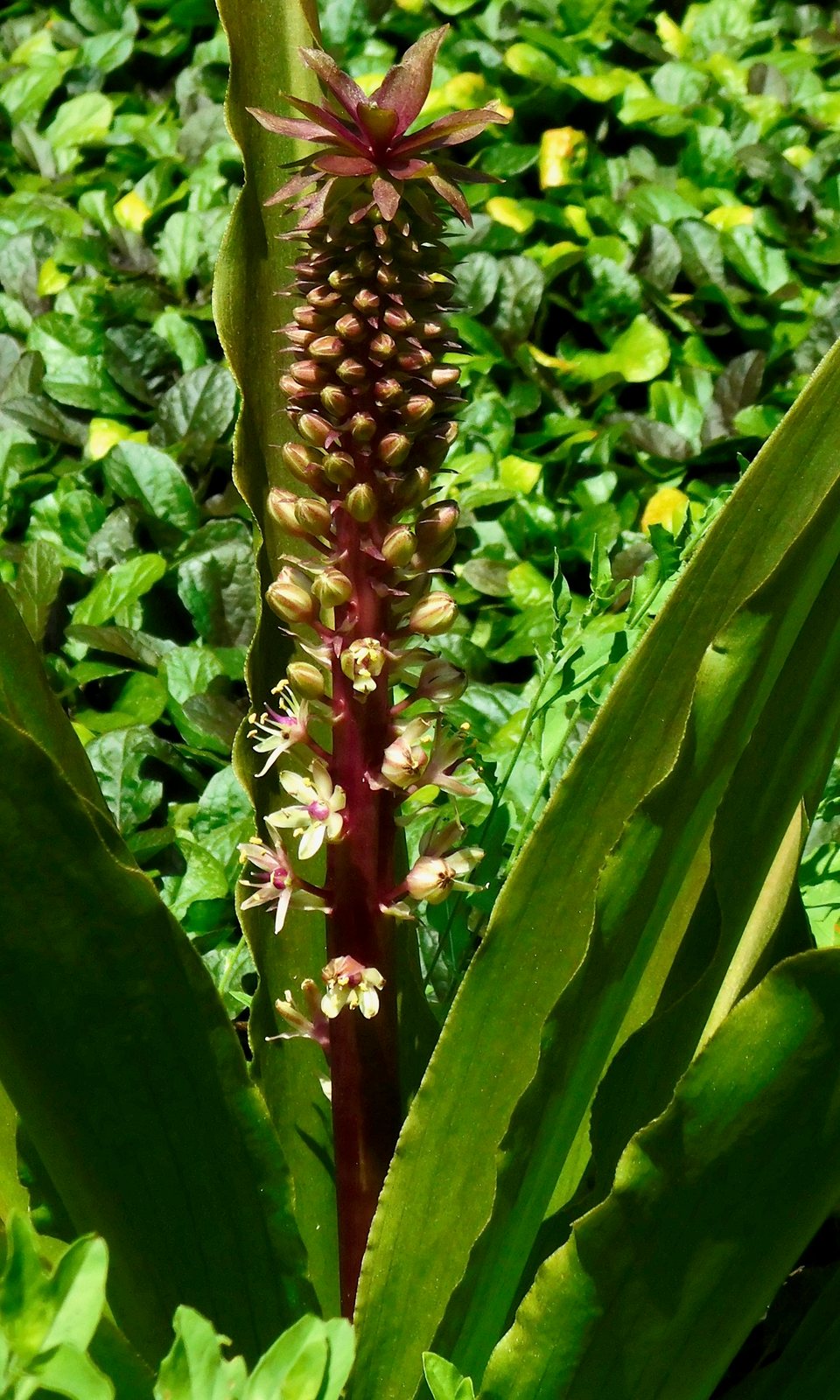
Pineapple lily is a summer-growing bulb from southern Africa, grown for its broad, strap-shaped leaves and upright flower spikes topped with a tuft of leafy bracts. It makes a striking container plant or border accent, but needs protection from severe frost and wet winter soil.
At a glance
- Sun
- Full sun; light afternoon shade is useful in very hot climates.
- Water
- Water regularly during active growth, keeping the soil moist but not waterlogged. Reduce watering as the leaves yellow, and keep dormant bulbs nearly dry.
- Soil
- Fertile, humus-rich, well-drained soil. Improve heavy clay drainage or grow in a container with free-draining potting mix.
- Height
- 2-3 ft (0.6-0.9 m)
- Spread
- 1-2 ft (0.3-0.6 m)
- Flowers
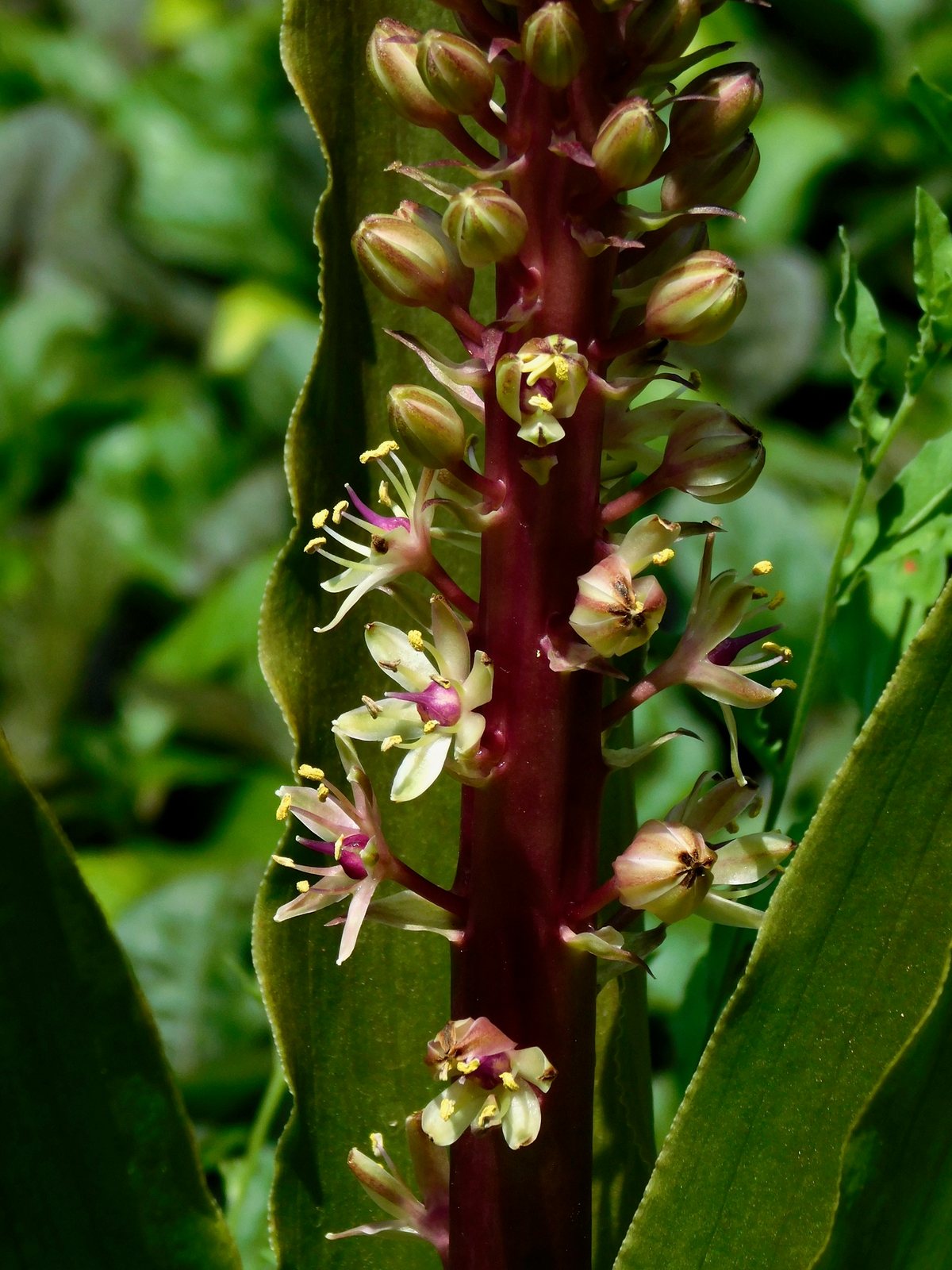
- Summer to early autumn; dense spikes of small, star-shaped flowers in cream, pale green or pinkish purple, topped by a leafy tuft.
- Foliage
- Broad, arching, strap-shaped green leaves, often with wavy edges; leaf bases and flower stems may have purple spotting.
- Growth
- Moderate; established bulbs flower annually and gradually form clumps.
- Care needed
- Medium
The year at a glance
- Pollinators
- Heat tolerant
- Low allergen
| J | F | M | A | M | J | J | A | S | O | N | D | |
|---|---|---|---|---|---|---|---|---|---|---|---|---|
| Flowers | ||||||||||||
| Fruit | ||||||||||||
| Plant |
Northern hemisphere months. In Australia, shift them by six.
- Difficulty
- Moderate
- Toughness
- Fairly tough
Will it suit your garden?
Pick your zone, country, light and whether you have pets.
Full sun is 6 or more hours of direct sun a day, part shade 3 to 6 hours, shade under 3.
How it grows
Planting day
0.5 ft (0.15 m)
After 1 year
2.5 ft (0.75 m)
full size
About 1 years to full size.
From a typical nursery size, at an average rate for this kind of plant. A rule of thumb, not a forecast.
Good to know
- Cats and dogs
- Toxic
- Growth rate
- Moderate
Care
Jobs through the year
- WaterMay, Sep, every 7 days
- Water established plants if soil is drying during leafy growth; taper watering as leaves yellow.
- WaterJun–Aug, every 7 days
- Water established plants deeply when rain is insufficient; new plantings may need more frequent watering.
- FeedMay
- Apply compost and a modest balanced feed as strong growth starts; avoid excess nitrogen.
- DivideApr–May
- Separate crowded offsets before substantial growth, protecting fleshy bulb bases.
- ProtectMay–Jun
- Check emerging leaves for slugs and snails and control significant damage.
- DeadheadAug–Sep
- Cut faded stalks at the base unless keeping the ornamental seed heads.
- PruneOct–Nov
- Remove leaves only after they have yellowed and died naturally.
- MulchNov
- In sheltered zone 7 gardens, insulate outdoor bulbs with dry mulch over freely drained soil.
- ProtectOct–Nov
- In zone 6 or cold, wet sites, lift dormant bulbs and store cool, nearly dry and frost-free.
- ProtectJan–Mar, Dec, every 30 days
- Check stored bulbs for rot and keep them frost-free and nearly dry.
- Plant in spring after severe frost has passed; allow room for the broad leaf rosette.
- Water thoroughly during leafy growth, then let excess water drain away.
- Apply a balanced liquid feed every two to three weeks during active growth in containers.
- In mild areas, mulch outdoor bulbs before winter, but do not leave them in waterlogged soil.
- Where winters are colder than its hardiness range, lift bulbs after the leaves die back and store cool, dry and frost-free, or move dormant pots under cover.
- Separate crowded offsets in spring, taking care not to damage the fleshy bulb bases.
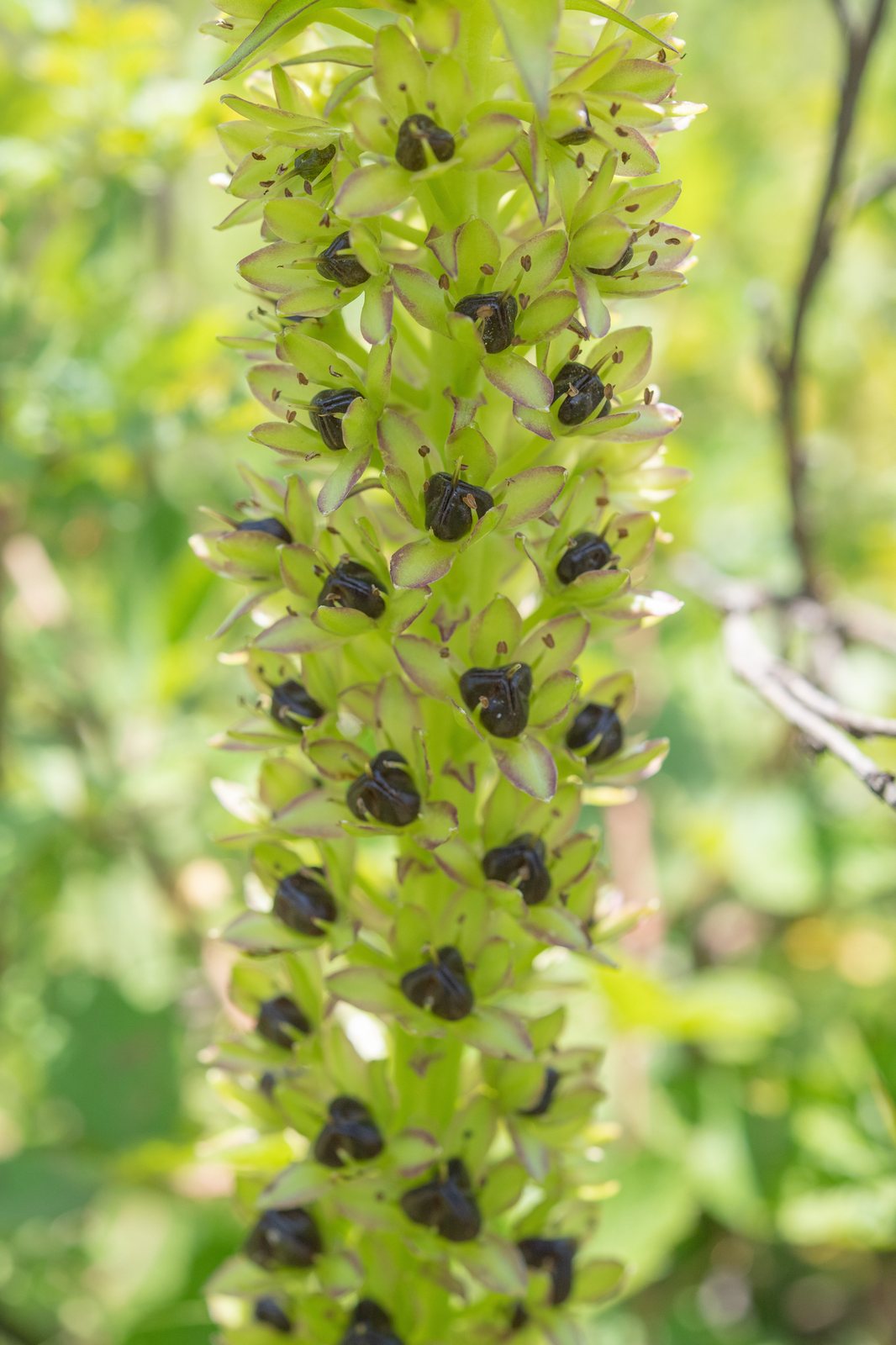
Pruning. Cut spent flower stalks at the base unless you want to save seed or enjoy the seedheads. Leave the foliage until it yellows and dies naturally, then remove it.
Through the year
- Spring
- Plant stored bulbs after severe frost, or repot dormant container-grown bulbs.
- Late spring
- Increase watering as shoots emerge; begin feeding once leaves are growing strongly.
- Summer
- Keep the root zone evenly moist and check young leaves for slugs and snails.
- Late summer
- Remove faded flower stalks if seed is not wanted.
- Autumn
- Stop feeding and reduce watering as the leaves yellow.
- Late autumn
- Lift bulbs in cold regions, move pots under cover, or mulch outdoor clumps in milder areas.
- Winter
- Keep stored bulbs frost-free and nearly dry; check occasionally for rot.
In the garden
- Use a large pot beside a sunny doorway or seating area to show off the flower spikes and broad leaves.
- Plant small groups among ornamental grasses for a contrast between bold foliage and fine blades.
- Combine with cannas and dahlias in a summer border for layered foliage and late-season flowers.
- Repeat clumps along a sunny border to create a clear rhythm of upright flower spikes.
Garden styles it suits: Architectural minimal, Modern tropical, Modern courtyard, Tropical, Cottage garden and Small-space.
Plant it with: Canna, Dahlia, Crocosmia, Lily of the Nile, Purple moor grass and Sedum.
Wildlife: Flowers attract bees and other insects. The plant is not a native host plant in the United States, United Kingdom, Canada or Australia.
Problems to watch for
- Bulb rot in wet soil: improve drainage, avoid standing water in saucers and keep dormant bulbs nearly dry.
- Slugs and snails eating emerging leaves: inspect at dusk, remove by hand and use suitable slug controls where needed.
- Winter frost damage: lift bulbs or move pots to a frost-free place in colder regions.
- Few flowers in deep shade or crowded pots: move to a sunnier position, feed during growth and divide congested bulbs in spring.
Safety
Treat the plant, especially the bulb, as poisonous if eaten. Ingestion can cause gastrointestinal illness in people; species-specific evidence for cats, dogs and horses is limited, so keep bulbs and plants away from pets and grazing animals and seek medical or veterinary advice after ingestion.
Easily confused with
Two-coloured pineapple lily (Eucomis bicolor)
Usually has green flowers distinctly edged in purple and strongly purple-blotched stems; Eucomis comosa has more variable flower colours and often less conspicuous stem markings.
Autumn pineapple lily (Eucomis autumnalis)
Typically has broad, strongly wavy leaves and greenish-white flowers on unspotted green stems; Eucomis comosa often has purple spotting at the leaf bases or on the flower stems.
Pineapple (Ananas comosus)
The edible pineapple is a bromeliad with a stiff, persistent leaf rosette and a large fleshy fruit. Pineapple lily has softer seasonal leaves and a spike of separate small flowers, not an edible pineapple.
The name
Eucomis comes from Greek words meaning 'beautiful-haired', while comosa means 'tufted', both referring to the leafy crown that gives the flower spike its pineapple-like appearance.
Propagation. Separate offsets from the parent bulb in spring and pot them individually; small offsets may take several years to flower. Seed can also be sown, but flowering takes several years and seedlings may differ from named parent plants.
Checked against open data
- Accepted botanical name
- Eucomis comosa
- Native range
- Cape Provinces and KwaZulu-Natal.
Sources: GBIF (CC BY 4.0) and Trefle (CC BY 4.0). The care and design notes are LandscapeGPT's own.
See it in your own yard.
Upload a photo of your yard and see it redesigned with plants that suit your climate, each checked against your zone.