Pink Lady apple
Malus domestica 'Cripps Pink'. Family Rosaceae. Tree.
Also called Cripps Pink apple.
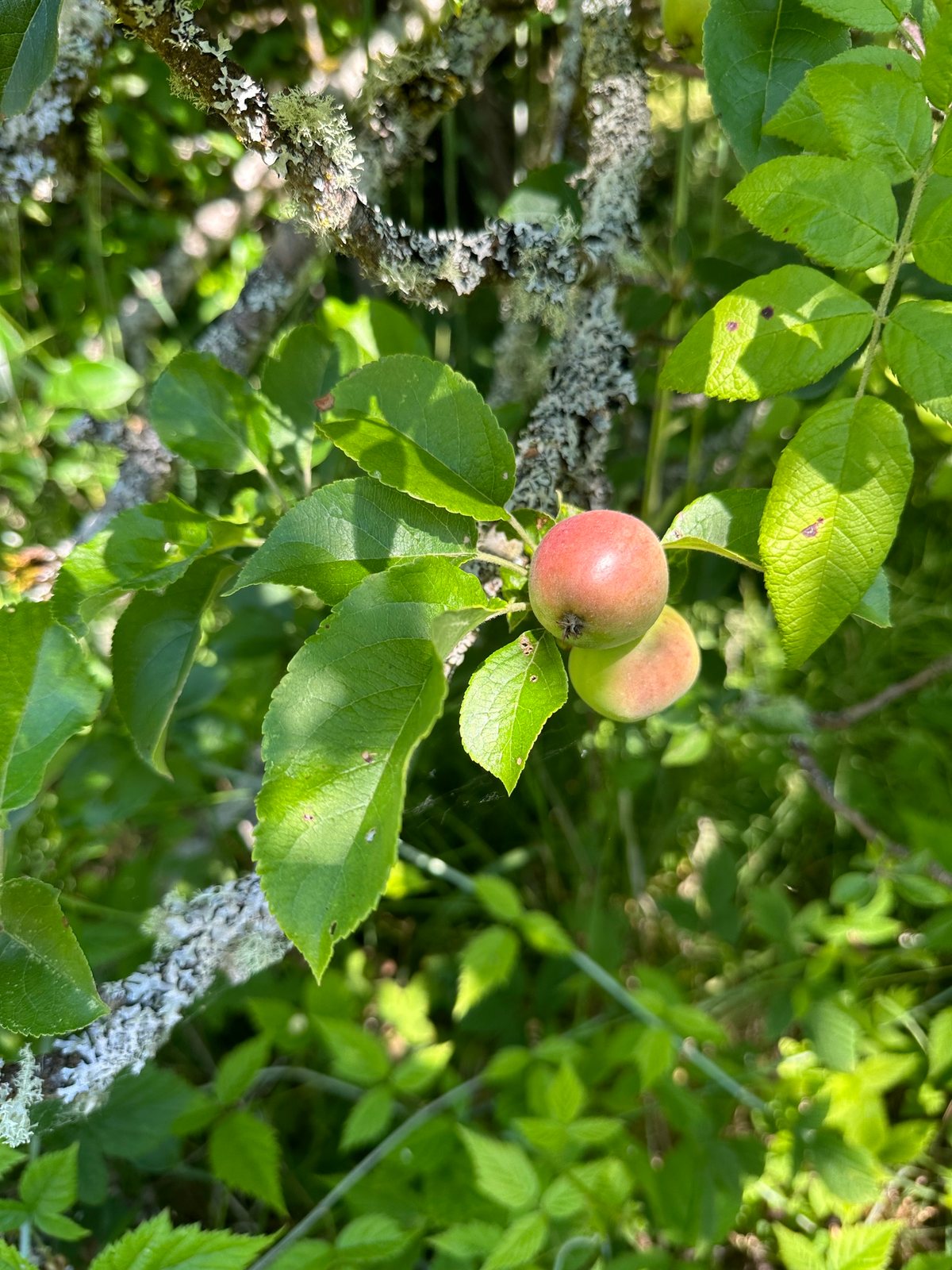
A deciduous dessert apple grown for crisp, sweet-tart fruit with a pink blush and good storage life. Pink Lady is a trademark used for qualifying fruit of 'Cripps Pink' and certain related selections, rather than the cultivar name itself. It needs a long, warm growing season to ripen well, so outdoor cropping is unreliable in much of the UK and colder parts of Canada, even where the tree survives winter.
At a glance
- Sun
- Full sun, ideally at least 6-8 hours daily; choose a warm site sheltered from strong winds and away from frost pockets.
- Water
- Keep the root zone evenly moist, especially during establishment and fruit swelling; avoid waterlogged soil.
- Soil
- Deep, fertile, well-drained loam, ideally pH 6.0-7.0; drainage matters more than soil texture.
- Height
- Usually 8-12 ft (2.4-3.7 m) on dwarfing rootstocks or 15-25 ft (4.6-7.6 m) on more vigorous rootstocks.
- Spread
- Usually 6-10 ft (1.8-3 m) on dwarfing rootstocks or 12-20 ft (3.7-6.1 m) on more vigorous rootstocks.
- Flowers
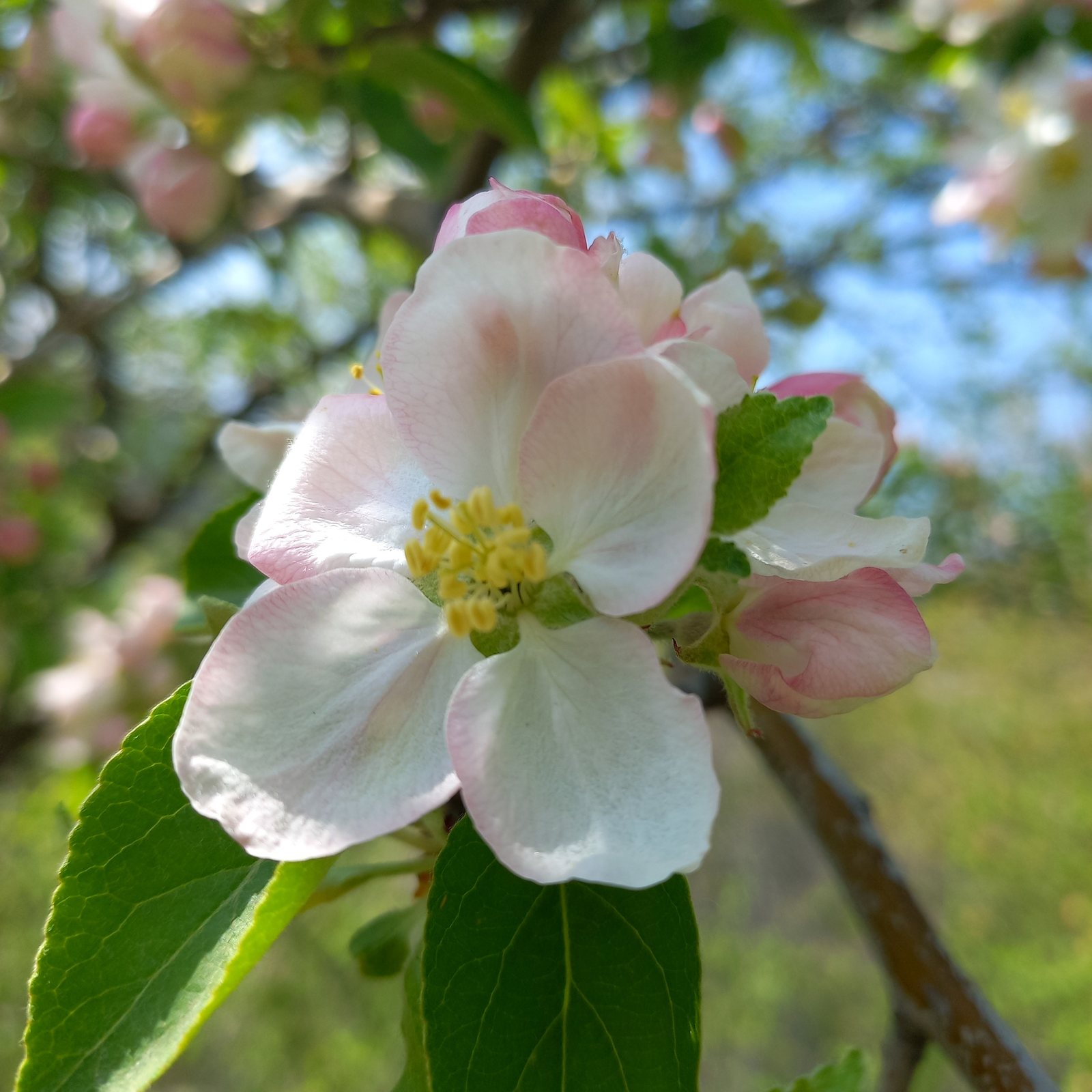
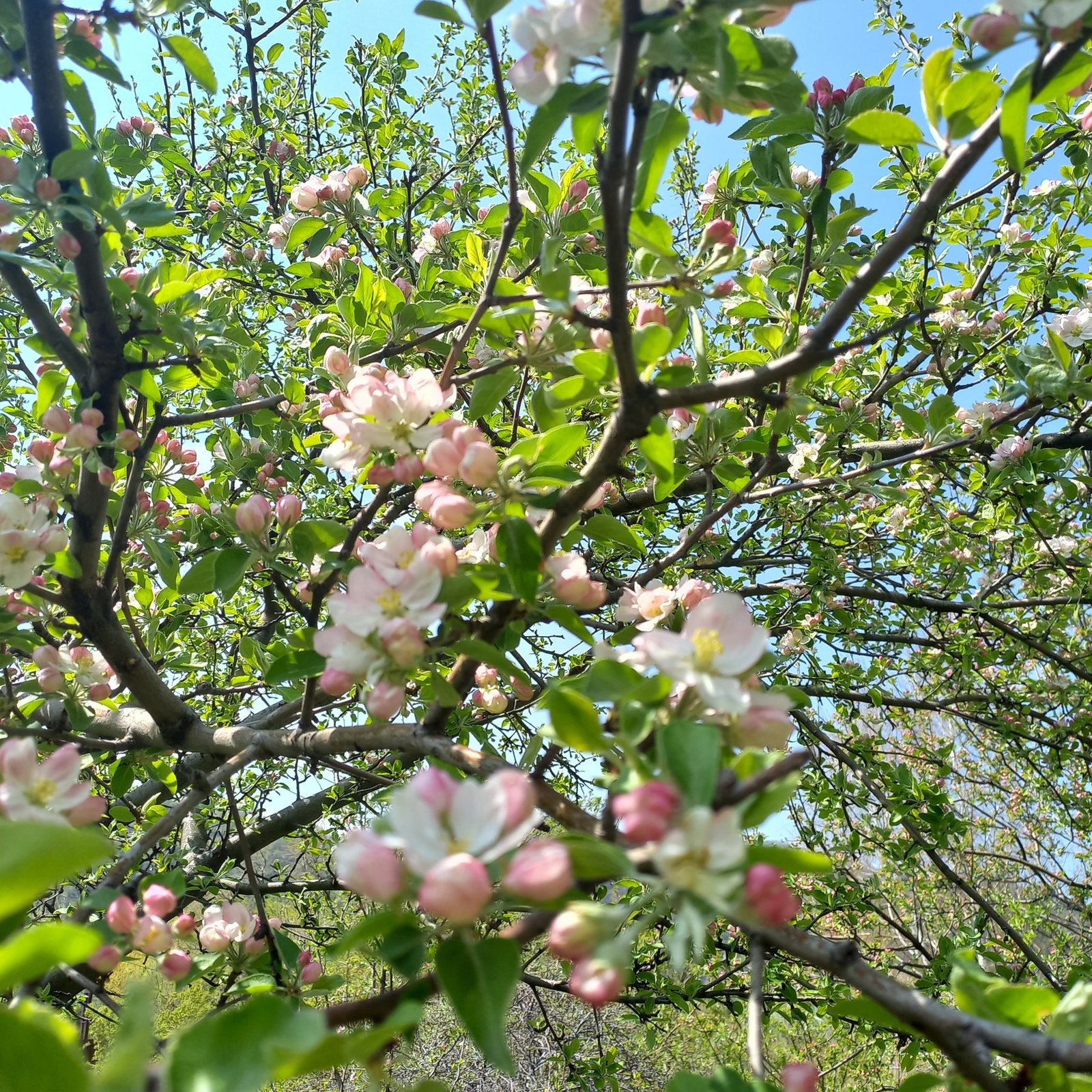
- Mid-spring; pink buds open to white or pale pink flowers.
- Foliage
- Oval, toothed green leaves, sometimes turning yellow before falling in autumn.
- Growth
- Moderate; rootstock, soil and training strongly influence growth and final size.
- Care needed
- High
The year at a glance
- Pollinators
- Wildlife
- Low allergen
- Edible
| J | F | M | A | M | J | J | A | S | O | N | D | |
|---|---|---|---|---|---|---|---|---|---|---|---|---|
| Flowers | ||||||||||||
| Fruit | ||||||||||||
| Plant |
Northern hemisphere months. In Australia, shift them by six.
- Difficulty
- Hard
- Toughness
- Fairly tough
Will it suit your garden?
Pick your zone, country, light and whether you have pets.
Full sun is 6 or more hours of direct sun a day, part shade 3 to 6 hours, shade under 3.
How it grows
Planting day
7 ft (2 m)
After 1 year
7 ft (2.1 m)
After 2 years
7 ft (2.1 m)
After 3 years
7 ft (2.2 m)
After 5 years
7 ft (2.3 m)
About 20 years to full size.
From a typical nursery size, at an average rate for this kind of plant. A rule of thumb, not a forecast.
Good to know
- Cats and dogs
- Toxic
- Growth rate
- Moderate
Care
Jobs through the year
- WaterApr–May, Oct, every 14 days
- Water established ground-grown trees deeply when soil is dry; young and dwarf trees need more.
- WaterJun–Sep, every 7 days
- In dry weather, soak the established root zone to support swelling fruit; avoid waterlogging.
- FeedMar–Apr
- Feed modestly only if growth or soil fertility is poor; avoid excess nitrogen.
- MulchMar–Apr
- Apply 5–8 cm of organic mulch, keeping it clear of the trunk and graft.
- PruneJan–Feb
- Prune dormant trees for an open framework, removing dead, damaged and crossing branches.
- PruneJul–Aug
- Summer-prune trained espaliers only, retaining foliage that shades fruit.
- ProtectApr–May
- Ensure a compatible apple flowers nearby and avoid insecticides during bloom.
- ProtectJun
- After natural fruit drop, thin to one apple per cluster, roughly 15 cm apart.
- ProtectJun–Sep, every 7 days
- Check for codling moth damage and remove damaged or fallen fruit promptly.
- ProtectSep–Nov
- Use securely fitted wildlife-safe netting if needed; this late cultivar needs a long, warm autumn.
- HarvestOct–Nov, every 7 days
- Taste-test for ripeness, then lift and twist mature apples before damaging freezes.
- ProtectNov–Dec
- Remove fallen leaves and mummified fruit to reduce overwintering disease.
- Plant with the graft union above the finished soil level; stake dwarf-rootstock trees permanently.
- Water deeply during dry spells, particularly for the first two growing seasons and while fruit is swelling.
- Apply a 2-3 in (5-8 cm) organic mulch, keeping it clear of the trunk.
- Feed modestly in spring if growth is weak; excess nitrogen encourages leafy growth rather than fruit.
- Provide a compatible apple flowering at the same time, such as 'Granny Smith' or 'Golden Delicious'; check local flowering overlap.
- After the natural early-summer fruit drop, thin crowded clusters to one apple, leaving roughly 6 in (15 cm) between fruit.
Pruning. Prune in late winter while dormant, removing dead, damaged and crossing branches and maintaining an open framework with well-spaced fruiting wood. Summer-prune trained espaliers to control side shoots, but avoid stripping off foliage that shades fruit from intense sun.
Harvest
Pick in late autumn, commonly October-November in suitable Northern Hemisphere climates and April-May in Australia, before damaging freezes. Look for a lighter green-to-yellow background beneath the pink blush, brown seeds and a crisp, developed sweet-tart flavour; lift and twist gently rather than pulling.
Through the year
- Winter
- Plant dormant bare-root trees when soil is workable; prune established trees and check stakes and ties.
- Early spring
- Renew mulch and feed only where growth or soil fertility warrants it.
- Mid-spring
- Check that a compatible apple is flowering nearby; avoid insecticide use during bloom.
- Early summer
- Thin fruit after natural fruit drop and begin regular checks for codling moth damage.
- Summer
- Water during dry spells and summer-prune espaliers without exposing fruit suddenly to strong sun.
- Late autumn
- Taste-test and harvest mature apples; store sound fruit cool and remove fallen or mummified fruit.
In the garden
- Train as an espalier along a sunny fence or wall to combine fruit production with a defined garden boundary.
- Plant dwarf trees in an edible garden where blossom and ripening fruit provide seasonal interest.
- Include in a small orchard with compatible pollinating varieties and room for harvesting access.
- Use a freestanding tree as a focal point beside a potager, keeping its immediate root zone free of competing turf.
Garden styles it suits: Backyard orchard, Edible landscape, Potager (kitchen garden), Cottage garden, Homestead and English country.
Plant it with: Granny Smith apple, Golden Delicious apple, Chives, Thyme, Yarrow and Sweet alyssum.
Wildlife: Spring flowers supply pollen and nectar for bees, and fallen fruit feeds birds and mammals. Protect ripening fruit with wildlife-safe exclusion netting where necessary, securing it tightly so animals cannot become entangled.
Problems to watch for
- Poor fruit set or unripe apples: provide a compatible flowering partner and a warm, sunny site; where autumn arrives too early, choose an earlier-ripening cultivar instead.
- Apple scab: remove fallen leaves, prune for airflow and avoid wetting foliage; use locally approved apple treatments if disease remains severe.
- Codling moth: remove damaged and fallen fruit promptly, use monitoring traps and time any locally approved controls to egg hatch.
- Fire blight: remove infected shoots well below visible damage during dry weather, disinfect tools between cuts and avoid excessive nitrogen feeding.
Safety
Apple flesh is not known to be toxic to people, cats, dogs or horses. Seeds, leaves and stems contain cyanogenic compounds; substantial consumption, especially of chewed seeds or wilted foliage, can cause serious poisoning. Do not let pets or horses eat pruning waste, and remove cores and seeds from fruit offered as treats.
Easily confused with
Fuji apple (Malus domestica 'Fuji')
Fruit is often rounder, with red striping or mottling, and tastes sweeter with less acidity; appearance overlaps, so a reliable label is more useful than colour alone.
Gala apple (Malus domestica 'Gala')
Usually ripens much earlier and bears smaller, sweeter fruit with orange-red stripes rather than the typical late-season pink blush of 'Cripps Pink'.
The name
'Cripps Pink' honours breeder John Cripps, who developed it in Western Australia from a cross between 'Golden Delicious' and 'Lady Williams'.
Propagation. Propagate by grafting or budding onto a suitable apple rootstock; seed-grown trees will not remain true to 'Cripps Pink'. Rootstock choice determines much of the tree's size, support needs and time to cropping; check local plant breeders' rights before propagating protected selections.
Checked against open data
- Accepted botanical name
- Malus domestica
- Native range
- Afghanistan, Kazakhstan, Kirgizstan, Pakistan, Tadzhikistan, Uzbekistan and Xinjiang.
- Measured
- Soil pH 5 to 7.5. Average height 700 cm.
Sources: GBIF (CC BY 4.0) and Trefle (CC BY 4.0). The care and design notes are LandscapeGPT's own.
See it in your own yard.
Upload a photo of your yard and see it redesigned with plants that suit your climate, each checked against your zone.