Pink trumpet vine
Podranea ricasoliana. Family Bignoniaceae. Climber.
Also called Port St Johns creeper, Pink trumpet creeper.
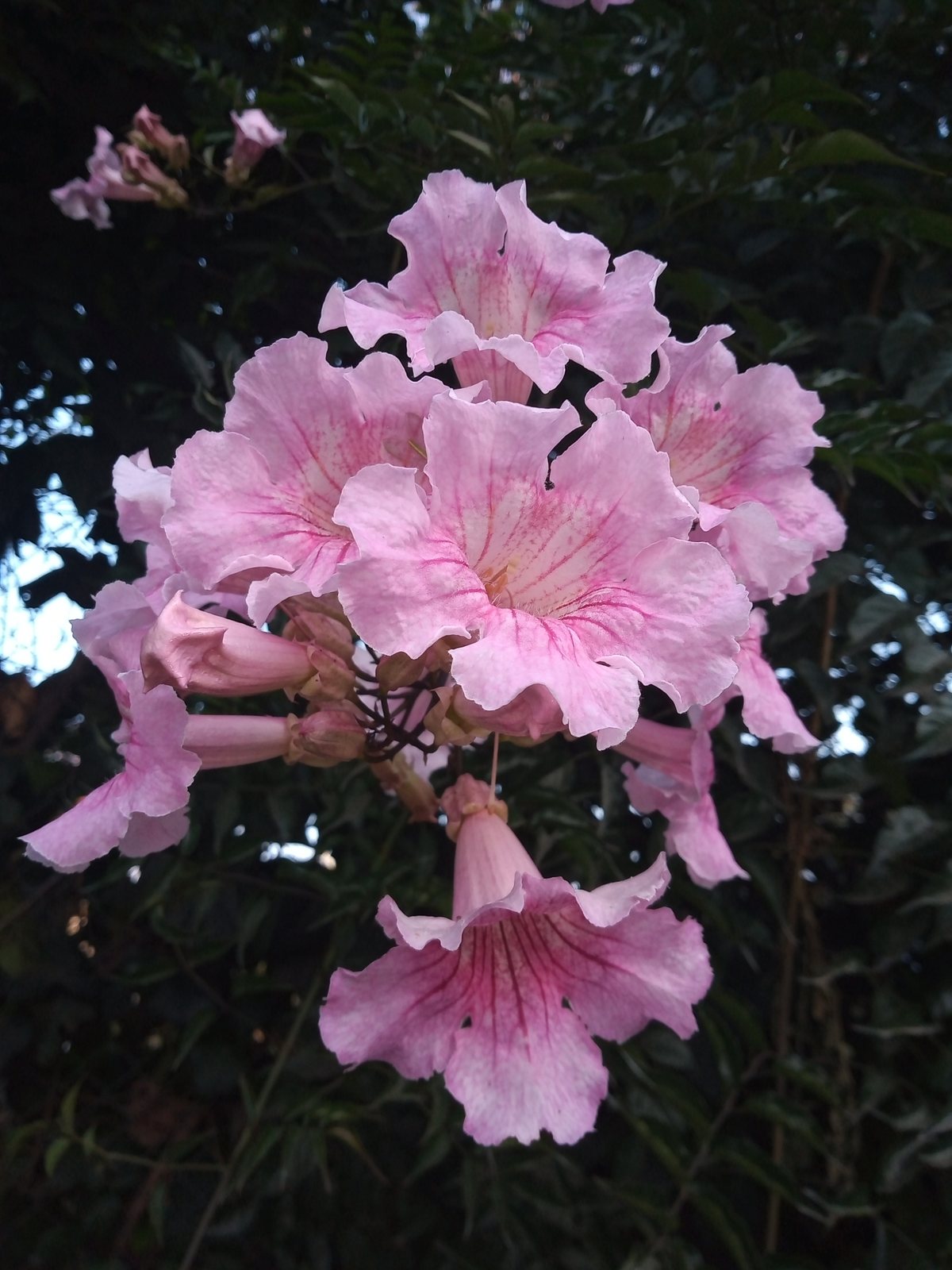
Pink trumpet vine is a vigorous, woody climber from southern Africa, grown for clusters of pale pink trumpets with darker veins. It needs a substantial support and help tying in its stems, which do not cling by themselves. Grow it outdoors in warm, sheltered gardens; in most of the UK and Canada, it needs a frost-free conservatory or greenhouse.
At a glance
- Sun
- Full sun for the best flowering; tolerates light shade but flowers less.
- Water
- Water regularly while establishing. Established plants tolerate short dry spells, but flower better with occasional deep watering during prolonged drought.
- Soil
- Well-drained soil enriched with compost; tolerates sandy and loamy soils but dislikes waterlogging.
- Height
- 15-30 ft (4.5-9 m), depending on support and pruning
- Spread
- 10-15 ft (3-4.5 m), potentially wider if stems are allowed to root
- Flowers
- Pale pink trumpet-shaped flowers with deeper pink veins, mainly in summer and autumn; the season can extend in frost-free climates.
- Foliage
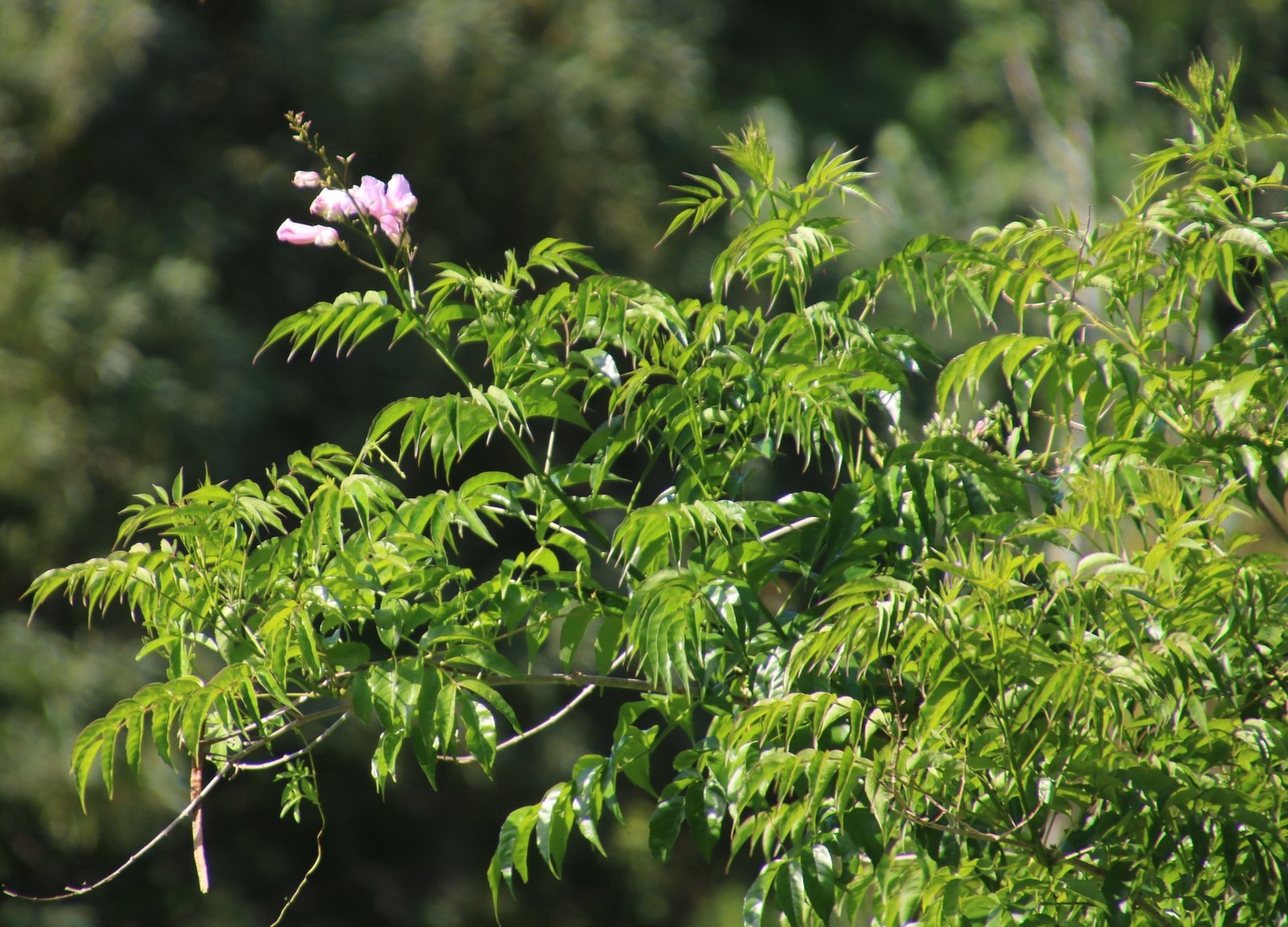
- Evergreen. Opposite, glossy green leaves divided into usually 7-11 pointed leaflets.
- Growth
- Fast in warm conditions
- Care needed
- Medium
The year at a glance
- Pollinators
- Heat tolerant
- Wildlife
- Low allergen
| J | F | M | A | M | J | J | A | S | O | N | D | |
|---|---|---|---|---|---|---|---|---|---|---|---|---|
| Flowers | ||||||||||||
| Plant |
Northern hemisphere months. In Australia, shift them by six.
- Difficulty
- Moderate
- Toughness
- Fairly tough
Will it suit your garden?
Pick your zone, country, light and whether you have pets.
Full sun is 6 or more hours of direct sun a day, part shade 3 to 6 hours, shade under 3.
How it grows
Planting day
2 ft (0.6 m)
After 1 year
3 ft (1.1 m)
After 2 years
5 ft (1.5 m)
After 3 years
6 ft (1.8 m)
full size
About 3 years to full size.
From a typical nursery size, at an average rate for this kind of plant. A rule of thumb, not a forecast.
Good to know
- Cats and dogs
- Safe
- Invasive in
- Australia
- In the garden
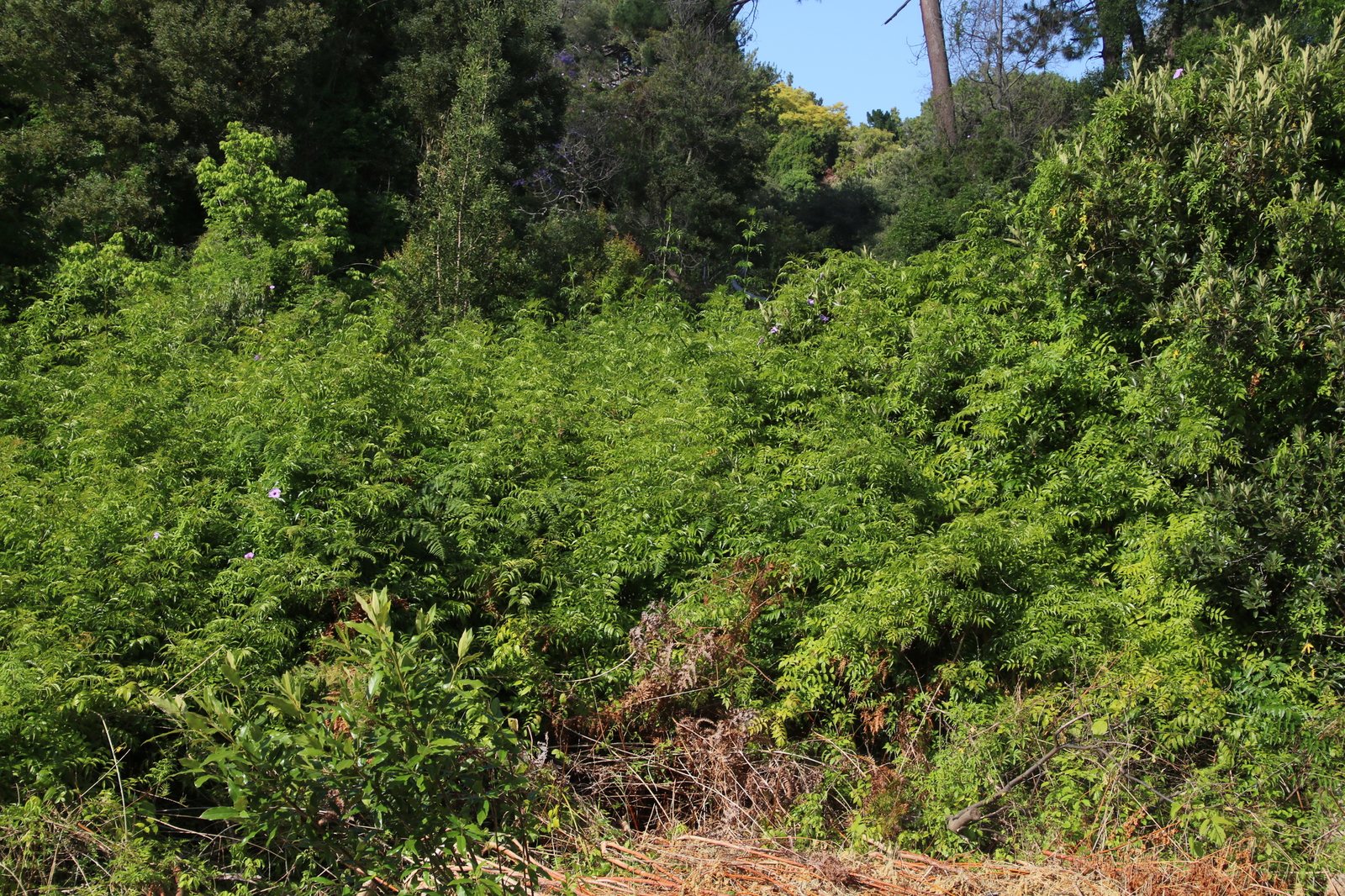
- Spreads vigorously: plan to contain it.
- Growth rate
- Fast
Care
Jobs through the year
- WaterApr–May, Sep–Oct, every 14 days
- Water established in-ground plants during dry spells; young plants and containers need closer checks.
- WaterJun–Aug, every 7 days
- Water deeply during prolonged dry weather, allowing the surface to dry between waterings.
- WaterJan–Mar, Nov–Dec, every 21 days
- Check sheltered container plants and water sparingly to keep compost just moist, never wet.
- FeedApr–May
- Apply compost and a light balanced slow-release feed; avoid excessive nitrogen.
- MulchMay
- Mulch the root area, keeping material clear of the main stems.
- PruneMar–Apr
- Under frost-free cover, remove dead or crowded stems and shorten side shoots before vigorous new growth.
- ProtectMay–Sep, every 14 days
- Tie shoots loosely to strong supports and lift trailing stems before they root.
- ProtectSep–Oct
- Move pots into bright, frost-free shelter before cold nights; this vine cannot overwinter outdoors in zones 6–7.
- Provide a strong trellis, pergola or wires, and tie young stems loosely to the support.
- Water deeply during the first growing season, allowing the soil surface to dry between waterings.
- Apply compost and a balanced, slow-release fertiliser in spring; avoid excessive nitrogen, which encourages leafy growth.
- Mulch the root area, keeping mulch clear of the main stems.
- Keep trailing stems off the soil where unwanted rooting would cause problems.
- In cold climates, grow in a large container and move it into bright, frost-free shelter before frost.
Pruning. In late winter or early spring, remove dead, crowded and misplaced stems, then shorten side shoots to keep the plant within its support. In frost-prone gardens, wait until frost danger has passed before removing damaged growth; flowers develop on new growth.
Through the year
- Late winter
- Check ties and supports; prune established plants in frost-free gardens.
- Spring
- After frost danger passes, plant out or return containers outdoors gradually; remove frost-damaged stems.
- Spring
- Apply compost, a light feed and fresh mulch.
- Summer
- Tie in new shoots and water deeply during prolonged dry weather.
- Summer
- Take semi-ripe cuttings and lift any trailing stems that are starting to root.
- Autumn
- Move container plants under frost-free cover before cold nights arrive.
- Winter
- Water sheltered container plants sparingly, keeping the compost just moist rather than wet.
In the garden
- Train over a sturdy pergola to create a loose canopy of foliage and hanging pink flowers.
- Cover wires on a sunny, sheltered wall, leaving room for regular pruning.
- Use on a substantial fence to soften a boundary in a frost-free garden.
- Grow in a large conservatory container with a trellis where outdoor winters are too cold.
Garden styles it suits: Mediterranean, Modern tropical, Romantic rose garden, Modern courtyard, Luxury resort and Pastel border.
Plant it with: Agapanthus, Society garlic, Lavender, Rosemary, African daisy and Salvia.
Wildlife: Flowers attract bees and other nectar-feeding insects. Dense mature growth can provide shelter for small birds.
Problems to watch for
- Frost damage: leaves and young stems blacken after cold nights; protect container plants and wait until spring to cut back damaged wood.
- Poor flowering: too much shade, excessive nitrogen or repeated summer pruning can reduce blooms; provide more sun, feed lightly and do major pruning before new growth starts.
- Aphids and whiteflies, especially under glass: inspect soft growth and leaf undersides, wash off small infestations and use insecticidal soap where needed.
- Root rot in wet soil: improve drainage, avoid standing water beneath pots and let the surface dry slightly between waterings.
Safety
Not known to be toxic to people, cats, dogs or horses, but species-specific safety information is limited. It is not an edible plant; discourage chewing or eating any part.
Where it spreads. Can spread aggressively by rooting where stems touch the ground. It is regarded as an environmental weed in parts of Queensland and New South Wales, Australia, and is invasive in parts of New Zealand's North Island; check local guidance before planting.
Easily confused with
Bower vine (Pandorea jasminoides)
Usually has fewer, smooth-edged leaflets and white or pink flowers with a conspicuous dark pink throat; its stems twine around supports.
Trumpet creeper (Campsis radicans)
Has orange to red flowers, more strongly toothed leaflets and aerial rootlets that cling to walls or trees; it is deciduous and much more cold-hardy.
The name
Podranea is an anagram of Pandorea, a related genus, while pink trumpet vine describes the flower colour and shape.
Propagation. Take semi-ripe stem cuttings in summer and root them in a free-draining medium with warmth. Layering a low stem also works, but remove unwanted rooted stems promptly.
Checked against open data
- Accepted botanical name
- Podranea ricasoliana
- In the US and Canada
- Introduced in the lower 48 states and Puerto Rico.
- Native range
- Cape Provinces, KwaZulu-Natal, Malawi, Mozambique and Zambia.
Sources: GBIF (CC BY 4.0), USDA PLANTS and Trefle (CC BY 4.0). The care and design notes are LandscapeGPT's own.
See it in your own yard.
Upload a photo of your yard and see it redesigned with plants that suit your climate, each checked against your zone.