Pitcher sage
Salvia azurea. Family Lamiaceae. Perennial.
Also called Blue sage, Azure sage, Prairie sage.
Pitcher sage is a tall, airy perennial native to the central and southern United States, grown for its clear blue flowers in late summer and autumn. It suits sunny prairie-style borders and dry gardens, where its loose flower spikes attract bees without needing rich soil or frequent watering.
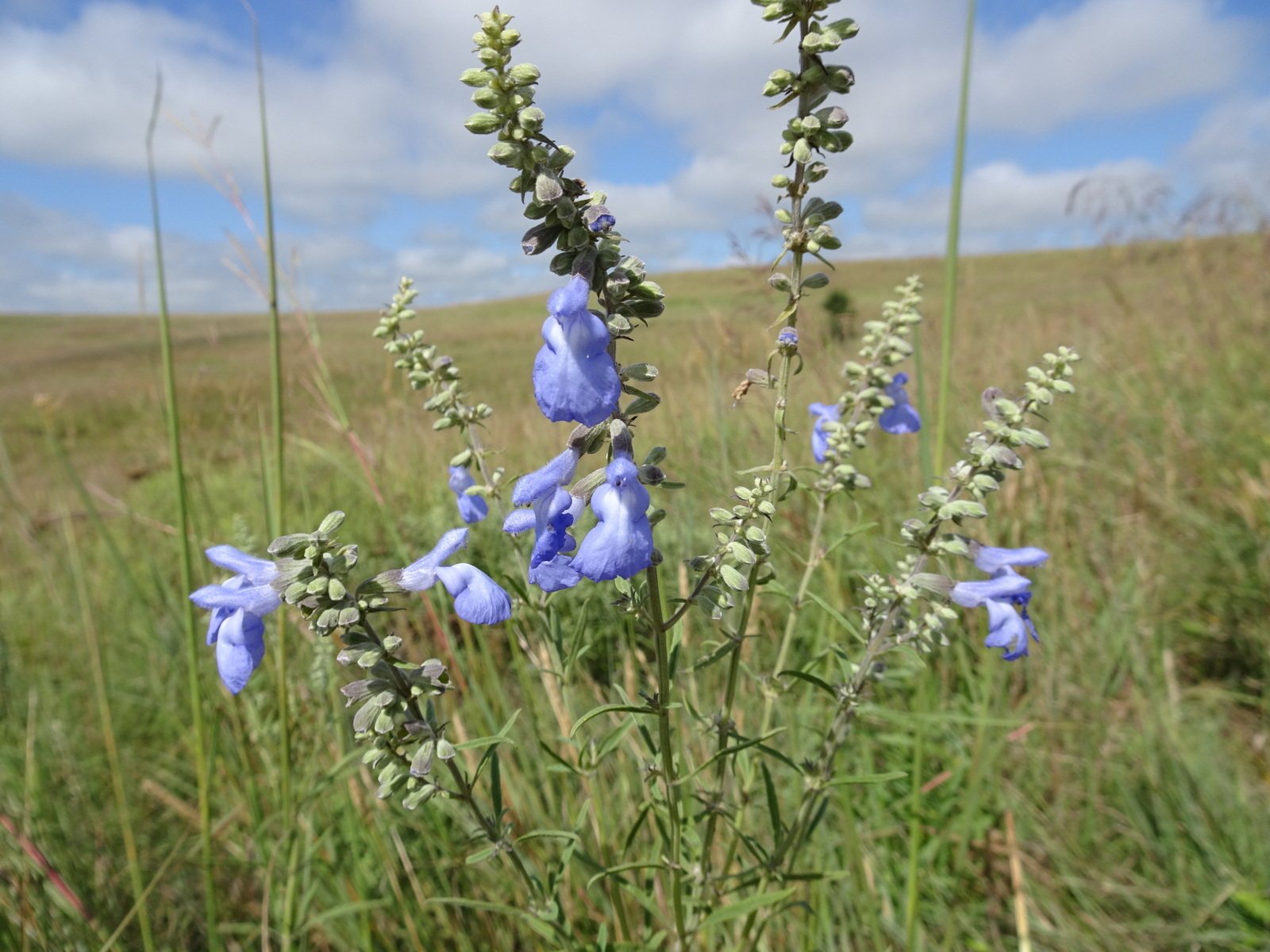
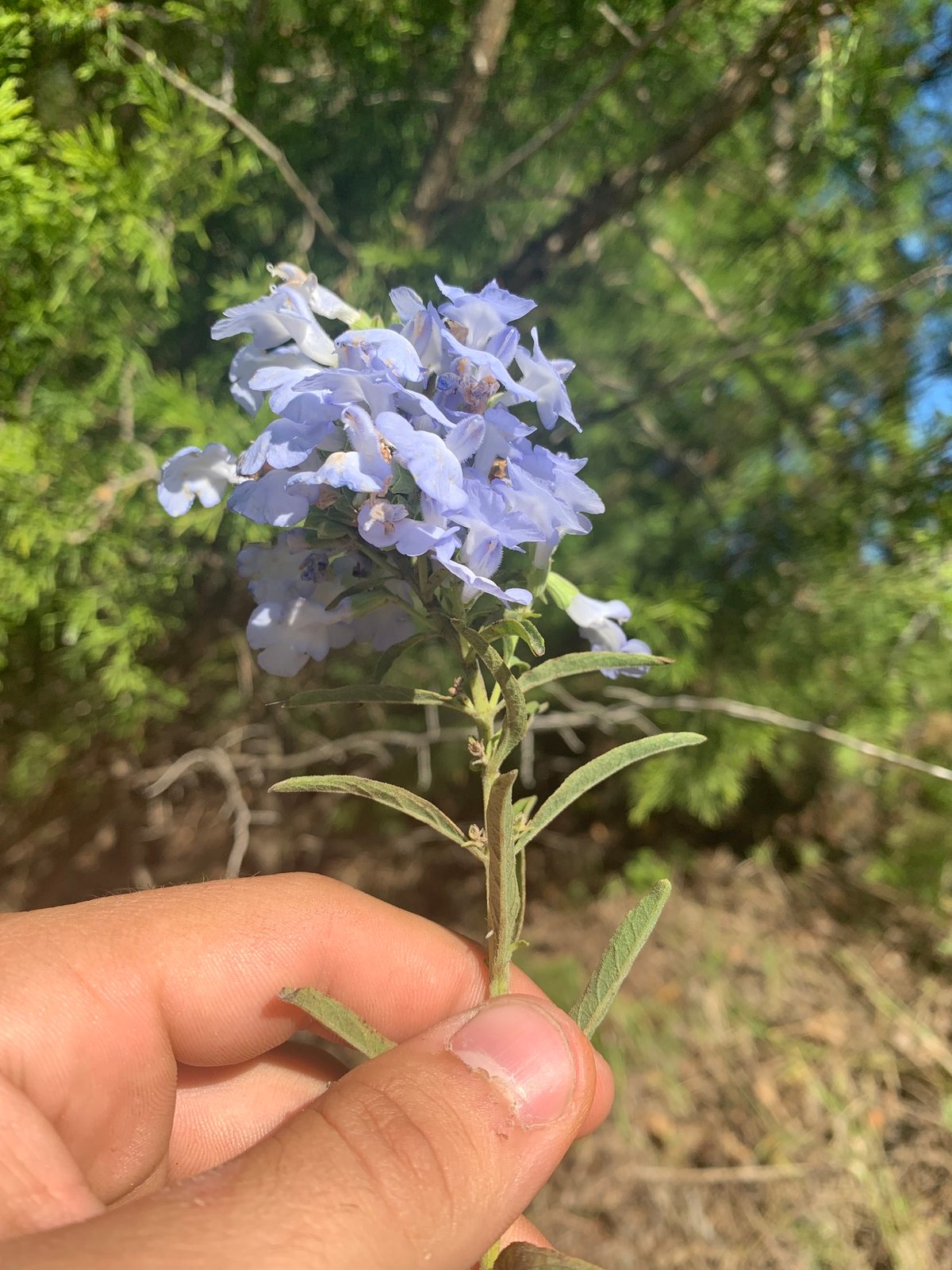
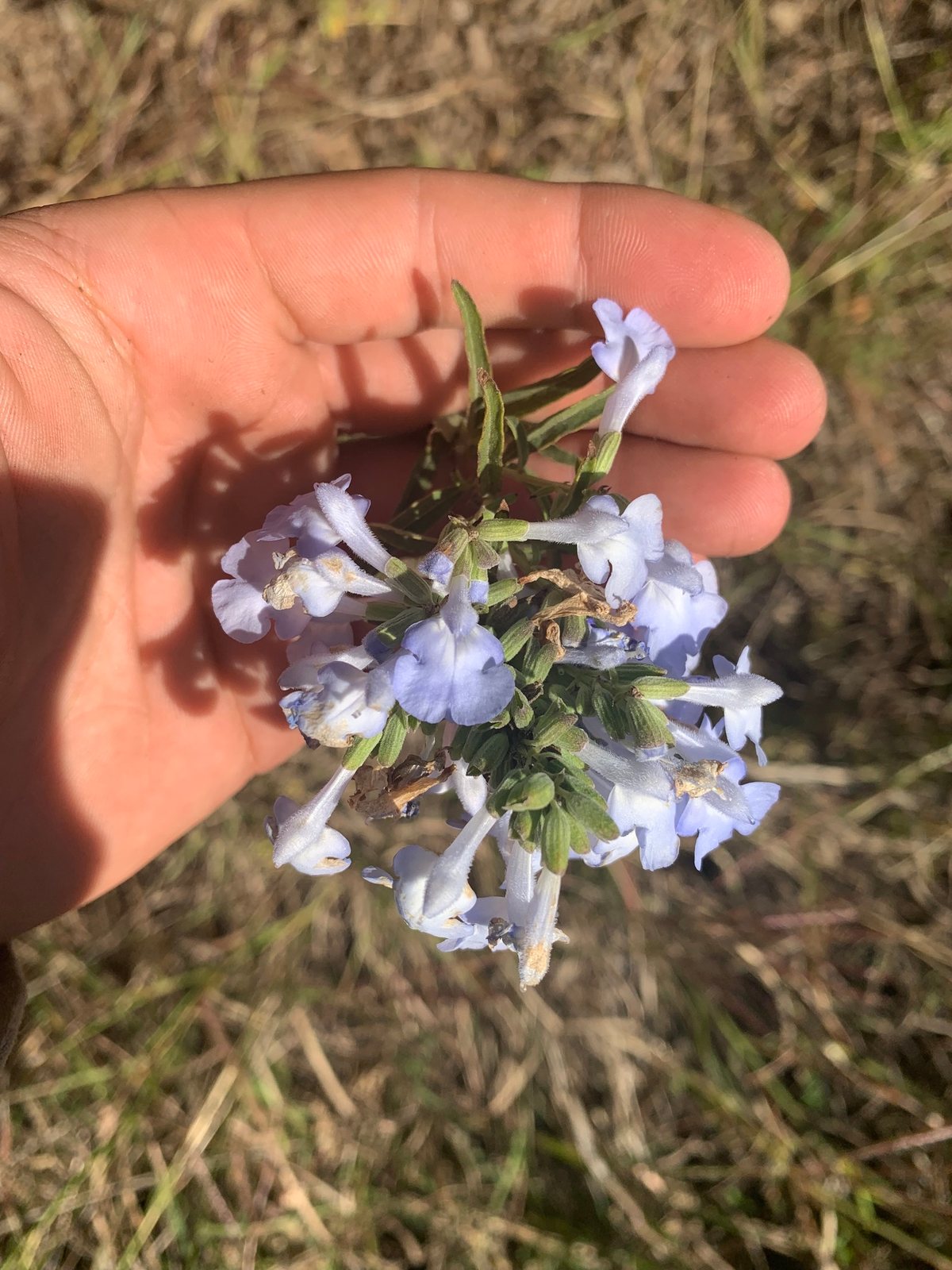
At a glance
- Sun
- Full sun; light shade is tolerated, but stems are more likely to flop.
- Water
- Water regularly during establishment, allowing the soil surface to dry between waterings. Once established, water during prolonged drought; avoid persistently wet soil.
- Soil
- Well-drained sandy, gravelly or loamy soil, including relatively poor soil. Clay is suitable only where drainage is good, especially in winter.
- Height
- 3-5 ft (0.9-1.5 m)
- Spread
- 2-3 ft (0.6-0.9 m)
- Flowers
- Late summer to autumn; loose spikes of sky-blue, two-lipped flowers.
- Foliage
- Opposite, narrow green leaves on slender, square stems; foliage dies back in winter.
- Growth
- Moderate; usually forms a substantial flowering clump within two or three growing seasons.
- Care needed
- Low
The year at a glance
- Pollinators
- Deer resistant
- Drought tolerant
- Heat tolerant
- Wildlife
- Low allergen
| J | F | M | A | M | J | J | A | S | O | N | D | |
|---|---|---|---|---|---|---|---|---|---|---|---|---|
| Flowers | ||||||||||||
| Fruit | ||||||||||||
| Plant |
Northern hemisphere months. In Australia, shift them by six.
- Difficulty
- Easy
- Toughness
- Very tough
Will it suit your garden?
Pick your zone, country, light and whether you have pets.
Full sun is 6 or more hours of direct sun a day, part shade 3 to 6 hours, shade under 3.
How it grows
Planting day
1 ft (0.3 m)
After 1 year
2 ft (0.6 m)
After 2 years
3 ft (0.9 m)
After 3 years
4 ft (1.2 m)
full size
About 3 years to full size.
From a typical nursery size, at an average rate for this kind of plant. A rule of thumb, not a forecast.
Good to know
- Cats and dogs
- Safe
- Growth rate
- Moderate
Care
Jobs through the year
- WaterApr–May, Sep–Oct, every 21 days
- Water established clumps only during prolonged dry weather; new plants need more regular watering.
- WaterJun–Aug, every 14 days
- Deep-water during prolonged drought, letting soil dry between waterings.
- PruneFeb–Mar
- Cut old stems close to ground level before new shoots lengthen.
- PruneMay–Jun
- Optionally shorten stems by one-third before buds form to reduce flopping.
- DivideApr–May
- Divide only crowded clumps or those with weak centres; replant into well-drained soil.
- ProtectApr–May
- Install discreet supports on exposed sites before stems become tall.
- Water deeply through the first growing season whenever the root zone becomes dry.
- Avoid routine feeding; rich soil and high-nitrogen fertiliser encourage weak, floppy stems.
- Keep the crown free of thick, damp mulch, particularly in wet-winter climates.
- Install discreet supports in spring on exposed sites, or let sturdy neighbouring perennials support the stems.
- Divide in spring if a clump becomes crowded or develops a weak centre.
Pruning. For shorter, sturdier plants, cut stems back by about one-third in late spring or early summer, before flower buds develop; flowering may be delayed. Leave spent stems standing over winter if wanted, then cut them close to ground level in late winter or early spring before new growth develops.
Through the year
- Early spring
- Cut down old stems before new shoots lengthen.
- Spring
- Plant or divide into well-drained soil, and water thoroughly.
- Late spring
- Add supports or shorten stems by one-third if a compact plant is needed.
- Summer
- Water young plants during dry spells; avoid feeding established clumps.
- Late summer
- Enjoy flowering and collect seed from drying flower spikes if wanted.
- Autumn
- Leave stems for winter structure, or remove seed heads where seedlings are unwanted.
In the garden
- Plant through prairie-style borders with little bluestem and coneflowers for late-season colour and movement.
- Use in the middle or back of a sunny border, where its open stems allow glimpses of plants behind.
- Combine with yellow black-eyed Susans or goldenrods for a strong blue-and-gold autumn display.
- Repeat small groups through a dry gravel garden for a light, informal effect.
Garden styles it suits: Native meadow, Midwest prairie, New perennial (prairie), Pollinator garden, Cottage garden and Dry gravel garden.
Plant it with: Little bluestem, Prairie dropseed, Purple coneflower, Black-eyed Susan, Butterfly weed and Showy goldenrod.
Wildlife: Flowers provide late-season nectar and pollen for bees, including bumblebees, and may also attract butterflies. Standing stems offer shelter for small invertebrates.
Problems to watch for
- Flopping stems: provide full sun, avoid fertiliser and excessive irrigation, and shorten stems in late spring or add supports.
- Root or crown rot in wet soil: improve drainage or move to a raised planting area; do not keep the crown buried under damp mulch.
- Powdery mildew: improve airflow, avoid crowding and remove badly affected foliage.
- Slugs and snails on spring shoots: check young growth during damp weather and use hand removal or locally approved controls.
Safety
Not known to be toxic to people, cats, dogs or horses. Species-specific safety information is limited, so do not treat the leaves or flowers as food or substitute them for culinary sage.
Easily confused with
Mealycup sage (Salvia farinacea)
Usually shorter and more compact, with denser flower spikes and conspicuously pale, mealy-looking flower stalks and calyces; pitcher sage has a looser, airier habit.
Bog sage (Salvia uliginosa)
Also bears sky-blue flowers, but has broader, clearly toothed leaves and spreads strongly by underground stems; it prefers much moister soil.
Russian sage (Salvia yangii)
Has silvery, often deeply cut foliage and woody stems, rather than pitcher sage's narrow green leaves and herbaceous stems.
The name
The species name azurea means sky-blue, referring to the flowers.
Propagation. Sow seed in autumn outdoors, or give seed a period of cold, moist treatment before spring sowing; germination can be variable. Divide established clumps in spring, or take softwood cuttings from non-flowering shoots in late spring.
Checked against open data
- Accepted botanical name
- Salvia azurea
- Native range
- Alabama, Arizona, Arkansas, Colorado, Florida, Georgia, Illinois, Kansas, Kentucky, Louisiana, Mississippi and Missouri.
- Measured
- Soil pH 6 to 8. Average height 88 cm.
Sources: GBIF (CC BY 4.0) and Trefle (CC BY 4.0). The care and design notes are LandscapeGPT's own.
See it in your own yard.
Upload a photo of your yard and see it redesigned with plants that suit your climate, each checked against your zone.