Plantainleaf sedge
Carex plantaginea. Family Cyperaceae. Ornamental grass.
Also called Plantain-leaved sedge, Seersucker sedge.
Plantainleaf sedge is a clump-forming perennial sedge native to moist woods in eastern North America. Gardeners grow it for its broad, puckered green leaves, which bring strong texture to shady borders without forming a running carpet.
At a glance
- Sun
- Partial to full shade; protect from hot afternoon sun.
- Water
- Keep evenly moist, especially while establishing. Established clumps tolerate brief dry spells, but prolonged drought damages the foliage.
- Soil
- Humus-rich, moist but well-drained soil; tolerates clay if it is not waterlogged.
- Height
- 1-2 ft (0.3-0.6 m) in flower; foliage usually 0.5-1 ft (0.15-0.3 m)
- Spread
- 1-1.5 ft (0.3-0.45 m)
- Flowers
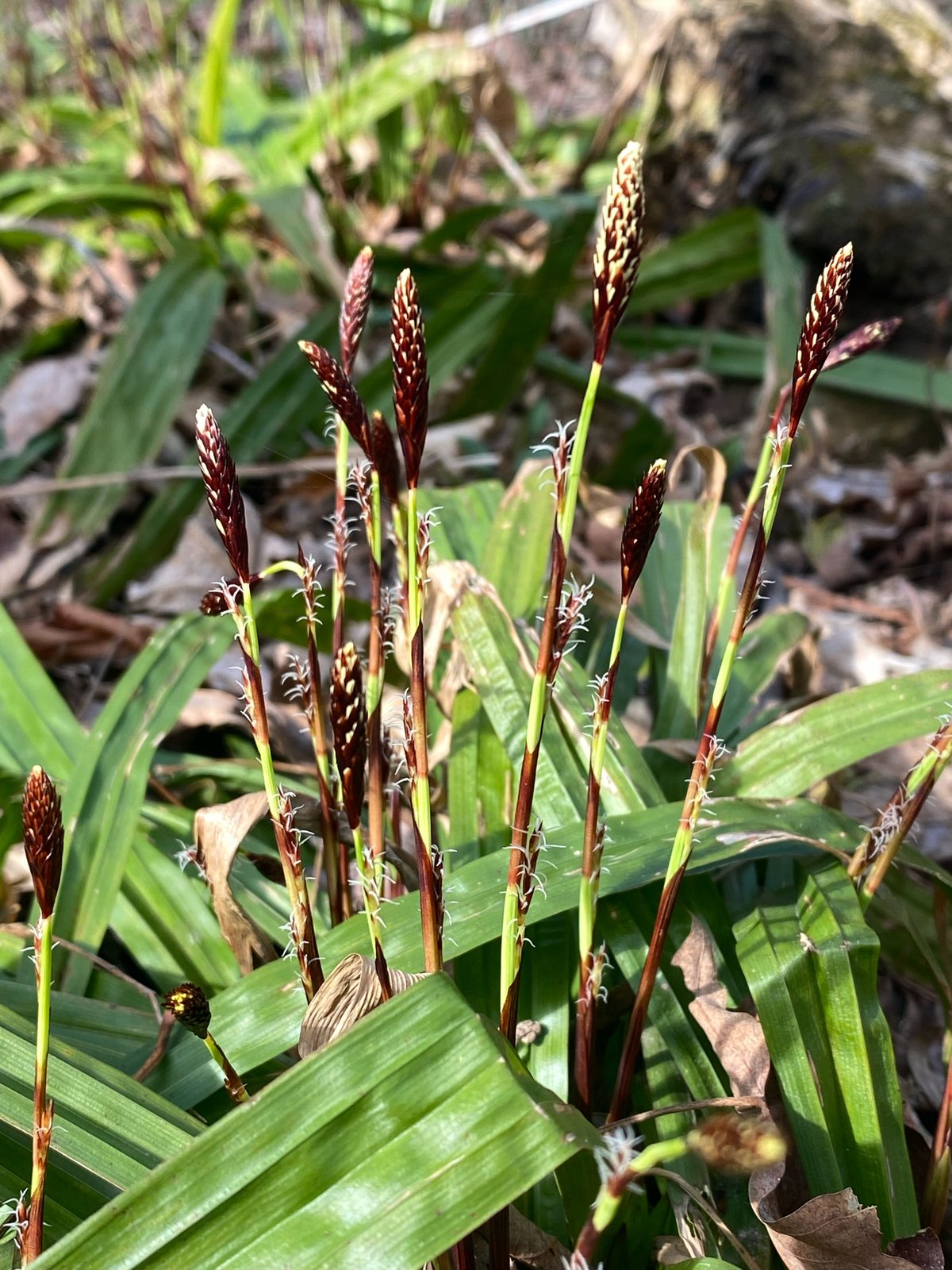
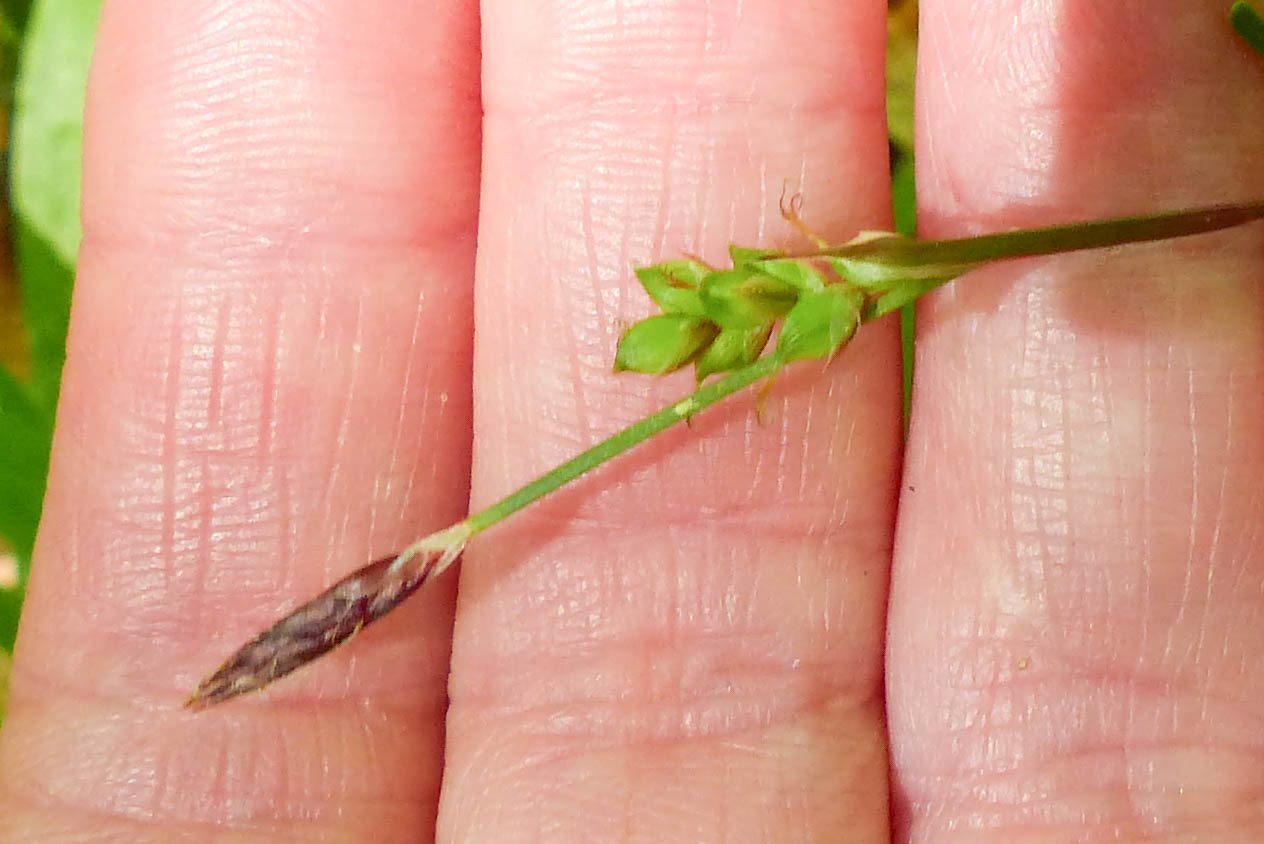
- Early to mid-spring; small, inconspicuous greenish flowers with reddish-purple to brown scales on upright stems.
- Foliage
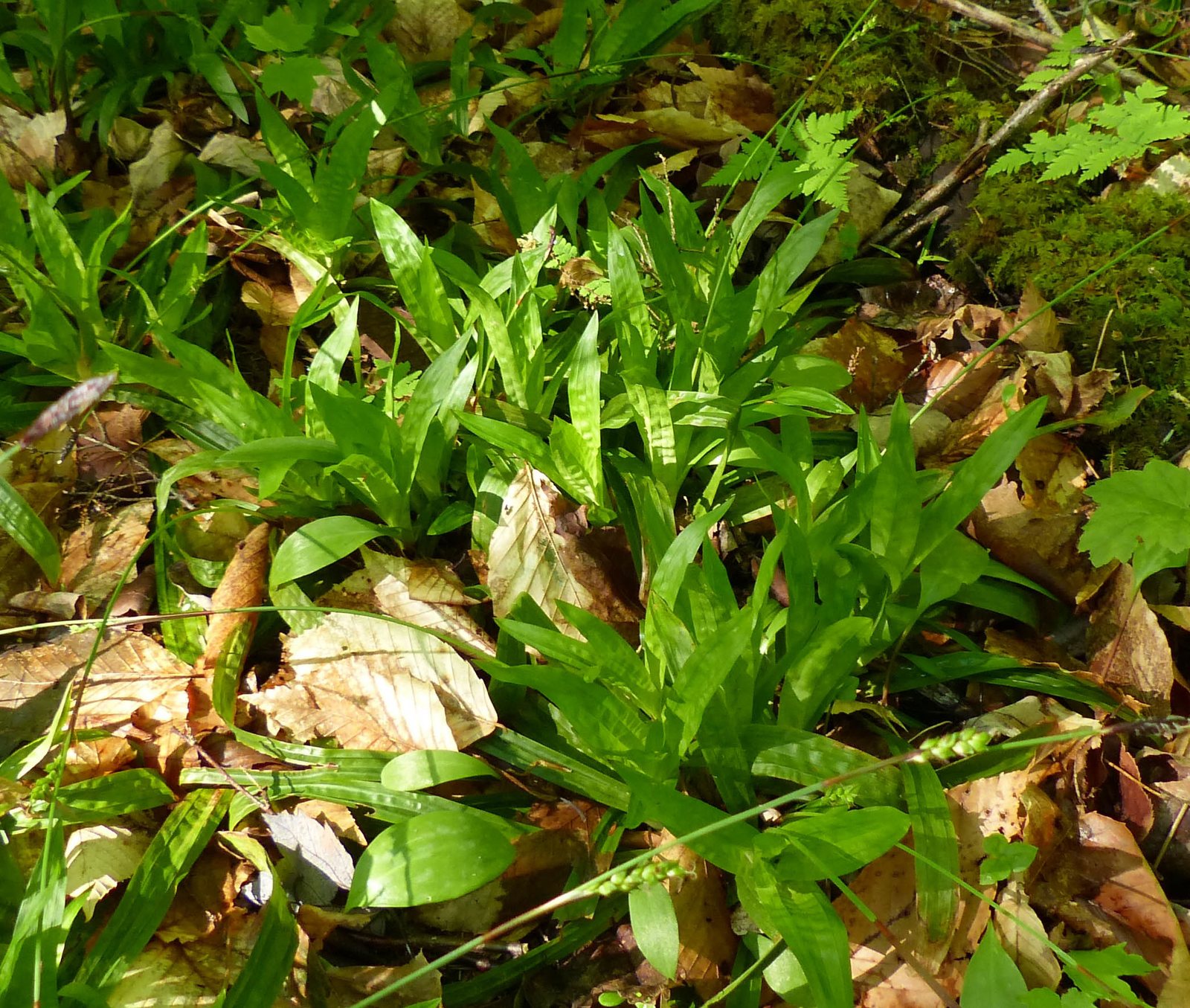
- Broad, arching, bright to deep green leaves with conspicuous lengthwise folds and a puckered, seersucker-like surface. Evergreen in mild winters and partly evergreen or winter-damaged in colder areas.
- Growth
- Slow to moderate
- Care needed
- Low
The year at a glance
- Deer resistant
- Cold hardy
- Wildlife
| J | F | M | A | M | J | J | A | S | O | N | D | |
|---|---|---|---|---|---|---|---|---|---|---|---|---|
| Flowers | ||||||||||||
| Plant |
Northern hemisphere months. In Australia, shift them by six.
- Difficulty
- Easy
- Toughness
- Fairly tough
Will it suit your garden?
Pick your zone, country, light and whether you have pets.
Full sun is 6 or more hours of direct sun a day, part shade 3 to 6 hours, shade under 3.
How it grows
Planting day
1.1 ft (0.35 m)
After 1 year
1.2 ft (0.38 m)
After 2 years
1.4 ft (0.41 m)
After 3 years
1.5 ft (0.44 m)
After 5 years
1.5 ft (0.45 m)
full size
About 3 years to full size.
From a typical nursery size, at an average rate for this kind of plant. A rule of thumb, not a forecast.
Good to know
- Cats and dogs
- Safe
- Native to
- the US and Canada
- Growth rate
- Slow
Care
Jobs through the year
- WaterMar–May, Sep–Oct, every 14 days
- Water established ground-grown clumps when rainfall is insufficient to keep soil evenly moist; water new plants more often.
- WaterJun–Aug, every 7 days
- Water deeply during dry weather before leaves brown; check young plants more frequently and avoid saturation.
- PruneFeb–Mar
- Remove dead or badly winter-damaged leaves at the base; do not shear healthy green foliage.
- MulchMar–Apr
- Top-dress with leaf mould or compost, keeping the crown uncovered.
- MulchOct–Nov
- Retain a light layer of fallen leaves around plants but clear thick, matted leaves from crowns.
- DivideMar–Apr
- Divide only crowded or weakening clumps, replanting promptly in moist shade.
- Water new plants regularly through their first growing season, keeping the root zone moist but not saturated.
- During prolonged dry weather, water deeply before the leaves begin to brown.
- Apply a thin layer of leaf mould or compost in spring; routine fertiliser is usually unnecessary.
- Mulch around clumps with shredded leaves, keeping the crown uncovered.
- Divide crowded clumps in early spring if growth weakens or you want more plants.
Pruning. In late winter or early spring, remove dead or badly damaged leaves by hand or cut them near the base before new growth starts. Leave healthy green leaves intact rather than routinely shearing the whole clump.
Through the year
- Late winter
- Check for frost-damaged leaves and remove them before fresh growth appears.
- Early spring
- Plant or divide clumps, then water thoroughly.
- Spring
- Top-dress with leaf mould or compost and renew the leaf mulch.
- Summer
- Water during extended dry spells and check for leaf scorch where sunlight reaches the bed.
- Autumn
- Retain a light covering of fallen leaves around plants, but remove thick, matted layers from the crowns.
In the garden
- Plant in small groups along shaded paths, where the puckered leaves can be seen close up.
- Use beneath deciduous trees and shrubs where the soil remains moist.
- Combine with fine-textured ferns for a contrast in leaf size and shape.
- Edge a woodland border with repeated clumps for a low, textured foreground.
Garden styles it suits: Woodland, Green on green, Low-maintenance, Japanese and Secret garden.
Plant it with: Christmas fern, Lady fern, Wild ginger, Foamflower, Solomon's seal and Hosta.
Wildlife: Dense clumps provide shelter for small invertebrates. Like other sedges, it is wind-pollinated rather than a nectar plant for bees.
Problems to watch for
- Brown tips and scorched leaves usually indicate dry soil, drying wind or too much sun; water deeply and provide more shade.
- Crown or root rot can develop in persistently saturated soil; improve drainage and keep mulch away from the crown.
- Slugs and snails may chew young leaves; remove them by hand and reduce damp hiding places immediately around damaged plants.
- Winter burn can leave ragged brown foliage; wait until late winter or early spring to remove damaged leaves.
Safety
Not known to be toxic to people, cats, dogs or horses. No part is recognised as poisonous, although species-specific toxicity information is limited; it is not a food plant.
Easily confused with
Broad-leaved sedge (Carex platyphylla)
Usually has blue-green or glaucous leaves rather than the glossy green, strongly puckered foliage of plantainleaf sedge.
White bear sedge (Carex albursina)
Also has broad green leaves, but they are generally flatter and lack the pronounced seersucker texture; flowering structures help confirm identification.
The name
The species name plantaginea means plantain-like, referring to the broad leaves, while seersucker sedge describes their puckered texture.
Propagation. Divide established clumps in early spring, retaining roots and several shoots on each piece. Seed propagation is possible, but germination can be slow and irregular; sow fresh seed outdoors and allow exposure to seasonal cold.
Checked against open data
- Accepted botanical name
- Carex plantaginea
- In the US and Canada
- Native in Canada and the lower 48 states.
- Native range
- Alabama, Connecticut, Georgia, Indiana, Iowa, Kentucky, Maine, Maryland, Masachusettes, Michigan, Minnesota and New Brunswick.
Sources: GBIF (CC BY 4.0), USDA PLANTS and Trefle (CC BY 4.0). The care and design notes are LandscapeGPT's own.
See it in your own yard.
Upload a photo of your yard and see it redesigned with plants that suit your climate, each checked against your zone.