Plum
Prunus domestica. Family Rosaceae. Tree.
Also called European plum, Common plum.
European plum is a deciduous fruit tree grown for its spring blossom and sweet or tart summer fruit, eaten fresh, cooked or dried. Tree size, harvest time and whether you need a pollination partner depend on the cultivar and rootstock. Choose a cultivar suited to your local winter chill and spring frost risk; warm-winter areas can give poor crops.
At a glance
- Sun
- Full sun, ideally with at least 6-8 hours of direct sunlight; shelter from strong winds without trapping cold air.
- Water
- Water deeply during dry spells, especially for the first two growing seasons and while fruit is swelling. Avoid waterlogged soil.
- Soil
- Fertile, moisture-retentive but well-drained loam; slightly acidic to neutral soil is ideal. Avoid shallow, drought-prone soil and poorly drained clay.
- Height
- 15-30 ft (4.5-9 m); trees on dwarfing rootstocks can be kept smaller
- Spread
- 15-25 ft (4.5-7.5 m); less on dwarfing rootstocks
- Flowers
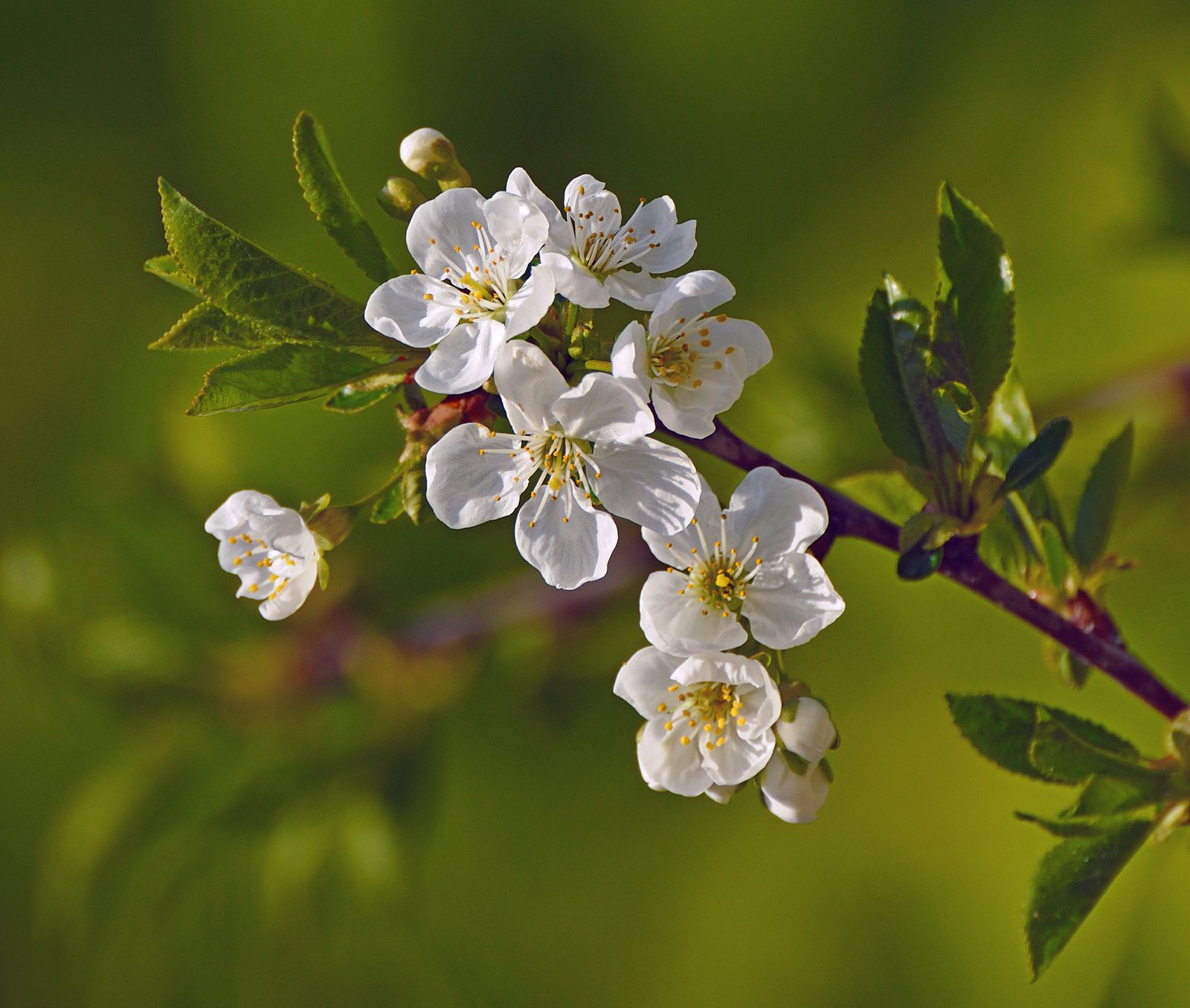
- White flowers in early to mid-spring, usually before or as the leaves emerge.
- Foliage
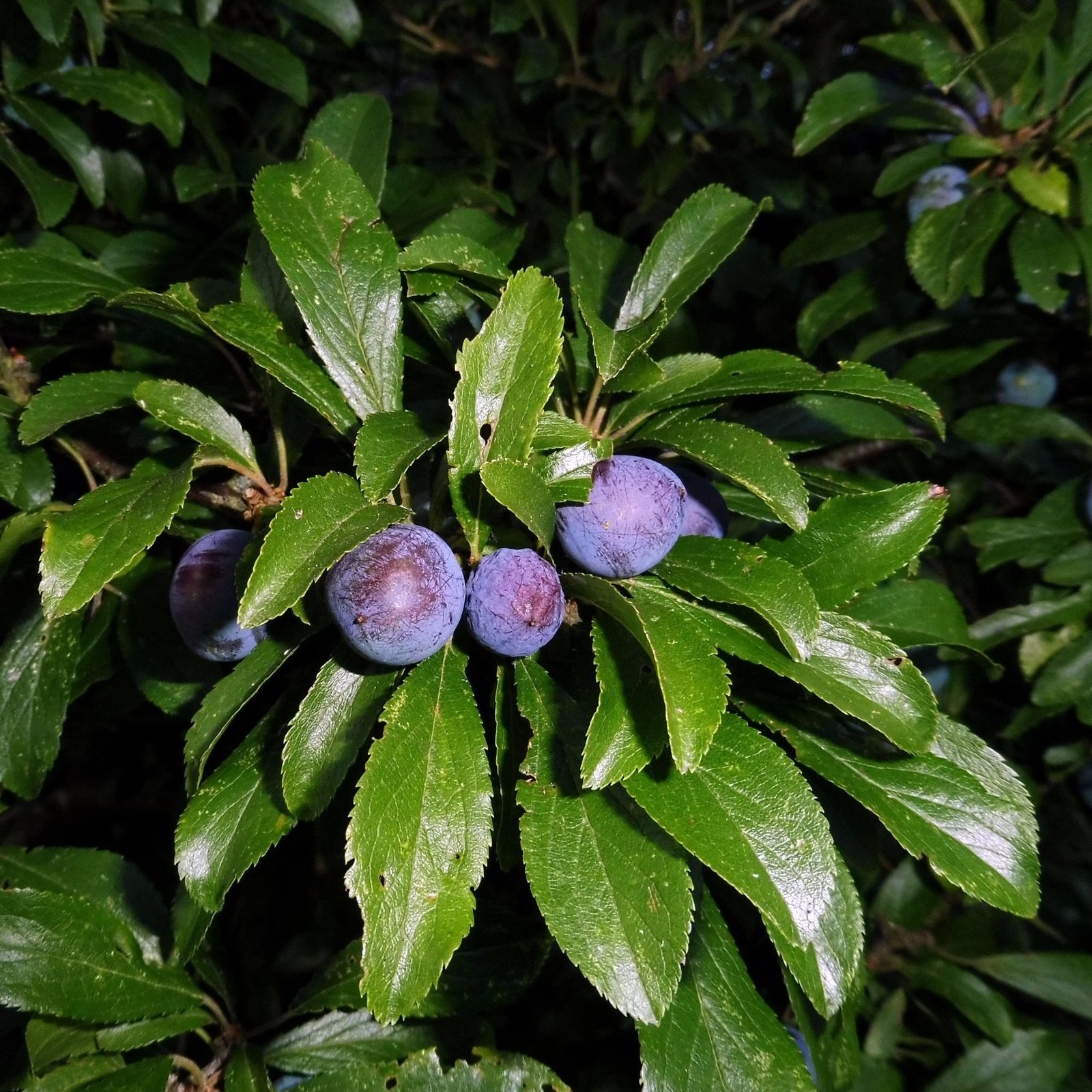
- Oval, toothed green leaves, sometimes turning yellow in autumn.
- Growth
- Moderate
- Care needed
- Medium
The year at a glance
- Pollinators
- Wildlife
- Low allergen
- Edible
| J | F | M | A | M | J | J | A | S | O | N | D | |
|---|---|---|---|---|---|---|---|---|---|---|---|---|
| Flowers | ||||||||||||
| Fruit | ||||||||||||
| Plant |
Northern hemisphere months. In Australia, shift them by six.
- Difficulty
- Moderate
- Toughness
- Fairly tough
Will it suit your garden?
Pick your zone, country, light and whether you have pets.
Full sun is 6 or more hours of direct sun a day, part shade 3 to 6 hours, shade under 3.
How it grows
Planting day
7 ft (2 m)
After 1 year
7 ft (2.2 m)
After 2 years
8 ft (2.5 m)
After 3 years
9 ft (2.7 m)
After 5 years
10 ft (3.2 m)
About 20 years to full size.
From a typical nursery size, at an average rate for this kind of plant. A rule of thumb, not a forecast.
Good to know
- Cats and dogs
- Toxic
- Growth rate
- Moderate
Care
Jobs through the year
- WaterApr–May, Sep–Oct, every 14 days
- Water established trees deeply in dry spells; trees in their first two years need closer attention.
- WaterJun–Aug, every 7 days
- Water deeply if rainfall is insufficient, especially while fruit swells; avoid waterlogging.
- MulchMar
- Apply 5–8 cm of organic mulch over the root zone, keeping it away from the trunk.
- FeedMar
- Feed modestly only if growth is weak; avoid excessive nitrogen.
- ProtectMar–Apr
- Cover blossom during forecast frosts where practical; remove covers by day for pollinators.
- PruneApr
- Train young trees in dry spring weather; avoid routine autumn or winter pruning.
- PruneJun
- Thin heavy crops after natural fruit drop, leaving approximately 5–8 cm between plums.
- PruneJul–Aug
- Prune established trees lightly in dry weather, removing damaged and crossing branches and suckers.
- ProtectJun–Aug
- Support heavily laden branches and use only securely fitted wildlife-safe crop netting.
- HarvestJul–Oct
- Pick according to cultivar as fruit colours and softens; cooking fruit can be slightly firmer.
- ProtectJul–Nov, every 7 days
- Remove rotten, fallen and mummified fruit to reduce disease carryover.
- Plant with the graft union above soil level, and stake young trees where wind could rock the roots.
- Water deeply during dry weather; keep the root zone moist but not saturated.
- Apply a 2-3 in (5-8 cm) organic mulch each spring, keeping it clear of the trunk.
- Feed modestly in early spring if growth is weak; excess nitrogen encourages leafy growth rather than fruit.
- Thin heavy crops after the natural fruit drop, leaving roughly 2-3 in (5-8 cm) between fruits to reduce branch breakage.
- Check whether your cultivar is self-fertile; otherwise plant a compatible European plum with overlapping flowering.
Pruning. Train young trees in spring and prune established trees lightly in dry summer weather, removing dead, damaged and crossing branches and opening crowded growth. Avoid routine autumn or winter pruning, particularly where silver leaf disease is a risk, and remove rootstock suckers promptly.
Harvest
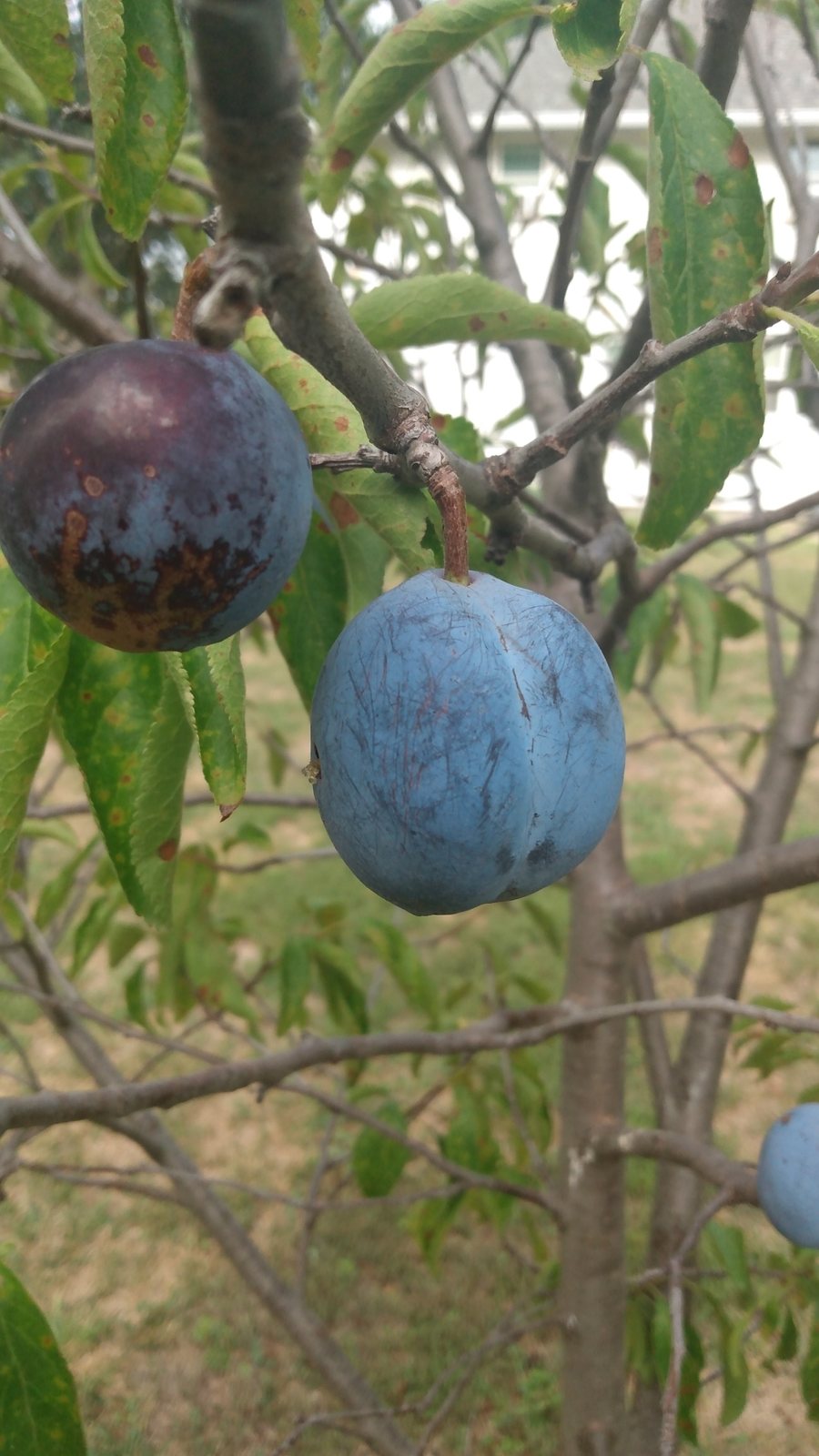
Pick plums in July–October in the US and UK, usually August–September in Canada, and January–March in Australia, depending on variety and local climate. For eating fresh, pick fruit with its full variety-specific colour that yields slightly to gentle pressure and comes away with a light twist; for cooking, pick while still slightly firm.
Through the year
- Late autumn to early spring
- Plant dormant bare-root trees while the soil is workable and neither frozen nor waterlogged.
- Early spring
- Apply mulch, check ties and feed only if needed.
- Spring
- Protect blossom from forecast frost with horticultural fleece where practical; remove it during the day so pollinators can reach flowers.
- Late spring to early summer
- Thin overloaded branches after the natural fruit drop and begin watering if conditions turn dry.
- Summer
- Prune lightly in dry weather and support heavily laden branches.
- Summer to early autumn
- Pick fruit as it colours and softens; remove rotten fruit promptly.
- Autumn
- Clear fallen fruit and remove shrivelled fruit remaining on the tree to reduce disease carryover.
In the garden
- Plant in a home orchard with compatible European plums for reliable pollination and a longer harvest.
- Use as a small lawn tree for spring blossom, summer shade and edible fruit, keeping grass away from the trunk.
- Train as a fan against a sunny wall or fence where space is limited.
- Include in an edible landscape with currants, gooseberries and low herbs planted beyond the mulched root zone.
Garden styles it suits: Backyard orchard, Edible landscape, Homestead, Cottage garden, Potager (kitchen garden) and Food forest.
Plant it with: Chives, Thyme, Yarrow, Calendula, Redcurrant and Gooseberry.
Wildlife: Spring flowers provide pollen and nectar for bees. Birds and small mammals eat ripe fruit, while the branches offer shelter; net crops only with wildlife-safe netting secured so animals cannot become entangled.
Problems to watch for
- Brown rot: fruit develops soft brown decay and often remains hanging as a shrivelled mummy. Remove affected and fallen fruit, reduce crowding and avoid damaging ripening fruit.
- Black knot, particularly in North America: hard black swellings develop on branches. Cut infected shoots at least 6-8 in (15-20 cm) below visible knots in dry weather and dispose of the prunings; heavily infected trees may need removal.
- Aphids: curled leaves and sticky honeydew can affect young shoots. Check early, rinse off small colonies and encourage ladybirds and other predators; use a labelled insecticidal soap if necessary.
- Poor fruit set: frost, insufficient winter chill or an unsuitable pollination partner can leave trees nearly fruitless. Choose locally proven cultivars, avoid frost pockets and provide a compatible flowering partner when required.
Safety
Ripe fruit flesh is edible for people. Leaves, stems and the kernels inside the stones contain cyanogenic compounds and can cause serious poisoning in people, cats, dogs and horses if eaten, especially when kernels are chewed or leaves are wilted. Keep prunings away from livestock; swallowed stones can also cause choking or intestinal blockage in pets.
Easily confused with
Japanese plum (Prunus salicina)
Usually has narrower, less hairy leaves and often larger, rounder fruit. Flowering is generally earlier, but cultivated forms overlap, so a nursery label is more reliable than fruit shape alone.
Cherry plum (Prunus cerasifera)
Usually flowers earlier and bears smaller, round yellow or red fruits. Purple-leaved ornamental forms are common.
Blackthorn (Prunus spinosa)
Forms a dense, thorny, suckering shrub with small leaves and small, very astringent blue-black sloes, rather than the larger dessert or cooking plums.
The name
Prunus is the Latin name for the plum tree, and domestica means domesticated or belonging to the household.
Propagation. Named cultivars are usually budded or grafted onto selected plum rootstocks. Seedlings vary in fruit quality and size and do not reliably reproduce the parent; rootstock suckers usually will not produce the same fruit as the grafted tree.
Checked against open data
- Accepted botanical name
- Prunus domestica
- In the US and Canada
- Introduced in Canada and the lower 48 states.
- Measured
- Soil pH 5 to 8.2. Average height 800 cm.
Sources: GBIF (CC BY 4.0), USDA PLANTS and Trefle (CC BY 4.0). The care and design notes are LandscapeGPT's own.
See it in your own yard.
Upload a photo of your yard and see it redesigned with plants that suit your climate, each checked against your zone.