Poinsettia
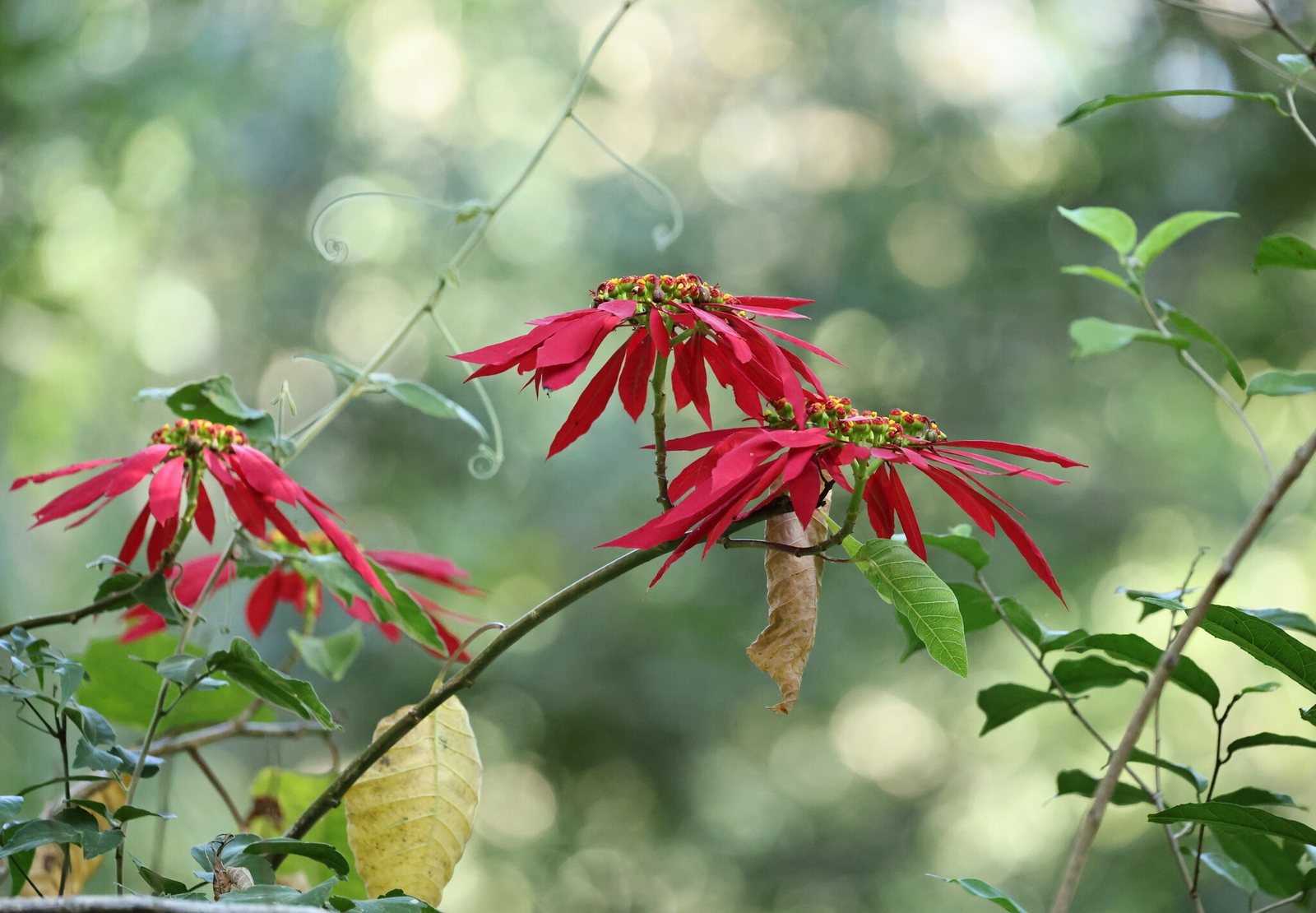
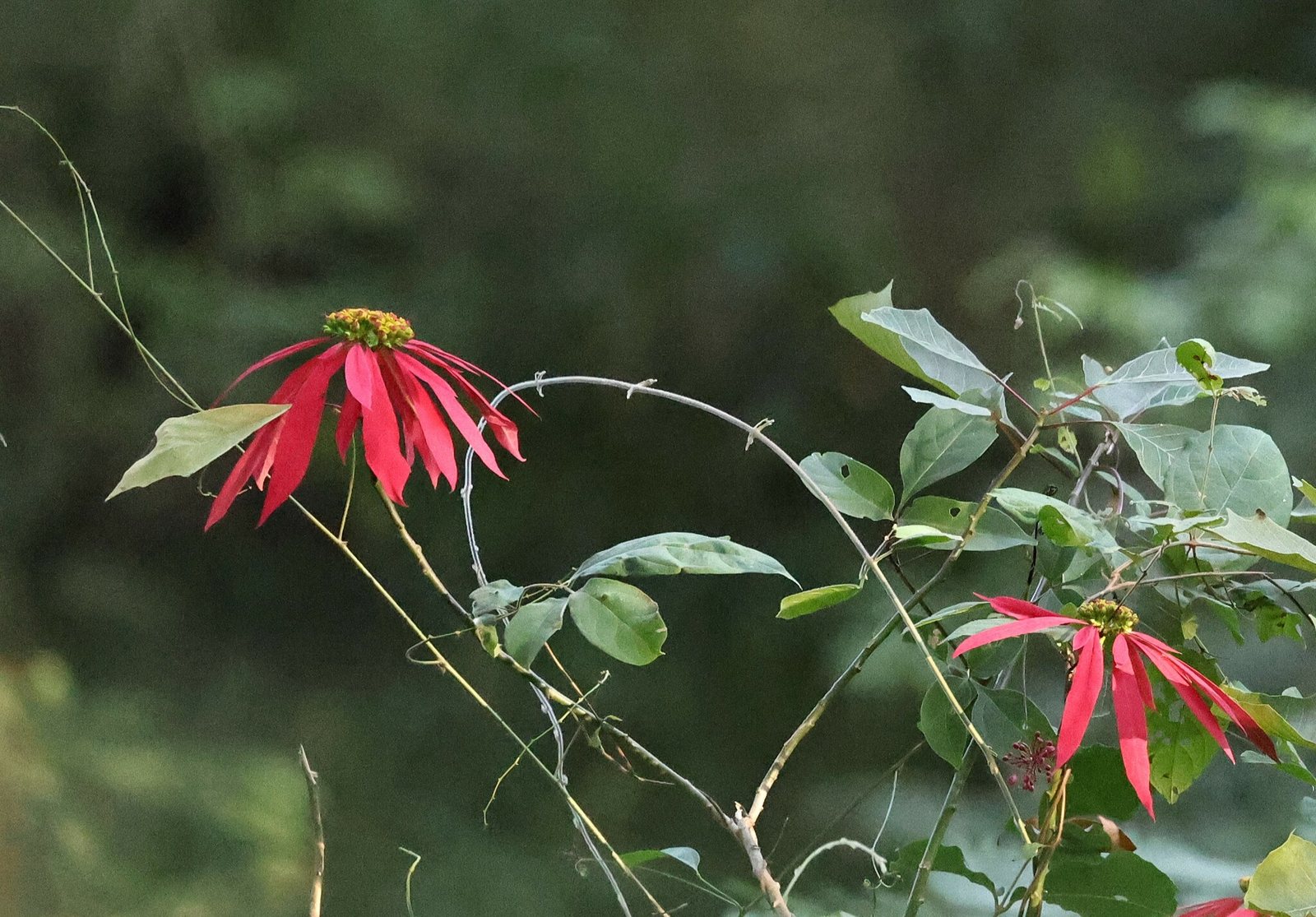
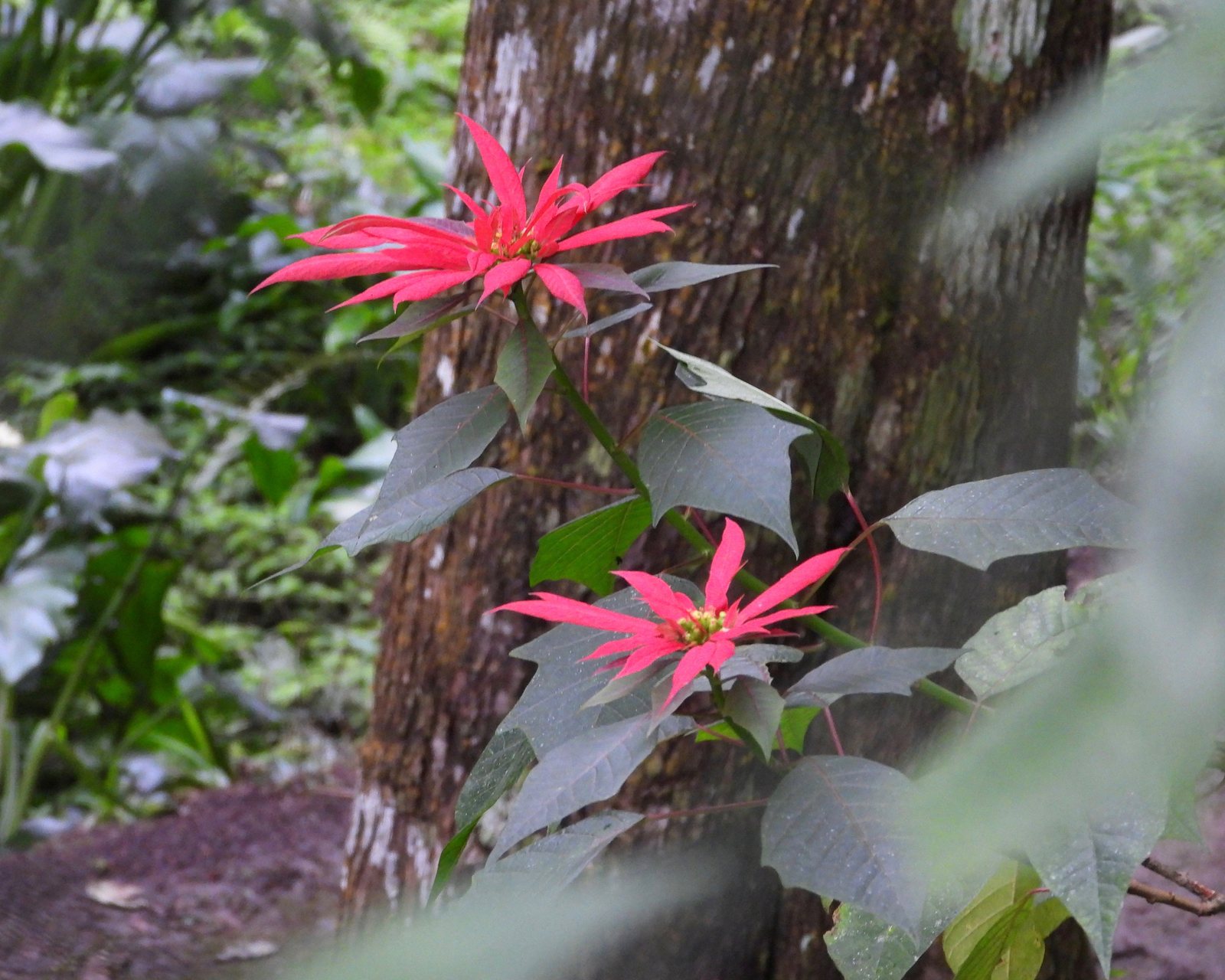
Euphorbia pulcherrima. Family Euphorbiaceae. Shrub.
Also called Christmas flower, Mexican flameleaf.
Poinsettia is a frost-tender Mexican shrub grown for colourful bracts surrounding its tiny flowers. Usually sold as a compact winter houseplant, it can become a large, spreading garden shrub in frost-free climates; outdoor flowering naturally falls in the cooler, shorter-day months.
At a glance
- Sun
- Full sun to partial shade outdoors; bright, indirect light indoors, away from cold windows.
- Water
- Water thoroughly when the surface of the potting mix feels dry, then let excess water drain. Established outdoor shrubs tolerate brief dry spells but flower best with steady moisture.
- Soil
- Well-drained, moderately fertile soil; use a free-draining houseplant potting mix in containers.
- Height
- 6-12 ft (1.8-3.7 m) outdoors; commonly 1-3 ft (0.3-0.9 m) in pots
- Spread
- 6-8 ft (1.8-2.4 m) outdoors; commonly 1-2 ft (0.3-0.6 m) in pots
- Flowers
- Tiny yellow-green flowers surrounded by red, pink, cream or white bracts, usually from late autumn through winter. Commercial plants can be timed for holiday display.
- Foliage
- Evergreen. Large, pointed, dark green leaves on branching, somewhat brittle stems; may shed leaves during drought, cold or a resting period.
- Growth
- Fast in warm weather
- Care needed
- Medium
The year at a glance
- Heat tolerant
- Low allergen
| J | F | M | A | M | J | J | A | S | O | N | D | |
|---|---|---|---|---|---|---|---|---|---|---|---|---|
| Flowers | ||||||||||||
| Plant |
Northern hemisphere months. In Australia, shift them by six.
- Difficulty
- Moderate
- Toughness
- Needs looking after
Will it suit your garden?
Pick your zone, country, light and whether you have pets.
Full sun is 6 or more hours of direct sun a day, part shade 3 to 6 hours, shade under 3.
How it grows
Planting day
1.6 ft (0.5 m)
After 1 year
4 ft (1.2 m)
After 2 years
6 ft (1.9 m)
After 3 years
8 ft (2.6 m)
After 5 years
9 ft (2.8 m)
full size
About 3 years to full size.
From a typical nursery size, at an average rate for this kind of plant. A rule of thumb, not a forecast.
Good to know
- Cats and dogs
- Mildly toxic: may upset a stomach
- Growth rate
- Fast
Care
Jobs through the year
- WaterMar–May, Sep–Oct, every 7 days
- Grow in a container here; water when the mix surface dries and empty any sleeve or saucer.
- WaterJun–Aug, every 4 days
- Check outdoor pots often; water thoroughly only when the surface dries.
- WaterJan–Feb, Nov–Dec, every 7 days
- Check indoor pots weekly; water only when the surface dries and let excess drain.
- FeedApr–Aug, every 21 days
- Feed with balanced liquid fertilizer at label strength during active growth.
- PruneMar–Apr
- After bracts fade, shorten leggy stems by one-third to one-half; wear gloves against sap.
- PruneMay–Jul, every 28 days
- Pinch vigorous shoot tips for branching; stop before late summer.
- ProtectJan–May, Sep–Dec
- Keep indoors in bright light at 16–24°C, away from cold glass, draughts and heating vents.
- ProtectJun
- Move outdoors gradually only when nights remain above 13°C.
- ProtectSep–Nov
- For repeat colour, give 14 hours of uninterrupted darkness nightly for 8–10 weeks.
- Remove decorative sleeves or empty them after watering so the pot never stands in water.
- Keep indoor plants around 60-75°F (16-24°C), away from draughts and heating vents.
- Feed every 2-4 weeks with a balanced liquid fertiliser at label strength during active spring and summer growth.
- Move pots outdoors only when nights remain above 55°F (13°C), introducing direct sun gradually.
- For repeat colour, provide about 14 hours of uninterrupted darkness nightly for 8-10 weeks in autumn, with bright light during the day.
Pruning. In spring, after the coloured bracts fade, shorten leggy stems by roughly one-third to one-half, cutting above healthy buds. Pinch new shoots in late spring and early summer for bushier growth, then stop by late summer so flowering shoots can develop; wear gloves against the milky sap.
Through the year
- Spring
- After the bracts fade, prune leggy growth and repot if roots crowd the container.
- Late spring
- Resume regular feeding as new shoots grow; move pots outside only once nights are consistently warm.
- Early summer
- Pinch shoot tips to encourage branching and check leaf undersides for whiteflies.
- Late summer
- Stop pinching and choose a position without evening lighting if you want natural autumn flowering.
- Autumn
- Bring pots indoors before cool nights. For indoor reblooming, begin the nightly darkness routine; seasonal timing is reversed between the Northern and Southern Hemispheres.
- Winter
- Keep flowering plants in bright light, protect them from cold draughts and water only as the surface dries.
In the garden
- Use compact potted plants for winter colour beside bright windows or in sheltered, frost-free entrances.
- Plant as a loose flowering shrub behind lower tropical foliage plants in frost-free gardens.
- Combine red-bracted plants with dark green foliage for a strong seasonal contrast.
- Use cream or white cultivars in sheltered courtyard containers with restrained green foliage.
Garden styles it suits: Tropical, Modern tropical, Modern courtyard, Traditional, Winter interest and Mexican hacienda.
Plant it with: Croton, Cordyline, Bromeliads and Cast-iron plant.
Wildlife: The small flowers can attract visiting insects outdoors, but poinsettia is not a major wildlife-supporting garden plant.
Problems to watch for
- Whiteflies: inspect leaf undersides, isolate affected pots and treat with insecticidal soap labelled for the plant; repeat as directed.
- Mealybugs: remove small infestations by hand and treat persistent colonies with a suitable labelled insecticidal soap.
- Root rot: prevent standing water and use freely draining mix; discard plants with extensive soft, rotten roots.
- Sudden leaf drop: protect plants from cold, draughts, prolonged dryness and waterlogging; buy plants that have not been displayed outdoors in cold weather.
Safety
The milky sap in stems and leaves can irritate skin and eyes. Chewing leaves, stems or bracts may cause mouth irritation, drooling, vomiting or diarrhoea in cats, dogs and people; serious poisoning is uncommon. Treat it as unsafe for horses to browse, although horse-specific toxicity information is limited. Keep broken stems and fallen leaves away from pets and children.
Easily confused with
Wild poinsettia (Euphorbia cyathophora)
This smaller annual has green upper leaves marked red mainly near their bases, rather than the broad, extensively coloured bracts of poinsettia; its leaves are often fiddle-shaped or lobed.
The name
Poinsettia commemorates Joel Roberts Poinsett, who introduced the plant to the United States from Mexico, while pulcherrima means 'most beautiful'.
Propagation. Take softwood stem cuttings in late spring or early summer, wearing gloves to avoid sap contact. Root them in clean, free-draining propagation mix with warmth, bright indirect light and high humidity.
Checked against open data
- Accepted botanical name
- Euphorbia pulcherrima
- Native range
- Guatemala, Mexico Central, Mexico Gulf, Mexico Northeast, Mexico Northwest, Mexico Southeast and Mexico Southwest.
- Measured
- Average height 300 cm.
Sources: GBIF (CC BY 4.0) and Trefle (CC BY 4.0). The care and design notes are LandscapeGPT's own.
See it in your own yard.
Upload a photo of your yard and see it redesigned with plants that suit your climate, each checked against your zone.