Possumhaw viburnum
Viburnum nudum. Family Viburnaceae. Shrub.
Also called Smooth witherod, Swamp haw, Witherod viburnum.
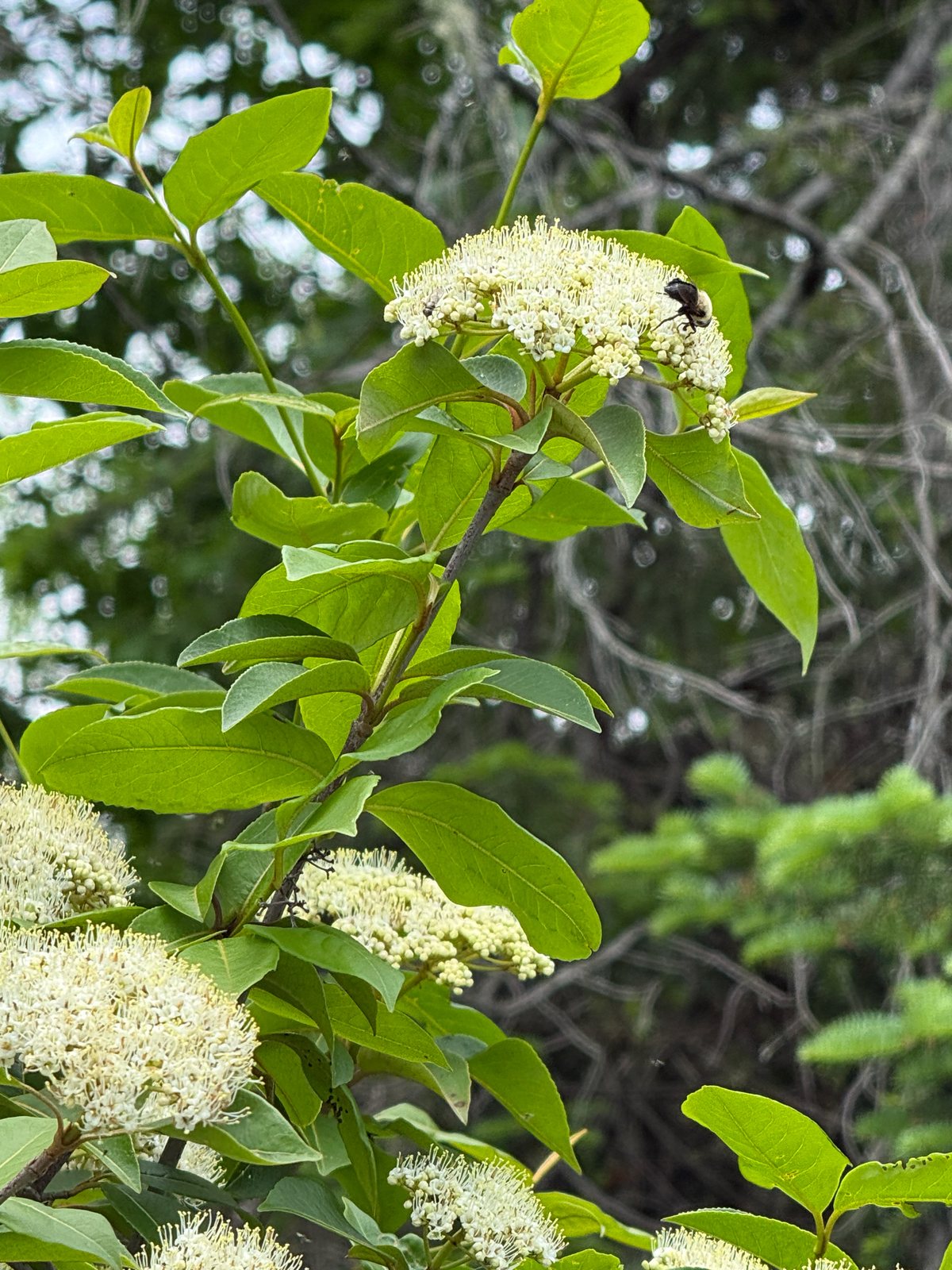
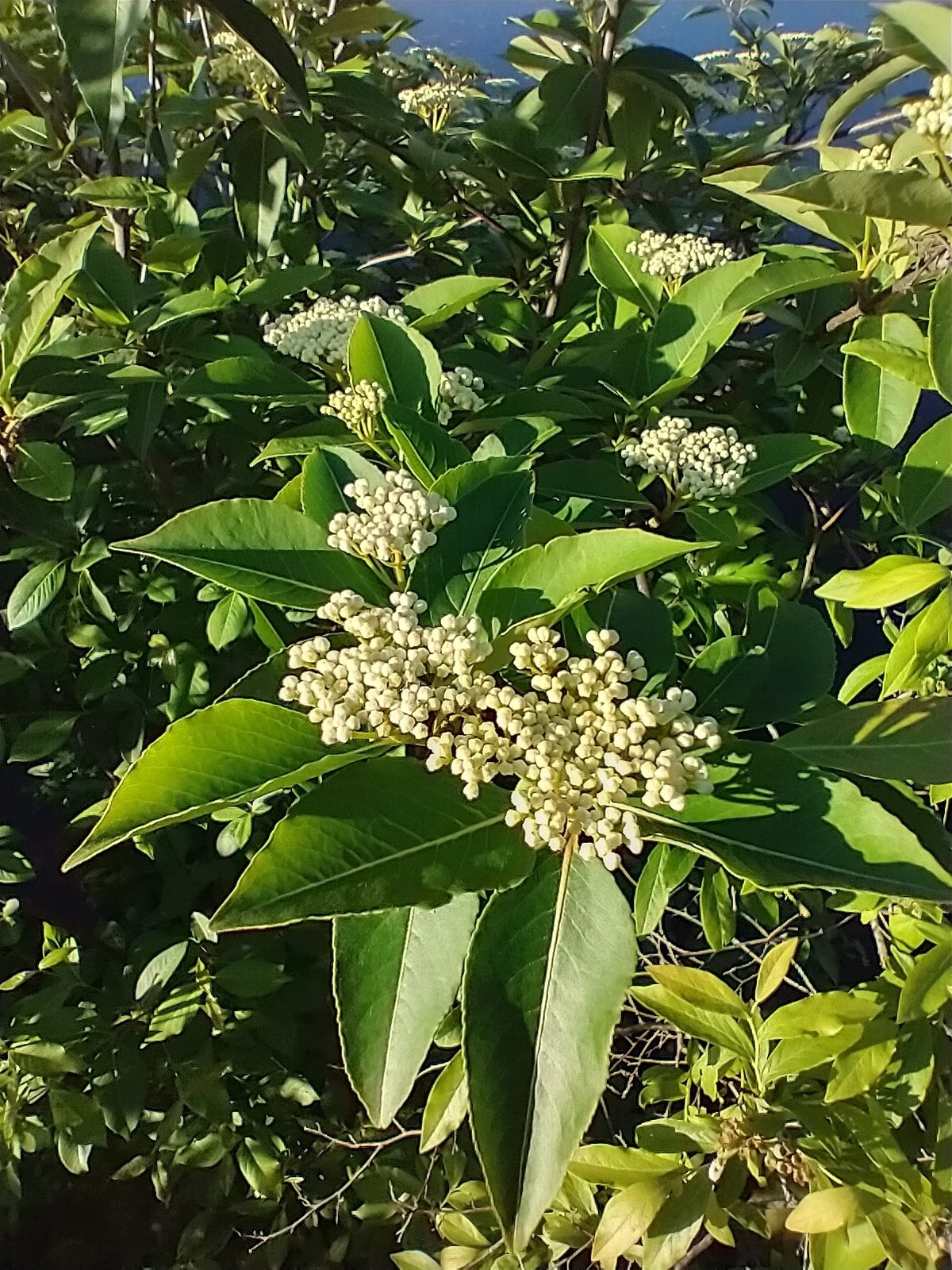
A deciduous shrub native to eastern North America, possumhaw viburnum is grown for creamy-white flowers, glossy leaves and clusters of fruit that change from pink to blue-black. Its burgundy autumn foliage and tolerance of moist ground make it useful in woodland gardens, informal screens and rain gardens.
At a glance
- Sun
- Full sun to partial shade; flowering, fruiting and autumn colour are generally best with several hours of direct sun.
- Water
- Keep the soil consistently moist, especially while establishing. Established plants tolerate wet ground and occasional flooding, but prolonged drought can cause leaf scorch and poor fruiting.
- Soil
- Moist, acidic soil rich in organic matter; tolerates clay and periodically waterlogged ground. Avoid very dry or strongly alkaline sites.
- Height
- 6-12 ft (1.8-3.7 m), occasionally taller in favourable conditions
- Spread
- 6-12 ft (1.8-3.7 m)
- Flowers
- Late spring to early summer; small creamy-white flowers in flat-topped clusters.
- Foliage
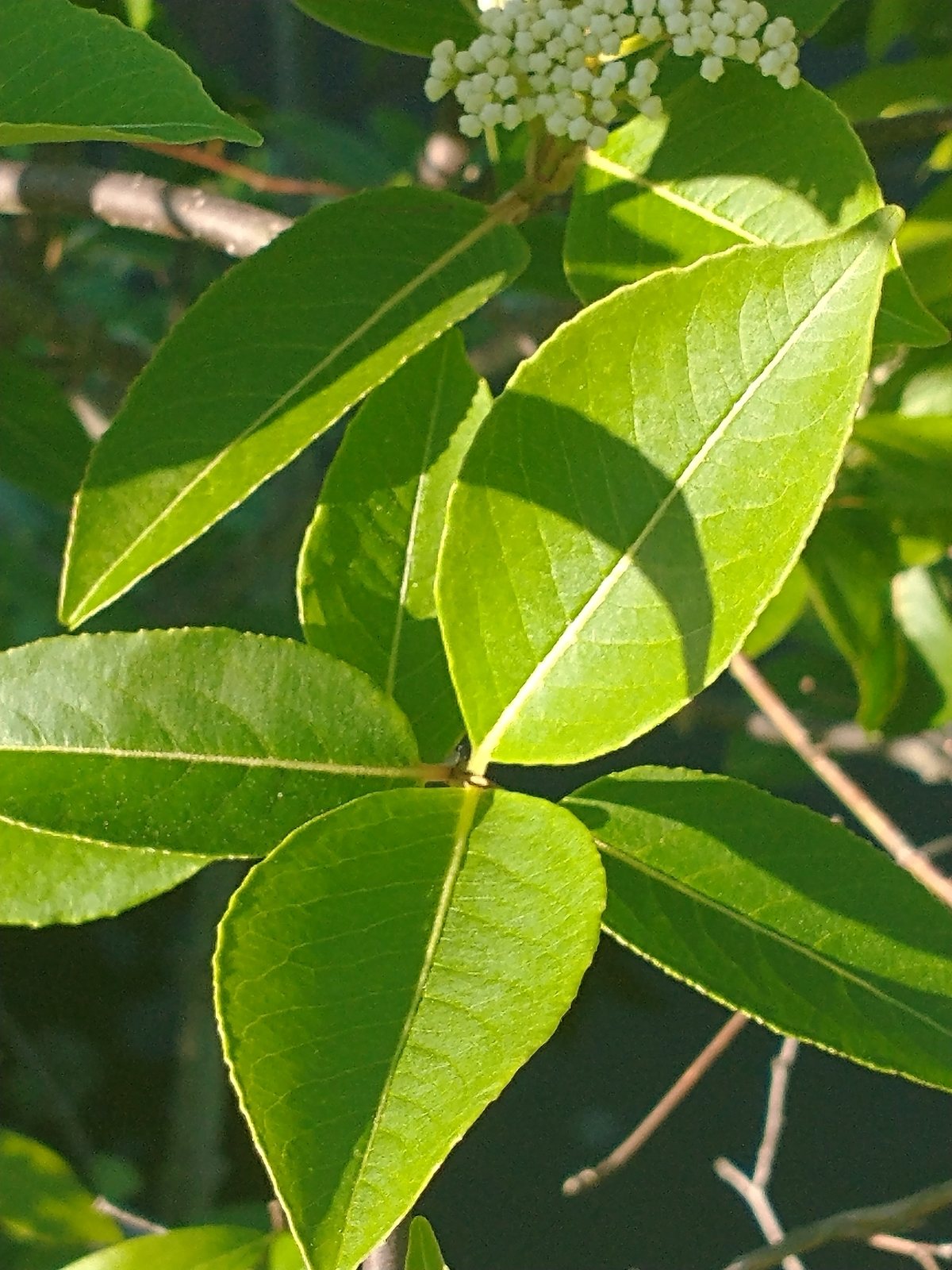
- Opposite, oval to elongated leaves with glossy dark-green upper surfaces; usually burgundy, red or purple in autumn.
- Growth
- Moderate
- Care needed
- Low
The year at a glance
- Pollinators
- Heat tolerant
- Wildlife
- Low allergen
| J | F | M | A | M | J | J | A | S | O | N | D | |
|---|---|---|---|---|---|---|---|---|---|---|---|---|
| Flowers | ||||||||||||
| Fruit | ||||||||||||
| Plant |
Northern hemisphere months. In Australia, shift them by six.
- Difficulty
- Easy
- Toughness
- Fairly tough
Will it suit your garden?
Pick your zone, country, light and whether you have pets.
Full sun is 6 or more hours of direct sun a day, part shade 3 to 6 hours, shade under 3.
How it grows
Planting day
1.6 ft (0.5 m)
After 1 year
3 ft (0.95 m)
After 2 years
5 ft (1.4 m)
After 3 years
6 ft (1.8 m)
After 5 years
9 ft (2.8 m)
full size
About 5 years to full size.
From a typical nursery size, at an average rate for this kind of plant. A rule of thumb, not a forecast.
Good to know
- Cats and dogs
- Safe
- Native to
- the US and Canada
- Growth rate
- Moderate
Care
Jobs through the year
- WaterApr–May, Sep–Oct, every 14 days
- Water established shrubs when rain is insufficient to maintain moist soil; keep young root balls evenly moist.
- WaterJun–Aug, every 7 days
- Soak established roots during dry weather to prevent scorch and poor fruiting; young plants need closer checks.
- MulchMar–Apr
- Apply 5–8 cm of organic mulch, keeping it clear of the stems.
- FeedMar–Apr
- Top-dress poor soil with compost; use fertilizer only if weak growth or a soil test warrants it.
- PruneJun
- Just after flowering, remove crossing branches or a few old stems; retain most flower clusters for fruit.
- ProtectJan–Feb, Dec
- Where viburnum leaf beetle occurs, inspect twigs and remove tips bearing egg pits.
- Water deeply during dry spells for the first two growing seasons; do not let the root ball dry out.
- Apply 2-3 in (5-8 cm) of organic mulch, keeping it clear of the stems.
- For dependable fruiting, plant a genetically different Viburnum nudum nearby that flowers at the same time; two plants of the same cultivar are not sufficient.
- Top-dress with compost in spring; use fertiliser only if growth or a soil test indicates a need.
- Leave room for its natural width rather than maintaining it as a tightly clipped hedge.
Pruning. Prune just after flowering, removing dead or crossing branches and, if needed, a few of the oldest stems at ground level. Keep pruning light because cutting off flower clusters also removes that season's developing fruit.
Through the year
- Autumn
- Plant while the soil is workable and moist; in very cold regions, wait until spring.
- Late winter
- Check for dead or damaged wood and remove it; avoid routine shortening of healthy branches carrying flower buds.
- Spring
- Refresh the mulch and top-dress with compost if the soil is poor.
- Late spring
- Check that a genetically different pollination partner flowers at the same time.
- Early summer
- After flowering, thin crowded stems only if necessary, retaining most flower clusters for fruit.
- Summer
- Water during extended dry weather, especially around newly planted shrubs.
- Autumn
- Leave the ripening fruit for birds and retain fallen leaves beneath the shrub where practical.
In the garden
- Plant in an informal mixed hedge with other moisture-loving shrubs for screening, flowers and bird food.
- Use at a sunny woodland edge with ferns and shade-tolerant perennials beneath its outer branches.
- Place in a rain garden where soil stays moist between storms and occasional flooding occurs.
- Group genetically different plants in a broad shrub border to improve fruit set and show the mixed pink and blue-black berries.
Garden styles it suits: Woodland, Wildlife garden, Native hedgerow, Autumn colour, Low-maintenance and Bog garden.
Plant it with: Winterberry holly, Virginia sweetspire, Summersweet, Red chokeberry, Cinnamon fern and Tussock sedge.
Wildlife: Flowers support bees and other visiting insects. Birds eat the ripe fruit, and the branching growth provides shelter and nesting cover.
Problems to watch for
- Few or no berries: provide a genetically different Viburnum nudum with overlapping flowering, allow more sunlight and avoid pruning away flower clusters.
- Yellow leaves with green veins: alkaline soil can restrict iron uptake; test the soil and, where alkalinity is persistent, move the shrub to a more suitable site.
- Leaf scorch or premature leaf drop: check soil moisture and water deeply during drought; mulch to reduce drying.
- Viburnum leaf beetle, where established in North America and Europe: inspect for larvae and skeletonised leaves in spring; remove infested shoots bearing egg pits during dormancy and use a locally approved treatment if damage is severe.
Safety
Not known to be toxic to people, cats, dogs or horses. The fruit is not generally grown for human consumption; eating large amounts of berries or other plant material may cause stomach upset.
Easily confused with
Possumhaw holly (Ilex decidua)
This unrelated shrub has alternate leaves and usually red or orange fruit; possumhaw viburnum has opposite leaves and fruit that ripens through pink to blue-black.
Arrowwood viburnum (Viburnum dentatum)
Arrowwood usually has broader leaves with conspicuous, coarse teeth; possumhaw viburnum has more elongated, glossy leaves with entire or finely toothed margins.
The name
The species name nudum means 'naked' or 'bare', referring to the plant's relatively hairless growth.
Propagation. Take softwood cuttings in late spring or early summer, or layer a low branch. Seed germination is slow and irregular and may require successive warm and cold periods, often taking two years; seedlings vary, while cuttings retain the parent plant's characteristics.
Checked against open data
- Accepted botanical name
- Viburnum nudum
- In the US and Canada
- Native in Canada, the lower 48 states and St. Pierre and Miquelon.
- Native range
- Alabama, Arkansas, Connecticut, Delaware, District of Columbia, Florida, Georgia, Kentucky, Louisiana, Maryland, Mississippi and New Jersey.
Sources: GBIF (CC BY 4.0), USDA PLANTS and Trefle (CC BY 4.0). The care and design notes are LandscapeGPT's own.
See it in your own yard.
Upload a photo of your yard and see it redesigned with plants that suit your climate, each checked against your zone.