Prairie smoke
Geum triflorum. Family Rosaceae. Perennial.
Also called Three-flowered avens, Old man's whiskers.
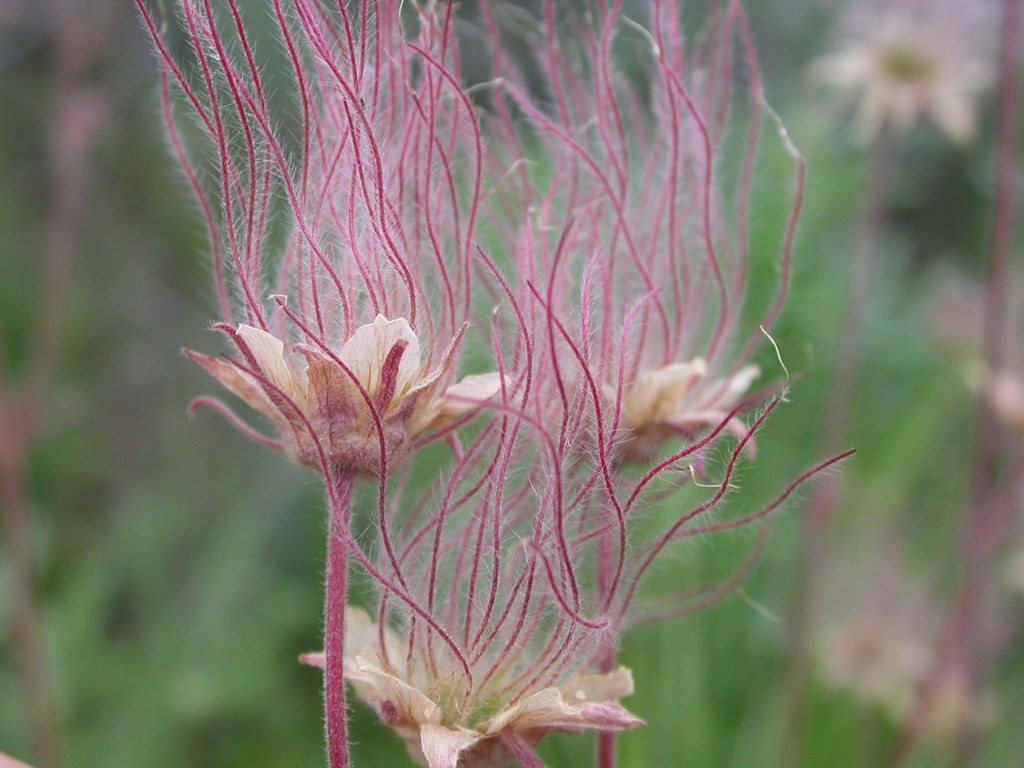
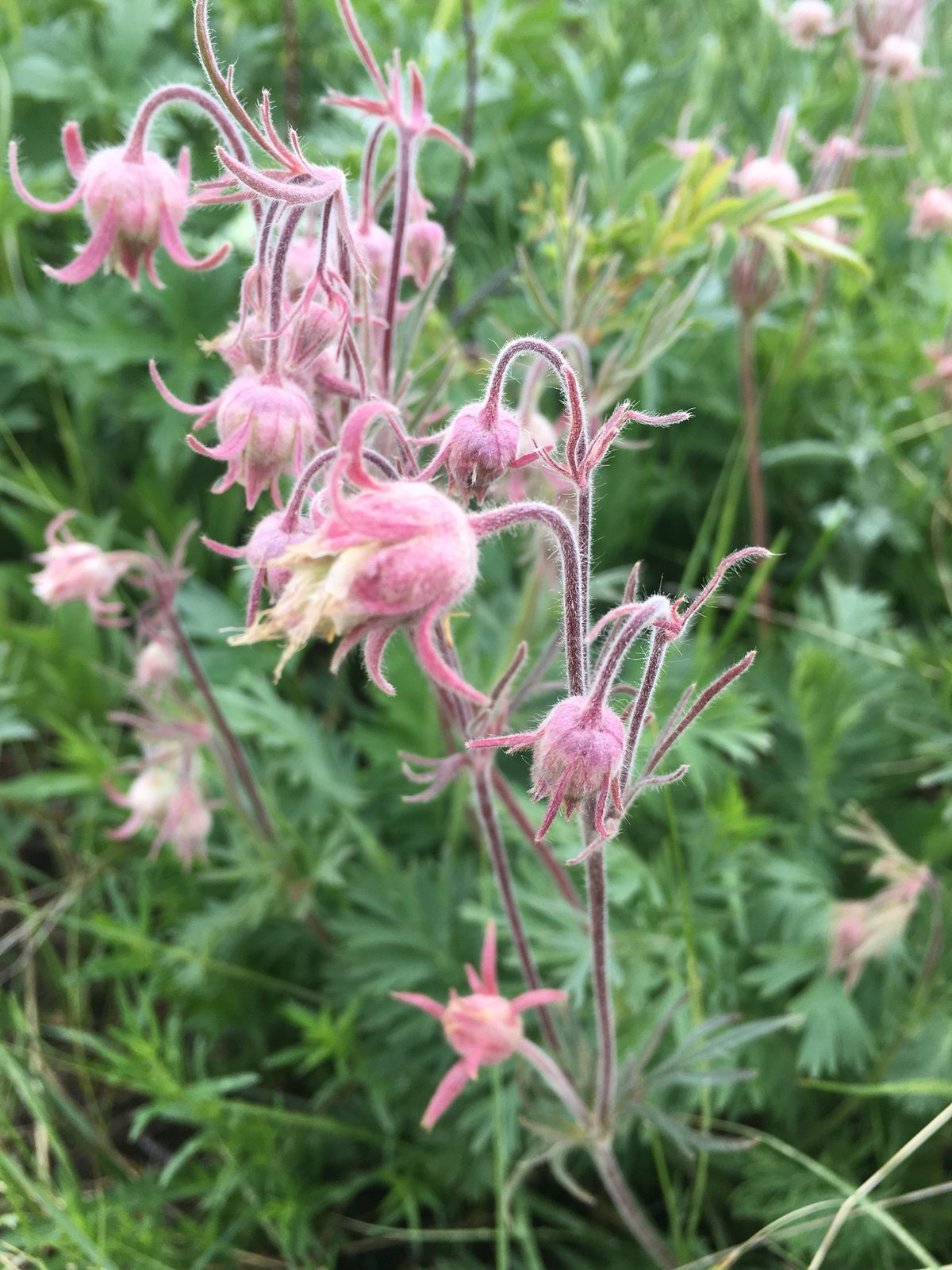
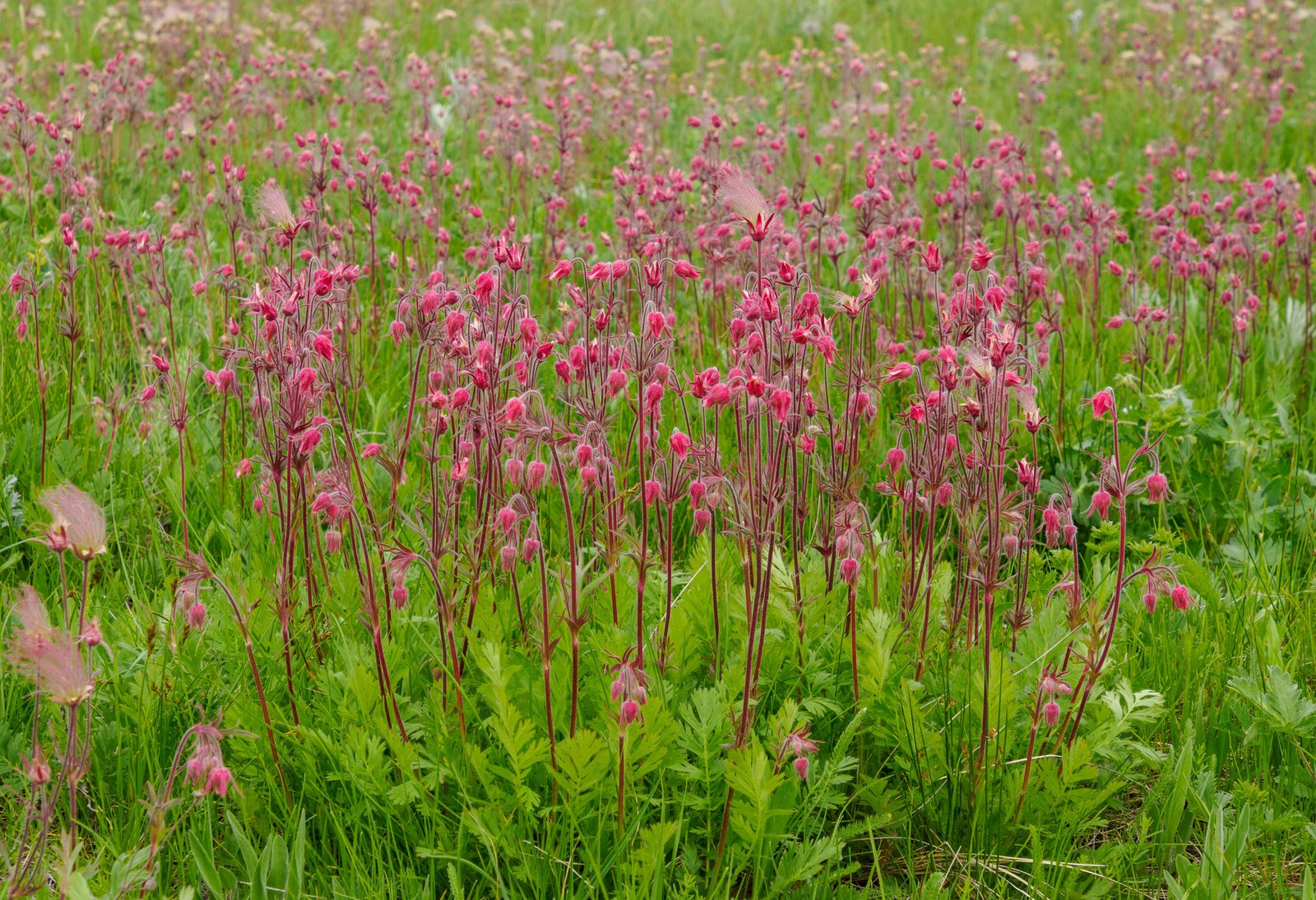
Prairie smoke is a low-growing North American perennial with nodding pink flowers followed by feathery, smoke-like seed heads. Its fern-like foliage forms spreading clumps suited to sunny gravel gardens, rock gardens and the front of prairie-style plantings.
At a glance
- Sun
- Full sun; light afternoon shade can help in warmer locations.
- Water
- Water regularly while establishing, then sparingly. Established plants tolerate dry spells but dislike persistently wet soil.
- Soil
- Well-drained sandy, gravelly or loamy soil, preferably of low to moderate fertility. Avoid heavy, waterlogged ground, especially in winter.
- Height
- 0.5-1.5 ft (0.15-0.45 m), including flower stems
- Spread
- 0.5-1 ft (0.15-0.3 m), gradually widening into a colony
- Flowers
- Spring to early summer; nodding dusky pink to reddish-pink flowers, followed by silvery-pink, feathery seed heads.
- Foliage
- Low rosettes of softly hairy, fern-like leaves divided into toothed leaflets. Leaves may turn reddish in autumn and remain through mild winters, but can die back in severe cold or summer drought.
- Growth
- Slow to moderate
- Care needed
- Low
The year at a glance
- Pollinators
- Deer resistant
- Drought tolerant
- Cold hardy
- Low allergen
| J | F | M | A | M | J | J | A | S | O | N | D | |
|---|---|---|---|---|---|---|---|---|---|---|---|---|
| Flowers | ||||||||||||
| Fruit | ||||||||||||
| Plant |
Northern hemisphere months. In Australia, shift them by six.
- Difficulty
- Easy
- Toughness
- Very tough
Will it suit your garden?
Pick your zone, country, light and whether you have pets.
Full sun is 6 or more hours of direct sun a day, part shade 3 to 6 hours, shade under 3.
How it grows
Planting day
1 ft (0.3 m)
full size
About 4 years to full size.
From a typical nursery size, at an average rate for this kind of plant. A rule of thumb, not a forecast.
Good to know
- Cats and dogs
- Safe
- Native to
- the US and Canada
- Growth rate
- Slow
Care
Jobs through the year
- WaterApr–May, Sep–Oct, every 14 days
- Check established plants; water only in extended dry spells. Water new plants more regularly.
- WaterJun–Aug, every 14 days
- Soak established plants only during severe drought; let soil dry between waterings.
- MulchMar–Apr
- Apply a light gravel mulch without burying the crown.
- PruneFeb–Mar
- Remove dead or damaged leaves without cutting into the crown.
- PruneJul–Aug
- Cut flower stems to the base only after the feathery seed heads fade.
- DivideMar–Apr
- Divide only when needed to propagate plants or manage spreading clumps.
- ProtectMar–May
- Inspect emerging leaves for slugs and hand-pick pests.
- ProtectOct–Nov
- Clear wet debris from crowns and ensure winter rain drains freely.
- Water during dry spells in the first growing season; let the soil begin to dry between waterings.
- Plant with the crown at soil level in a freely draining position.
- Avoid routine feeding; rich soil can produce floppy growth.
- Use a light gravel mulch rather than piling organic mulch against the crown.
- Divide established clumps in early spring only when needed for propagation or to manage their spread.
Pruning. Remove dead or damaged leaves in late winter or early spring without cutting into the crown. Leave flower stems until the feathery seed heads have faded, then cut them back to the base.
Through the year
- Late winter
- Check that water is draining away from crowns and remove matted dead foliage.
- Early spring
- Plant or divide clumps while conditions are cool; water new plants thoroughly.
- Spring
- Keep emerging growth clear of weeds and check for slug damage.
- Early summer
- Leave spent flowers in place so their feathery seed heads can develop.
- Summer
- Water young plants during dry spells; avoid frequent watering of established clumps.
- Autumn
- Sow fresh seed outdoors in pots or a prepared seedbed for natural winter chilling.
In the garden
- Plant small groups along a sunny path where the low flowers and seed heads can be seen closely.
- Use among rocks or in gravel beds with other small, drought-tolerant perennials.
- Place at the front of prairie-style borders with short grasses, keeping taller plants from shading it.
- Repeat in informal drifts to create a soft layer of feathery seed heads in early summer.
Garden styles it suits: Native meadow, Midwest prairie, Dry gravel garden, Wildlife garden, Low-maintenance and Alpine rock garden.
Plant it with: Prairie dropseed, Little bluestem, Pale purple coneflower, Wild blue flax, Pasque flower and Prairie onion.
Wildlife: Spring flowers provide pollen and nectar for bumblebees and other native bees. Deer and rabbits often leave the hairy foliage alone, though browsing is still possible.
Problems to watch for
- Crown or root rot in wet soil: improve drainage or move plants to a raised, gravelly bed; avoid winter waterlogging.
- Slugs and snails on young leaves: inspect during damp weather and remove pests or use locally approved iron-phosphate bait as directed.
- Scorching or summer dieback in prolonged heat: provide light afternoon shade in warmer gardens and occasional deep watering during severe drought.
- Poor flowering in shade or crowded borders: move to a sunnier position and keep taller neighbours from overgrowing the clump.
Safety
Not known to be toxic to people, cats, dogs or horses. Species-specific safety information is limited, so do not treat it as an edible plant or encourage pets to eat it.
Easily confused with
Water avens (Geum rivale)
Also has nodding pinkish flowers, but prefers moist ground and forms compact seed heads rather than prairie smoke's long, spreading plumes.
Pasque flower (Pulsatilla vulgaris)
Has similarly silky seed heads, but its spring flowers open widely, usually in purple, and its leaves are finely dissected rather than divided into distinct toothed leaflets.
Mountain avens (Dryas octopetala)
Produces feathery seed heads, but has open white flowers and small, simple, leathery evergreen leaves rather than fern-like rosettes.
The name
Prairie smoke refers to the hazy appearance of its feathery seed heads, while triflorum means three-flowered, referring to the usual grouping of flowers on each stem.
Propagation. Divide clumps carefully in early spring. Sow fresh seed outdoors in autumn, or give stored seed a cold, moist period before spring sowing; germination can be uneven.
Checked against open data
- Accepted botanical name
- Geum triflorum
- In the US and Canada
- Native in Canada and the lower 48 states.
- Native range
- Alberta, Arizona, British Columbia, California, Colorado, Idaho, Illinois, Iowa, Manitoba, Michigan, Minnesota and Montana.
- Measured
- Soil pH 6 to 7.5. Average height 25 cm.
Sources: GBIF (CC BY 4.0), USDA PLANTS and Trefle (CC BY 4.0). The care and design notes are LandscapeGPT's own.
See it in your own yard.
Upload a photo of your yard and see it redesigned with plants that suit your climate, each checked against your zone.