Princess flower
Pleroma urvilleanum. Family Melastomataceae. Shrub.
Also called Glory bush, Purple glory bush, Tibouchina urvilleana.
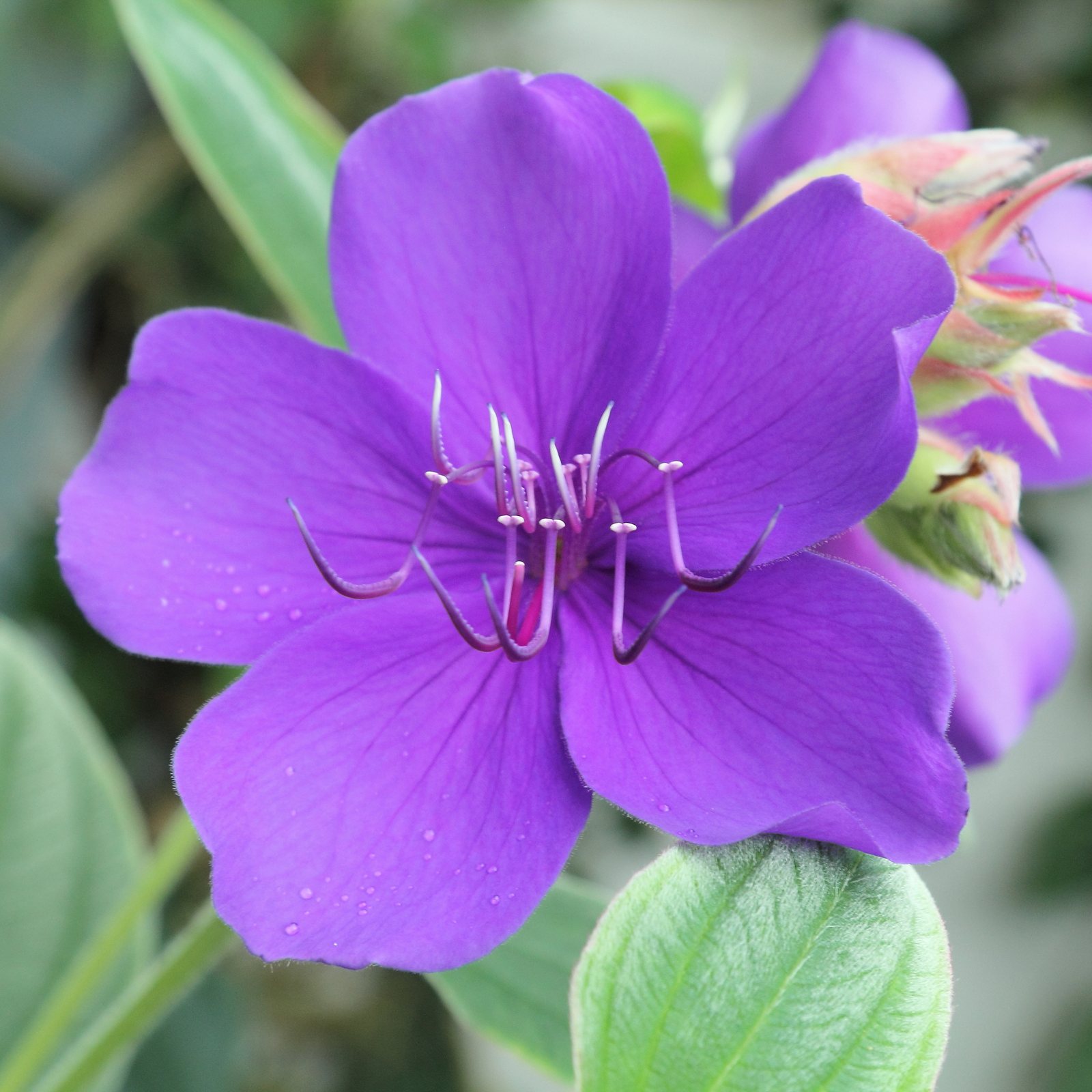
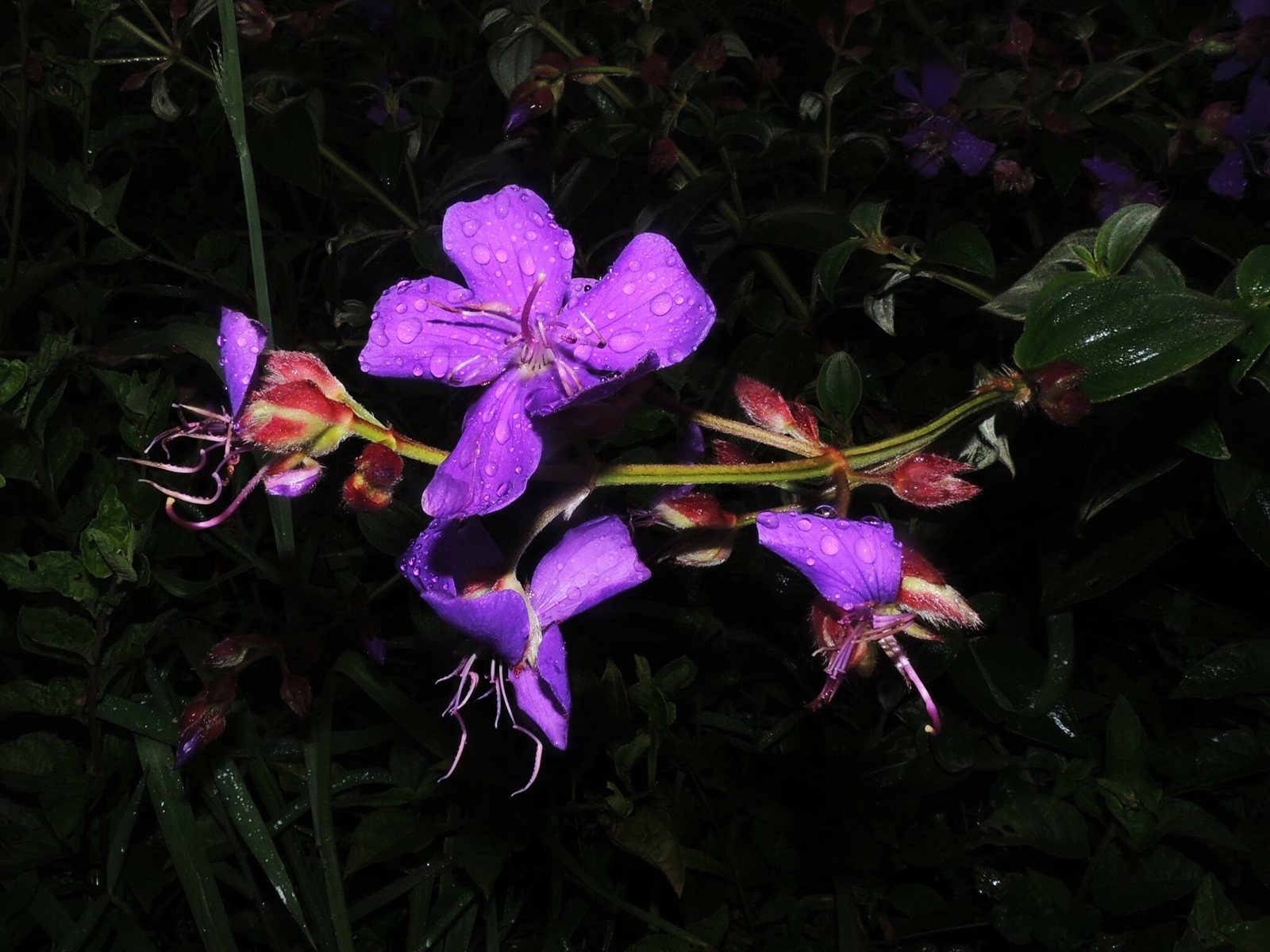
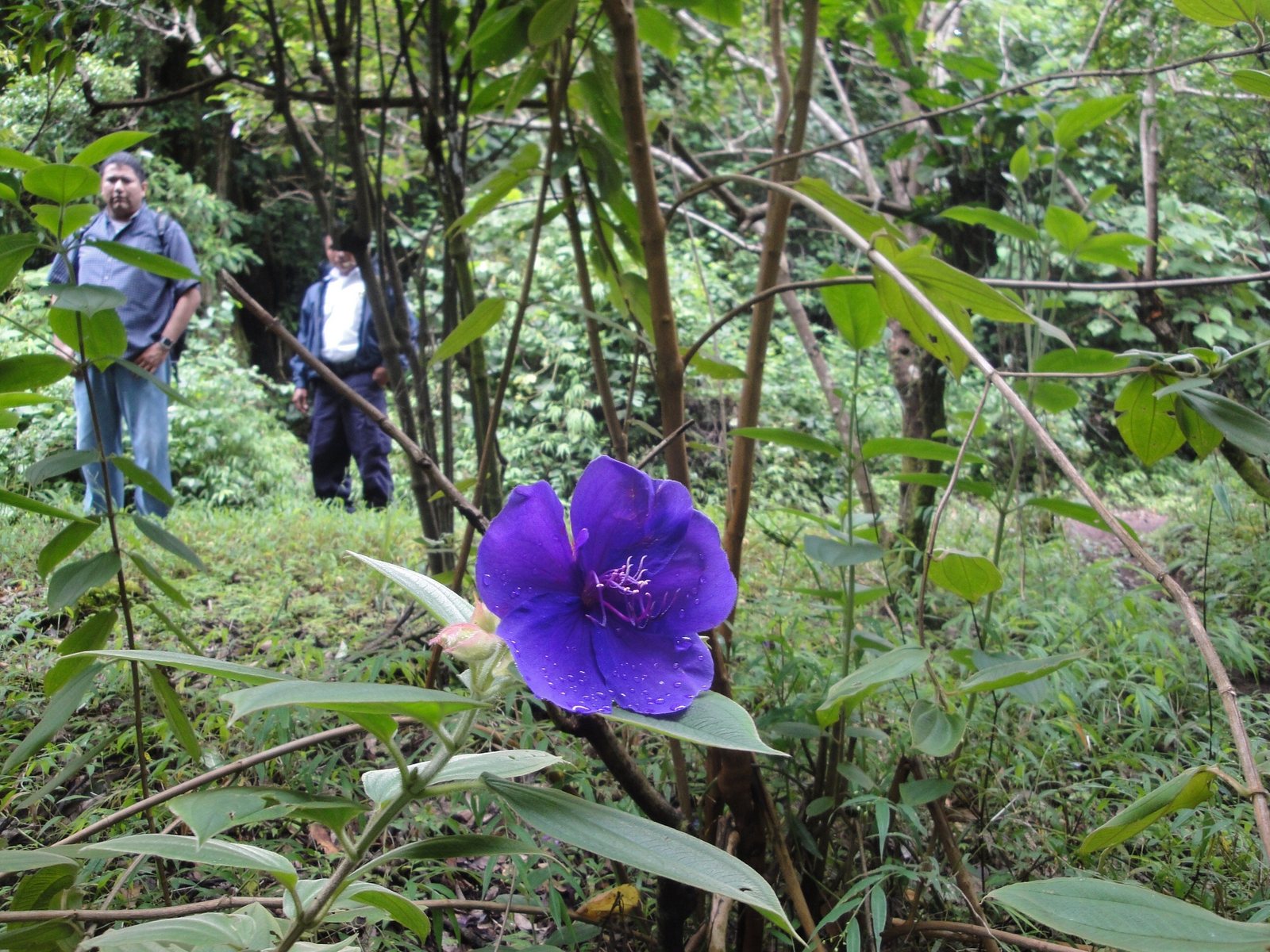
Princess flower is a tender evergreen shrub from Brazil, grown for its large violet-purple flowers and softly hairy, strongly veined leaves. It makes a loose, spreading shrub in warm gardens; in colder areas, grow it in a large container and overwinter it somewhere bright and frost-free.
At a glance
- Sun
- Full sun to light partial shade; afternoon shade helps in very hot inland gardens. Shelter from strong wind.
- Water
- Keep the root zone evenly moist but not waterlogged. Water established plants during dry spells, and check containers frequently in warm weather.
- Soil
- Fertile, humus-rich, well-drained soil, preferably slightly acidic. Avoid chalky soil and heavy ground that stays wet.
- Height
- 6-15 ft (1.8-4.6 m)
- Spread
- 6-10 ft (1.8-3 m)
- Flowers
- Large violet-purple flowers with prominent curved stamens, mainly from late spring through autumn; flowering may continue intermittently in frost-free climates.
- Foliage
- Evergreen. Opposite, oval to lance-shaped green leaves with a velvety surface and conspicuous lengthwise veins.
- Growth
- Moderate to fast in warm conditions
- Care needed
- Medium
The year at a glance
- Pollinators
- Heat tolerant
- Low allergen
| J | F | M | A | M | J | J | A | S | O | N | D | |
|---|---|---|---|---|---|---|---|---|---|---|---|---|
| Flowers | ||||||||||||
| Plant |
Northern hemisphere months. In Australia, shift them by six.
- Difficulty
- Moderate
- Toughness
- Needs looking after
Will it suit your garden?
Pick your zone, country, light and whether you have pets.
Full sun is 6 or more hours of direct sun a day, part shade 3 to 6 hours, shade under 3.
How it grows
Planting day
1.6 ft (0.5 m)
After 1 year
4 ft (1.2 m)
After 2 years
6 ft (1.9 m)
After 3 years
8 ft (2.5 m)
After 5 years
10 ft (3.2 m)
full size
About 4 years to full size.
From a typical nursery size, at an average rate for this kind of plant. A rule of thumb, not a forecast.
Good to know
- Cats and dogs
- Safe
- Invasive in
- the US and Australia
- In the garden
- Spreads vigorously: plan to contain it.
- Growth rate
- Fast
Care
Jobs through the year
- WaterApr–May, Sep, every 7 days
- Water established plants when the surface begins drying; young plants and containers need closer checks.
- WaterJun–Aug, every 3 days
- Check established plants and water deeply as needed to keep roots evenly moist; never leave pots standing in water.
- WaterJan–Mar, Oct–Dec, every 14 days
- Check overwintering pots and water lightly when needed, without letting the root ball dry out.
- FeedApr
- Apply balanced fertiliser as growth resumes, following the label.
- FeedMay–Aug, every 28 days
- Feed container plants lightly during active growth; avoid duplicating slow-release feeding.
- MulchMay
- Apply composted bark or leaf mould, keeping the stems clear.
- PruneApr–May
- Remove damaged wood and shorten long shoots as growth resumes; pinch young tips for bushiness.
- ProtectSep–Oct
- Move into bright shelter before frost, ideally above 5–10°C; it cannot overwinter outdoors in zones 6–7.
- ProtectMay–Jun
- Harden off after frost and shelter from strong wind.
- Water deeply when the soil surface begins to dry; do not leave container plants standing in water.
- Apply a balanced fertiliser in spring, following the label rate; feed container plants lightly during active growth.
- Mulch the root area with composted bark or leaf mould, keeping mulch clear of the stems.
- Pinch young shoot tips to encourage a fuller, less leggy shrub.
- Move containers under cover before frost and keep them bright, ideally above 5-10°C; water less in winter without letting the root ball dry out.
Pruning. In spring, once frost risk has passed and new growth begins, remove dead or damaged wood and shorten long shoots to shape the shrub. Avoid heavy autumn pruning in cooler climates, where tender regrowth can be damaged by cold.
Through the year
- Spring
- Prune damaged or straggly growth as active growth resumes, then apply fertiliser.
- Late spring
- Plant outdoors or move overwintered containers outside once frost risk has passed, acclimatising them gradually to stronger sunlight.
- Summer
- Check soil moisture regularly and water thoroughly during dry weather.
- Summer
- Take semi-ripe cuttings from healthy, non-flowering shoots.
- Autumn
- Move container plants into bright, frost-free shelter before nights become cold.
- Winter
- Reduce watering under cover and check leaves and stems for mites, whitefly and scale.
In the garden
- Use as a flowering specimen beside a sheltered terrace, allowing room for its spreading branches.
- Grow in a large patio container where winter protection is available.
- Place behind lower ferns and shade-tolerant foliage plants in a warm, lightly shaded border.
- Combine with white flowers and silver foliage to emphasise the violet blooms.
Garden styles it suits: Tropical, Modern tropical, Modern courtyard, Luxury resort, Cottage garden and Blues and silvers.
Plant it with: Agapanthus, Camellia, Azalea, Cast-iron plant, Bird's nest fern and White gaura.
Wildlife: The pollen-rich flowers attract bees capable of buzz pollination. It is an ornamental introduction, not a substitute for locally native habitat plants.
Problems to watch for
- Frost damage: leaves and shoots blacken after freezing weather; protect containers before frost and wait until spring growth starts before cutting back damaged wood.
- Root rot: persistently wet soil causes wilting and decline; improve drainage and never leave pots standing in water.
- Iron chlorosis: young leaves turn yellow between green veins in alkaline conditions; use a suitable acidic growing medium and apply chelated iron if needed.
- Spider mites, whitefly or scale: inspect leaf undersides and stems, especially under cover; wash off light infestations and use a labelled insecticidal soap or horticultural oil where appropriate.
Safety
Not known to be toxic to people, cats, dogs or horses, although species-specific toxicity information is limited. No part is intended for eating; discourage pets and children from chewing the plant.
Where it spreads. Reported as invasive in Hawaii and as an environmental weed in parts of south-eastern Queensland and north-eastern New South Wales, Australia. Branches can root where they touch the ground; check local guidance before planting and dispose of prunings responsibly.
Easily confused with
Purple glory tree (Pleroma granulosum)
Usually develops into a larger, more distinctly tree-shaped plant, with rougher, less velvety leaves and flowers carried in conspicuous terminal clusters.
Silverleaf glory bush (Pleroma heteromallum)
Has much broader, often heart-based leaves with densely pale-hairy undersides, and purple flowers arranged in upright, branched clusters above the foliage.
The name
The species name honours the French explorer Jules Dumont d'Urville.
Propagation. Take semi-ripe cuttings in summer and root them in a free-draining propagation mix with warmth and high humidity. Low branches can also be layered.
Checked against open data
- Accepted botanical name
- Pleroma urvilleanum
- Native range
- Brazil South and Brazil Southeast.
- Measured
- Average height 350 cm.
Sources: GBIF (CC BY 4.0) and Trefle (CC BY 4.0). The care and design notes are LandscapeGPT's own.
See it in your own yard.
Upload a photo of your yard and see it redesigned with plants that suit your climate, each checked against your zone.