Prostrate speedwell
Veronica prostrata. Family Plantaginaceae. Perennial.
Also called Rock speedwell.
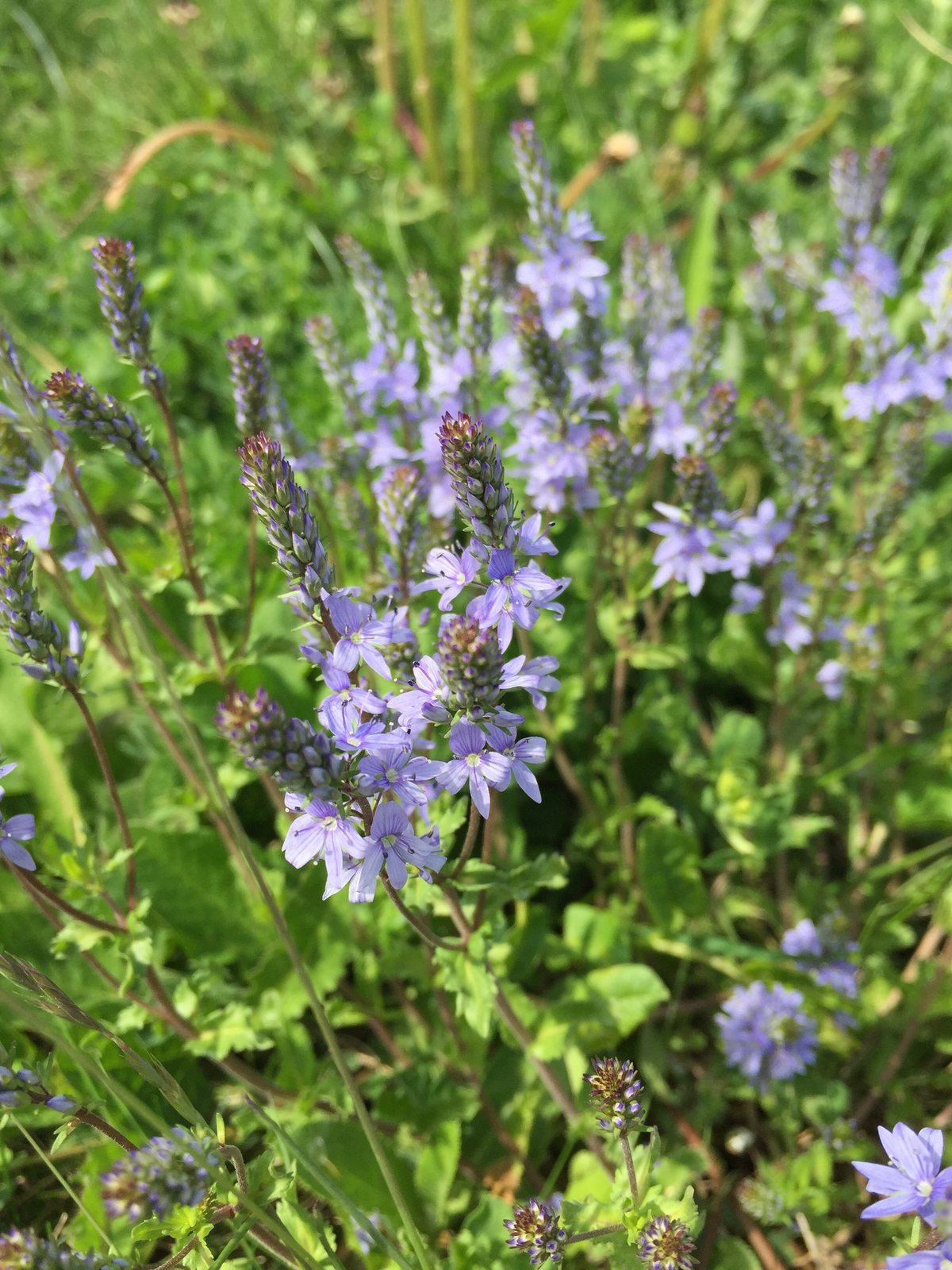
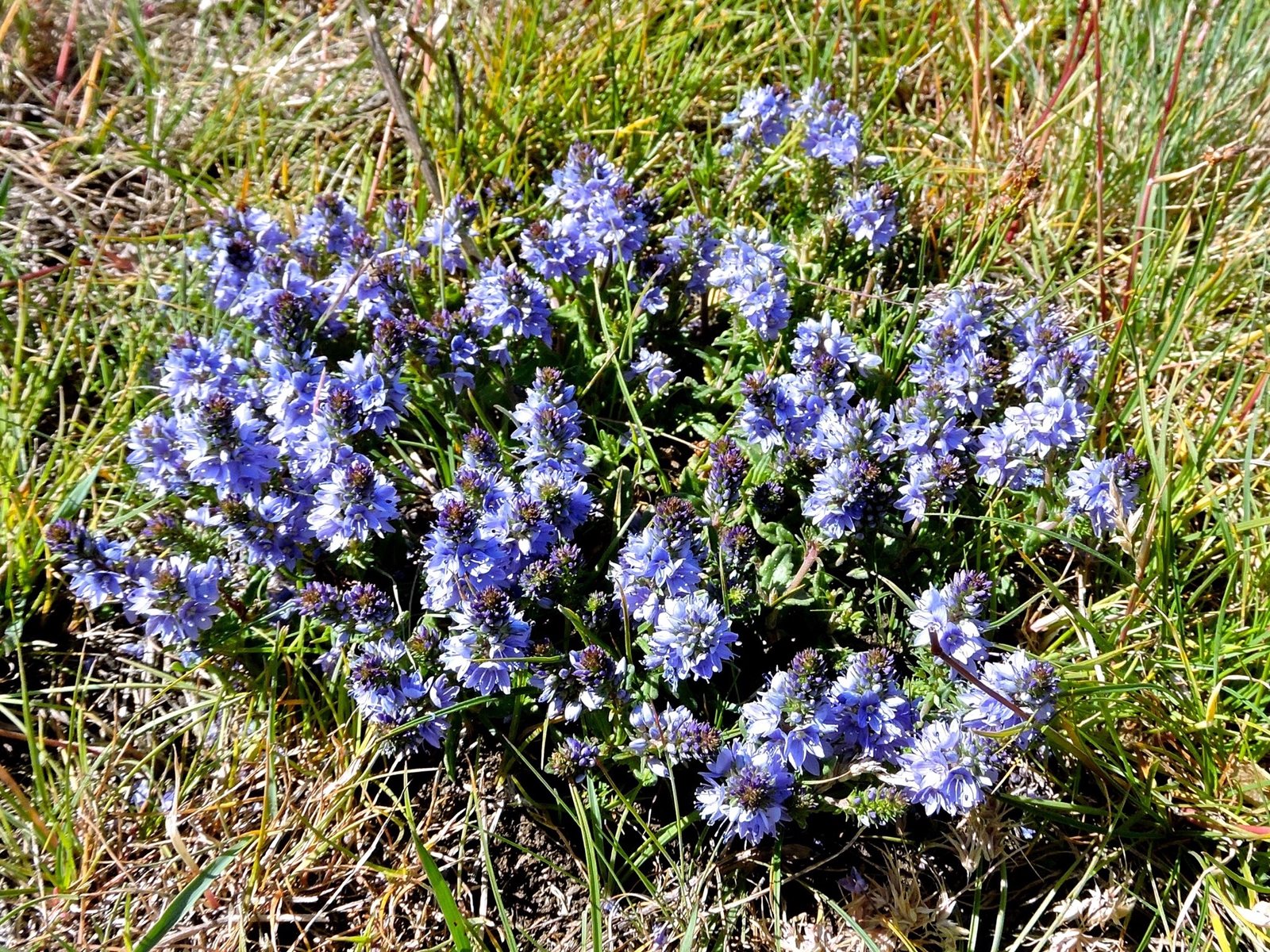
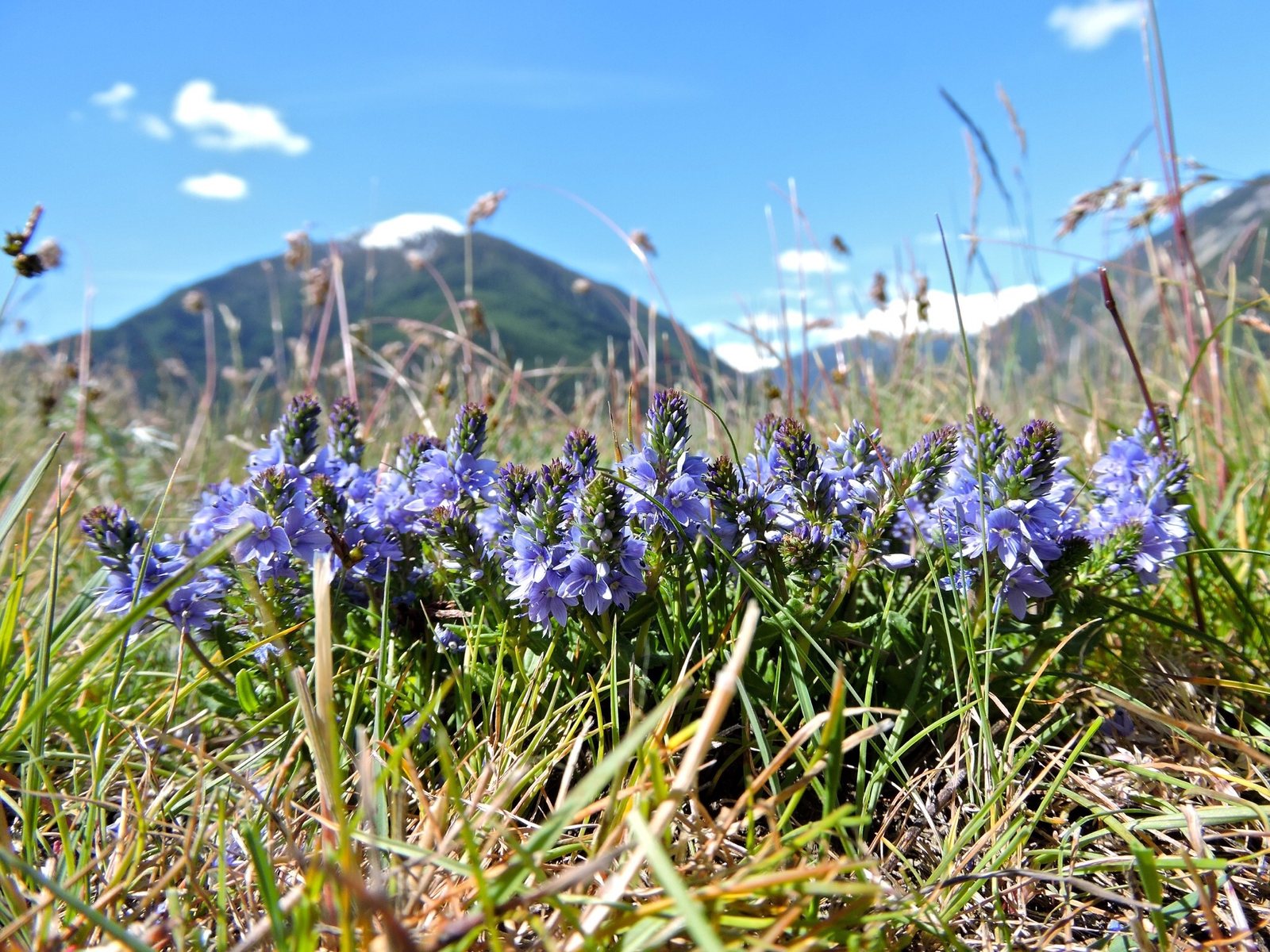
Prostrate speedwell is a low, mat-forming perennial with short spikes of blue flowers in late spring and early summer. Grow it along sunny borders, in rock gardens or beside paving where its spreading foliage can soften edges without being walked on.
At a glance
- Sun
- Full sun; tolerates light shade, but flowers best in sun.
- Water
- Water regularly while establishing. Once rooted, it tolerates short dry spells; water during prolonged drought rather than keeping the soil constantly wet.
- Soil
- Well-drained, moderately fertile soil, preferably sandy or gritty. Tolerates neutral to alkaline soil; avoid waterlogged clay.
- Height
- 0.25-0.5 ft (0.08-0.15 m)
- Spread
- 1-1.5 ft (0.3-0.45 m)
- Flowers
- Late spring to early summer; short, upright spikes of small blue flowers. Named cultivars may have pink or white flowers.
- Foliage
- Small, opposite, oval to narrow green leaves with toothed edges. Foliage may persist through mild winters but usually dies back in colder climates.
- Growth
- Moderate; creeping stems gradually form a low mat.
- Care needed
- Low
The year at a glance
- Pollinators
- Drought tolerant
- Cold hardy
- Low allergen
| J | F | M | A | M | J | J | A | S | O | N | D | |
|---|---|---|---|---|---|---|---|---|---|---|---|---|
| Flowers | ||||||||||||
| Plant |
Northern hemisphere months. In Australia, shift them by six.
- Difficulty
- Easy
- Toughness
- Very tough
Will it suit your garden?
Pick your zone, country, light and whether you have pets.
Full sun is 6 or more hours of direct sun a day, part shade 3 to 6 hours, shade under 3.
How it grows
Planting day
0.4 ft (0.12 m)
full size
About 3 years to full size.
From a typical nursery size, at an average rate for this kind of plant. A rule of thumb, not a forecast.
Good to know
- Cats and dogs
- Safe
- Growth rate
- Moderate
Care
Jobs through the year
- WaterApr–May, Sep–Oct, every 14 days
- Water established plants only in extended dry weather; water new plants more often.
- WaterJun–Aug, every 10 days
- Water deeply during prolonged drought, allowing soil to dry between soakings.
- PruneMar
- Remove dead foliage and winter-damaged stems before new growth develops.
- PruneJun–Jul
- Lightly shear spent flower spikes without cutting into bare old stems.
- DivideMar–Apr
- Divide congested or thinning mats about every three to four years.
- ProtectJan–Feb, Oct–Dec
- Remove wet leaves and keep drainage channels clear around crowns.
- Plant with the crown at soil level in a sunny spot with free drainage.
- Water new plants when the surface soil dries; reduce watering once they are established.
- Apply a thin layer of compost in spring on poor soil; avoid heavy feeding.
- Use a light gravel mulch where needed, keeping the crown clear of damp organic mulch.
- Divide congested or thinning mats in spring, usually every three to four years.
Pruning. Lightly shear off spent flower spikes after the main flowering period, avoiding a hard cut into bare old stems. Remove dead or winter-damaged growth in early spring.
Through the year
- Early spring
- Remove dead foliage and check that winter rain has not left the crown sitting in wet soil.
- Spring
- Plant or divide established clumps; water divisions until they root.
- Late spring
- Check newly planted mats during dry weather and water at soil level when needed.
- Early summer
- Trim spent flower spikes after the main display to keep the mat tidy.
- Summer
- Water during prolonged drought and trim stems that spread onto paths.
- Autumn
- Remove fallen leaves from the mat and keep drainage channels clear before winter.
In the garden
- Edge sunny paths or borders with a low ribbon of blue spring flowers.
- Plant among rocks or in gravel gardens alongside compact, drought-tolerant perennials.
- Let it spread over the lip of a low wall or raised bed.
- Use small drifts beneath upright flowering perennials to cover bare soil without hiding their stems.
Garden styles it suits: Alpine rock garden, Dry gravel garden, Cottage garden, Pollinator garden, Low-maintenance and Small-space.
Plant it with: Creeping thyme, Moss phlox, Candytuft, Rock rose, Dwarf bearded iris and Dianthus.
Wildlife: The flowers provide nectar and pollen for bees and other small pollinating insects.
Problems to watch for
- Crown or root rot in wet soil: improve drainage or move the plant to a raised, gritty bed; remove rotting sections.
- Powdery mildew in crowded or stressed growth: improve airflow, avoid letting plants become severely dry, and remove badly affected foliage.
- Slug and snail damage to young shoots: check plants after dark and use hand removal or locally approved controls.
- Sparse flowering and loose growth in shade: move to a sunnier position and avoid high-nitrogen fertiliser.
Safety
Not known to be toxic to people, cats, dogs or horses. No particular part is recognised as poisonous, although species-specific toxicity information is limited; it is not a food plant.
Easily confused with
Creeping speedwell (Veronica repens)
Forms a flatter, finer-textured carpet with tiny leaves and scattered pale blue to white flowers rather than the distinct upright flower spikes of prostrate speedwell.
Slender speedwell (Veronica filiformis)
Has rounded, kidney-shaped leaves on thin creeping stems and solitary blue flowers on slender stalks, not upright spikes; it often spreads through lawns.
The name
The species name prostrata is Latin for lying flat, referring to its spreading stems.
Propagation. Divide rooted sections in spring and replant promptly. Take non-flowering softwood cuttings in late spring or early summer. Seed can be sown in spring, but seedlings from named cultivars may differ from the parent.
Checked against open data
- Accepted botanical name
- Veronica prostrata
- In the US and Canada
- Introduced in the lower 48 states.
- Native range
- Albania, Altay, Austria, Baltic States, Belarus, Bulgaria, Central European Rus, Czechoslovakia, France, Germany, Hungary and Irkutsk.
- Measured
- Average height 15 cm.
Sources: GBIF (CC BY 4.0), USDA PLANTS and Trefle (CC BY 4.0). The care and design notes are LandscapeGPT's own.
See it in your own yard.
Upload a photo of your yard and see it redesigned with plants that suit your climate, each checked against your zone.