Purple sprouting broccoli
Brassica oleracea 'Purple Sprouting'. Family Brassicaceae. Annual.
Also called Purple broccoli, Winter sprouting broccoli.
Purple sprouting broccoli is grown as an annual vegetable for its slender stems, tender leaves and small purple flower buds, which usually turn green when cooked. Traditional types are sown in spring and overwintered for a late-winter or spring harvest; their cold tolerance varies, and they need protection or a different cropping schedule where winters are severe.

At a glance
- Sun
- Full sun; light afternoon shade can help in warmer districts.
- Water
- Keep soil evenly moist, especially after transplanting and while shoots develop. Water deeply during dry spells without leaving the roots waterlogged.
- Soil
- Fertile, firm, well-drained soil with plenty of organic matter; ideally pH 6.5-7.5. Avoid acidic or persistently wet ground.
- Height
- 2-3 ft (0.6-0.9 m)
- Spread
- 2-3 ft (0.6-0.9 m)
- Flowers
- Yellow flowers in spring if the edible buds are left unpicked.
- Foliage
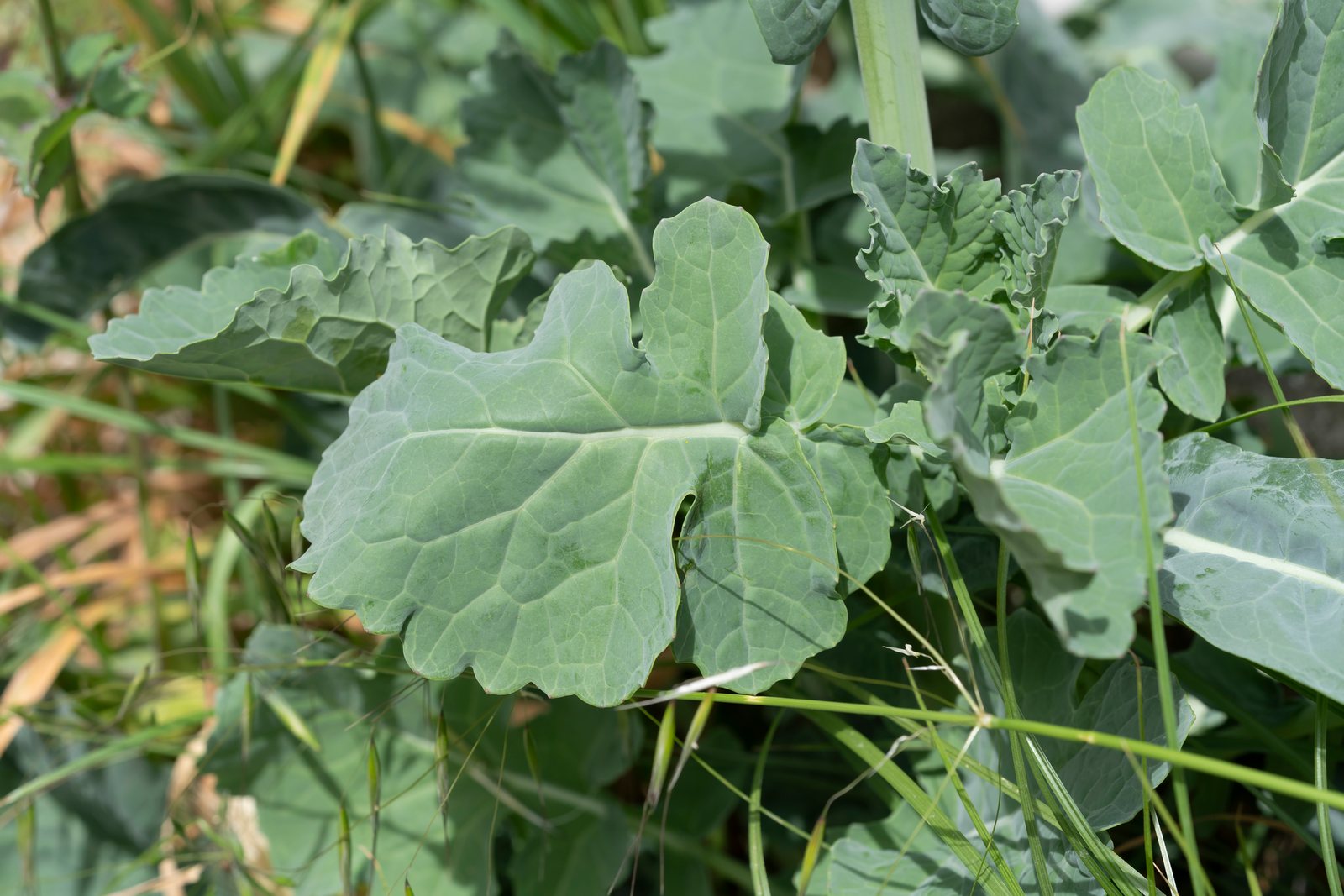
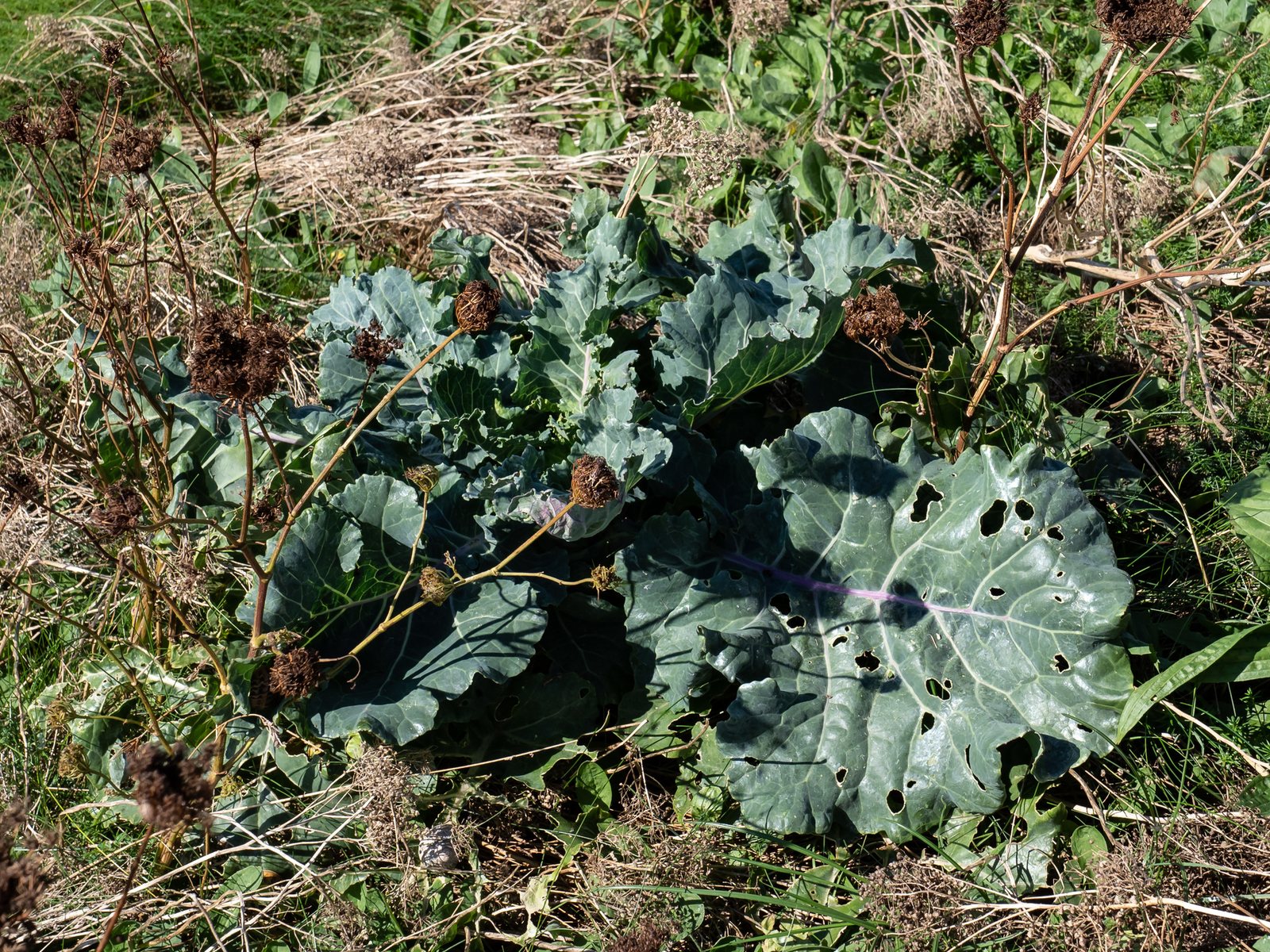
- Large, waxy blue-green leaves with pale veins; some plants develop purple colouring in cold weather.
- Growth
- Moderate; traditional overwintering types commonly take about 9-12 months from sowing to harvest.
- Care needed
- Medium
The year at a glance
- Low allergen
- Edible
| J | F | M | A | M | J | J | A | S | O | N | D | |
|---|---|---|---|---|---|---|---|---|---|---|---|---|
| Flowers | ||||||||||||
| Fruit | ||||||||||||
| Plant |
Northern hemisphere months. In Australia, shift them by six.
- Difficulty
- Moderate
- Toughness
- Fairly tough
Will it suit your garden?
Pick your zone, country, light and whether you have pets.
Full sun is 6 or more hours of direct sun a day, part shade 3 to 6 hours, shade under 3.
How it grows
Planting day
0.5 ft (0.15 m)
After 1 year
2.5 ft (0.75 m)
full size
Full size in one season.
From a typical nursery size, at an average rate for this kind of plant. A rule of thumb, not a forecast.
Good to know
- Cats and dogs
- Safe
- Native to
- the UK
- Growth rate
- Moderate
Care
Jobs through the year
- WaterMar–May, Sep–Oct, every 7 days
- Water established plants deeply if rain is insufficient; keep transplants and developing shoots consistently moist.
- WaterJun–Aug, every 4 days
- Water deeply in dry weather, maintaining even moisture without waterlogging.
- WaterJan–Feb, Nov–Dec, every 14 days
- Water only if soil is dry and unfrozen; winter rain usually suffices.
- FeedFeb–Mar
- Apply a nitrogen-rich vegetable feed as overwintered plants resume growth.
- MulchMay–Jun
- Mulch moist soil with mature compost, keeping stems clear.
- ProtectApr–Sep
- Secure insect mesh over plants and fit brassica collars when transplanting.
- ProtectSep–Nov
- Stake tall plants, firm loose roots and net against pigeons.
- ProtectJan–Feb, Dec
- Use suitable winter protection in zone 6–7; severe freezes can kill traditional overwintering varieties.
- PruneJan–Dec
- Remove yellowing or diseased leaves as needed.
- HarvestFeb–May
- Cut tight-budded shoots before yellow flowers open, taking the central shoot first.
- Space plants about 2-2.5 ft (0.6-0.75 m) apart in ground enriched with mature compost.
- Water deeply during dry weather, keeping moisture steady as shoots form.
- Apply a nitrogen-rich vegetable feed in late winter as overwintered plants resume growth, following the label rate.
- Mulch around plants to conserve moisture, keeping mulch clear of the stems.
- Firm soil around the stems and stake tall plants before autumn winds loosen their roots.
- Cover with securely fastened insect mesh to exclude cabbage butterflies and other brassica pests.
Pruning. Remove yellowing or diseased leaves as they appear. Cut the central edible shoot first to encourage side shoots, then keep harvesting before the buds open.
Harvest
Pick the purple shoots when the buds are tightly closed, usually from late winter through spring on traditional overwintering plants. Cut stems about 4-6 in (10-15 cm) long with their tender leaves, taking the central shoot first and then the side shoots every few days.
Through the year
- Spring
- Sow traditional overwintering types in modules or a seedbed; check the seed packet because early and summer-cropping types follow different schedules.
- Late spring
- Harden off young plants and transplant into firm, fertile soil with room to reach their full spread.
- Summer
- Water during dry spells, weed regularly and inspect beneath leaves for caterpillars and eggs.
- Autumn
- Stake tall plants, firm any wind-rocked roots and protect against pigeons or other browsing animals.
- Winter
- Remove damaged leaves and check supports; in severely cold regions, use suitable protected cropping rather than relying on outdoor survival.
- Late winter to spring
- Feed as growth resumes and harvest tight-budded shoots regularly. These seasonal timings apply in either hemisphere; use locally suitable varieties.
In the garden
- Plant in rows or blocks in a kitchen garden for a substantial late-winter and spring crop.
- Use its tall blue-green foliage as a backdrop to lower vegetables in a potager.
- Underplant young, widely spaced plants with quick-growing lettuce or spinach, harvesting these before the broccoli fills out.
- Include in an edible mixed border where its bold leaves provide contrast with finer herbs.
Garden styles it suits: Potager (kitchen garden), Edible landscape, Homestead, Cottage garden, Farmhouse and English country.
Plant it with: Lettuce, Spinach, Onions, Calendula and Thyme.
Wildlife: Leaves feed several butterfly and moth caterpillars, while pigeons and other animals may browse the crop. Plants left to flower attract bees and other pollinating insects, but flowering ends the useful shoot harvest.
Problems to watch for
- Cabbage caterpillars: cover plants with insect mesh before butterflies lay eggs, and remove any eggs or caterpillars already present.
- Cabbage root fly: protect transplants with well-fitted brassica collars or fine insect mesh; remove badly affected plants.
- Clubroot: swollen roots and wilting indicate infection; improve drainage, lime acidic soil according to a soil test, and avoid growing brassicas in affected ground.
- Failure to crop: unsuitable varieties, insufficient winter chilling or severe frost damage can prevent a useful harvest; choose seed recommended for your local climate and sowing season.
Safety
Not known to be toxic to people, cats or dogs in normal food quantities; the buds, tender stems and leaves are edible. Large amounts can cause digestive upset in pets. Do not use plants or crop waste as bulk horse feed, as heavy brassica consumption can cause digestive and other health problems.
Easily confused with
Calabrese broccoli (Brassica oleracea Italica Group)
Usually forms one large, compact green head before producing smaller side shoots; purple sprouting broccoli produces numerous slender, purple-budded shoots.
Purple cauliflower (Brassica oleracea Botrytis Group)
Forms a dense, solid purple curd surrounded by leaves, rather than separate branching shoots with distinct flower buds.
Broccoli raab (Brassica rapa Ruvo Group)
Has thinner, less waxy, often toothed leaves and small green bud clusters; it usually crops much faster and has a more bitter flavour.
The name
Broccoli comes from the Italian word for small shoots, while purple sprouting describes the colour and branching habit of its edible flower shoots.
Propagation. Grow from seed, usually sown in spring for an overwintered crop. Use the seed supplier's schedule for the particular strain and your climate; saved seed may cross with other flowering Brassica oleracea crops and may not come true.
Checked against open data
- Accepted botanical name
- Brassica oleracea
- In the US and Canada
- Introduced in the lower 48 states, Pacific Basin and Puerto Rico.
- Native range
- France, Great Britain and Spain.
- Measured
- Soil pH 7 to 7.5. Average height 50 cm.
Sources: GBIF (CC BY 4.0), USDA PLANTS and Trefle (CC BY 4.0). The care and design notes are LandscapeGPT's own.
See it in your own yard.
Upload a photo of your yard and see it redesigned with plants that suit your climate, each checked against your zone.