Pygmy date palm
Phoenix roebelenii. Family Arecaceae. Tree.
Also called Dwarf date palm, Miniature date palm, Robellini palm.
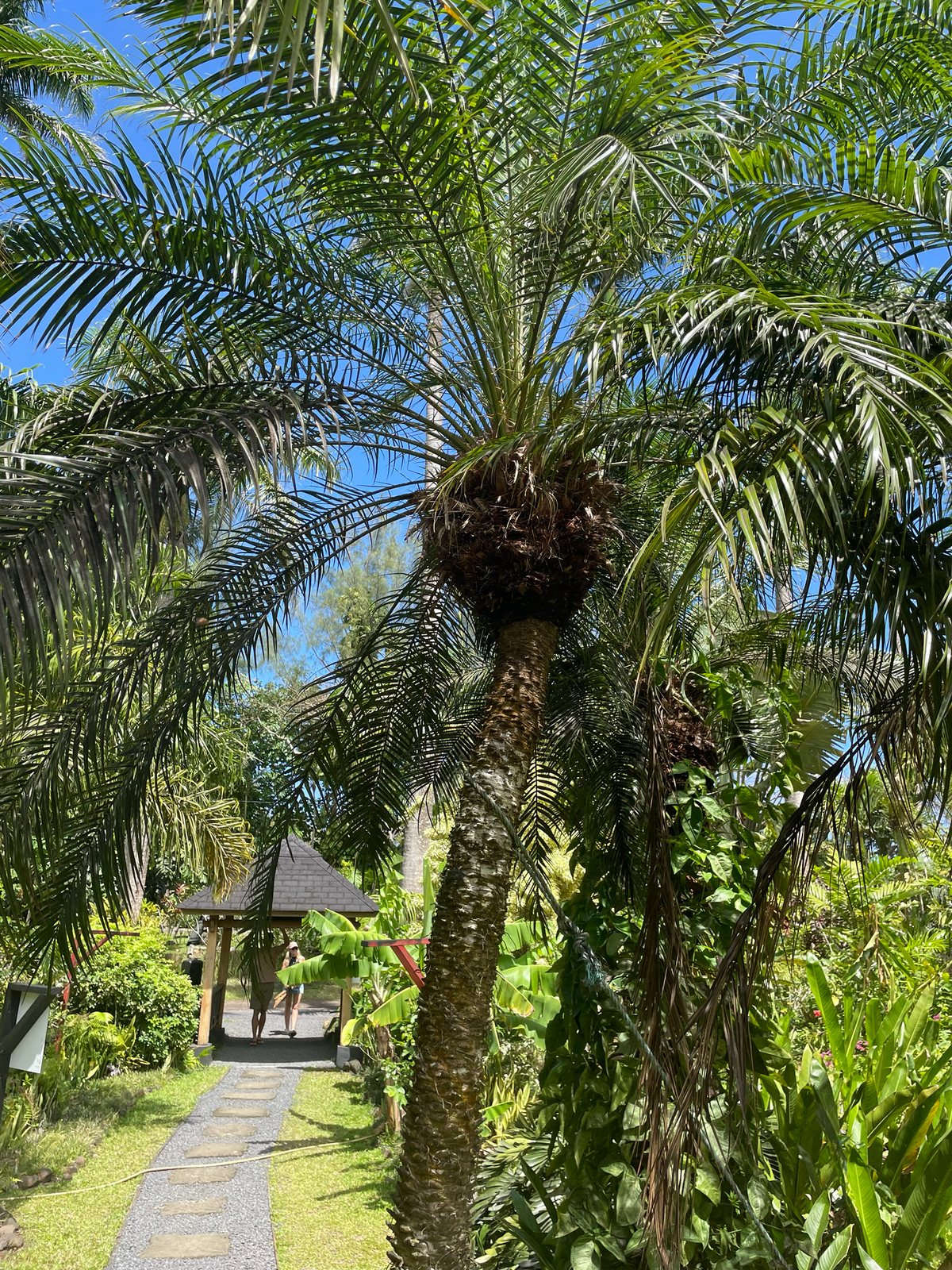
Pygmy date palm is a slow-growing, evergreen palm with a slender trunk and arching, finely divided fronds. It gives small gardens and containers a tropical canopy without the eventual bulk of larger date palms. Grow it outdoors year-round only in frost-free or nearly frost-free climates; elsewhere, keep it in a container and overwinter it under cover.
At a glance
- Sun
- Full sun to partial shade; light afternoon shade helps in very hot, dry climates. Indoors, provide bright light near a window.
- Water
- Keep the root zone moderately moist during active growth, allowing the surface to dry slightly between waterings. Water less in cool weather, but do not let the root ball dry out completely.
- Soil
- Moisture-retentive but well-drained soil, preferably slightly acidic to neutral. Use a free-draining container mix and a pot with drainage holes.
- Height
- 6-12 ft (1.8-3.7 m)
- Spread
- 6-8 ft (1.8-2.4 m)
- Flowers
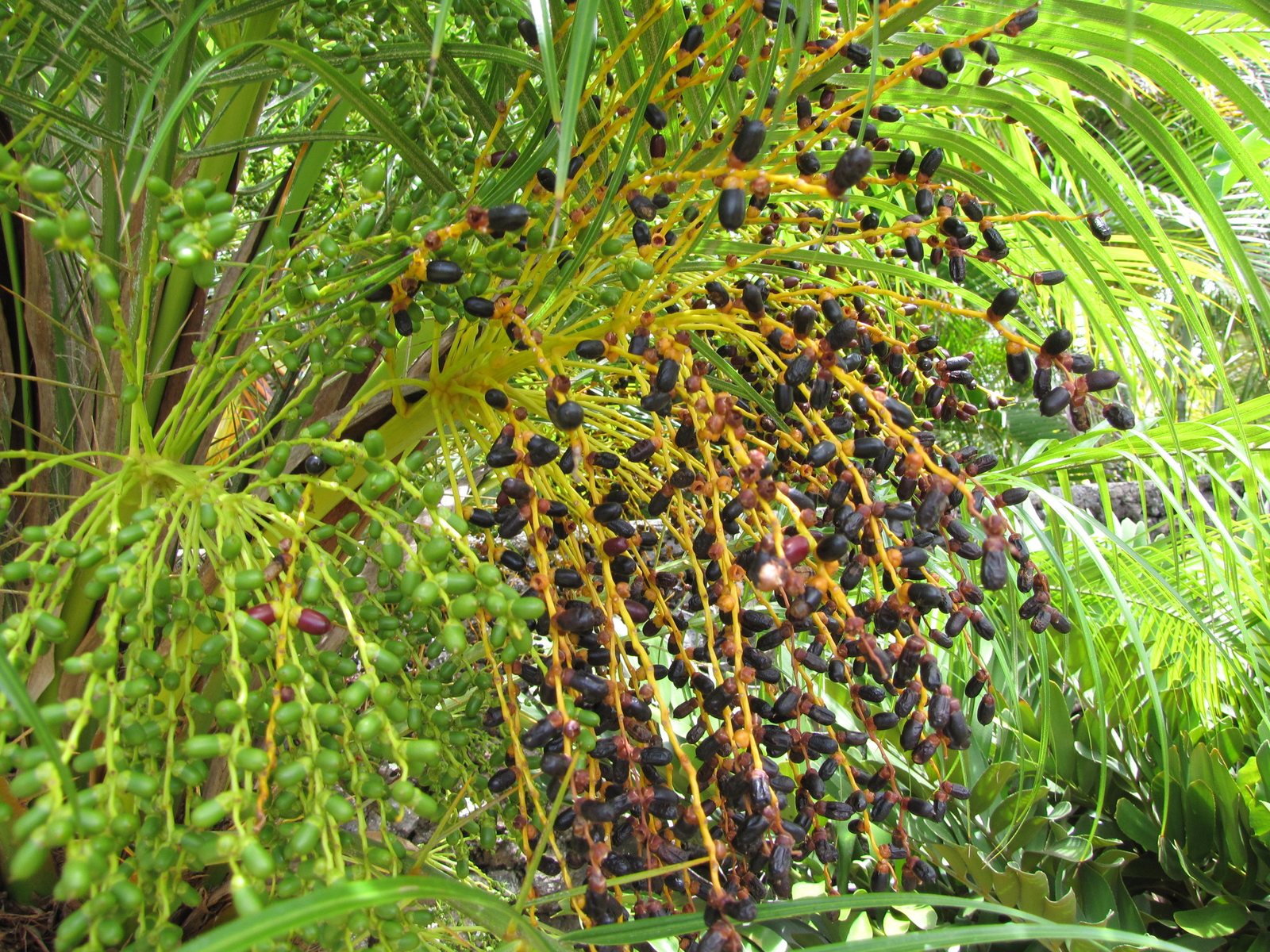
- Small cream to pale yellow flowers in branched clusters, usually in spring or summer. Female plants can produce small, dark fruits if a male plant provides pollen.
- Foliage
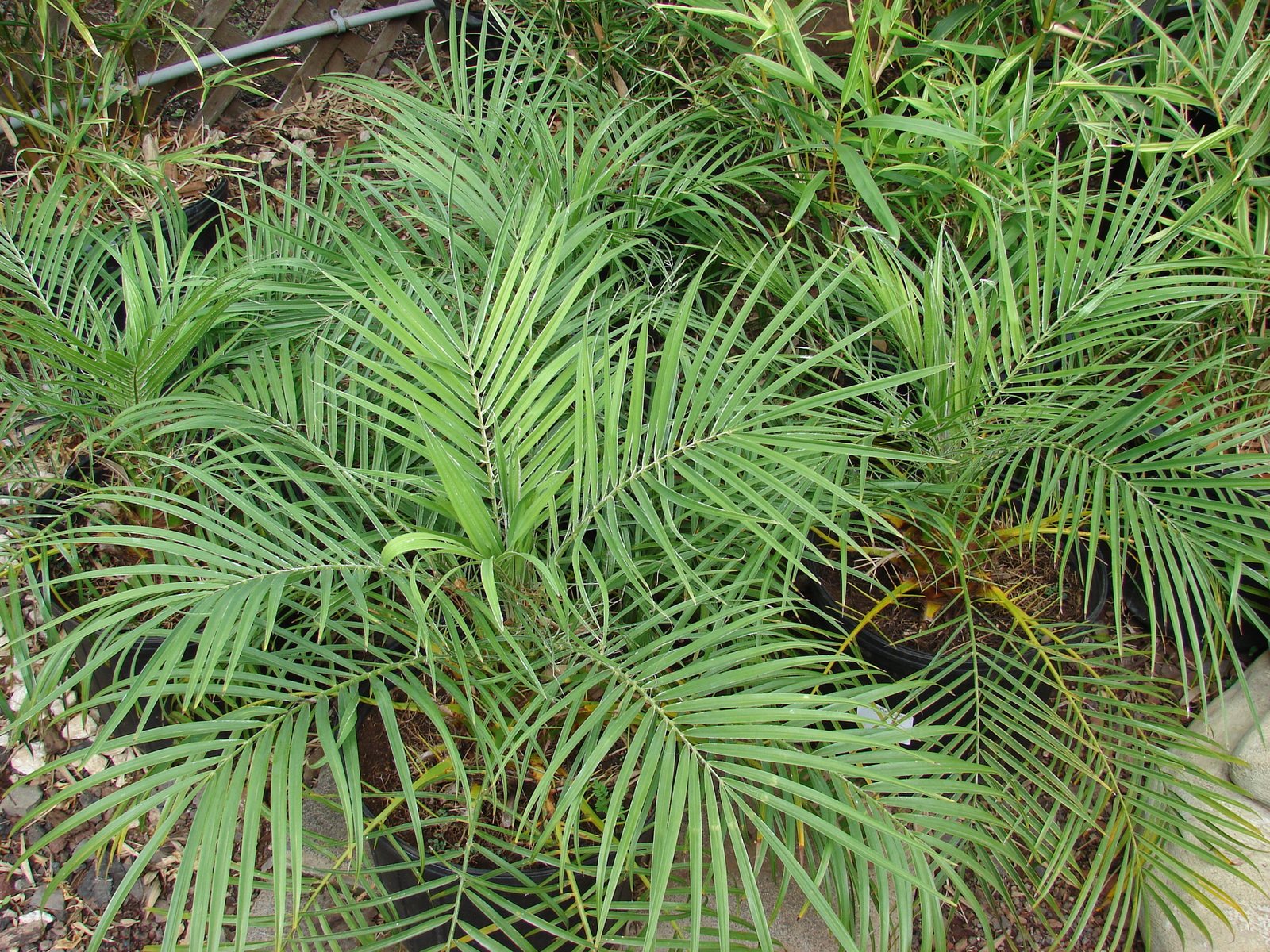
- Evergreen. Arching, feather-shaped, dark green fronds with narrow leaflets. The lowest leaflets near the trunk are modified into sharp spines.
- Growth
- Slow
- Care needed
- Medium
The year at a glance
- Pollinators
- Heat tolerant
- Wildlife
| J | F | M | A | M | J | J | A | S | O | N | D | |
|---|---|---|---|---|---|---|---|---|---|---|---|---|
| Flowers | ||||||||||||
| Fruit | ||||||||||||
| Plant |
Northern hemisphere months. In Australia, shift them by six.
- Difficulty
- Moderate
- Toughness
- Needs looking after
Will it suit your garden?
Pick your zone, country, light and whether you have pets.
Full sun is 6 or more hours of direct sun a day, part shade 3 to 6 hours, shade under 3.
How it grows
Planting day
7 ft (2 m)
After 1 year
7 ft (2 m)
After 2 years
7 ft (2 m)
After 3 years
7 ft (2.1 m)
After 5 years
7 ft (2.1 m)
About 32 years to full size.
From a typical nursery size, at an average rate for this kind of plant. A rule of thumb, not a forecast.
Good to know
- Cats and dogs
- Safe
- Growth rate
- Slow
Care
Jobs through the year
- WaterApr–May, Sep–Oct, every 7 days
- For established ground plants in frost-free climates, water as the surface dries; check containers more often.
- WaterJun–Aug, every 7 days
- Keep established root zones moderately moist; containers may need water several times weekly.
- WaterJan–Mar, Nov–Dec, every 14 days
- Check sheltered pots and water when the surface dries; never let the whole root ball dry out.
- FeedMay–Jun
- Apply slow-release palm fertiliser with magnesium and micronutrients at the label rate.
- MulchMay
- Lightly mulch outdoor root zones without covering the trunk base.
- PruneJun–Aug
- With heavy gloves and clean tools, remove fully brown fronds only; preserve the central spear.
- ProtectJan–May, Sep–Dec
- Keep in movable containers and shelter before cold nights; maintain bright conditions above 5°C.
- Water deeply when the soil surface begins to dry; empty container saucers rather than leaving roots standing in water.
- Feed outdoor plants during the growing season with a slow-release palm fertiliser containing magnesium and micronutrients, following the label.
- Apply a light organic mulch over the root area, keeping it clear of the trunk.
- Move container plants into bright, frost-free shelter before cold weather; aim to keep them above 41°F (5°C).
- Acclimatise plants gradually when moving them from indoor shelter into outdoor sun.
Pruning. Remove fully brown fronds and unwanted flower or fruit stalks during warm weather, using clean tools and heavy gloves. Leave green fronds and the central growing spear intact, and do not shave or wound the trunk.
Through the year
- Spring
- Check drainage and repot container plants only when roots have filled the pot; keep the trunk at its existing planting depth.
- Late spring
- Move overwintered plants outside once frost risk has passed and nights are consistently mild, introducing direct sun gradually.
- Summer
- Check soil moisture frequently, especially in pots, and feed according to the palm fertiliser label.
- Late summer
- Inspect leaf undersides for spider mites and scale insects, particularly on sheltered patio plants.
- Autumn
- Bring container plants under cover before frost and reduce watering as growth slows.
- Winter
- Keep sheltered plants in bright light, away from heaters, and water sparingly without letting the root ball become completely dry.
In the garden
- Use a single specimen as a small-scale canopy in a sheltered courtyard, keeping its spiny leaf bases away from seating and paths.
- Plant in a substantial container beside a patio for summer foliage, with space to move it into winter shelter.
- Combine with cast-iron plants and bromeliads for layered foliage in a warm, partly shaded garden.
- Use its fine-textured fronds to soften walls and contrast with broad-leaved tropical plants.
Garden styles it suits: Modern tropical, Luxury resort, Modern courtyard, Architectural minimal, Tropical and Small-space.
Plant it with: Cast-iron plant, Bird of paradise, Bromeliads, Liriope, Clivia and Philodendron.
Wildlife: Flowers can attract visiting insects, and small fruits may be eaten by birds where the palm fruits outdoors. It offers limited wildlife value compared with locally native trees and shrubs.
Problems to watch for
- Spider mites cause fine speckling, dull foliage and sometimes webbing, especially indoors. Rinse the fronds thoroughly and use an insecticidal soap labelled for palms if needed.
- Scale insects and mealybugs collect on fronds and leaf bases. Remove small infestations by hand and treat persistent infestations with a suitable labelled horticultural oil or insecticidal soap.
- Waterlogged soil can cause root rot and decline. Improve drainage, empty saucers and let the soil surface dry slightly before watering again.
- Yellowing or spotted older fronds can indicate potassium or magnesium deficiency. Check watering and soil conditions, then use a complete palm fertiliser rather than repeatedly adding nitrogen alone.
Safety
Not known to be toxic to cats, dogs, horses or people. The sharp spines at the leaf bases are the main hazard: punctures can be deep and may become infected. Wear heavy gloves and keep the plant away from play areas and narrow routes.
Easily confused with
Canary Island date palm (Phoenix canariensis)
Young plants can look similar, but they develop much stiffer, heavier fronds and eventually a massive trunk and broad crown.
Senegal date palm (Phoenix reclinata)
Usually produces a suckering clump of taller stems with larger, coarser fronds; pygmy date palm is usually single-stemmed unless several seedlings have been planted together.
Parlour palm (Chamaedorea elegans)
Has thin, green, cane-like stems and lacks the sharp spines at the leaf bases found on pygmy date palm.
The name
The species name honours the plant collector Roebelen, while 'pygmy date palm' refers to its small size compared with other date palms.
Propagation. Grow from fresh seed in a warm, moist, free-draining medium; germination can be slow and uneven. Commercial multi-trunk specimens are often several seedlings planted together, not a clump suitable for routine division.
Checked against open data
- Accepted botanical name
- Phoenix roebelenii
- Native range
- China South-Central, Laos, Myanmar, Thailand and Vietnam.
- Measured
- Average height 400 cm.
Sources: GBIF (CC BY 4.0) and Trefle (CC BY 4.0). The care and design notes are LandscapeGPT's own.
See it in your own yard.
Upload a photo of your yard and see it redesigned with plants that suit your climate, each checked against your zone.