Queen palm
Syagrus romanzoffiana. Family Arecaceae. Tree.
Also called Cocos palm, Feather palm.
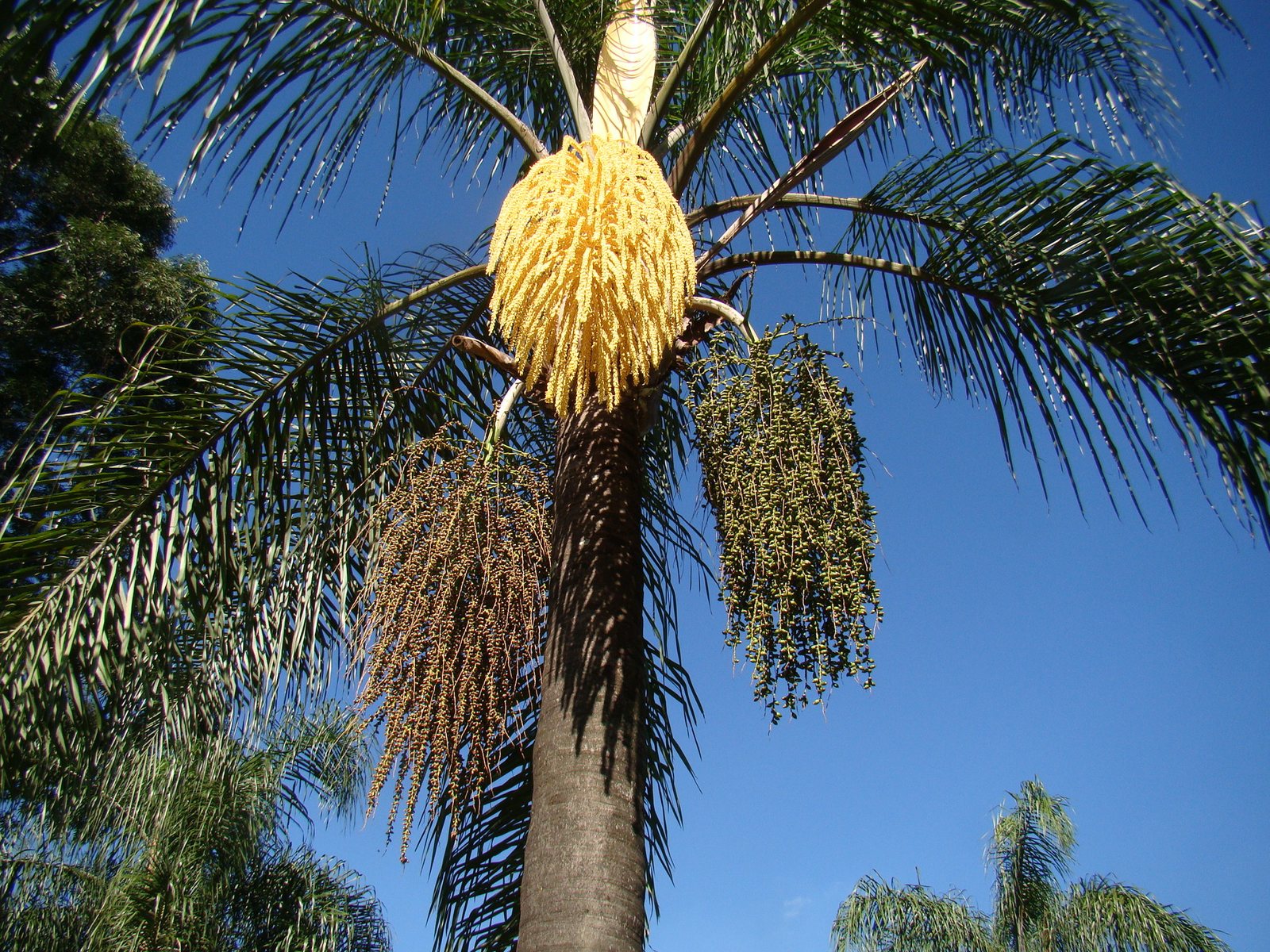
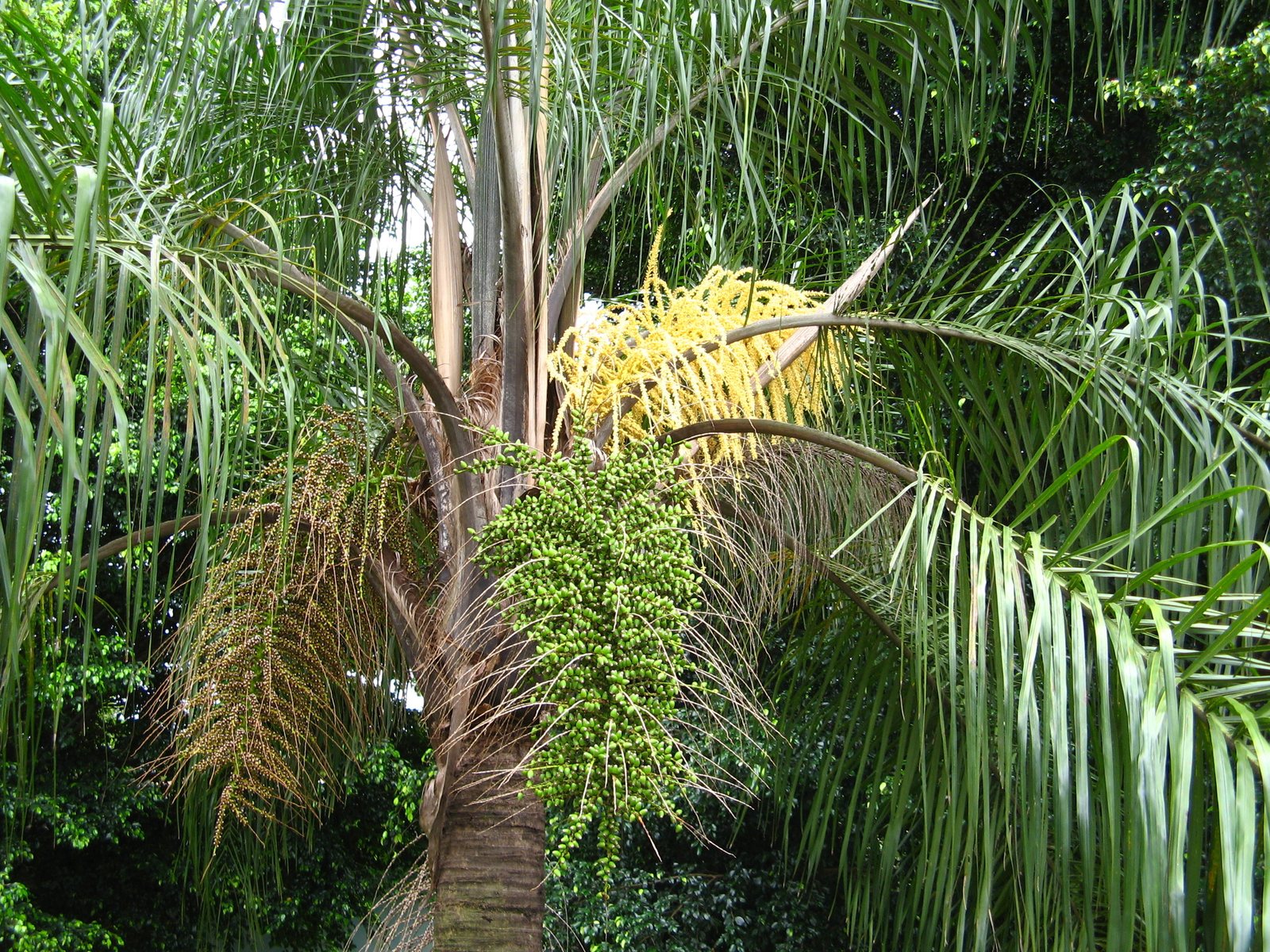
Queen palm is a tall, evergreen South American palm with a smooth grey trunk and arching, feathery fronds. Gardeners grow it for height, filtered shade and a tropical canopy, but its falling fruit creates litter. It needs a warm climate and is not reliably hardy outdoors in most of the United Kingdom or Canada.
At a glance
- Sun
- Full sun; young plants tolerate light shade.
- Water
- Moderate; water deeply during establishment and prolonged dry weather. Established palms tolerate some drought but grow better with regular moisture.
- Soil
- Well-drained soil, preferably slightly acidic. Alkaline soils often cause serious nutrient deficiencies; avoid permanently wet ground.
- Height
- 40-60 ft (12-18 m)
- Spread
- 20-25 ft (6-7.6 m)
- Flowers
- Cream to pale yellow flowers in large branched clusters, usually in spring and summer, followed by orange fruit; flowering can extend beyond these seasons in tropical climates.
- Foliage
- Evergreen. Long, arching, dark green feather-like fronds with leaflets arranged in several planes, giving a fluffy appearance.
- Growth
- Fast in warm climates with adequate water and nutrition; much slower in cool conditions.
- Care needed
- Medium
The year at a glance
- Pollinators
- Heat tolerant
- Wildlife
| J | F | M | A | M | J | J | A | S | O | N | D | |
|---|---|---|---|---|---|---|---|---|---|---|---|---|
| Flowers | ||||||||||||
| Fruit | ||||||||||||
| Plant |
Northern hemisphere months. In Australia, shift them by six.
- Difficulty
- Hard
- Toughness
- Needs looking after
Will it suit your garden?
Pick your zone, country, light and whether you have pets.
Full sun is 6 or more hours of direct sun a day, part shade 3 to 6 hours, shade under 3.
How it grows
Planting day
7 ft (2 m)
After 1 year
9 ft (2.7 m)
After 2 years
11 ft (3.3 m)
After 3 years
13 ft (4 m)
After 5 years
17 ft (5.3 m)
About 20 years to full size.
From a typical nursery size, at an average rate for this kind of plant. A rule of thumb, not a forecast.
Good to know
- Cats and dogs
- Safe
- Invasive in
- Australia
- In the garden
- Spreads vigorously: plan to contain it.
- Growth rate
- Moderate
Care
Jobs through the year
- WaterApr–May, Sep–Oct, every 14 days
- Soak established roots when dry; check young and container palms more frequently.
- WaterJun–Aug, every 7 days
- Water deeply during dry weather; young plants need more frequent checks.
- WaterJan–Mar, Nov–Dec, every 14 days
- Check sheltered containers and water when the surface dries, allowing excess to drain.
- FeedMay–Aug
- Use slow-release palm fertiliser with potassium, magnesium and micronutrients at label intervals.
- MulchMay
- Refresh root-zone mulch without covering the trunk base.
- PruneJun–Sep
- Remove fully brown fronds and unwanted fruit stalks only; use an arborist for tall palms.
- ProtectJan–May, Sep–Dec
- Cannot overwinter in the ground here; provide a large container and bright, frost-free shelter.
- Plant with the top of the root ball level with the surrounding soil; do not bury the trunk.
- Water the root ball regularly while establishing, then water deeply during extended dry spells.
- Apply a slow-release palm fertiliser containing potassium, magnesium and micronutrients during the warm growing season, following the label.
- Mulch the root area, keeping mulch clear of the trunk.
- Keep lawn fertiliser and irrigation from concentrating around the trunk; excess nitrogen can worsen nutrient imbalances.
- Collect fallen fruit regularly, especially beside paths, pools and play areas.
Pruning. Remove fully brown fronds and unwanted flower or fruit stalks as needed, preferably during warm weather. Keep green and partly green fronds, never cut the growing tip, and use a qualified arborist for tall palms.
Through the year
- Spring
- Plant once the soil is warming and frost risk has passed; water thoroughly.
- Spring
- Apply palm fertiliser according to the label and check new growth for nutrient deficiency.
- Summer
- Water deeply during dry spells and inspect the crown for distorted or yellowing new leaves.
- Late summer
- Remove unwanted fruit stalks before fruit drops, using professional help if they are beyond safe reach.
- Autumn
- Collect fallen fruit and remove seedlings before they become established.
- Winter
- Protect small palms during brief cold snaps; leave frost-damaged fronds until the risk of further frost has passed.
In the garden
- Use as a tall specimen in a large lawn, allowing room for the mature crown and falling fruit.
- Plant in loose groups to create a high canopy above broad-leaved subtropical shrubs.
- Repeat along a broad driveway for rhythm and height, setting trunks well back from paving.
- Use behind a terrace planting to provide a feathery skyline, rather than directly over seating or a pool.
Garden styles it suits: Modern tropical, Luxury resort, Tropical, Florida subtropical, Mediterranean and Brazilian tropical modernism.
Plant it with: Bird of paradise, Philodendron, Cast-iron plant, Clivia, Bromeliads and Lomandra.
Wildlife: Flowers attract insects, and ripe fruit is eaten by birds and mammals. Wildlife can carry the seeds into nearby natural areas.
Problems to watch for
- Potassium or magnesium deficiency causes spotting, yellowing or premature decline of older fronds. Use a balanced palm fertiliser with these nutrients and retain partly green leaves.
- Manganese deficiency causes small, distorted, frizzled new leaves, especially in alkaline soil. Seek a diagnosis and apply manganese specifically as directed; ordinary magnesium supplements will not correct it.
- Ganoderma butt rot can cause wilting and a shelf-like fungal growth near the trunk base. There is no cure; have an affected palm assessed and removed, and avoid replanting another palm in the same spot.
- Frost can scorch fronds or kill the growing point. Choose a warm, sheltered site, protect young plants during brief freezes and avoid planting where hard freezes recur.
Safety
Not known to be toxic to cats, dogs, horses or people. The fruit and seeds are not considered poisonous, but swallowed seeds can cause choking or intestinal blockage, especially in dogs; eating large quantities of fruit may cause digestive upset.
Where it spreads. An environmental weed in parts of Australia, particularly south-eastern Queensland and north-eastern New South Wales. It also escapes cultivation in parts of Florida. Remove fruit stalks and seedlings, and check local guidance before planting near natural vegetation.
Easily confused with
Foxtail palm (Wodyetia bifurcata)
Has more densely bushy, bottlebrush-like fronds and a smooth green crownshaft below the leaves; queen palm has no crownshaft.
Christmas palm (Adonidia merrillii)
Usually much shorter, with a distinct green crownshaft and bright red ripe fruit rather than orange fruit.
Jelly palm (Butia odorata)
Has a stouter trunk and strongly arching, blue-grey fronds with leaflets arranged in a more regular V shape.
The name
The species name romanzoffiana honours Count Nikolai Rumyantsev, a Russian patron of exploration.
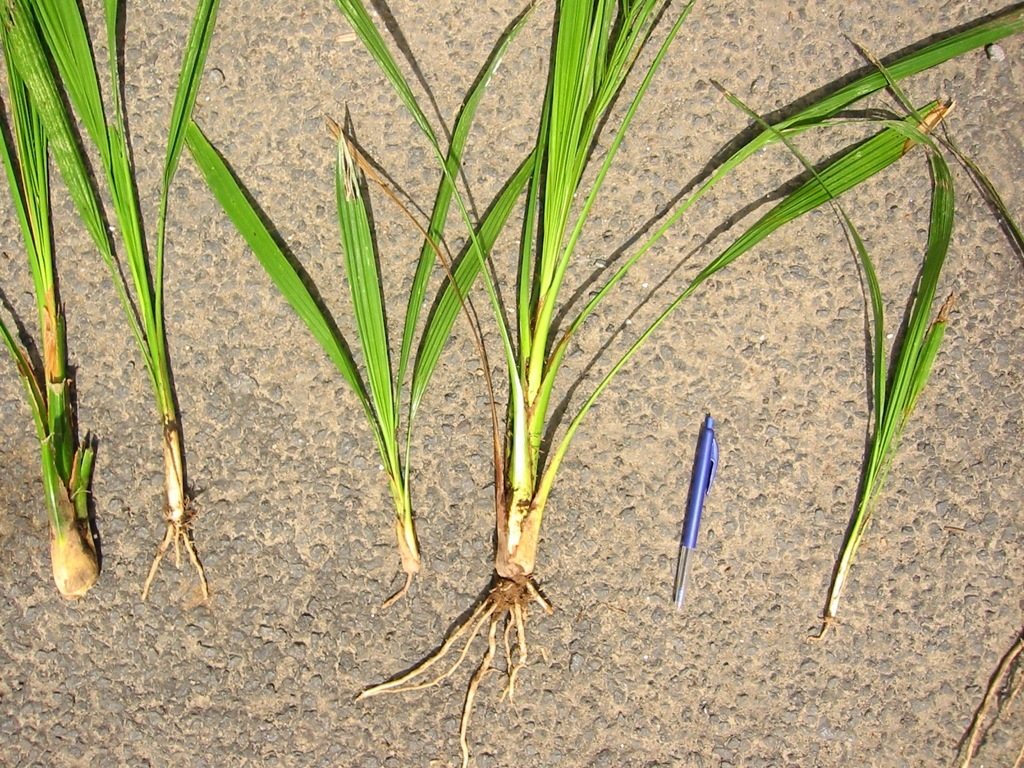
Propagation. Grow from fresh seed after removing the orange fruit pulp. Sow in a warm, moist, well-drained medium; germination is irregular and can take several months. It does not produce offsets for division.
Checked against open data
- Accepted botanical name
- Syagrus romanzoffiana
- In the US and Canada
- Introduced in the lower 48 states.
- Native range
- Argentina Northeast, Brazil Northeast, Brazil South, Brazil Southeast, Brazil West-Central, Paraguay and Uruguay.
- Measured
- Average height 1200 cm.
Sources: GBIF (CC BY 4.0), USDA PLANTS and Trefle (CC BY 4.0). The care and design notes are LandscapeGPT's own.
See it in your own yard.
Upload a photo of your yard and see it redesigned with plants that suit your climate, each checked against your zone.