Queen Victoria agave
Agave victoriae-reginae. Family Asparagaceae. Succulent.
Also called Royal agave.
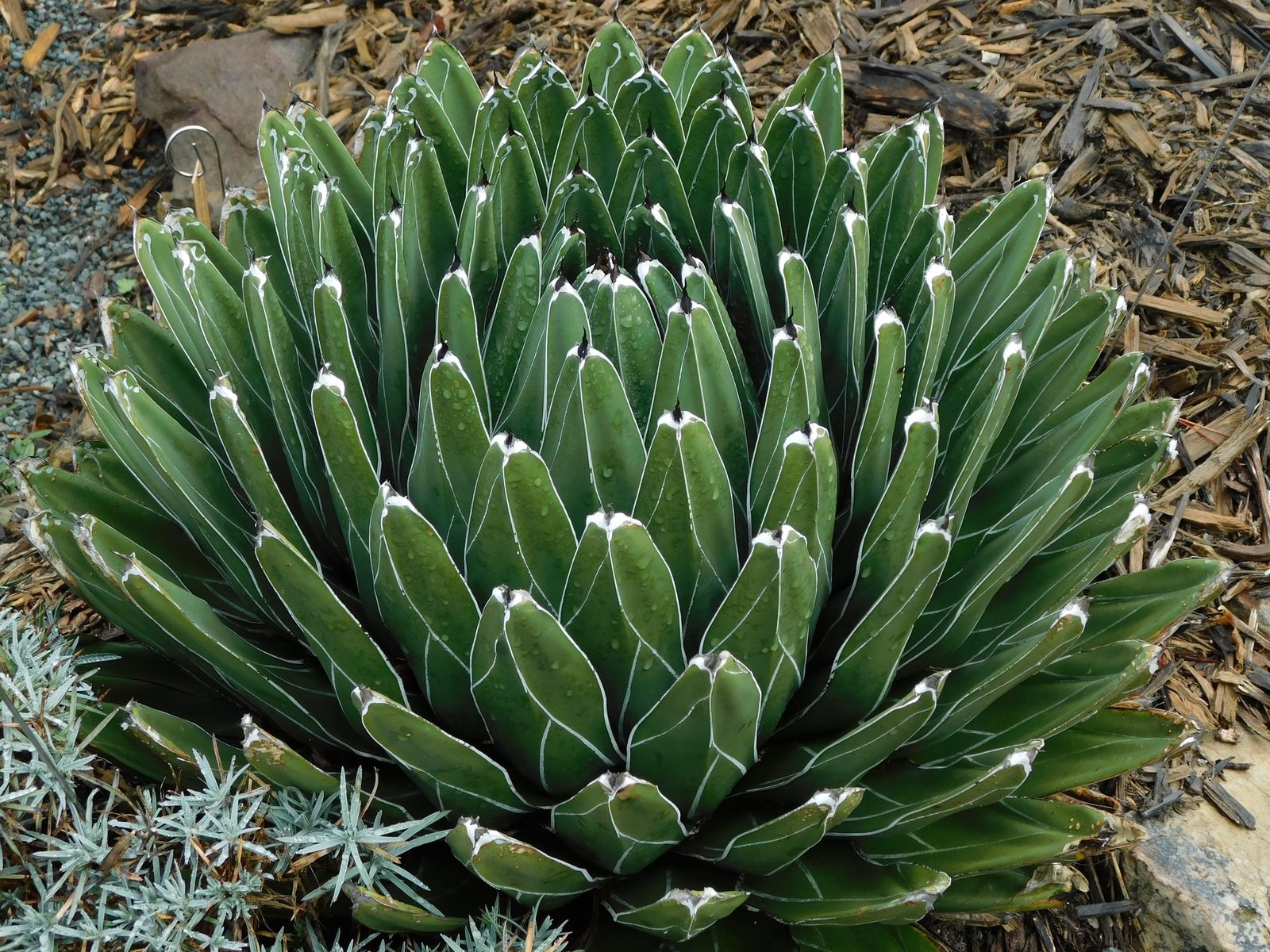
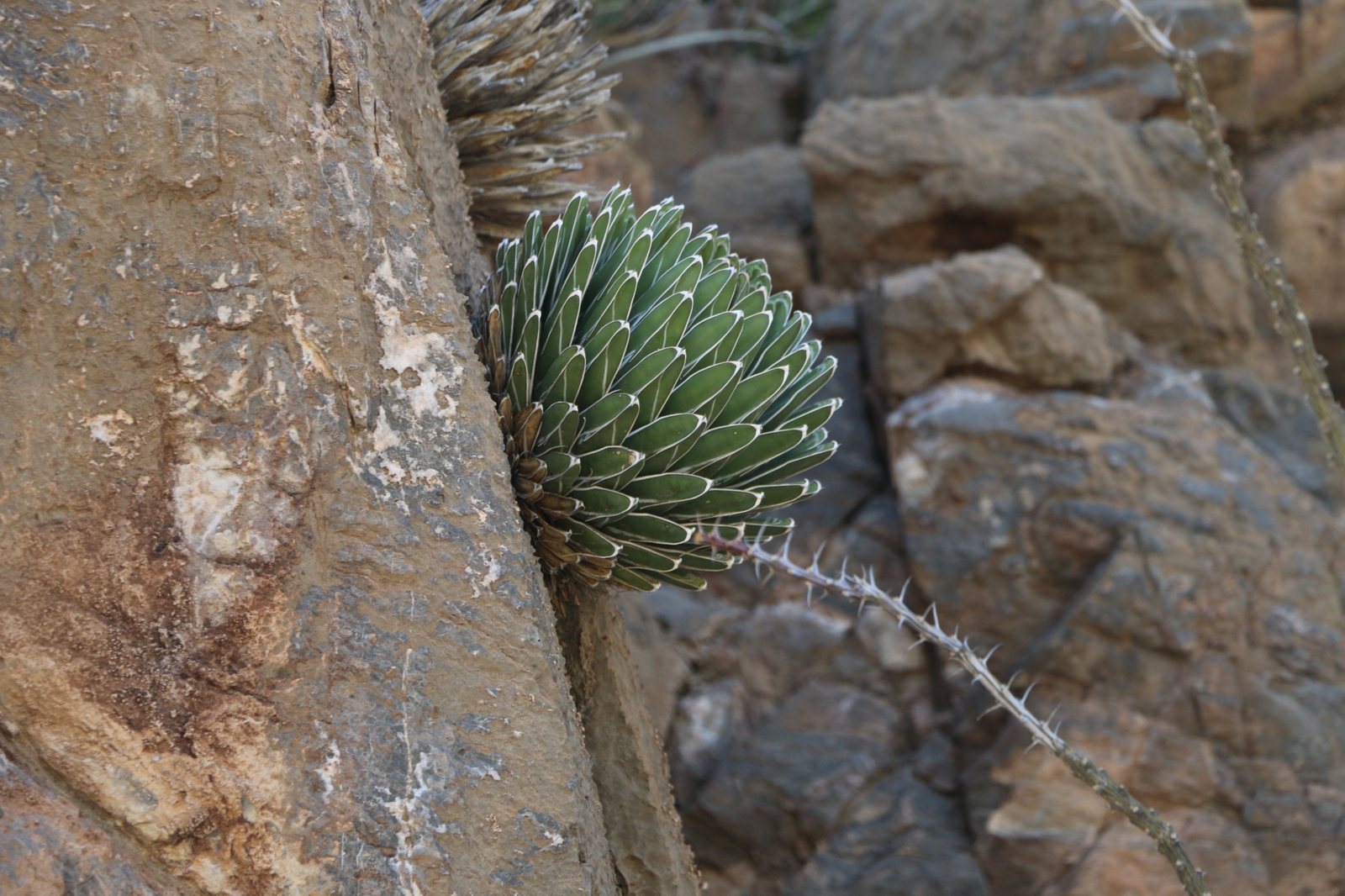
A slow-growing Mexican succulent with a compact, rounded rosette of stiff green leaves traced with white markings. Gardeners grow it for its precise geometry in gravel gardens and containers; it needs excellent drainage and protection from cold, wet winters.
At a glance
- Sun
- Full sun; light afternoon shade is helpful in very hot inland climates. Acclimatise indoor-grown plants gradually to direct sunlight.
- Water
- Low water needs once established. Water deeply during active growth, then let the soil dry thoroughly; keep almost dry in winter.
- Soil
- Sharply drained, gritty or stony soil. In containers, use a cactus mix amended with pumice, grit or coarse perlite, and a pot with drainage holes.
- Height
- 1-2 ft (0.3-0.6 m), excluding the flower stalk
- Spread
- 1-2 ft (0.3-0.6 m)
- Flowers
- Mature plants, usually after several decades, produce creamy-white flowers on a stalk roughly 10-15 ft (3-4.5 m) tall, generally in summer. Each flowering rosette then dies.
- Foliage
- Evergreen. Dense rosettes of short, thick, dark green leaves with white lines and smooth, white-edged margins. Each leaf ends in a sharp dark spine.
- Growth
- Slow
- Care needed
- Low
The year at a glance
- Pollinators
- Deer resistant
- Drought tolerant
- Heat tolerant
- Low allergen
| J | F | M | A | M | J | J | A | S | O | N | D | |
|---|---|---|---|---|---|---|---|---|---|---|---|---|
| Flowers | ||||||||||||
| Plant |
Northern hemisphere months. In Australia, shift them by six.
- Difficulty
- Moderate
- Toughness
- Fairly tough
Will it suit your garden?
Pick your zone, country, light and whether you have pets.
Full sun is 6 or more hours of direct sun a day, part shade 3 to 6 hours, shade under 3.
How it grows
Planting day
0.8 ft (0.25 m)
After 1 year
0.9 ft (0.27 m)
After 2 years
1 ft (0.29 m)
After 3 years
1 ft (0.31 m)
After 5 years
1.2 ft (0.35 m)
About 10 years to full size.
From a typical nursery size, at an average rate for this kind of plant. A rule of thumb, not a forecast.
Good to know
- Cats and dogs
- Mildly toxic: may upset a stomach
- Growth rate
- Slow
Care
Jobs through the year
- WaterApr–May, Sep, every 30 days
- Water established plants only in warmth when fully dry; check containers and new plants more often.
- WaterJun–Aug, every 21 days
- Water deeply only after the root zone dries thoroughly; skip after rain.
- FeedApr–May
- Feed containers once with dilute cactus fertiliser; omit routine feeding in the ground.
- MulchMay
- Use thin gravel mulch, keeping the crown uncovered.
- ProtectMay–Jun
- Move outside after frost risk passes and introduce direct sun gradually.
- ProtectJan–Apr, Sep–Dec
- Overwinter in bright, frost-free shelter; keep almost dry and inspect leaf bases for rot.
- Plant on a raised mound or in a freely draining container; never leave the pot standing in water.
- Water only after the root zone has dried, and avoid frequent light sprinkling.
- Feed container plants once in spring with a dilute cactus fertiliser; established plants in the ground rarely need feeding.
- Use gravel rather than moisture-holding organic mulch around the crown.
- In cold or wet-winter regions, move containers into a bright, frost-free greenhouse or conservatory before frost.
Pruning. No routine pruning is needed. Remove fully dead basal leaves with clean secateurs when they detach easily, wearing gloves and eye protection; do not trim healthy leaf tips.
Through the year
- Spring
- Check drainage and repot only if the plant is crowded, using a container just larger than the root ball.
- Late spring
- After frost risk has passed, gradually acclimatise sheltered plants to outdoor sun.
- Summer
- Water deeply when the compost has dried throughout, then allow excess water to drain.
- Early autumn
- Reduce watering as growth slows and nights cool.
- Late autumn
- Move pots under bright, frost-free cover where winters are cold or persistently wet.
- Winter
- Keep sheltered plants almost dry and inspect leaf bases for mealybugs and rot.
In the garden
- Use a single specimen in a plain container to show off the rounded shape and white leaf markings.
- Repeat plants through a sunny gravel garden with low, drought-tolerant companions for a strong geometric rhythm.
- Place among rocks and small boulders in a dry courtyard, keeping the crown clear of surrounding plants.
- Pair with fine-textured grasses for contrast, well back from paths where the terminal spines cannot catch passers-by.
Garden styles it suits: Desert modern, Contemporary minimal, Architectural minimal, Dry gravel garden, Desert / xeriscape and Modern courtyard.
Plant it with: Blue fescue, Blue chalksticks, Hens and chicks, Ice plant, Red yucca and Golden barrel cactus.
Wildlife: The flowers provide nectar and pollen for visiting insects and other local flower visitors, but flowering is infrequent. The foliage offers little food value for garden wildlife.
Problems to watch for
- Root or crown rot in wet soil: improve drainage, stop watering until dry, and remove badly rotted plants.
- Agave snout weevil in regions where it occurs: investigate sudden wilting or collapse; remove infested plants and debris promptly, and seek local advice on control.
- Mealybugs or scale around leaf bases: isolate affected pots and treat with a product labelled for succulents, testing a small area first.
- Sun scorch after moving outdoors: introduce direct sun gradually; bleached or brown damaged tissue will not turn green again.
Safety
Agave sap can irritate skin and eyes, and chewing plant tissue may irritate the mouth and digestive tract. Species-specific toxicity information for people, cats, dogs and horses is limited, so keep it out of reach and seek medical or veterinary advice after ingestion. The sharp terminal spines are a clear puncture hazard.
Easily confused with
King Ferdinand agave (Agave nickelsiae)
Usually has a more open rosette with longer, narrower leaves and a longer terminal spine; Queen Victoria agave is generally denser and more compact.
Artichoke agave (Agave parryi)
Has broader grey-blue leaves with obvious teeth along their margins, rather than the smooth white-edged leaves of Queen Victoria agave.
The name
The species epithet victoriae-reginae means 'of Queen Victoria', honouring the British monarch.
Propagation. Raise from seed in a warm, bright position using a freely draining seed mix. Some plants produce offsets, which can be separated in spring; let cut surfaces dry and callus before potting. Many specimens remain solitary.
Checked against open data
- Accepted botanical name
- Agave victoriae-reginae
- Native range
- Mexico Northeast.
Sources: GBIF (CC BY 4.0) and Trefle (CC BY 4.0). The care and design notes are LandscapeGPT's own.
See it in your own yard.
Upload a photo of your yard and see it redesigned with plants that suit your climate, each checked against your zone.