Rabbiteye blueberry
Vaccinium virgatum. Family Ericaceae. Shrub.
Also called Rabbit-eye blueberry, Southern black blueberry, Vaccinium ashei.
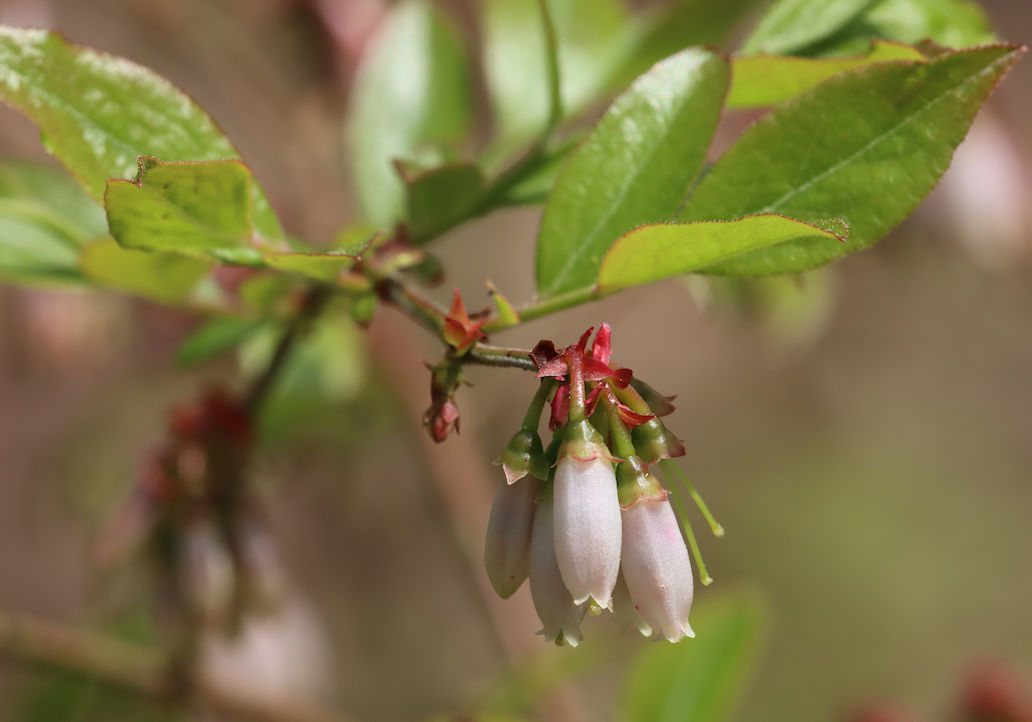
Native to the southeastern United States, rabbiteye blueberry is a large, long-lived fruiting shrub with blue berries, spring flowers and often colourful autumn leaves. It suits warm-summer gardens with acidic soil; crops are less reliable in cool summers or where winters do not provide the chosen cultivar's chilling requirement.
At a glance
- Sun
- Full sun for the best crops; tolerates light partial shade but produces fewer berries.
- Water
- Keep the shallow root zone consistently moist but not waterlogged, especially during flowering, fruit swelling and the first two growing seasons.
- Soil
- Acidic soil, ideally pH 4.5-5.5, rich in organic matter and well drained. Unsuitable for chalky or alkaline ground unless grown in a large container of ericaceous compost.
- Height
- 6-12 ft (1.8-3.7 m)
- Spread
- 6-10 ft (1.8-3 m)
- Flowers
- Spring; small white to pale pink, bell-shaped flowers, sometimes opening early enough to be damaged by frost.
- Foliage
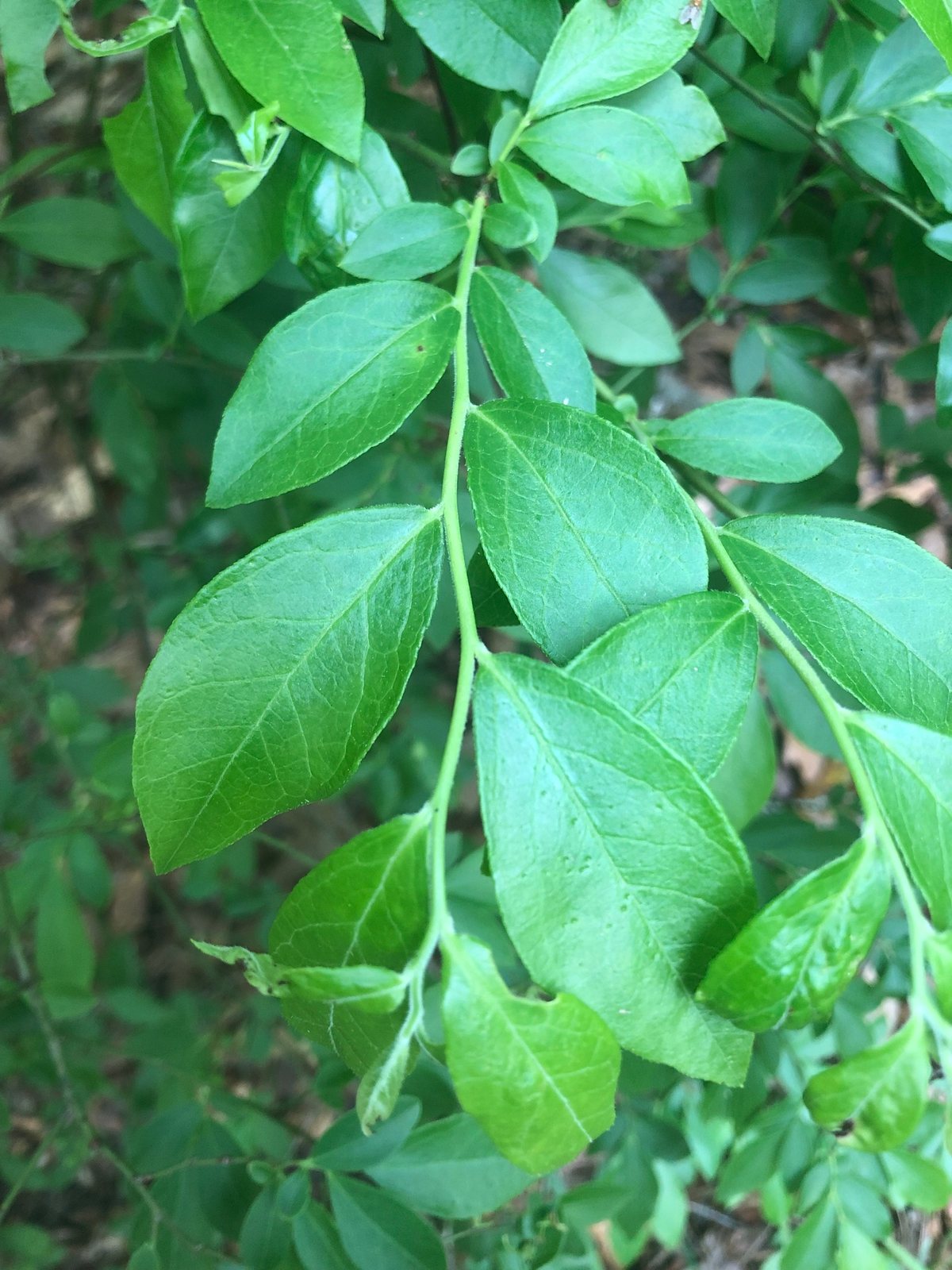
- Small oval leaves, blue-green to green, often turning red or burgundy in autumn; some leaves may persist through mild winters.
- Growth
- Moderate
- Care needed
- Medium
The year at a glance
- Pollinators
- Heat tolerant
- Wildlife
- Low allergen
- Edible
| J | F | M | A | M | J | J | A | S | O | N | D | |
|---|---|---|---|---|---|---|---|---|---|---|---|---|
| Flowers | ||||||||||||
| Fruit | ||||||||||||
| Plant |
Northern hemisphere months. In Australia, shift them by six.
- Difficulty
- Moderate
- Toughness
- Fairly tough
Will it suit your garden?
Pick your zone, country, light and whether you have pets.
Full sun is 6 or more hours of direct sun a day, part shade 3 to 6 hours, shade under 3.
How it grows
Planting day
1.6 ft (0.5 m)
After 1 year
3 ft (0.95 m)
After 2 years
5 ft (1.4 m)
After 3 years
6 ft (1.8 m)
After 5 years
9 ft (2.8 m)
full size
About 5 years to full size.
From a typical nursery size, at an average rate for this kind of plant. A rule of thumb, not a forecast.
Good to know
- Cats and dogs
- Safe
- Native to
- the US
- Growth rate
- Moderate
Care
Jobs through the year
- WaterMar–May, Sep–Oct, every 7 days
- Water established bushes if rain is insufficient; use rainwater on alkaline sites.
- WaterJun–Aug, every 4 days
- Keep shallow roots evenly moist, not saturated; young bushes need closer checks.
- FeedMar–Apr
- Apply a light blueberry or ericaceous feed according to its label.
- MulchMar–Apr
- Maintain 5–10 cm of pine bark mulch, clear of stems, in acidic soil.
- PruneFeb–Mar
- Remove damaged and crossing wood and a few oldest canes; retain fruiting tips.
- ProtectMar–May
- Cover open flowers with fleece during frost; choose locally hardy, compatible cultivars.
- DeadheadMar–May
- Remove most flowers in the first growing season to promote establishment.
- ProtectJun–Sep
- Frame ripening berries with taut wildlife-safe netting and check it daily.
- HarvestJul–Sep
- Pick fully blue, sweet berries that detach easily; newly blue fruit may need several days.
- Plant at least two different rabbiteye cultivars with overlapping flowering times for reliable pollination and heavier crops.
- Water deeply during dry spells; use rainwater where tap water is alkaline.
- Maintain a 2-4 in (5-10 cm) layer of pine bark or other suitable organic mulch, keeping it clear of the stems.
- Feed lightly in spring with a fertiliser formulated for blueberries or acid-loving plants; avoid lime and excessive fertiliser.
- Protect ripening berries with taut wildlife-safe netting on a frame, checking it daily.
- Remove most flowers in the first growing season so young plants establish roots and shoots.
Pruning. Prune in late winter before growth starts, removing dead, damaged and crossing stems. Once established, remove a few of the oldest canes at ground level each year and retain vigorous younger canes; avoid shearing off the fruiting tips.
Harvest
Pick berries in summer, sometimes continuing into early autumn, once they are fully blue, sweet and detach easily; newly blue berries often need several more days to develop their flavour. Harvest repeatedly by gently rolling ripe berries into your hand. Expect the first substantial crop about 3-4 years after planting a young nursery bush, with yields increasing as it matures.
Through the year
- Late winter
- Prune established bushes and check that mulch has not built up against the stems.
- Early spring
- Apply a light blueberry feed and refresh the mulch.
- Spring
- Check that companion cultivars flower together; protect open flowers from forecast frost with fleece where practical.
- Late spring
- Water during dry weather as berries swell and install a netting frame before fruit colours.
- Summer
- Pick ripe berries regularly and keep the root zone evenly moist.
- Autumn
- Test soil pH if growth is weak or leaves are yellow; plant new bushes while soil is moist in mild climates.
In the garden
- Plant several compatible cultivars as a loose edible hedge, allowing room for picking on both sides.
- Use behind lower acid-loving plants in a sunny border, combining spring flowers, summer fruit and autumn colour.
- Group in an orchard or food forest on an open, sunny edge rather than beneath dense tree cover.
- Grow a suitably compact cultivar in a large container of ericaceous compost where garden soil is alkaline.
Garden styles it suits: Edible landscape, Backyard orchard, Food forest, Homestead, Southern and Wildlife garden.
Plant it with: Other rabbiteye blueberries, Azaleas, Camellias, Summersweet, Wintergreen and Lingonberries.
Wildlife: Flowers feed bumblebees and other native bees, whose visits improve fruit set. Berries feed birds and mammals, and mature bushes provide cover.
Problems to watch for
- Yellow leaves with green veins usually indicate iron chlorosis from excessive soil pH: test the soil and irrigation water, correct the underlying alkalinity, or move the plant to an ericaceous container.
- Poor fruit set can result from incompatible flowering times, insufficient winter chill or spring frost: choose locally proven cultivars and plant two rabbiteye varieties that flower together.
- Birds can remove most of the crop: fit wildlife-safe netting over a rigid frame before berries ripen and secure all edges.
- Phytophthora root rot causes declining growth and wilting in wet soil: improve drainage, avoid overwatering and replace severely affected plants in a better-drained position.
Safety
Not known to be toxic to people, cats, dogs or horses. The ripe berries are edible; leaves and stems are not normally eaten.
Easily confused with
Highbush blueberry (Vaccinium corymbosum)
Usually has larger, broader leaves and lacks the conspicuous pinkish stage often seen in unripe rabbiteye fruit. Cultivars and hybrids overlap in appearance, so a reliable nursery label is the safest guide.
Lowbush blueberry (Vaccinium angustifolium)
Forms low, spreading colonies, usually under 2 ft (0.6 m) tall, rather than a tall, upright shrub.
Sparkleberry (Vaccinium arboreum)
Often develops a small-tree form with peeling bark and shiny leaves; its small, dark berries are much drier and less palatable than cultivated blueberries.
The name
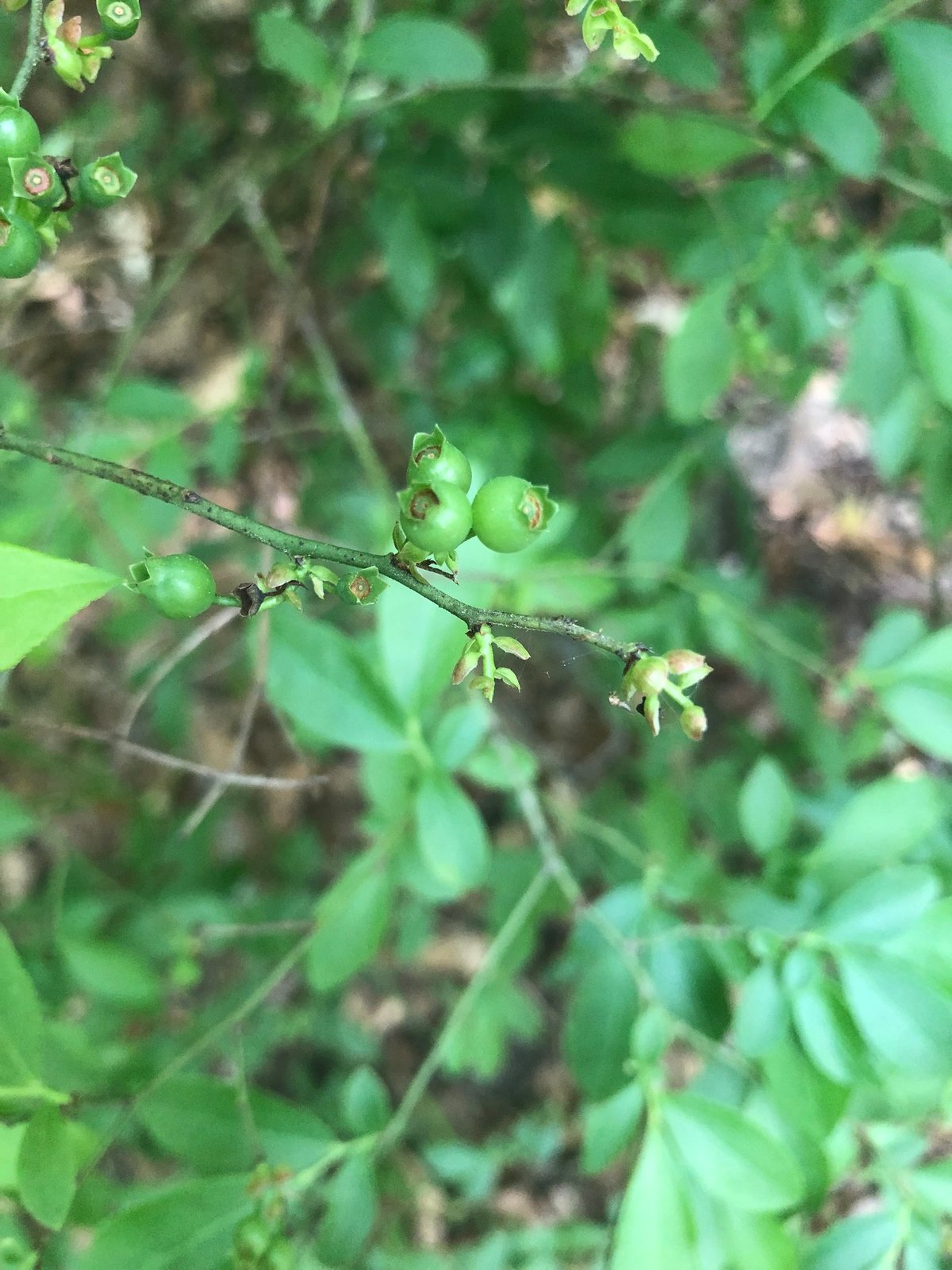
The common name refers to the pinkish colour of the berries before they ripen blue, while virgatum means twiggy or wand-like.
Propagation. Root softwood cuttings in late spring or early summer under humid conditions, or take hardwood cuttings during dormancy. Seedlings vary and will not preserve a named cultivar; check propagation restrictions before taking cuttings from protected cultivars.
Checked against open data
- Accepted botanical name
- Vaccinium virgatum
- In the US and Canada
- Native in the lower 48 states.
Sources: GBIF (CC BY 4.0), USDA PLANTS and Trefle (CC BY 4.0). The care and design notes are LandscapeGPT's own.
See it in your own yard.
Upload a photo of your yard and see it redesigned with plants that suit your climate, each checked against your zone.