Rattlesnake master
Eryngium yuccifolium. Family Apiaceae. Perennial.
Also called Button snake-root, Button eryngo.
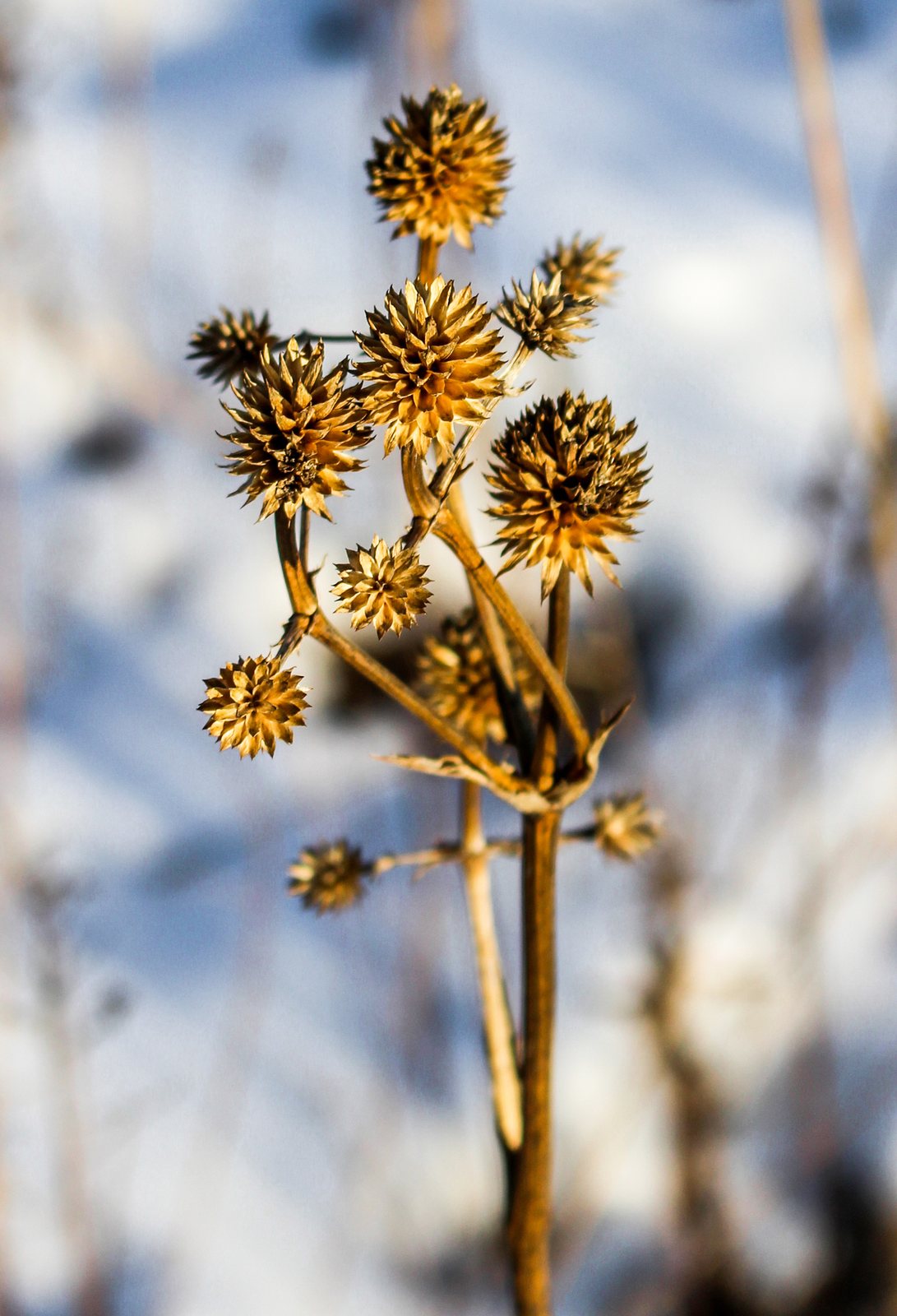
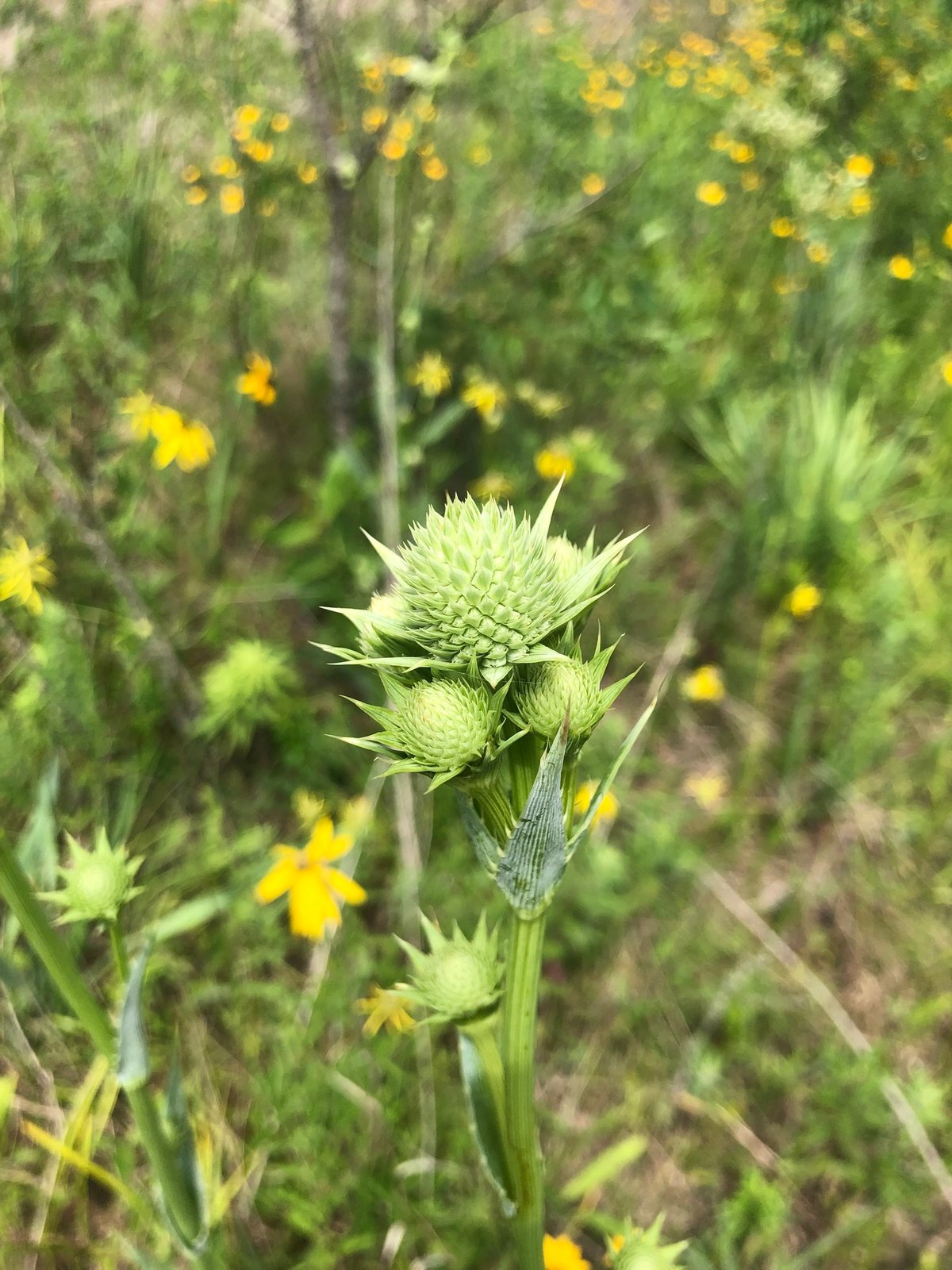
Rattlesnake master is a North American prairie perennial with yucca-like leaves and branching stems topped by pale, prickly flower heads. Gardeners grow it for its strong upright shape, long-lasting seed heads and flowers that attract many kinds of pollinating insects.
At a glance
- Sun
- Full sun; shade encourages weak, leaning stems.
- Water
- Water regularly during establishment. Once established, it tolerates drought, though it also grows well with moderate moisture in freely draining soil.
- Soil
- Average to lean, well-drained soil, including loam, sandy soil and clay that does not remain waterlogged. Avoid rich soil and wet winter conditions.
- Height
- 3-5 ft (0.9-1.5 m)
- Spread
- 1.5-3 ft (0.45-0.9 m)
- Flowers
- Midsummer to late summer; small greenish-white flowers packed into rounded, bristly heads.
- Foliage
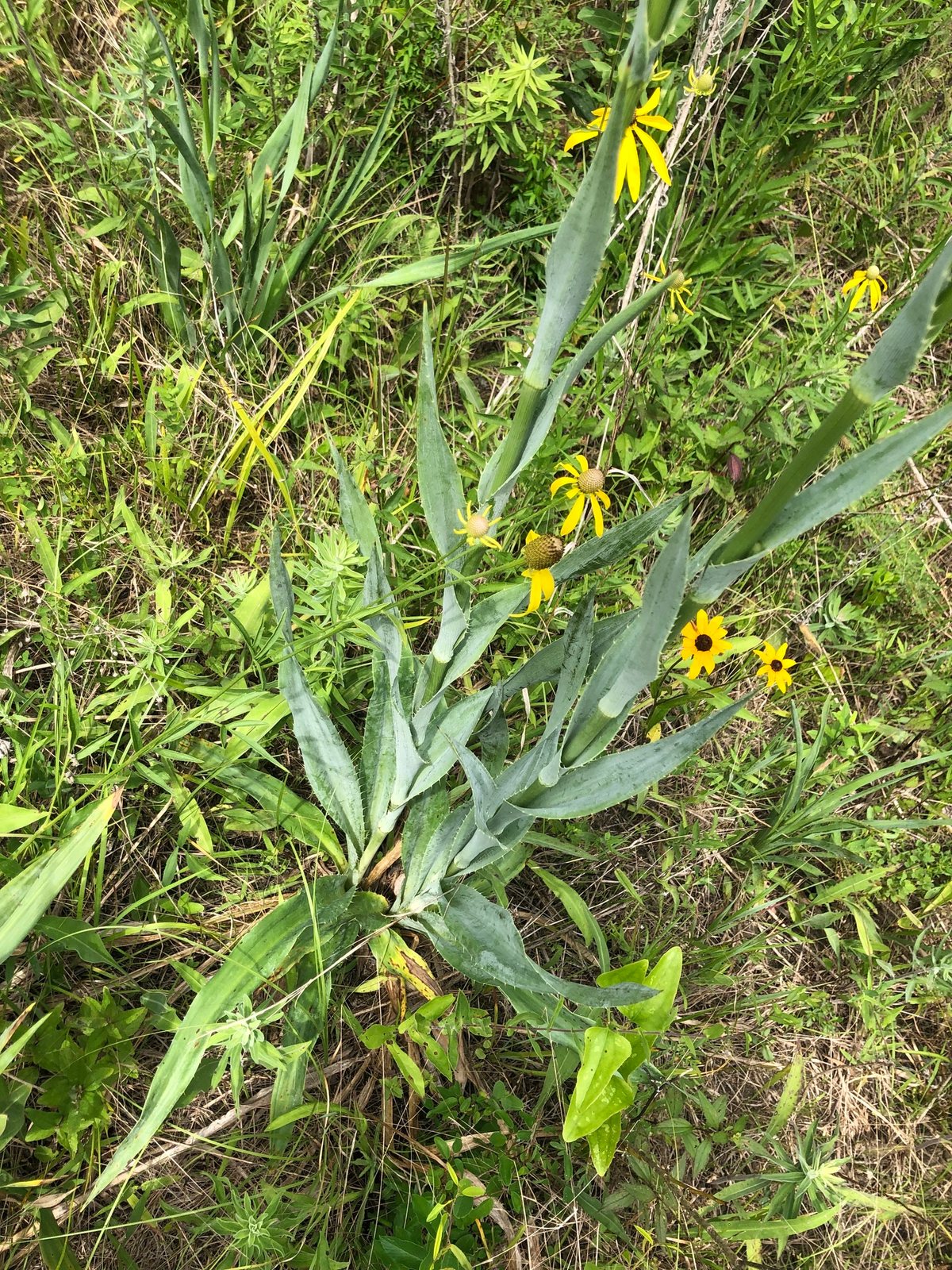
- Stiff, blue-green, strap-shaped leaves form a basal clump, with smaller leaves up the stems. The leaf margins carry small bristles or teeth.
- Growth
- Moderate; young plants spend time developing deep roots before making substantial top growth.
- Care needed
- Low
The year at a glance
- Pollinators
- Deer resistant
- Drought tolerant
- Cold hardy
- Wildlife
- Low allergen
| J | F | M | A | M | J | J | A | S | O | N | D | |
|---|---|---|---|---|---|---|---|---|---|---|---|---|
| Flowers | ||||||||||||
| Fruit | ||||||||||||
| Plant |
Northern hemisphere months. In Australia, shift them by six.
- Difficulty
- Easy
- Toughness
- Very tough
Will it suit your garden?
Pick your zone, country, light and whether you have pets.
Full sun is 6 or more hours of direct sun a day, part shade 3 to 6 hours, shade under 3.
How it grows
Planting day
1 ft (0.3 m)
After 1 year
2 ft (0.6 m)
After 2 years
3 ft (0.9 m)
After 3 years
4 ft (1.2 m)
full size
About 3 years to full size.
From a typical nursery size, at an average rate for this kind of plant. A rule of thumb, not a forecast.
Good to know
- Cats and dogs
- Safe
- Native to
- the US
- Growth rate
- Moderate
Care
Jobs through the year
- WaterApr–May, Sep, every 21 days
- Water established plants only in extended dry weather; young plants need more frequent watering.
- WaterJun–Aug, every 14 days
- Check established plants during prolonged drought and water deeply only if needed.
- MulchApr
- Use only light mulch if needed and keep the crown uncovered.
- DeadheadAug–Sep
- Remove heads before seeds ripen only if seedlings are unwanted; otherwise retain for winter.
- PruneFeb–Mar
- Cut old stems close to the ground, leaving some hollow stems nearby for insects.
- ProtectOct–Nov
- Clear mulch and accumulated debris from crowns to reduce winter rot.
- Plant in full sun, allowing room for the mature clump and choosing a position where it can stay.
- Water deeply during dry spells in the first growing season; established plants need much less supplemental water.
- Do not routinely fertilize; rich feeding encourages floppy growth.
- Keep mulch away from the crown, particularly where winters are wet.
- Avoid routine division or moving established plants, which have deep roots.
- Remove unwanted seedlings while small; their roots soon become difficult to lift.
Pruning. Leave stems and seed heads standing through winter, then cut them close to the ground in late winter or early spring before new growth develops. If seedlings are unwanted, remove flower heads before the seed ripens.
Through the year
- Late winter
- Cut down old stems before new growth begins, leaving some hollow stems nearby as insect shelter.
- Spring
- Plant young plants in a sunny, well-drained position and water them in thoroughly.
- Late spring
- Remove weeds around developing clumps and pull unwanted seedlings while they are small.
- Summer
- Water new plants during dry weather; check leaning stems for excessive shade or overly rich soil.
- Early autumn
- Remove ripening heads if you want to limit self-seeding, or leave them for winter structure.
- Late autumn
- Sow fresh seed outdoors in pots or a prepared seedbed so it receives natural winter chilling.
In the garden
- Repeat small groups through prairie-style planting with little bluestem and prairie dropseed for a strong rhythm of upright stems.
- Pair with purple coneflowers and black-eyed Susans so the pale rounded heads contrast with broad daisy flowers.
- Use in a sunny gravel border, where the blue-green foliage adds a sharp, architectural shape.
- Place in the middle or back of a pollinator border and retain the seed heads for winter interest.
Garden styles it suits: Midwest prairie, Native meadow, New perennial (prairie), Architectural minimal, Pollinator garden and Dry gravel garden.
Plant it with: Little bluestem, Prairie dropseed, Purple coneflower, Black-eyed Susan, Butterfly weed and Wild bergamot.
Wildlife: Flowers attract native bees, wasps, flies, beetles and butterflies. In parts of its native US range, it is the host plant of the rare rattlesnake-master borer moth. Deer and rabbits usually leave the coarse foliage alone, though browsing is still possible.
Problems to watch for
- Flopping stems: provide full sun, stop feeding and avoid overly rich soil; support existing stems discreetly if needed.
- Crown or root rot in persistently wet soil: improve drainage or move young plants to a better-drained position.
- Poor establishment after transplanting: use young plants, disturb the roots as little as possible and water through the first season.
- Unwanted self-seeding: remove heads before seed ripens and pull seedlings promptly.
Safety
Not known to be toxic to people, cats, dogs or horses, but reliable species-specific ingestion data are limited. Do not treat the roots, leaves or seeds as edible or medicinal. The stiff leaf edges and prickly flower heads can scratch skin; its historical use for snakebite is not an effective treatment.
Easily confused with
Adam's needle (Yucca filamentosa)
Both have sword-like basal leaves, but Adam's needle has conspicuous curling threads along the leaf edges and tall clusters of large white bell-shaped flowers, not small rounded flower heads.
Blue eryngo (Eryngium planum)
Blue eryngo has broad, heart-shaped basal leaves and blue to violet flower heads and stems; rattlesnake master has long strap-shaped leaves and greenish-white heads.
The name
The species name yuccifolium means yucca-leaved, while rattlesnake master refers to the plant's historical, ineffective use as a snakebite remedy.
Propagation. Grow from seed sown outdoors in autumn, or give seed a cold, moist treatment before spring sowing; germination can be uneven. Transplant seedlings while young. Division is possible in early spring but is difficult because of the deep roots, so seed is usually the better method.
Checked against open data
- Accepted botanical name
- Eryngium yuccifolium
- In the US and Canada
- Native in the lower 48 states.
- Native range
- Alabama, Arkansas, Florida, Georgia, Illinois, Indiana, Iowa, Kansas, Kentucky, Louisiana, Maryland and Michigan.
- Measured
- Average height 82 cm.
Sources: GBIF (CC BY 4.0), USDA PLANTS and Trefle (CC BY 4.0). The care and design notes are LandscapeGPT's own.
See it in your own yard.
Upload a photo of your yard and see it redesigned with plants that suit your climate, each checked against your zone.