Red and green kangaroo paw
Anigozanthos manglesii. Family Haemodoraceae. Perennial.
Also called Mangles' kangaroo paw.
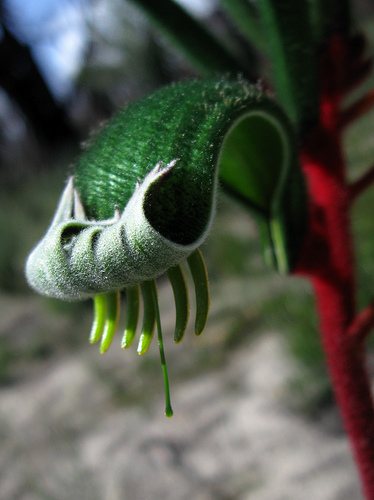
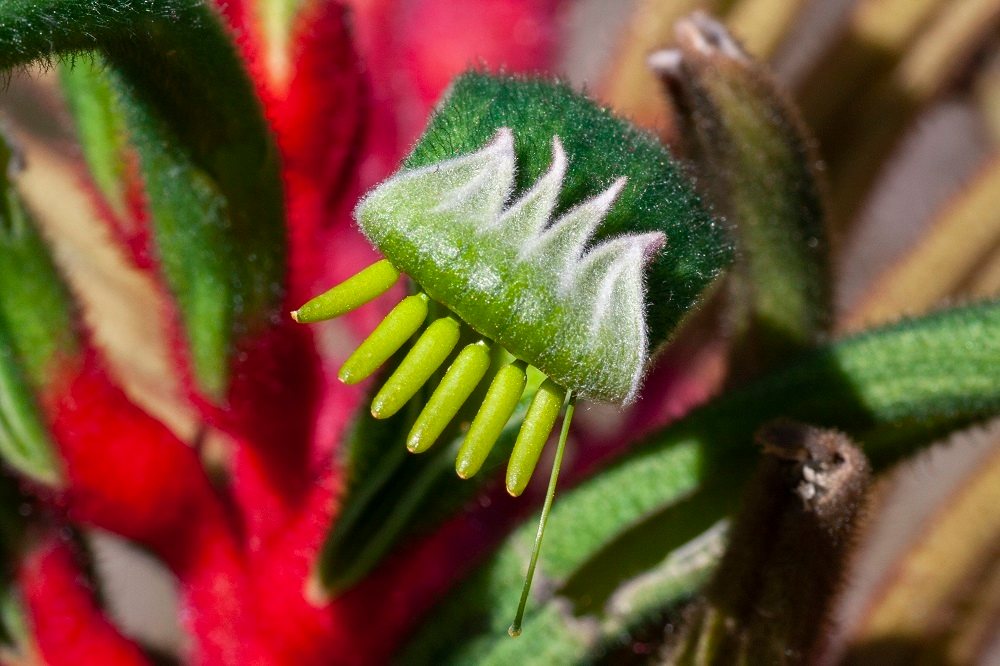
A clump-forming, often short-lived perennial from southwestern Australia, grown for its upright stems of velvety green flowers with red bases. It suits sunny, sharply drained gardens with dry summers; in cold or humid climates, it is usually more successful in a container kept under bright, frost-free cover in winter.
At a glance
- Sun
- Full sun; flowering is poorer in shade.
- Water
- Water moderately during active growth in autumn, winter and spring, allowing the surface to dry between waterings. Keep almost dry during summer dormancy, and never leave the roots waterlogged.
- Soil
- Sharply drained, sandy or gritty soil, preferably slightly acidic. Avoid heavy clay, rich manure and high-phosphorus fertilizers.
- Height
- 1-4 ft (0.3-1.2 m), including flower stems
- Spread
- 1-2 ft (0.3-0.6 m)
- Flowers
- Late winter to spring in Australia, generally spring to early summer in the Northern Hemisphere; fuzzy green tubular flowers with red bases on red-haired stems.
- Foliage
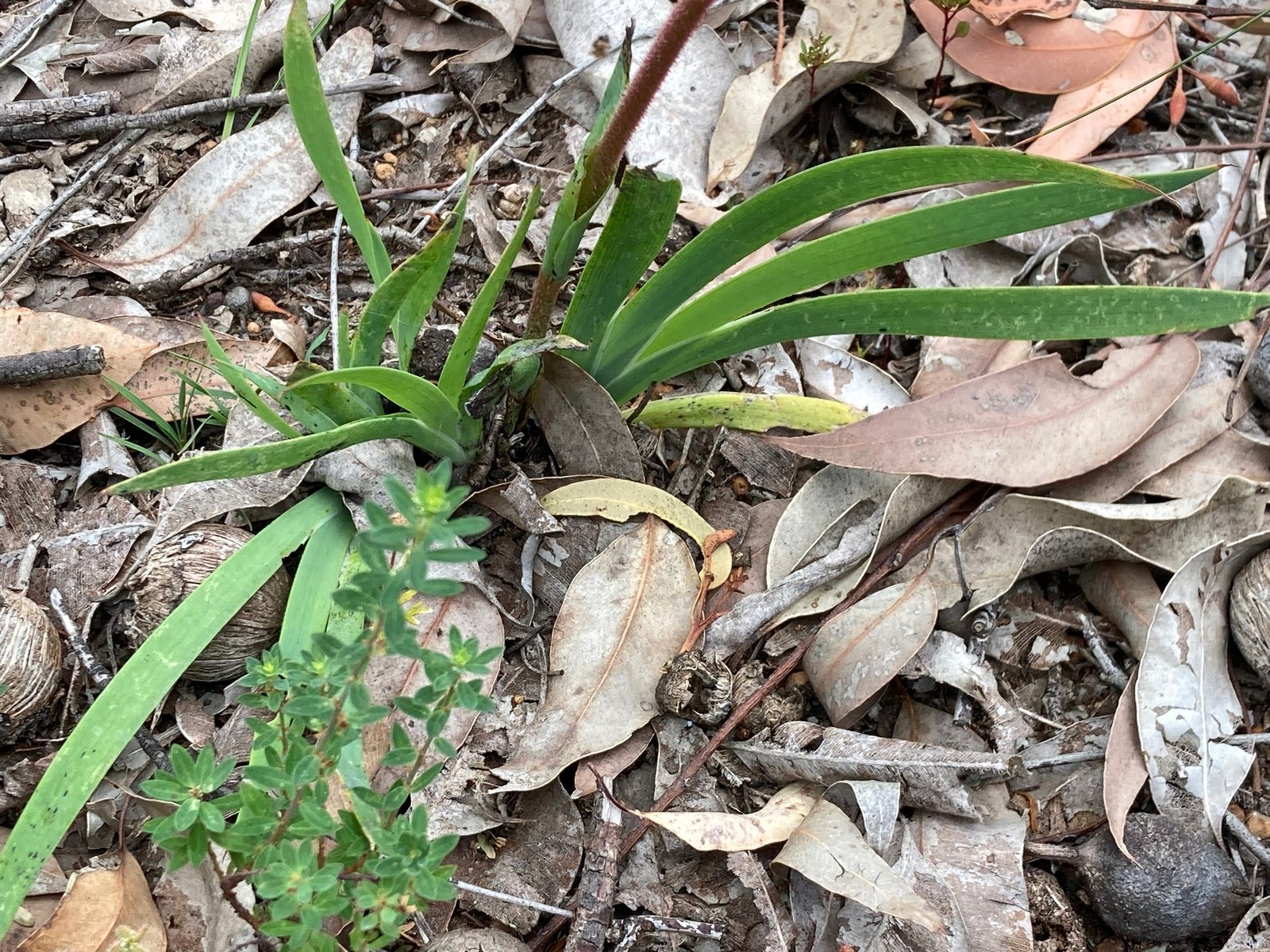
- Narrow, upright, sword-shaped green leaves in basal fans. Leaves can die back during dry summer dormancy.
- Growth
- Moderate; grows mainly during the cooler months.
- Care needed
- Medium
The year at a glance
- Pollinators
- Wildlife
- Low allergen
| J | F | M | A | M | J | J | A | S | O | N | D | |
|---|---|---|---|---|---|---|---|---|---|---|---|---|
| Flowers | ||||||||||||
| Plant |
Northern hemisphere months. In Australia, shift them by six.
- Difficulty
- Hard
- Toughness
- Needs looking after
Will it suit your garden?
Pick your zone, country, light and whether you have pets.
Full sun is 6 or more hours of direct sun a day, part shade 3 to 6 hours, shade under 3.
How it grows
Planting day
1 ft (0.3 m)
After 1 year
1.5 ft (0.45 m)
After 2 years
2 ft (0.6 m)
After 3 years
2.5 ft (0.75 m)
full size
About 3 years to full size.
From a typical nursery size, at an average rate for this kind of plant. A rule of thumb, not a forecast.
Good to know
- Cats and dogs
- Safe
- Growth rate
- Moderate
Care
Jobs through the year
- WaterMar–Jun, every 7 days
- For established ground plants, water if the surface has dried; keep foliage dry.
- WaterJul–Aug, every 21 days
- During summer dormancy, keep almost dry; water only if needed to prevent severe shrivelling.
- WaterSep–Oct, every 10 days
- Resume moderate watering as leaves appear; young plants and pots need closer checks.
- WaterJan–Feb, Nov–Dec, every 14 days
- Under bright frost-free cover, water active plants when the surface dries; avoid saturation.
- FeedSep
- Apply a light low-phosphorus native-plant feed when new growth begins.
- DeadheadMay–Jul, every 14 days
- Cut finished flower stems to the base unless retaining a few for seed.
- PruneMar, Sep
- Remove dead or spotted leaves individually with clean tools; retain healthy foliage.
- MulchMay
- Use a thin gravel mulch, leaving the crown exposed.
- ProtectJan–Apr, Sep–Dec
- Overwinter pots in bright, ventilated frost-free shelter; exclude persistent rain during dormancy.
- Plant with the crown at soil level in a sunny position with excellent drainage.
- Water the soil rather than the leaves, and provide good air circulation.
- Reduce watering sharply when summer growth stops; keep dormant rhizomes almost dry.
- Feed lightly during active growth with a low-phosphorus fertilizer formulated for Australian native plants.
- Use a thin gravel mulch, keeping it away from the crown.
- Move containers into bright, frost-free shelter before freezing weather; protect them from persistent winter rain.
Pruning. Cut finished flower stems down to their base unless you want seed. Remove dead or badly spotted leaves individually with clean tools, but do not shear off healthy green foliage.
Through the year
- Autumn
- As new leaves appear, resume moderate watering and give a light application of low-phosphorus fertilizer.
- Winter
- Keep actively growing plants in strong light, protect from frost and prevent waterlogging.
- Spring
- Water during dry spells while flower stems develop, allowing the soil surface to dry between waterings.
- Late spring
- Remove spent flower stems, or leave a few to ripen seed.
- Summer
- Reduce watering as growth slows or foliage dies back; shelter dormant pots from prolonged rain.
In the garden
- Plant in small groups through a sunny gravel garden, where the red-and-green flowers stand above low foliage.
- Use in a freely drained container near a doorway or terrace so the furry flowers can be seen closely.
- Combine with fine-leaved grasses and low Australian native plants for contrasting leaf shapes.
- Place among rocks on a sunny bank, keeping the crown above surrounding runoff.
Garden styles it suits: Australian native, Dry gravel garden, Mediterranean, Architectural minimal, Modern courtyard and Wildlife garden.
Plant it with: Blue leschenaultia, Cottonheads, Geraldton wax and Blue fescue.
Wildlife: Flowers provide nectar for honeyeaters and other nectar-feeding birds in Australia. Their value to local wildlife elsewhere varies.
Problems to watch for
- Ink disease causes blackened patches and declining leaves: remove affected foliage, disinfect tools, improve airflow and avoid overhead watering; discard severely affected plants.
- Root or crown rot follows wet, poorly drained conditions: improve drainage, reduce watering and keep dormant plants nearly dry; badly rotted plants rarely recover.
- Slugs and snails damage young leaves and flower shoots: inspect after dark, remove hiding places and use appropriate bait where needed.
- Frost can scorch foliage or kill the crown: grow in a movable pot in cold regions and overwinter in bright, frost-free conditions.
Safety
Not known to be toxic to people, cats, dogs or horses, although species-specific safety information is limited. Do not treat any part as edible; the fine hairs on flowers and stems can irritate sensitive skin.
Easily confused with
Tall kangaroo paw (Anigozanthos flavidus)
Usually forms a larger, more persistent leafy clump with taller, more branched flower stems; flowers are commonly yellow-green rather than the sharply contrasting red-and-green flowers of this species.
Black kangaroo paw (Macropidia fuliginosa)
Has green flowers and stems covered with conspicuous black hairs rather than red hairs.
The name
Anigozanthos refers to the unequal flower lobes, manglesii honours Robert Mangles, who grew the plant in England, and kangaroo paw describes the furry, paw-shaped flowers.
Propagation. Usually raised from seed sown in a freely drained mix in autumn or spring. Germination can be uneven, and smoke treatment may help. Established clumps can sometimes be divided as cool-season growth resumes, but small divisions are easily lost.
Checked against open data
- Accepted botanical name
- Anigozanthos manglesii
Sources: GBIF (CC BY 4.0). The care and design notes are LandscapeGPT's own.
See it in your own yard.
Upload a photo of your yard and see it redesigned with plants that suit your climate, each checked against your zone.