Red bistort 'Firetail'
Persicaria amplexicaulis 'Firetail'. Family Polygonaceae. Perennial.
Also called Mountain fleece 'Firetail', Bistorta amplexicaulis 'Firetail', Polygonum amplexicaule 'Firetail'.
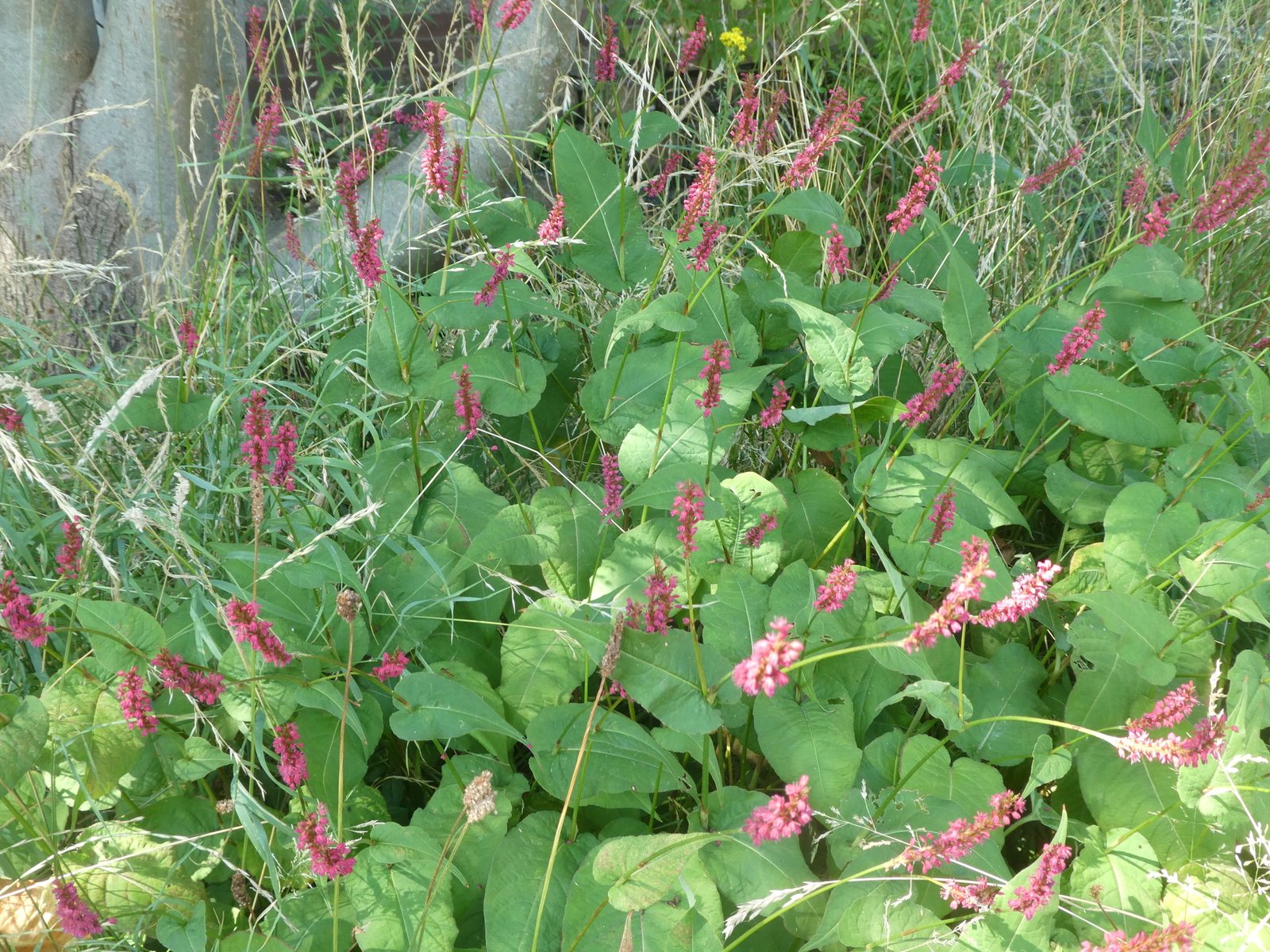
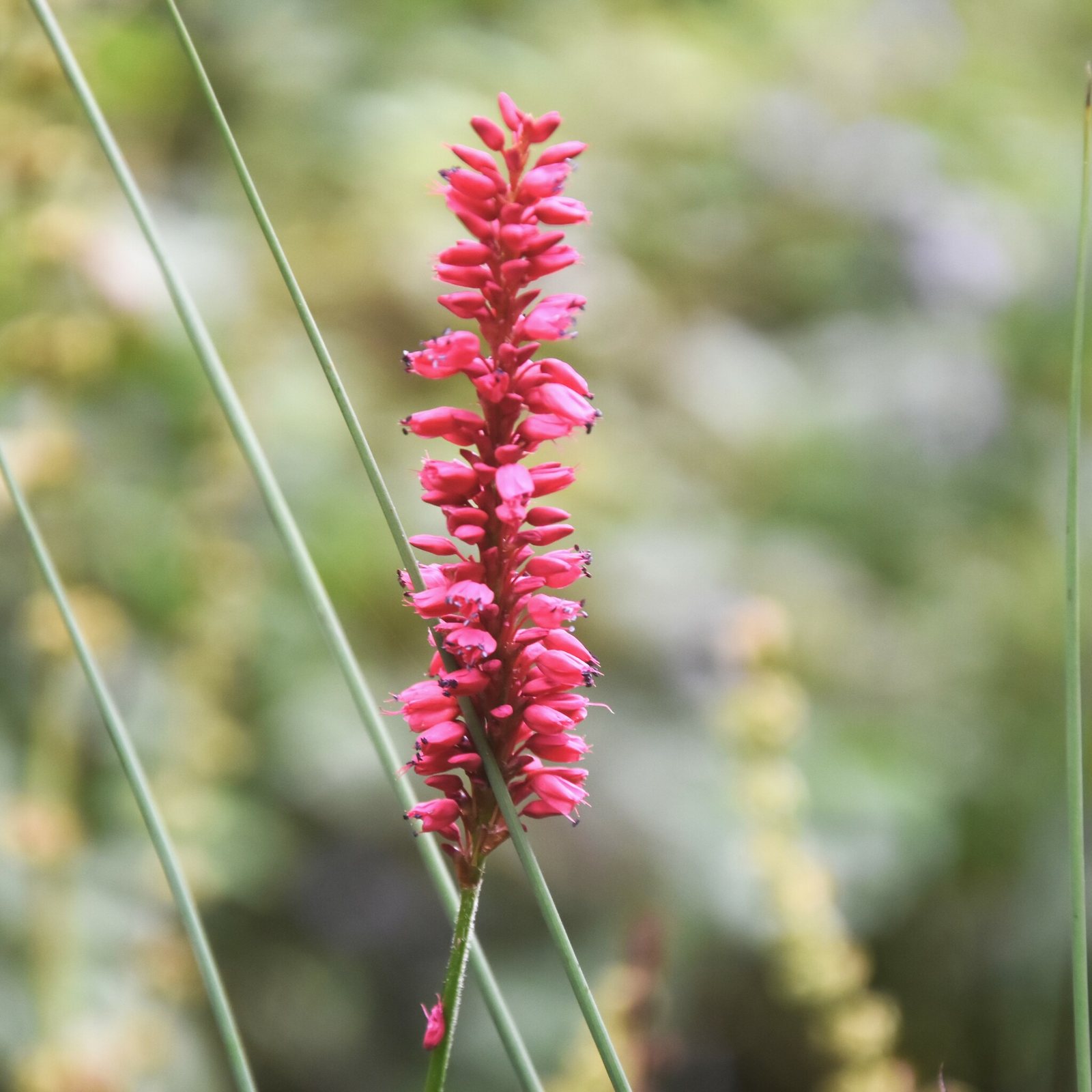
'Firetail' is a clump-forming perennial with broad green leaves and slender spikes of deep scarlet-red flowers from summer into autumn. It brings long-lasting colour to moist borders and naturalistic planting, especially among grasses and other late-flowering perennials.
At a glance
- Sun
- Full sun to partial shade; afternoon shade helps in hot summers.
- Water
- Keep the soil consistently moist, especially during establishment and hot weather. Established clumps tolerate brief dry spells but flower poorly in prolonged drought.
- Soil
- Moist, humus-rich soil, including clay, provided it is not persistently waterlogged. Tolerates acidic, neutral and mildly alkaline conditions.
- Height
- 3-4 ft (0.9-1.2 m)
- Spread
- 3-4 ft (0.9-1.2 m)
- Flowers
- Summer to autumn, often until the first frosts; slender spikes of deep scarlet-red flowers.
- Foliage
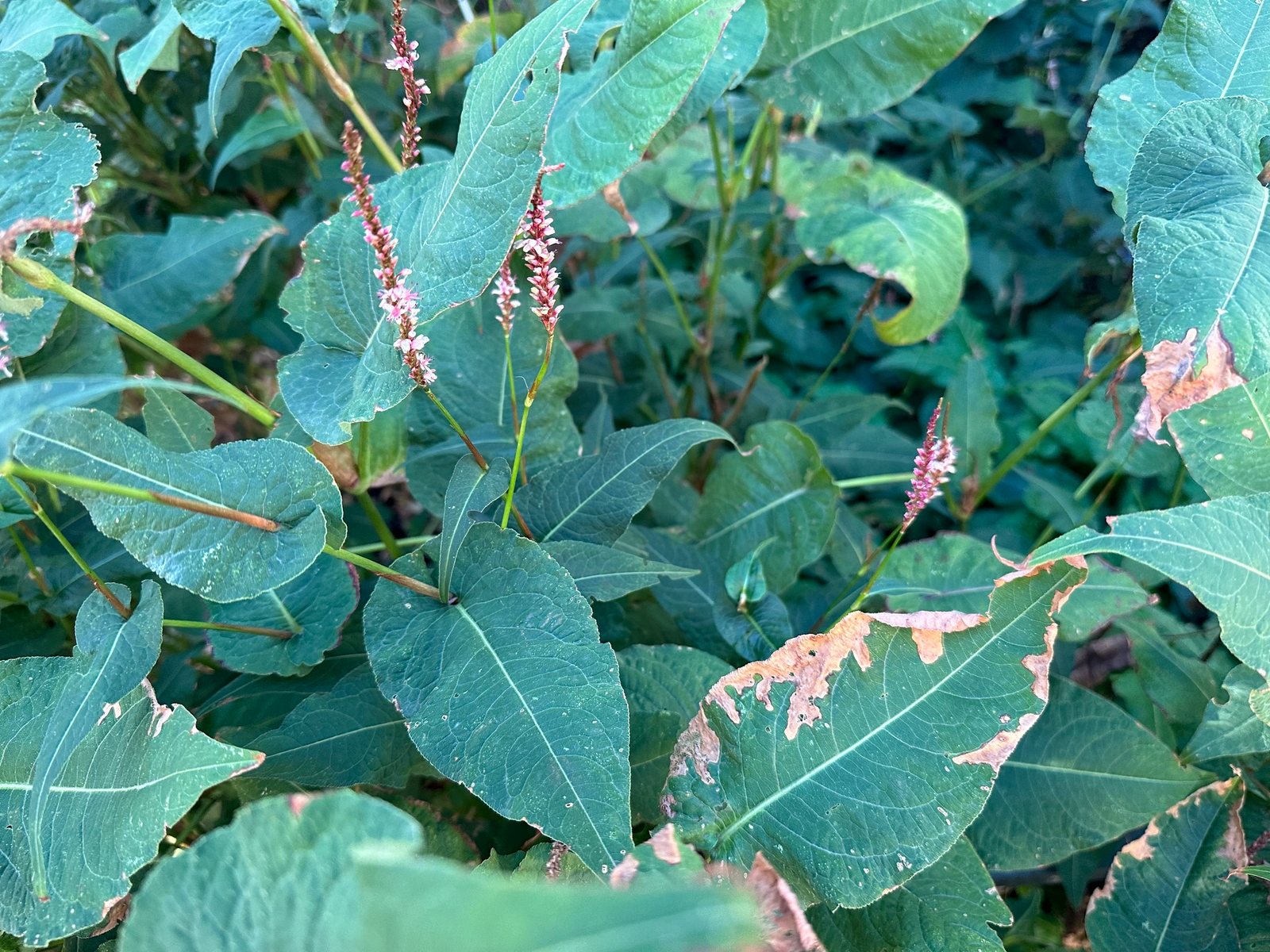
- Broad, pointed green leaves with heart-shaped bases that clasp the stems; forms a dense leafy clump and dies back in winter.
- Growth
- Moderate to fast once established
- Care needed
- Low
The year at a glance
- Pollinators
- Cold hardy
- Low allergen
| J | F | M | A | M | J | J | A | S | O | N | D | |
|---|---|---|---|---|---|---|---|---|---|---|---|---|
| Flowers | ||||||||||||
| Plant |
Northern hemisphere months. In Australia, shift them by six.
- Difficulty
- Easy
- Toughness
- Very tough
Will it suit your garden?
Pick your zone, country, light and whether you have pets.
Full sun is 6 or more hours of direct sun a day, part shade 3 to 6 hours, shade under 3.
How it grows
Planting day
1 ft (0.3 m)
After 1 year
2 ft (0.61 m)
After 2 years
3 ft (0.93 m)
After 3 years
3 ft (1.1 m)
full size
About 2 years to full size.
From a typical nursery size, at an average rate for this kind of plant. A rule of thumb, not a forecast.
Good to know
- Cats and dogs
- Safe
- Growth rate
- Fast
Care
Jobs through the year
- WaterApr–May, Sep–Oct, every 7 days
- Water established clumps during dry spells to maintain moist soil; new plants need more frequent checks.
- WaterJun–Aug, every 5 days
- Water deeply in dry weather before the root zone dries out completely.
- MulchMar–Apr
- Apply compost or leaf mould to conserve moisture, keeping emerging shoots clear.
- PruneFeb–Mar
- Cut dead stems and leaves to ground level before fresh shoots emerge.
- DivideMar–Apr
- Divide only when the clump outgrows its space, replanting vigorous sections.
- DeadheadJul–Oct, every 14 days
- Optionally remove spent spikes for tidiness; flowering does not depend on deadheading.
- ProtectApr–May
- Inspect young shoots for slugs and snails and protect them if damage occurs.
- Water deeply during dry spells rather than allowing the root zone to dry out completely.
- Mulch in spring with compost or leaf mould to conserve moisture.
- Avoid heavy feeding; a yearly compost mulch is usually enough.
- Allow room for the clump to widen, and divide it in spring if it outgrows its space.
- Use discreet supports early in the season only if stems lean in shade or exposed positions.
Pruning. Cut dead stems and leaves to ground level in late winter or early spring before new shoots emerge. Deadheading is optional; remove spent flower stems if you want a tidier appearance.
Through the year
- Late winter
- Cut down the previous year's dead growth before fresh shoots emerge.
- Spring
- Plant or divide clumps, water them in thoroughly, and add a compost mulch.
- Late spring
- Check young shoots for slug and snail damage and protect them if necessary.
- Summer
- Water during dry spells to maintain flowering and prevent leaf scorch.
- Autumn
- Leave standing stems for seasonal structure, or remove them once they collapse.
In the garden
- Plant in repeated groups through a mixed border to carry red colour from summer into autumn.
- Combine with ornamental grasses for a loose, naturalistic planting with contrasting flower shapes.
- Use beside a pond or rain garden on moist ground above the permanently saturated edge.
- Pair with asters and Japanese anemones for a late-season border.
Garden styles it suits: New perennial (prairie), English country, Cottage garden, Wildlife garden, Pollinator garden and Bog garden.
Plant it with: Tufted hair grass, Purple moor grass, Japanese anemone, Joe-Pye weed, Siberian iris and Hardy geranium.
Wildlife: The flowers provide nectar and pollen for bees and other visiting insects over a long season.
Problems to watch for
- Slugs and snails may eat emerging shoots: check at dusk, remove pests and use wildlife-conscious slug controls where needed.
- Dry soil can cause wilting, scorched leaves and fewer flowers: water deeply and renew the mulch.
- Stems may lean in excessive shade or rich soil: give more light, avoid heavy feeding and support the clump early if necessary.
- A widening clump can crowd smaller neighbours: lift and divide it in spring, replanting only the sections you need.
Safety
Not known to be toxic to people, cats, dogs or horses. No part is recognized as a significant poisoning hazard, but it is an ornamental plant rather than a food crop.
Easily confused with
Common bistort (Bistorta officinalis)
Usually flowers earlier, with thicker, pale pink flower spikes rather than the slender red spikes of 'Firetail'.
Lesser bistort (Bistorta affinis)
Forms a much lower, spreading carpet with smaller leaves and pink flower spikes, rather than a tall leafy clump.
The name
The species name amplexicaulis means stem-clasping, referring to the leaf bases, while 'Firetail' describes the red flower spikes.
Propagation. Divide established clumps in spring, keeping healthy roots and several shoots on each division. Division preserves 'Firetail'; seedlings may differ from the parent.
Checked against open data
- Accepted botanical name
- Bistorta amplexicaulis Persicaria amplexicaulis 'Firetail' is an older name for Bistorta amplexicaulis.
- Native range
- Afghanistan, China North-Central, China South-Central, China Southeast, East Himalaya, Nepal, Pakistan and West Himalaya.
Sources: GBIF (CC BY 4.0) and Trefle (CC BY 4.0). The care and design notes are LandscapeGPT's own.
See it in your own yard.
Upload a photo of your yard and see it redesigned with plants that suit your climate, each checked against your zone.