Red cottonwood hibiscus
Hibiscus tiliaceus 'Rubra'. Family Malvaceae. Tree.
Also called Red-leaved sea hibiscus, Burgundy cottonwood, Hibiscus tiliaceus 'Rubra', Talipariti tiliaceum 'Rubra'.
Red cottonwood hibiscus is a fast-growing tropical evergreen tree grown mainly for its broad, burgundy-red leaves and spreading crown. It makes a strong foliage feature or informal screen in frost-free coastal gardens, but needs a heated greenhouse or conservatory through winter in most of the United Kingdom and Canada.
At a glance
- Sun
- Full sun to partial shade; foliage usually colours best in full sun.
- Water
- Water regularly while establishing, then during prolonged dry weather. Keep container plants evenly moist without leaving the pot standing in water.
- Soil
- Moist, well-drained soil, including sandy coastal soil; tolerates a range of soil textures and some salt exposure.
- Height
- 15-30 ft (4.5-9 m)
- Spread
- 15-30 ft (4.5-9 m)
- Flowers
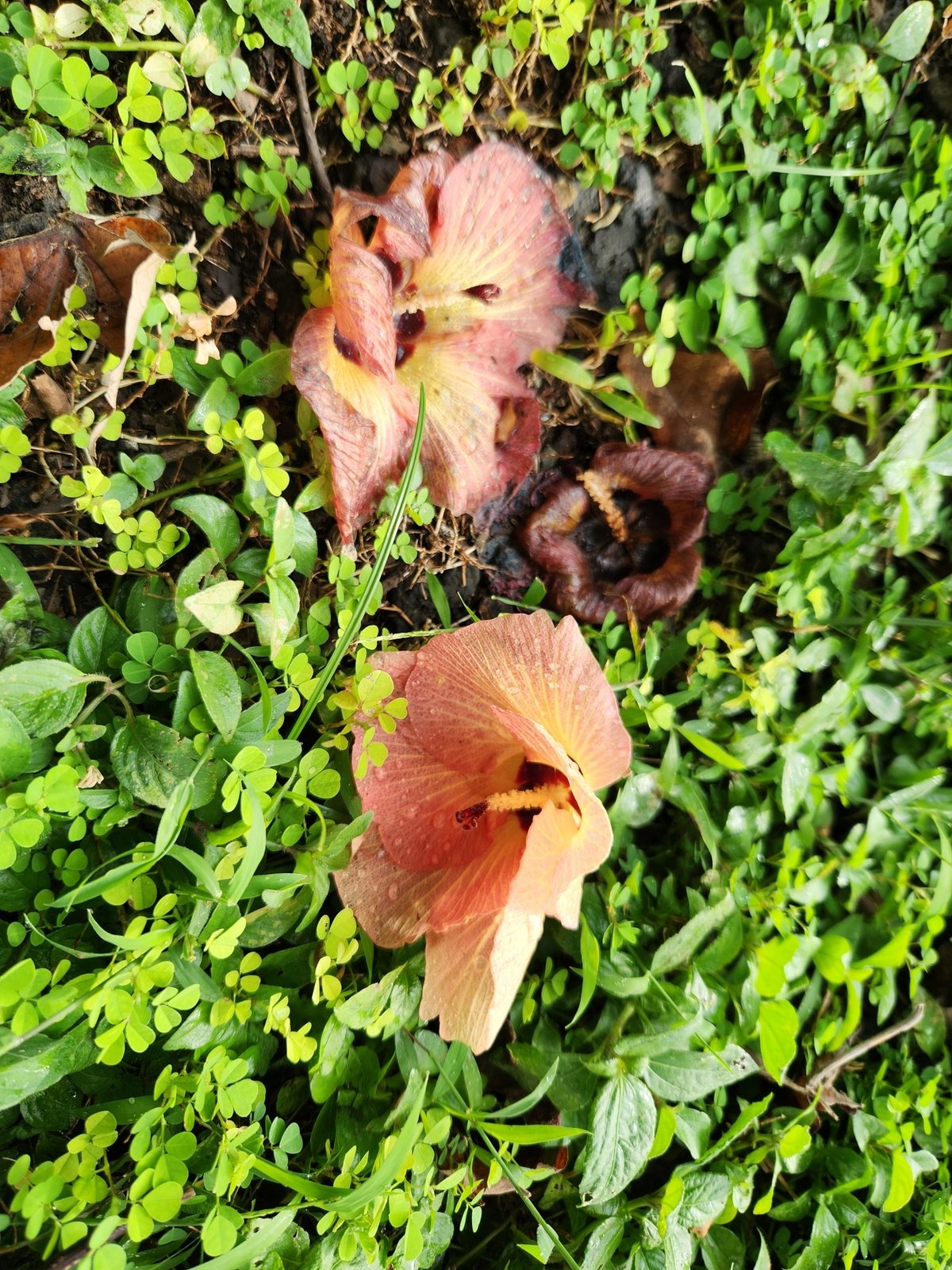
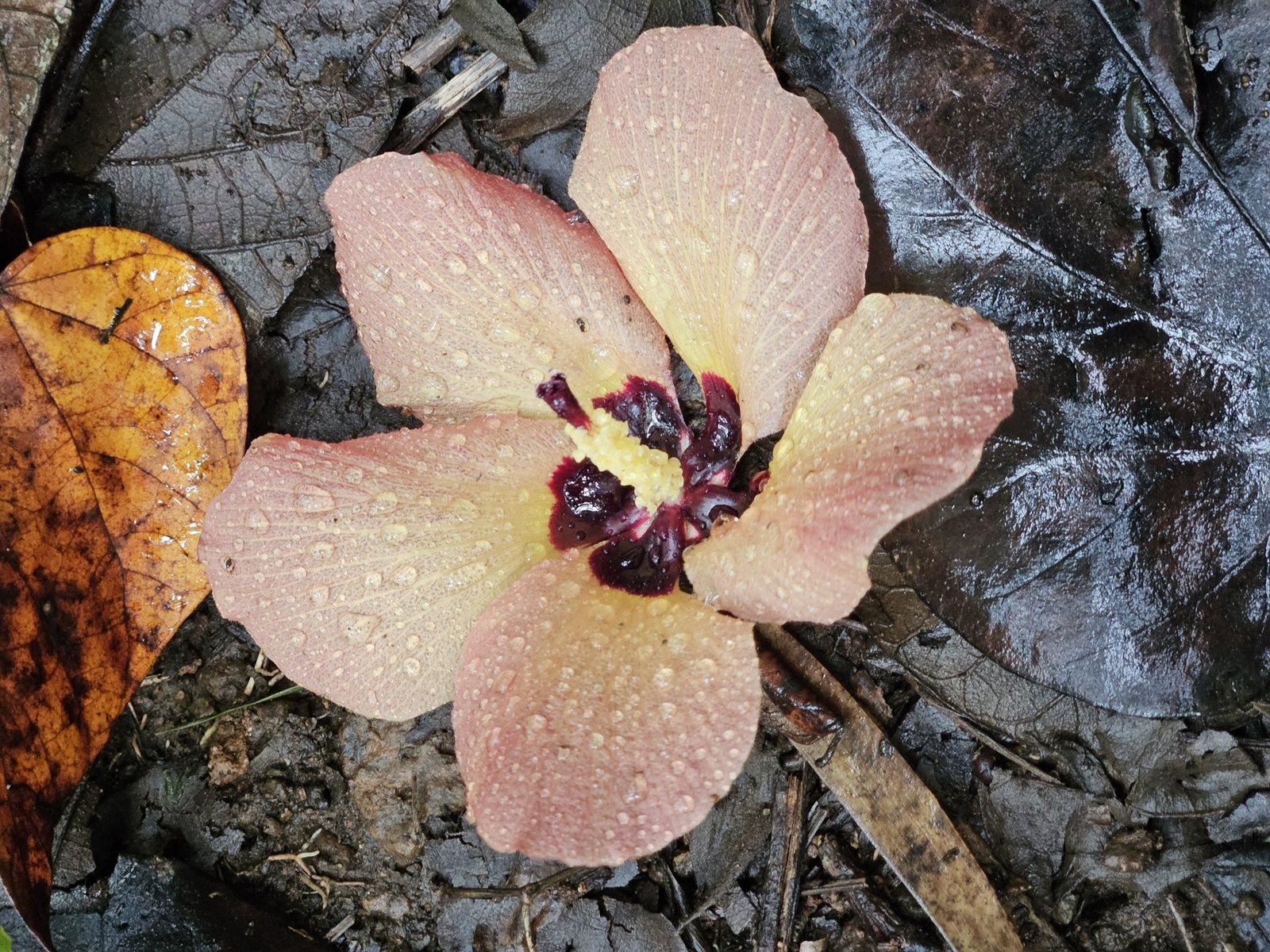
- Yellow flowers with a dark red centre in the warmer months, sometimes year-round in tropical climates; individual flowers age through orange to reddish tones.
- Foliage
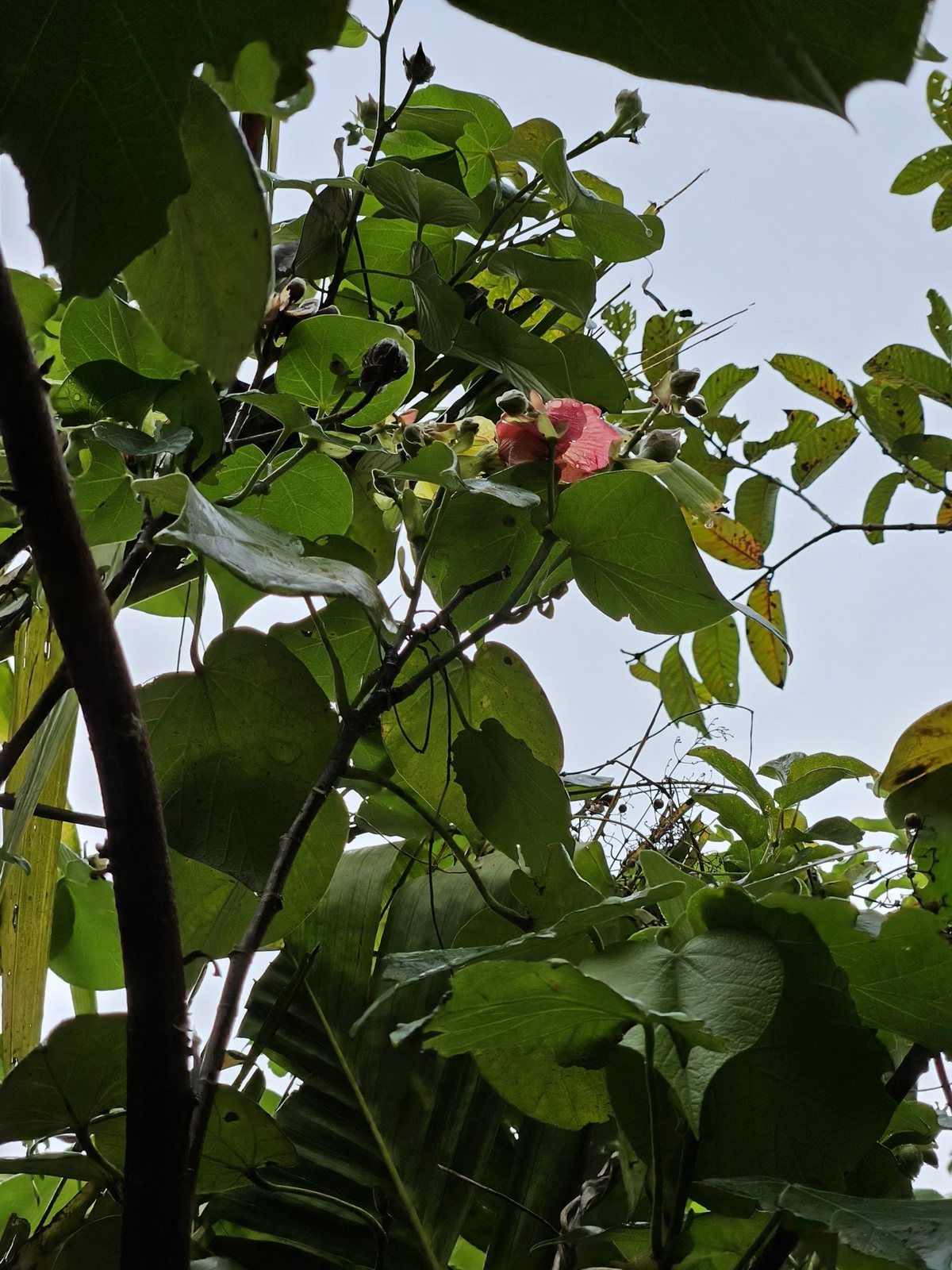
- Evergreen. Large, heart-shaped leaves, burgundy to reddish purple, with paler, softly hairy undersides; older or shaded leaves may become greener.
- Growth
- Fast in warm conditions with adequate moisture.
- Care needed
- Medium
The year at a glance
- Pollinators
- Heat tolerant
- Wildlife
- Low allergen
| J | F | M | A | M | J | J | A | S | O | N | D | |
|---|---|---|---|---|---|---|---|---|---|---|---|---|
| Flowers | ||||||||||||
| Plant |
Northern hemisphere months. In Australia, shift them by six.
- Difficulty
- Moderate
- Toughness
- Fairly tough
Will it suit your garden?
Pick your zone, country, light and whether you have pets.
Full sun is 6 or more hours of direct sun a day, part shade 3 to 6 hours, shade under 3.
How it grows
Planting day
7 ft (2 m)
After 1 year
8 ft (2.4 m)
After 2 years
9 ft (2.7 m)
After 3 years
10 ft (3.1 m)
After 5 years
13 ft (3.8 m)
About 13 years to full size.
From a typical nursery size, at an average rate for this kind of plant. A rule of thumb, not a forecast.
Good to know
- Cats and dogs
- Safe
- Invasive in
- the US
- In the garden
- Spreads vigorously: plan to contain it.
- Growth rate
- Fast
Care
Jobs through the year
- WaterApr–May, Sep–Oct, every 14 days
- Water established ground plants during dry spells; young plants and pots need more frequent watering.
- WaterJun–Aug, every 7 days
- Soak established ground plants during prolonged dry weather; keep pots evenly moist with free drainage.
- WaterJan–Mar, Nov–Dec, every 14 days
- Check sheltered pots and water sparingly as the surface dries, never drying the root ball completely.
- FeedApr–May
- Apply balanced slow-release fertiliser to container plants or weak-growing specimens.
- MulchMay
- Refresh organic mulch over the roots, leaving the trunk clear.
- PruneMar–Apr
- Remove dead or crossing branches and shape lightly; repeated clipping reduces flowering.
- ProtectJan–May, Sep–Dec
- Use a movable container in this climate and overwinter in bright, frost-free shelter.
- Plant after frost risk has passed, allowing room for a broad crown and vigorous roots away from paving, drains and buildings.
- Water deeply through the first growing season and during extended dry spells.
- Spread organic mulch over the root area, keeping it clear of the trunk.
- Apply a balanced slow-release fertiliser in spring if growth is weak or the plant is container-grown.
- In cold climates, grow in a movable container and overwinter in bright, frost-free conditions; reduce watering as growth slows.
Pruning. Prune in late winter or early spring as warm-weather growth approaches, removing dead, crossing or poorly placed branches. Shorten vigorous shoots to maintain a screen, or gradually select a clear trunk for a small tree; repeated clipping reduces flowering.
Through the year
- Spring
- Plant or repot once conditions are warm and frost risk has passed.
- Spring
- Shape the crown, renew mulch and feed container plants.
- Summer
- Water during dry weather and check leaf undersides for sap-feeding pests.
- Summer
- Take semi-ripe cuttings from healthy, non-flowering shoots.
- Autumn
- Move container plants under cover before nights become cold.
- Winter
- Keep protected plants in bright light and water sparingly, without letting the root ball dry completely.
In the garden
- Use as a burgundy-leaved focal tree against pale walls or light-coloured paving.
- Train as an informal screen in a spacious, frost-free coastal garden.
- Combine with green palms and broad-leaved tropical plants for foliage contrast.
- Grow in a large container on a sheltered terrace where winter protection is practical.
Garden styles it suits: Modern tropical, Tropical, Coastal, Luxury resort, Architectural minimal and Australian native.
Plant it with: Bird of paradise, Shell ginger, Coastal banksia, Lomandra, Dwarf mondo grass and Cordyline.
Wildlife: Flowers provide pollen and nectar for visiting insects. The dense crown offers shelter for small birds in suitable climates.
Problems to watch for
- Aphids, scale insects and whiteflies can cause sticky honeydew and sooty mould; inspect leaf undersides and treat with horticultural soap or oil according to the label.
- Spider mites may cause stippled leaves in hot, dry indoor conditions; rinse foliage regularly and use a labelled mite treatment if needed.
- Cold damages leaves and young stems; move pots under cover before frost and wait until spring to remove damaged growth.
- Persistent waterlogging can cause root decline; improve drainage and never leave container plants standing in saucers of water.
Safety
Not known to be toxic to people, cats, dogs or horses. Specific safety information for this cultivar is limited; it is an ornamental rather than a food plant, and eating substantial amounts of foliage may cause digestive upset.
Where it spreads. The species is listed as invasive in Florida, where it can spread into coastal wetlands and mangrove margins. Branches touching moist ground can root; do not assume the red-leaved cultivar is exempt from local restrictions.
Easily confused with
Green-leaved sea hibiscus (Hibiscus tiliaceus)
The ordinary green-leaved form has similar heart-shaped leaves and yellow flowers, but lacks the persistent burgundy colouring of 'Rubra'.
Portia tree (Thespesia populnea)
Also has heart-shaped leaves and yellow flowers with dark centres, but its leaves are generally glossy green and lack the conspicuously pale, softly hairy undersides of sea hibiscus.
The name
The epithet tiliaceus means linden-like, referring to the leaf shape, while 'Rubra' means red and refers to the foliage.
Propagation. Take semi-ripe stem cuttings in warm weather and root them in a free-draining propagation mix with warmth and humidity. Cuttings preserve the cultivar; seedlings may not retain its red foliage.
Checked against open data
- Accepted botanical name
- Talipariti tiliaceum Hibiscus tiliaceus 'Rubra' is an older name for Talipariti tiliaceum.
- In the US and Canada
- Native in Pacific Basin. Introduced in Hawaii and the lower 48 states.
Sources: GBIF (CC BY 4.0) and USDA PLANTS. The care and design notes are LandscapeGPT's own.
See it in your own yard.
Upload a photo of your yard and see it redesigned with plants that suit your climate, each checked against your zone.