Red ginger
Alpinia purpurata. Family Zingiberaceae. Perennial.
Also called Ostrich plume, Pink cone ginger.
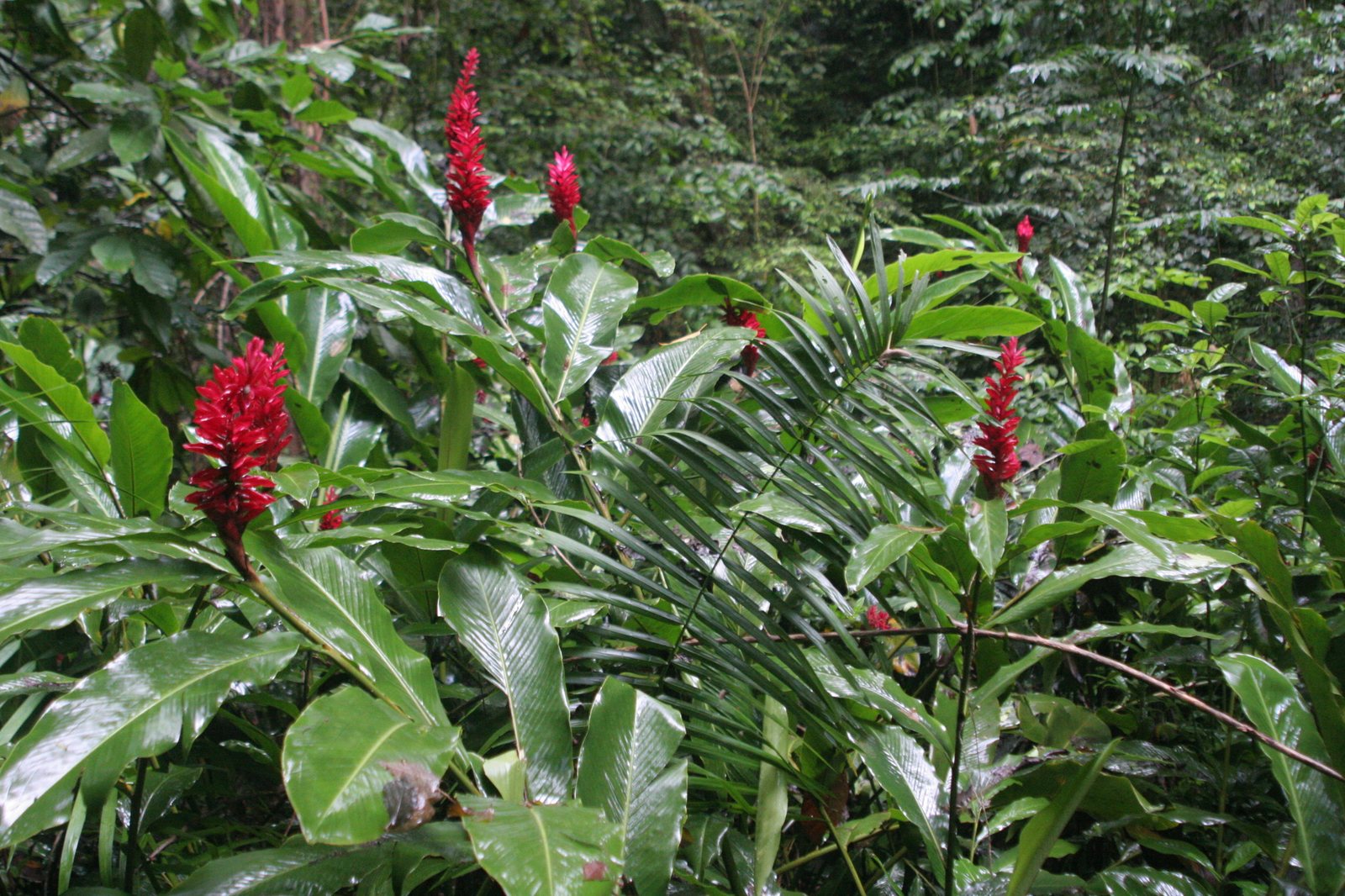
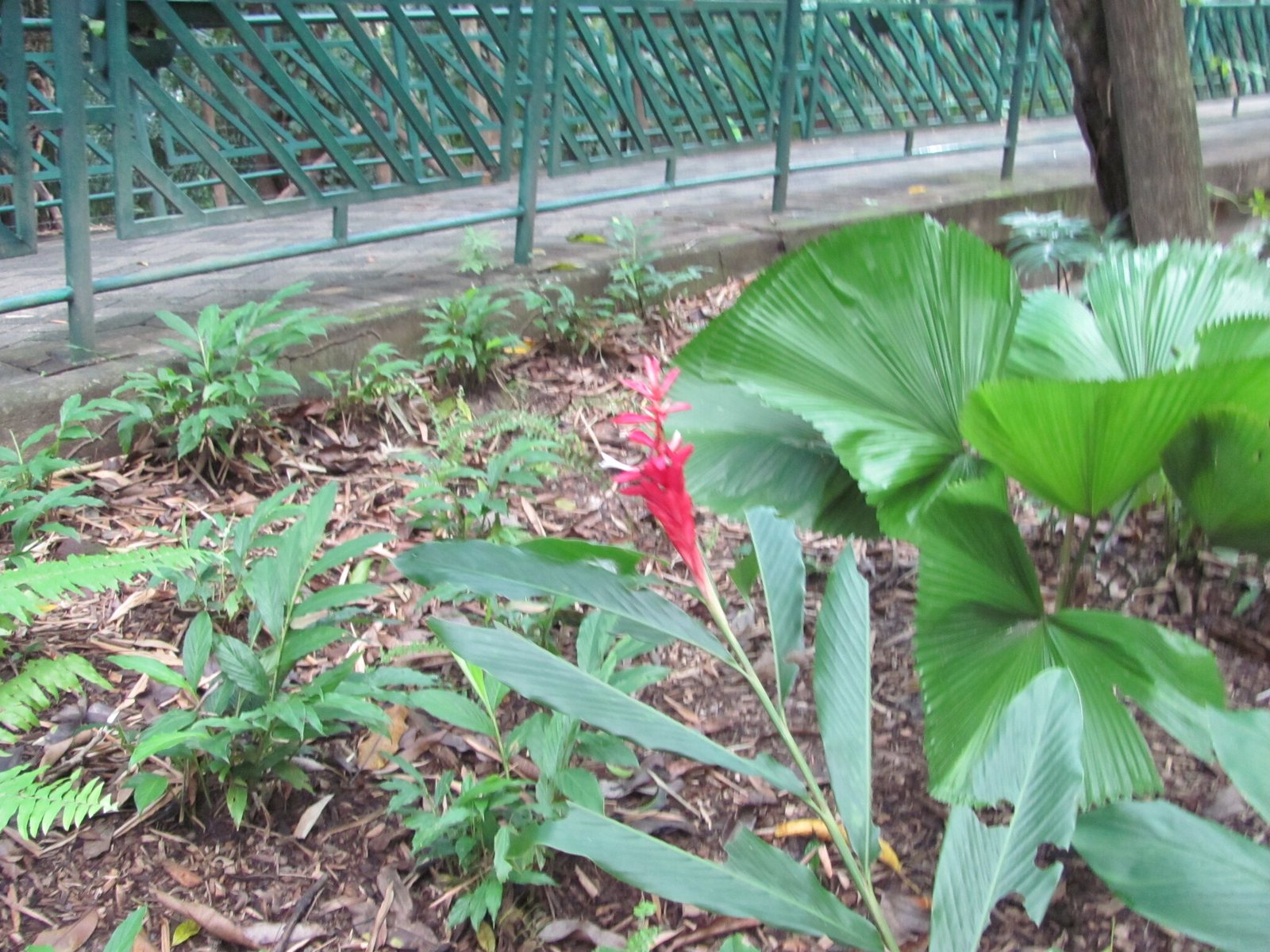
Red ginger is a frost-tender, clump-forming tropical perennial grown for its broad leaves and upright spikes of red or pink bracts. It makes a bold planting in warm, humid gardens, but in cooler climates needs a heated greenhouse or a large container brought indoors for winter. It is an ornamental ginger, not the ginger grown for cooking.
At a glance
- Sun
- Partial shade or bright filtered light; tolerates more sun where humidity and soil moisture remain high. Shelter from hot afternoon sun and strong winds.
- Water
- Keep evenly moist during active growth, without leaving the roots waterlogged. Water less in winter, but do not let the root ball dry out completely.
- Soil
- Fertile, humus-rich soil that holds moisture but drains freely; slightly acidic to neutral is ideal.
- Height
- 6-12 ft (1.8-3.7 m)
- Spread
- 3-6 ft (0.9-1.8 m), widening as the rhizomes spread
- Flowers
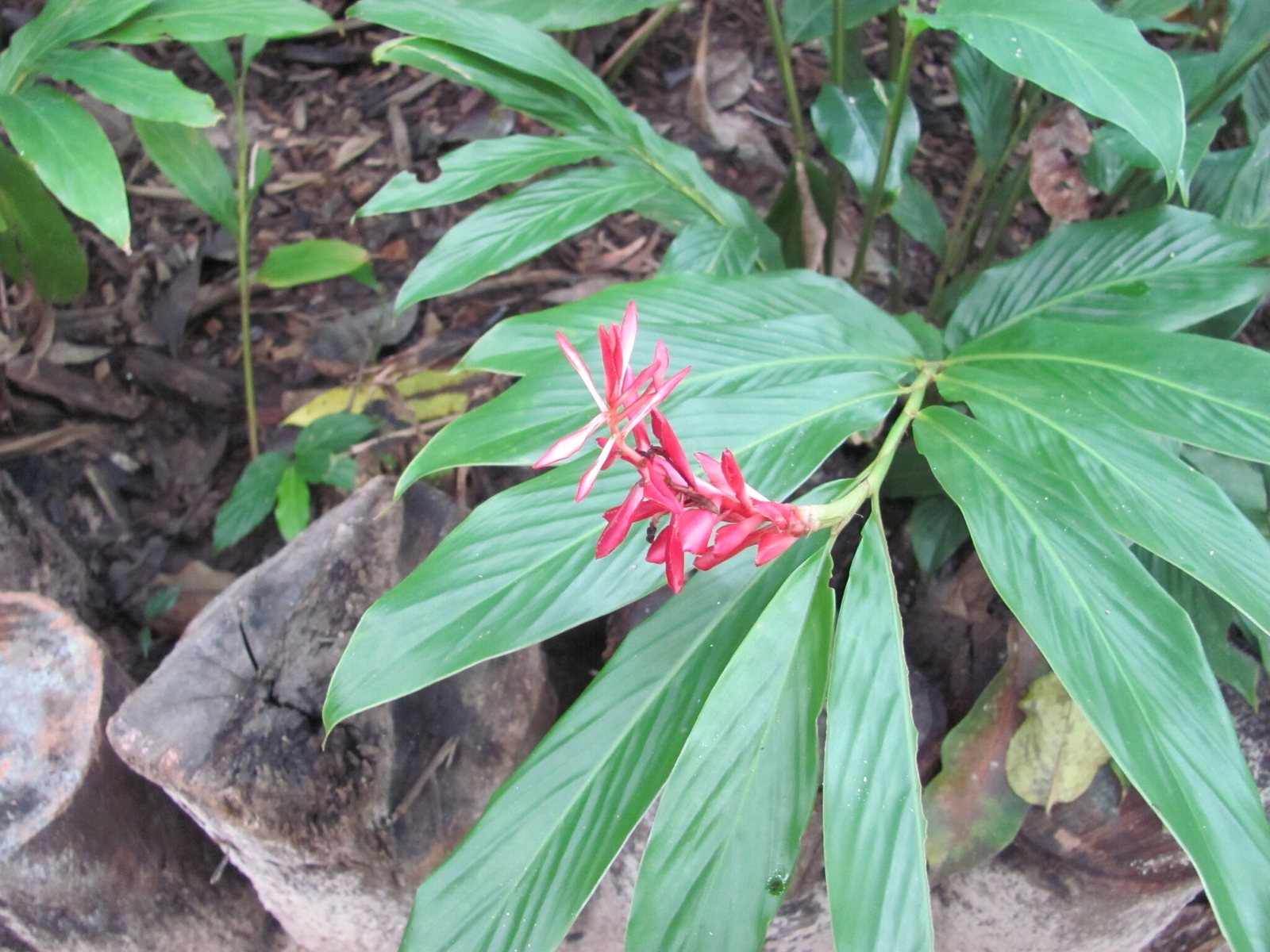
- Mainly summer into autumn, potentially year-round in humid tropical climates. Showy red or pink bracts surround small, short-lived white flowers.
- Foliage
- Evergreen. Large, glossy green, lance-shaped leaves carried along upright, cane-like stems.
- Growth
- Fast in consistently warm, moist conditions; slow in cool weather.
- Care needed
- Medium
The year at a glance
- Heat tolerant
- Low allergen
| J | F | M | A | M | J | J | A | S | O | N | D | |
|---|---|---|---|---|---|---|---|---|---|---|---|---|
| Flowers | ||||||||||||
| Plant |
Northern hemisphere months. In Australia, shift them by six.
- Difficulty
- Hard
- Toughness
- Needs looking after
Will it suit your garden?
Pick your zone, country, light and whether you have pets.
Full sun is 6 or more hours of direct sun a day, part shade 3 to 6 hours, shade under 3.
How it grows
Planting day
1.1 ft (0.33 m)
After 1 year
4 ft (1.1 m)
After 2 years
6 ft (1.9 m)
After 3 years
9 ft (2.8 m)
full size
About 3 years to full size.
From a typical nursery size, at an average rate for this kind of plant. A rule of thumb, not a forecast.
Good to know
- Cats and dogs
- Safe
- In the garden
- Spreads vigorously: plan to contain it.
- Growth rate
- Moderate
Care
Jobs through the year
- WaterApr–May, Sep–Oct, every 7 days
- Water established plants when the surface starts drying; young plants and pots need closer checks.
- WaterJun–Aug, every 3 days
- Keep established root zones evenly moist without saturating them.
- WaterJan–Mar, Nov–Dec, every 10 days
- Under warm cover, water less but never let the root ball dry completely.
- FeedMay–Aug, every 14 days
- Feed with balanced fertiliser at the label rate while growing strongly.
- MulchJun
- Apply compost or leaf mould, keeping stem bases clear.
- DivideMay–Jun
- Divide congested clumps when strong growth and sustained warmth return.
- PruneMar–Apr
- Remove dead or damaged stems, retaining healthy older growth.
- PruneJul–Oct, every 14 days
- Cut faded flowering stems to soil level without damaging younger shoots.
- ProtectSep
- Move into warm, bright shelter before nights fall below 10°C.
- ProtectJun
- Acclimatise outdoors only in reliably warm weather; shelter from afternoon sun and wind.
- Water deeply when the soil surface starts to dry during warm weather.
- Apply a balanced fertiliser during active growth, following the label rate; stop feeding when growth slows.
- Mulch with compost or leaf mould, keeping mulch clear of the stem bases.
- Grow container plants in a rich, free-draining potting mix and empty water-filled saucers.
- Move plants under warm, bright cover before nights fall below about 10°C (50°F).
- Divide crowded clumps in spring or at the start of the warm growing season.
Pruning. Cut spent flowering stems down to soil level once their display fades, leaving healthy younger stems to develop. Remove dead or damaged stems whenever needed; avoid cutting the whole clump back routinely.
Through the year
- Early spring
- Remove damaged growth and check overwintered plants for spider mites and mealybugs.
- Spring
- Divide crowded clumps or repot container plants as strong new growth begins.
- Late spring
- Move container plants outside only when nights are consistently warm; introduce them gradually to brighter light.
- Summer
- Keep soil evenly moist, feed during active growth and replenish mulch.
- Late summer
- Remove faded flower stems at the base without damaging new shoots.
- Autumn
- Bring container plants into warm shelter before chilly nights arrive.
- Winter
- Provide bright light and warmth under cover; reduce watering and withhold fertiliser if growth has slowed.
In the garden
- Plant behind lower tropical foliage plants to give a sheltered border height and red accents.
- Use a large container as a seasonal feature beside a warm, sheltered patio.
- Combine with elephant ears and ferns for contrasting leaf sizes in partial shade.
- Plant repeated clumps along a frost-free courtyard boundary for a loose leafy screen.
Garden styles it suits: Tropical, Modern tropical, Luxury resort, Balinese, Hawaiian and Modern courtyard.
Plant it with: Elephant ears, Bird of paradise, Heliconias, Bromeliads, Peace lilies and Boston ferns.
Wildlife: The small flowers can attract nectar-feeding birds and insects in tropical regions. It is not a host plant for most wildlife in temperate gardens.
Problems to watch for
- Spider mites in dry indoor air: inspect leaf undersides, rinse foliage thoroughly and treat persistent infestations with insecticidal soap labelled for the plant.
- Mealybugs and scale: isolate affected container plants, remove small infestations by hand and use a labelled horticultural oil if needed.
- Root or rhizome rot in saturated soil: improve drainage, reduce watering and discard soft, rotting material.
- Little or no flowering: provide more warmth and bright filtered light, avoid excessive nitrogen and allow young divisions time to establish.
Safety
Not known to be toxic to people, cats, dogs or horses, although species-specific safety information is limited, especially for horses. No particular part is established as poisonous; do not treat the leaves, bracts or rhizomes as food.
Where it spreads. Naturalised in Hawaii and parts of the tropical Pacific. Rhizomes and plantlets formed on old flower heads can establish new clumps in warm, wet conditions; keep garden waste out of nearby vegetation and check local restrictions before planting.
Easily confused with
Shell ginger (Alpinia zerumbet)
Has arching, often drooping clusters of pearly pink-and-white flowers with yellow, red-marked interiors, rather than upright red bract spikes.
Torch ginger (Etlingera elatior)
Produces large, waxy flower heads on separate, leafless stalks rising from the ground; red ginger flowers at the tips of leafy stems.
Indian head ginger (Costus woodsonii)
Has leaves arranged in a conspicuous spiral and compact red cones with orange-yellow flowers, rather than the two-ranked leaves and small white flowers of red ginger.
The name
Alpinia honours the Italian botanist Prospero Alpini, while purpurata means purple-coloured and refers to the richly coloured bracts.
Propagation. Divide rhizomes at the start of warm-season growth, keeping roots and healthy shoots on each division. Plantlets that develop on ageing flower heads can also be detached once they have roots and potted in a warm, humid place.
Checked against open data
- Accepted botanical name
- Alpinia purpurata
- In the US and Canada
- Introduced in Hawaii, Pacific Basin and Puerto Rico.
- Native range
- Bismarck Archipelago, Maluku, New Caledonia, New Guinea, Solomon Is. and Vanuatu.
Sources: GBIF (CC BY 4.0), USDA PLANTS and Trefle (CC BY 4.0). The care and design notes are LandscapeGPT's own.
See it in your own yard.
Upload a photo of your yard and see it redesigned with plants that suit your climate, each checked against your zone.