Revolution Gold melaleuca
Melaleuca bracteata 'Revolution Gold'. Family Myrtaceae. Shrub.
Also called Golden black tea tree, Melaleuca 'Revolution Gold'.
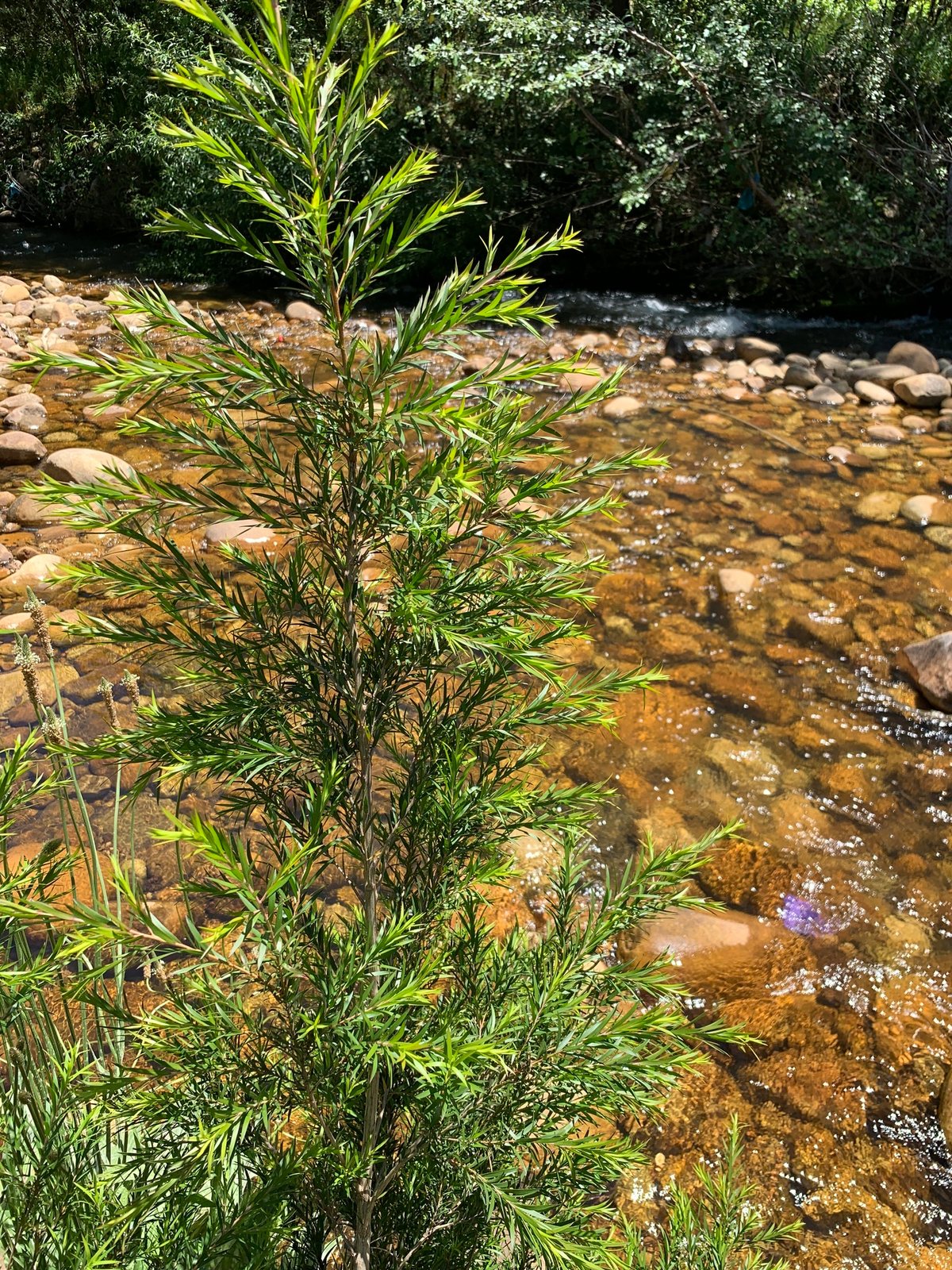
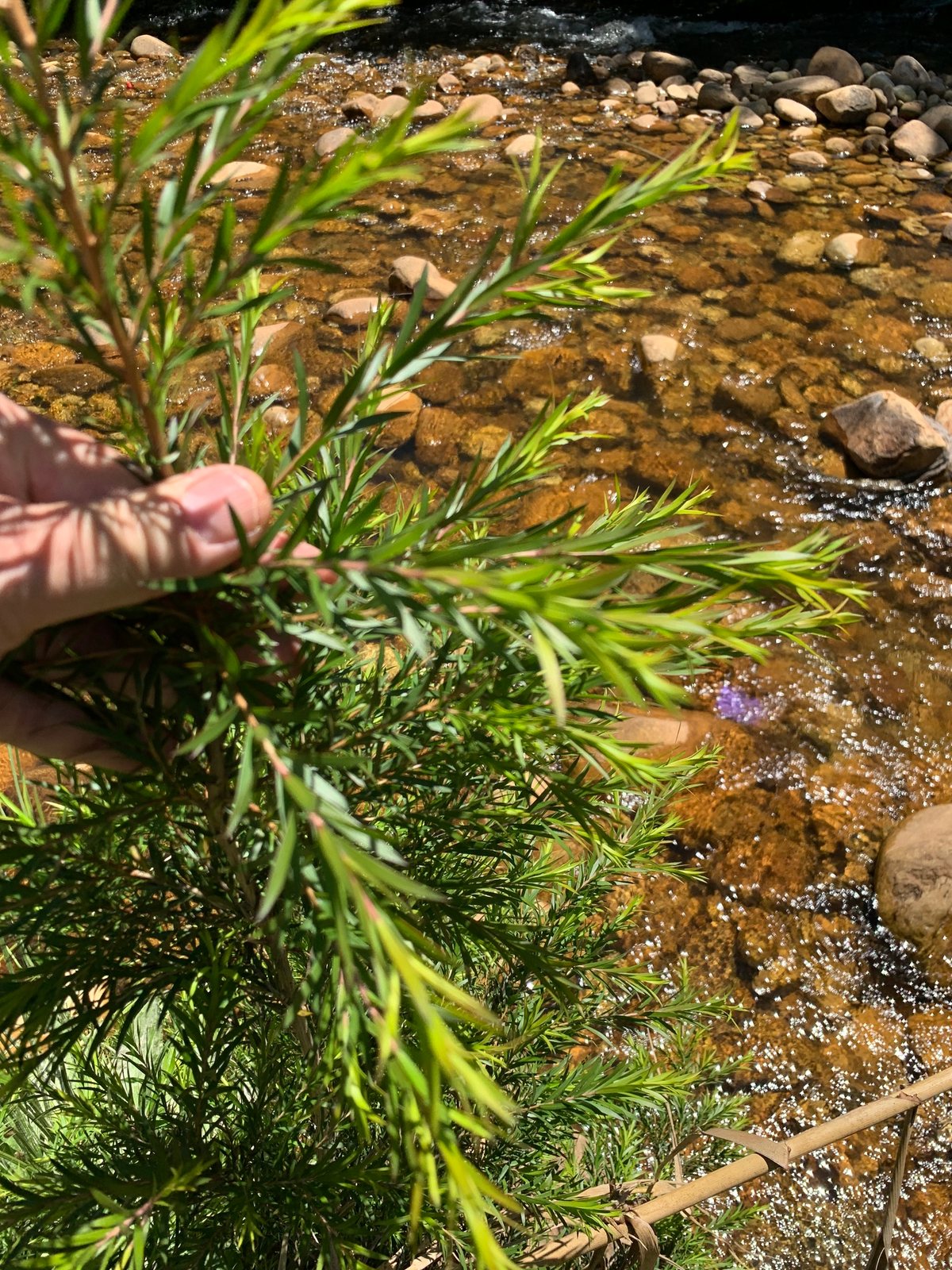
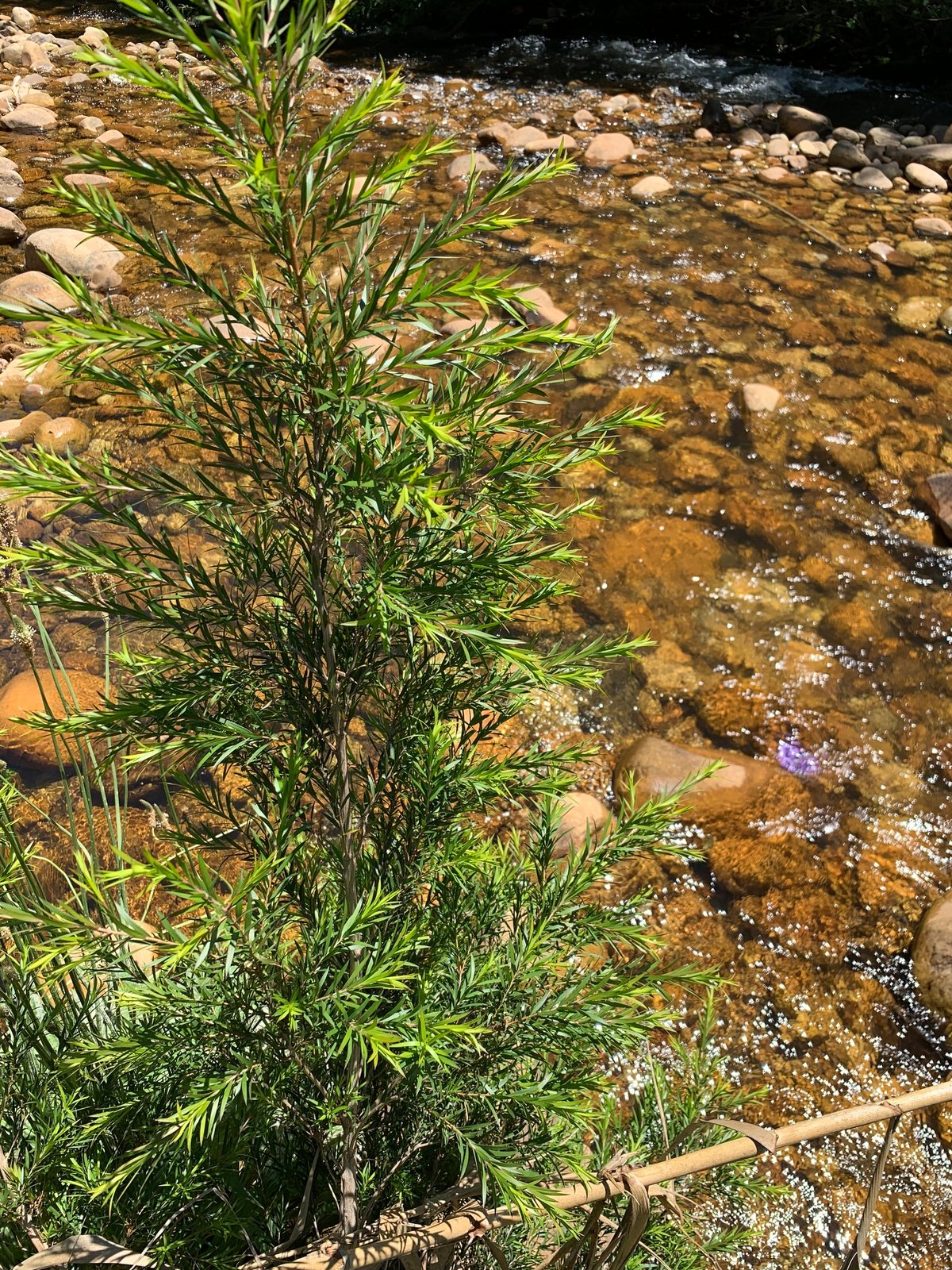
Melaleuca 'Revolution Gold' is a large evergreen shrub or small tree grown for its fine, golden-yellow foliage and softly arching branches. It makes a bright screen, clipped hedge or specimen in warm gardens, with the strongest foliage colour in full sun. Allow room for its eventual size rather than relying on frequent hard pruning.
At a glance
- Sun
- Full sun for the brightest gold foliage; tolerates light shade but becomes greener and less dense.
- Water
- Water regularly while establishing. Once established, tolerates short dry spells, but grows more evenly with occasional deep watering during prolonged drought.
- Soil
- Adaptable to sandy, loamy or clay soils, provided water does not remain stagnant around the roots. Tolerates occasional wet ground once established.
- Height
- 13-20 ft (4-6 m)
- Spread
- 7-13 ft (2-4 m)
- Flowers
- Small creamy-white, brush-like flowers, mainly in late spring and summer; less conspicuous than the foliage.
- Foliage
- Fine, narrow evergreen leaves on slender, arching shoots; new growth is bright golden yellow, becoming more yellow-green with age or shade.
- Growth
- Fast in warm conditions with adequate moisture.
- Care needed
- Medium
The year at a glance
- Pollinators
- Heat tolerant
- Wildlife
- Low allergen
| J | F | M | A | M | J | J | A | S | O | N | D | |
|---|---|---|---|---|---|---|---|---|---|---|---|---|
| Plant |
Northern hemisphere months. In Australia, shift them by six.
- Difficulty
- Moderate
- Toughness
- Fairly tough
Will it suit your garden?
Pick your zone, country, light and whether you have pets.
Full sun is 6 or more hours of direct sun a day, part shade 3 to 6 hours, shade under 3.
How it grows
Planting day
2 ft (0.6 m)
After 1 year
6 ft (2 m)
After 2 years
11 ft (3.3 m)
After 3 years
15 ft (4.7 m)
After 5 years
16 ft (5 m)
full size
About 3 years to full size.
From a typical nursery size, at an average rate for this kind of plant. A rule of thumb, not a forecast.
Good to know
- Cats and dogs
- Safe
- Native to
- Australia
- Growth rate
- Fast
Care
Jobs through the year
- WaterApr–May, Sep–Oct, every 14 days
- Check established ground plants and water if dry; young plants need more frequent watering.
- WaterJun–Aug, every 7 days
- Deep-water established ground plants in prolonged dry weather; check containers more frequently.
- FeedApr–May
- Use a modest dose of native-plant slow-release fertiliser only if growth is weak.
- MulchMay
- Maintain 5–8 cm of organic mulch, keeping it clear of the trunk.
- PruneJun–Jul
- Lightly trim leafy shoots after flowering or for shape; avoid cutting into bare old stems.
- PruneAug
- Give hedges a further light trim only if needed; avoid later clipping before frost.
- ProtectJan–Apr, Oct–Dec
- Move containers to bright, frost-free shelter; this shrub cannot overwinter reliably in zone 6–7 ground.
- Water deeply through the first one or two growing seasons, allowing the surface soil to begin drying between waterings.
- Apply 2-3 in (5-8 cm) of organic mulch over the root area, keeping it clear of the trunk.
- If growth is weak, apply a modest amount of slow-release fertiliser suitable for Australian native plants in spring.
- Choose a sheltered position away from cold, drying winds and frost pockets.
- Check container-grown plants frequently in warm weather; their roots dry much faster than those in the ground.
Pruning. Lightly trim in late spring or after the main flowering flush to encourage dense growth; hedges may need another light trim in summer. Remove dead or damaged wood, and avoid severe pruning into bare old stems or late-season clipping before frost.
Through the year
- Spring
- Plant after the risk of damaging frost has passed, and water thoroughly.
- Spring
- Refresh mulch and feed lightly only if growth needs support.
- Late spring
- Trim lightly after flowering to maintain a hedge or compact outline.
- Summer
- Deep-water young plants during dry spells and inspect shoots for scale insects.
- Autumn
- Stop clipping where winters are cool so new shoots can mature before frost.
- Winter
- Protect young plants during exceptional cold and move containers under cover where winters fall below its hardiness range.
In the garden
- Use as a tall golden hedge or informal screen where there is room for its mature width.
- Plant as a specimen against dark evergreen foliage to emphasise its fine texture and colour.
- Combine with burgundy-leaved shrubs and blue-flowered perennials for strong foliage contrast.
- Use in a spacious Australian-native planting with bottlebrushes, lomandras and kangaroo paws.
Garden styles it suits: Australian native, Modern, Architectural minimal, Native hedgerow, Mediterranean and Wildlife garden.
Plant it with: Lomandra, Kangaroo paw, Bottlebrush, Westringia, Purple hop bush and Society garlic.
Wildlife: Flowers provide nectar and pollen for visiting insects. Dense, mature growth can provide shelter for small birds.
Problems to watch for
- Frost damage: young shoots may blacken after cold nights; shelter young plants and wait until spring growth starts before cutting back damaged tips.
- Scale insects and sooty mould: inspect stems for scale, encourage natural predators and use a labelled horticultural oil if needed, avoiding hot weather.
- Root decline in stagnant soil: improve drainage or plant on a broad mound rather than leaving roots in persistently waterlogged ground.
- Sparse, greener growth in shade: provide more sun and lightly tip-prune to encourage branching.
Safety
Not known to be toxic to people, cats, dogs or horses, but reliable toxicity information specific to this cultivar is limited. Do not treat the leaves, bark or seeds as edible, and do not give pets concentrated melaleuca oils.
Where it spreads. The species Melaleuca bracteata is listed as invasive in South Africa. Information specific to 'Revolution Gold' is limited; do not assume the cultivar is sterile, and check local restrictions before planting.
Easily confused with
Claret Tops melaleuca (Melaleuca linariifolia 'Claret Tops')
Has reddish young shoots rather than consistently golden foliage, with generally broader, more conspicuous leaves.
Golden deodar cedar (Cedrus deodara 'Aurea')
Has true needles, many gathered in clusters on woody spurs, and develops a conifer's tiered branching rather than a fine-leaved shrub's canopy.
Golden Monterey cypress (Cupressus macrocarpa 'Goldcrest')
Has tightly packed scale leaves on conifer shoots, usually with a strong lemon scent when rubbed, rather than separate narrow melaleuca leaves.
The name
Melaleuca comes from Greek words meaning 'black' and 'white', referring to contrasting bark, while bracteata means 'bearing bracts'.
Propagation. Propagate from semi-ripe cuttings taken during the growing season. Seed does not reliably preserve the golden foliage and other characteristics of the cultivar.
Checked against open data
- Accepted botanical name
- Melaleuca bracteata
- Native range
- New South Wales, Northern Territory, Queensland, South Australia and Western Australia.
Sources: GBIF (CC BY 4.0) and Trefle (CC BY 4.0). The care and design notes are LandscapeGPT's own.
See it in your own yard.
Upload a photo of your yard and see it redesigned with plants that suit your climate, each checked against your zone.