Rock polypody
Polypodium virginianum. Family Polypodiaceae. Fern.
Also called Common rock polypody, Virginia polypody.
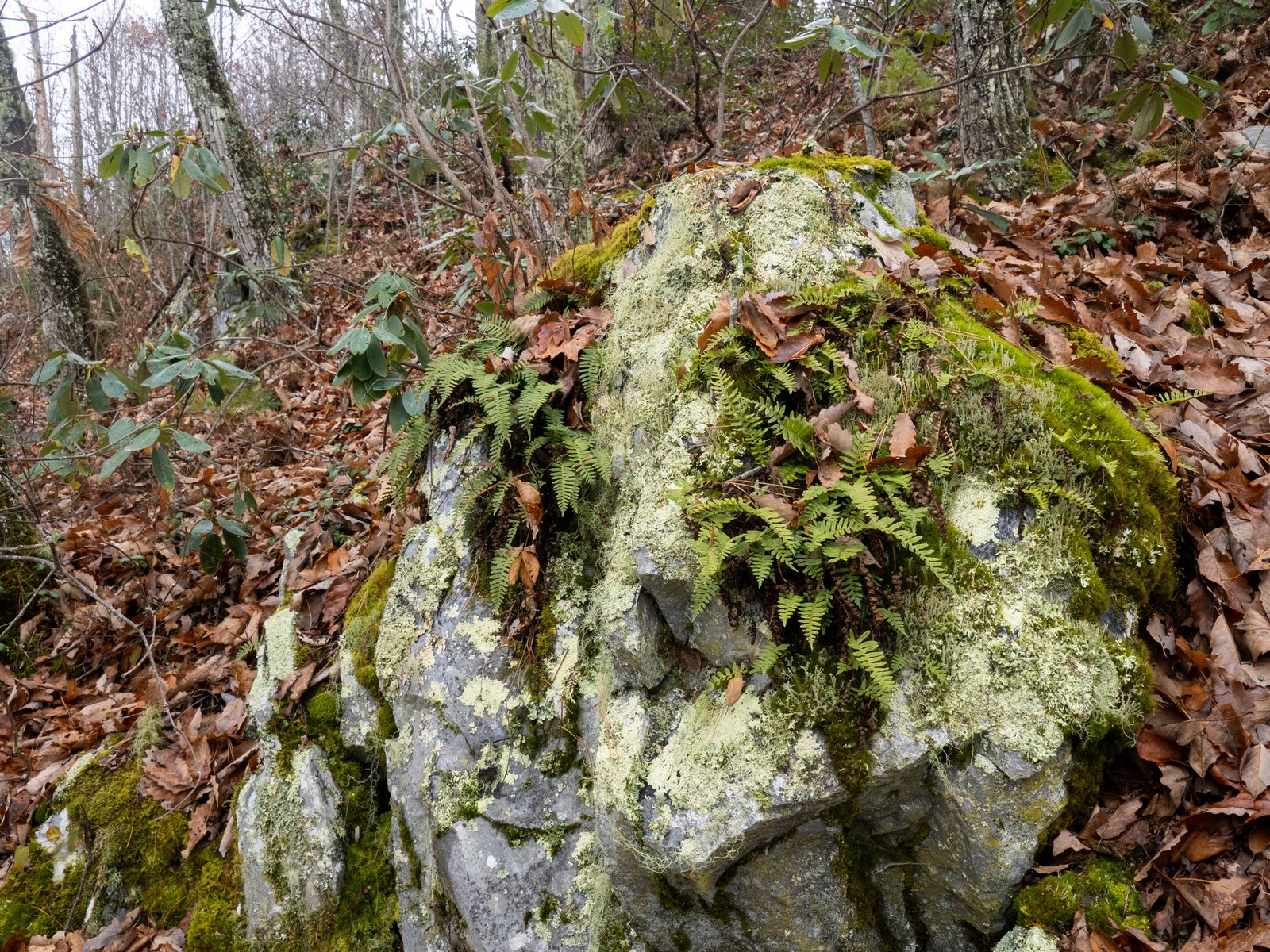
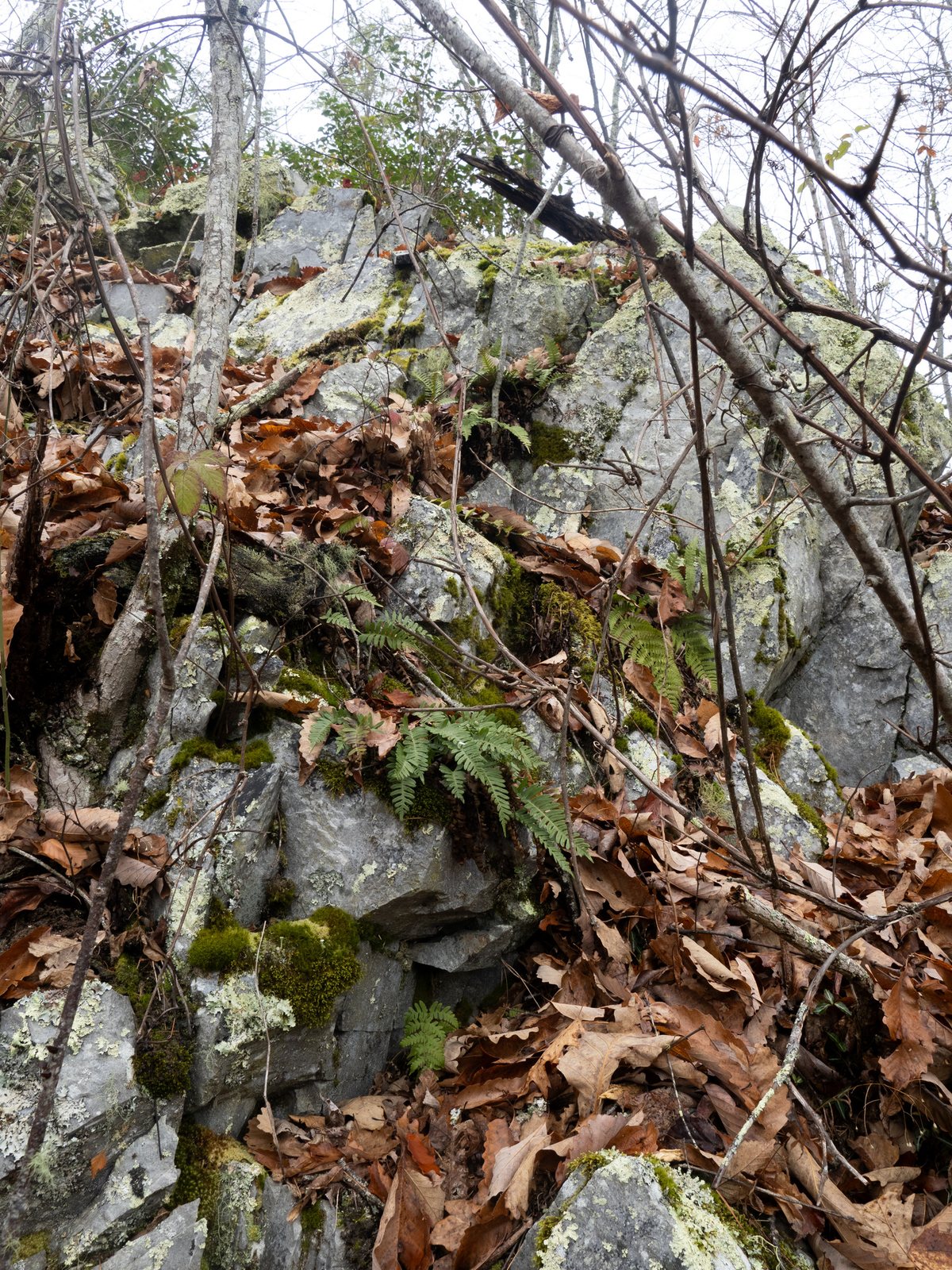
Rock polypody is a small, evergreen fern native to eastern North America, where it grows on shaded rocks, ledges and thin woodland soils. Gardeners grow it for its leathery, deeply divided fronds and its ability to form quiet patches in rocky shade.
At a glance
- Sun
- Partial to full shade; gentle morning sun is suitable where the roots stay cool.
- Water
- Moderate while establishing; tolerates occasional dry periods once established in cool shade. Avoid constantly wet soil.
- Soil
- Acidic to neutral, humus-rich and sharply drained; especially suited to shallow soil pockets among non-limestone rocks.
- Height
- 0.5-1 ft (0.15-0.3 m)
- Spread
- 1-2 ft (0.3-0.6 m), gradually spreading farther by creeping rhizomes
- Foliage
- Evergreen. Leathery green fronds with rounded to pointed lobes arranged along a central stalk. Round, uncovered clusters of spores develop beneath mature fronds.
- Growth
- Slow
- Care needed
- Low
The year at a glance
- Deer resistant
- Drought tolerant
- Cold hardy
- Wildlife
| J | F | M | A | M | J | J | A | S | O | N | D | |
|---|---|---|---|---|---|---|---|---|---|---|---|---|
| Plant |
Northern hemisphere months. In Australia, shift them by six.
- Difficulty
- Easy
- Toughness
- Very tough
Will it suit your garden?
Pick your zone, country, light and whether you have pets.
Full sun is 6 or more hours of direct sun a day, part shade 3 to 6 hours, shade under 3.
How it grows
Planting day
0.7 ft (0.22 m)
full size
About 5 years to full size.
From a typical nursery size, at an average rate for this kind of plant. A rule of thumb, not a forecast.
Good to know
- Cats and dogs
- Safe
- Native to
- the US and Canada
- Growth rate
- Slow
Care
Jobs through the year
- WaterApr–May, Sep–Oct, every 14 days
- Water established colonies only if root pockets are dry; check new plants more often during their first season.
- WaterJun–Aug, every 7 days
- Check established colonies and water deeply only during prolonged drought; allow excess water to drain.
- MulchOct
- Add a thin dressing of leaf mould around plants without covering surface rhizomes.
- PruneFeb–Mar
- Snip off dead or badly damaged fronds; retain healthy evergreen growth.
- DivideMar–Apr
- Divide only when propagation or moving is necessary; replant rhizomes at the surface.
- ProtectApr–May
- Inspect young fronds for slug or snail damage and hand-pick pests as needed.
- Plant with the creeping rhizome at the soil surface rather than buried deeply.
- Water during dry spells through the first growing season, allowing excess water to drain freely.
- Add a thin layer of leaf mould around the plant, keeping the rhizome uncovered.
- Avoid routine feeding; a light annual top-dressing of leaf mould is usually enough.
- Leave established colonies undisturbed unless you need to divide or move them.
Pruning. In late winter or early spring, snip off dead or badly damaged fronds close to their bases before new growth expands. Keep healthy green fronds rather than cutting the whole plant back.
Through the year
- Early spring
- Remove damaged fronds and check that fallen leaves have not buried the rhizomes.
- Spring
- Plant nursery-grown plants in shaded rock pockets, or divide established clumps if necessary.
- Late spring
- Water new plants during dry weather while their roots establish.
- Summer
- Check shallow planting pockets during prolonged drought and water thoroughly if they become very dry.
- Autumn
- Add a thin dressing of leaf mould around the colony without covering its surface rhizomes.
- Winter
- Leave healthy evergreen fronds in place and avoid walking on frozen plants.
In the garden
- Tuck into shaded rock crevices to soften stone without hiding its shape.
- Use along a woodland path with mosses and small sedges for low, evergreen texture.
- Plant beneath deciduous trees among exposed roots where drainage is good and soil is shallow.
- Grow in a shaded trough with other small woodland plants, using a gritty, leaf-mould-rich mix.
Garden styles it suits: Woodland, Moss and fern garden, Japanese, Winter interest, Low-maintenance and New England.
Plant it with: Christmas fern, Pennsylvania sedge, Wild columbine, Wintergreen, Foamflower and Barrenwort.
Wildlife: Low frond cover shelters small invertebrates. Like other ferns, it produces spores rather than flowers and does not provide nectar or pollen.
Problems to watch for
- Rhizome rot in wet or deeply buried planting sites: improve drainage and keep the rhizome at the surface.
- Scorched or bleached fronds in strong sun: provide more shade, especially during hot afternoons.
- Brown or curled fronds during prolonged drought: water the root zone thoroughly and add a light leaf-mould dressing around the plant.
- Slugs or snails damaging young fronds: inspect at dusk and hand-pick, removing nearby hiding places.
Safety
Not known to be toxic to cats, dogs, horses or people, but species-specific safety information is limited. Neither the fronds nor the rhizomes should be treated as food.
Easily confused with
Appalachian polypody (Polypodium appalachianum)
Often has a more triangular frond outline, but it overlaps strongly with rock polypody. Reliable identification may require microscopic examination of spores; frond shape alone is not dependable.
Resurrection fern (Pleopeltis polypodioides)
Has conspicuous scales on the undersides of its fronds and often grows on tree branches in warmer regions. Rock polypody has comparatively smooth frond undersides apart from its round spore clusters.
The name
Polypodium comes from Greek words meaning 'many little feet', referring to the creeping rhizome and its appendages, while virginianum means 'of Virginia'.
Propagation. Divide a healthy colony in spring, keeping several fronds and rooted sections of rhizome on each piece. Replant shallowly and keep evenly moist while establishing. Spores can also be sown, but raising plants this way is slow and requires careful hygiene and humidity control.
Checked against open data
- Accepted botanical name
- Polypodium virginianum
- In the US and Canada
- Native in Canada, Greenland, the lower 48 states and St. Pierre and Miquelon.
- Native range
- Alabama, Alaska, Arkansas, Connecticut, Delaware, District of Columbia, Georgia, Greenland, Illinois, Indiana, Iowa and Kentucky.
Sources: GBIF (CC BY 4.0), USDA PLANTS and Trefle (CC BY 4.0). The care and design notes are LandscapeGPT's own.
See it in your own yard.
Upload a photo of your yard and see it redesigned with plants that suit your climate, each checked against your zone.