Roma tomato
Solanum lycopersicum 'Roma'. Family Solanaceae. Annual.
Also called Roma paste tomato, Roma plum tomato.
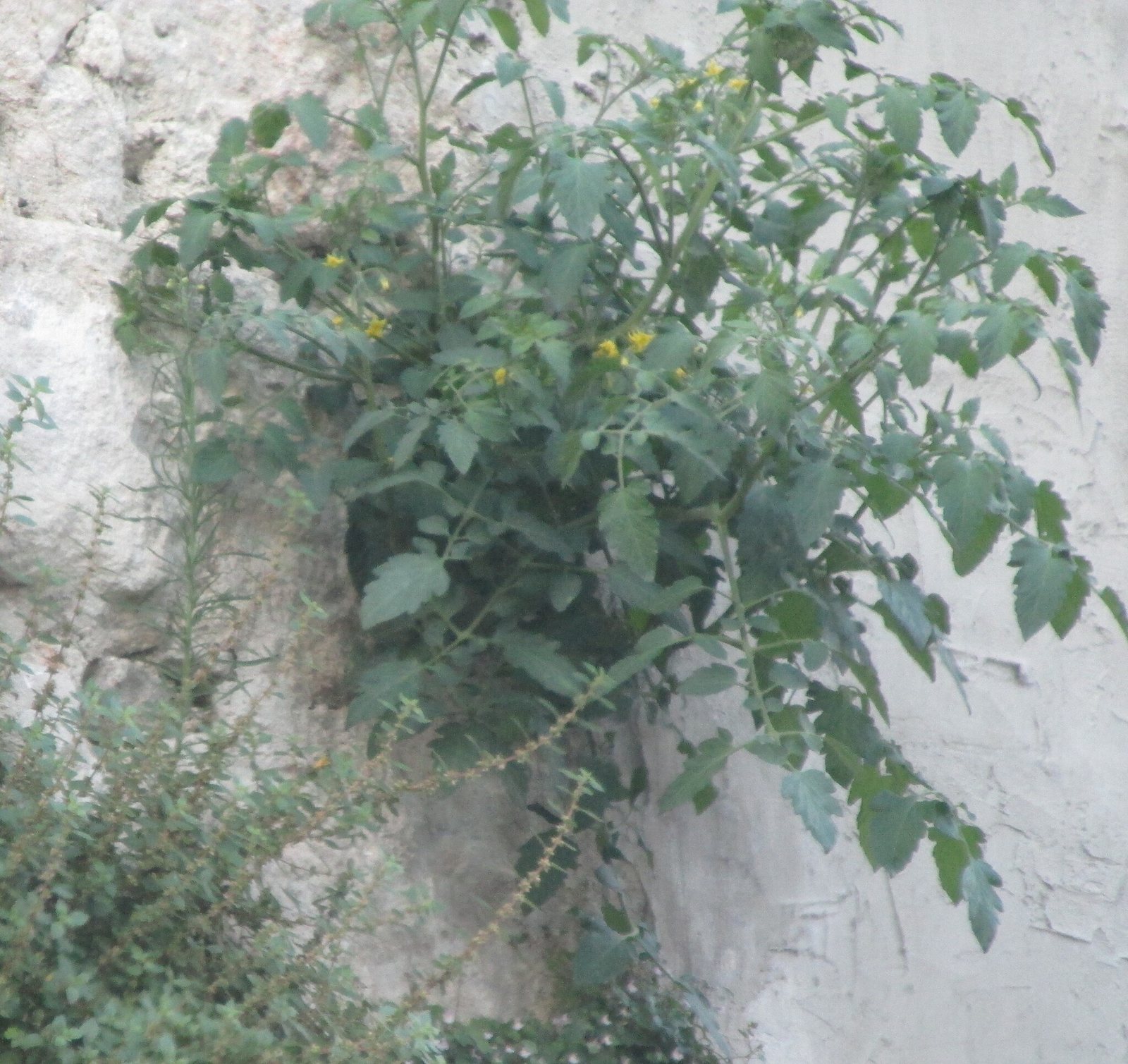
Roma is a compact, determinate tomato grown as an annual for its red, oval fruits with thick flesh and relatively few seeds. It is especially useful for sauces, paste and preserving, with much of the crop ripening over a fairly short period.

At a glance
- Sun
- Full sun; at least 6-8 hours of direct sunlight daily.
- Water
- Water deeply when the soil surface starts to dry, keeping the root zone evenly moist but not waterlogged. Containers may need daily watering in hot weather.
- Soil
- Fertile, well-drained soil enriched with compost; ideally pH 6.0-6.8.
- Height
- 3-4 ft (0.9-1.2 m)
- Spread
- 2-3 ft (0.6-0.9 m)
- Flowers
- Small yellow flowers from late spring through summer, depending on planting time.
- Foliage
- Green, hairy, strongly scented leaves divided into irregular, toothed leaflets.
- Growth
- Fast; flowers and fruits within one growing season.
- Care needed
- Medium
The year at a glance
- Pollinators
- Low allergen
- Edible
| J | F | M | A | M | J | J | A | S | O | N | D | |
|---|---|---|---|---|---|---|---|---|---|---|---|---|
| Flowers | ||||||||||||
| Fruit | ||||||||||||
| Plant |
Northern hemisphere months. In Australia, shift them by six.
- Difficulty
- Moderate
- Toughness
- Fairly tough
Will it suit your garden?
Pick your zone, country, light and whether you have pets.
Full sun is 6 or more hours of direct sun a day, part shade 3 to 6 hours, shade under 3.
How it grows
Planting day
0.5 ft (0.15 m)
After 1 year
3 ft (1.1 m)
full size
Full size in one season.
From a typical nursery size, at an average rate for this kind of plant. A rule of thumb, not a forecast.
Good to know
- Cats and dogs
- Toxic
- Growth rate
- Fast
Care
Jobs through the year
- WaterMay–Jun, every 4 days
- Water established plants deeply at soil level as the surface dries; check new transplants more often.
- WaterJul–Aug, every 3 days
- Keep soil evenly moist during fruiting; increase watering in heat and check pots daily.
- WaterSep–Oct, every 7 days
- Water as needed to prevent drying swings, allowing for rainfall and cooler weather.
- FeedJun–Sep, every 14 days
- Start tomato feed when fruit sets, following the product's rate and interval.
- MulchJun
- Mulch warm soil to conserve moisture, keeping mulch clear of stems.
- ProtectMay–Jun
- Harden off and plant after frost with nights above 10°C; install a sturdy cage or short stakes.
- PruneJun–Sep
- Remove diseased leaves and those touching soil; retain healthy sideshoots on this determinate variety.
- HarvestJul–Oct
- Pick fully red, slightly yielding fruit; bring full-sized green tomatoes indoors before frost.
- Plant out after frost danger has passed and nights are consistently above 50°F (10°C); harden off indoor-grown plants first.
- Space plants 2-3 ft (0.6-0.9 m) apart and install a sturdy tomato cage or short stakes at planting.
- Water at soil level rather than wetting the leaves, and avoid alternating drought with heavy soaking.
- Mulch once the soil has warmed, keeping mulch clear of the stem.
- Feed with a tomato fertilizer according to its label once fruit begins to set; avoid excessive nitrogen.
Pruning. Do not routinely remove side shoots: Roma is determinate, and heavy pruning reduces its crop. During the growing season, remove diseased leaves and lower leaves touching the soil, using clean tools.
Harvest
Pick individual fruits when they are fully red and slightly yielding, usually about 75-85 days after transplanting, depending on warmth and growing conditions. Twist gently or snip the stalk; harvest regularly during the main flush. Before frost, bring full-sized green fruits indoors to ripen.
Through the year
- Late winter to early spring
- Sow indoors 6-8 weeks before your expected last frost; provide warmth and strong light.
- Spring
- Pot seedlings on as needed and gradually harden them off before outdoor planting.
- Late spring
- Plant into warm soil after frost danger, install supports and water thoroughly.
- Early summer
- Mulch warmed soil and begin tomato feed when the first fruits set.
- Summer
- Maintain even moisture, check leaves for pests and disease, and harvest red fruits regularly.
- Autumn
- Collect remaining full-sized fruit before frost and remove spent plants; keep diseased material out of home compost.
In the garden
- Plant in sunny raised vegetable beds, where its bushy habit is easier to contain than a tall cordon tomato.
- Use in a potager with basil, parsley and low edging flowers for a productive seasonal display.
- Grow one plant in a large patio container holding at least 10 US gallons (38 litres), with a cage and reliable watering.
- Arrange in supported rows in a kitchen garden for convenient picking and batch preserving.
Garden styles it suits: Potager (kitchen garden), Edible landscape, Homestead, Cottage garden, Family-friendly and Small-space.
Plant it with: Basil, Parsley, Lettuce, French marigold and Sweet alyssum.
Wildlife: Flowers provide pollen for bumblebees and other bees capable of buzz pollination, although tomatoes are self-fertile. Birds and small mammals may eat ripe fruit.
Problems to watch for
- Blossom-end rot: dark, sunken patches develop on the fruit base, often after uneven watering. Maintain steady moisture and mulch; add calcium only if a soil test shows a deficiency.
- Tomato blights: brown leaf lesions or rapidly blackening foliage and fruit need prompt attention. Keep foliage dry, allow airflow, remove affected material and replace plants if infection is extensive.
- Aphids: colonies distort soft growth and leave sticky honeydew. Wash them off with water, encourage natural predators and use insecticidal soap labelled for edible crops if needed.
- Whitefly: small white insects rise from leaf undersides when disturbed, especially under cover. Inspect regularly and use suitable biological controls in greenhouses or a labelled insecticidal soap outdoors.
Safety
Ripe tomato fruit is not known to be toxic to people, cats, dogs or horses in ordinary food amounts. Leaves, stems and unripe green fruit contain glycoalkaloids and should not be eaten or fed to animals; ingestion can cause vomiting, diarrhoea and lethargy, with larger amounts potentially more serious.
Easily confused with
Potato (Solanum tuberosum)
The foliage can look similar, but potato usually has white, pink or purple flowers rather than yellow ones. Its small green berries are poisonous and are not tomatoes.
Black nightshade (Solanum nigrum)
It has simple rather than divided leaves, small white flowers and clusters of small berries that generally ripen black, not large red plum-shaped fruits. Do not eat unidentified nightshade berries.
The name
The botanical epithet lycopersicum comes from Greek words meaning 'wolf peach'.
Propagation. Sow seed indoors in seed compost at about 70-80°F (21-27°C). Roma is open-pollinated, so seed saved from fully ripe fruit usually comes true if it has not cross-pollinated with another variety.
Checked against open data
- Accepted botanical name
- Solanum lycopersicum
- In the US and Canada
- Introduced in Alaska, Hawaii, the lower 48 states, Pacific Basin, Puerto Rico and US Virgin Islands.
- Native range
- Peru.
- Measured
- Soil pH 7 to 7.5. Average height 19 cm.
Sources: GBIF (CC BY 4.0), USDA PLANTS and Trefle (CC BY 4.0). The care and design notes are LandscapeGPT's own.
See it in your own yard.
Upload a photo of your yard and see it redesigned with plants that suit your climate, each checked against your zone.