Romanesco
Brassica oleracea 'Romanesco'. Family Brassicaceae. Annual.
Also called Romanesco cauliflower, Romanesco broccoli, Roman cauliflower.
Romanesco is a cool-season brassica grown as an annual for its lime-green edible head, made up of tightly packed spiral cones. Its mild, nutty flavour and striking shape make it useful in both vegetable beds and ornamental kitchen gardens; good heads need steady growth and cool weather.
At a glance
- Sun
- Full sun; light afternoon shade can help in warmer districts.
- Water
- Keep soil evenly moist, supplying about 1-1.5 in (25-38 mm) of water weekly during dry weather. Avoid alternating drought and heavy watering.
- Soil
- Fertile, moisture-retentive but well-drained soil, ideally pH 6.5-7.5. Avoid compacted or waterlogged ground.
- Height
- 1.5-3 ft (0.45-0.9 m)
- Spread
- 1.5-2.5 ft (0.45-0.75 m)
- Flowers
- Yellow flowers if plants bolt or remain in the ground beyond the edible-head stage.
- Foliage
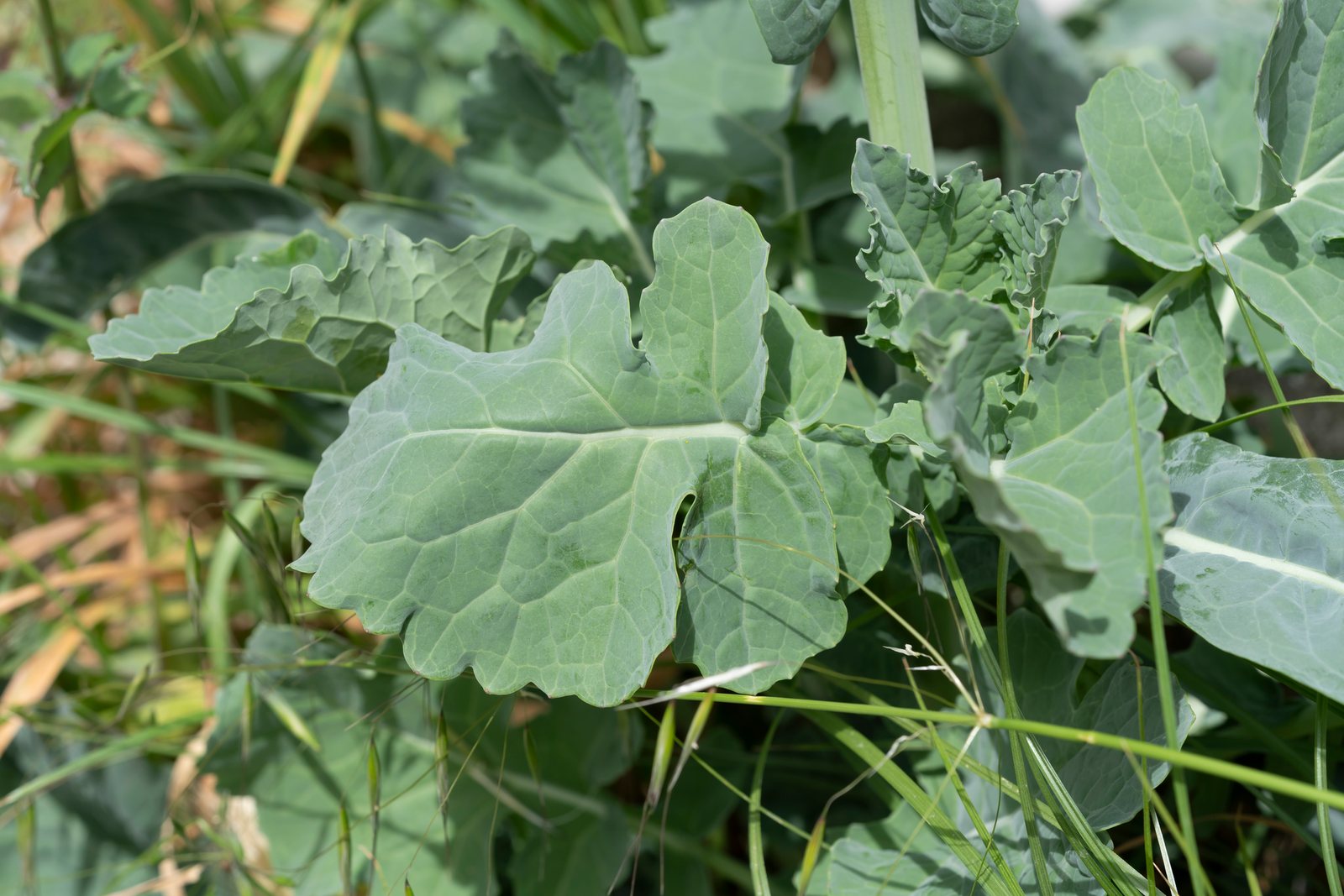
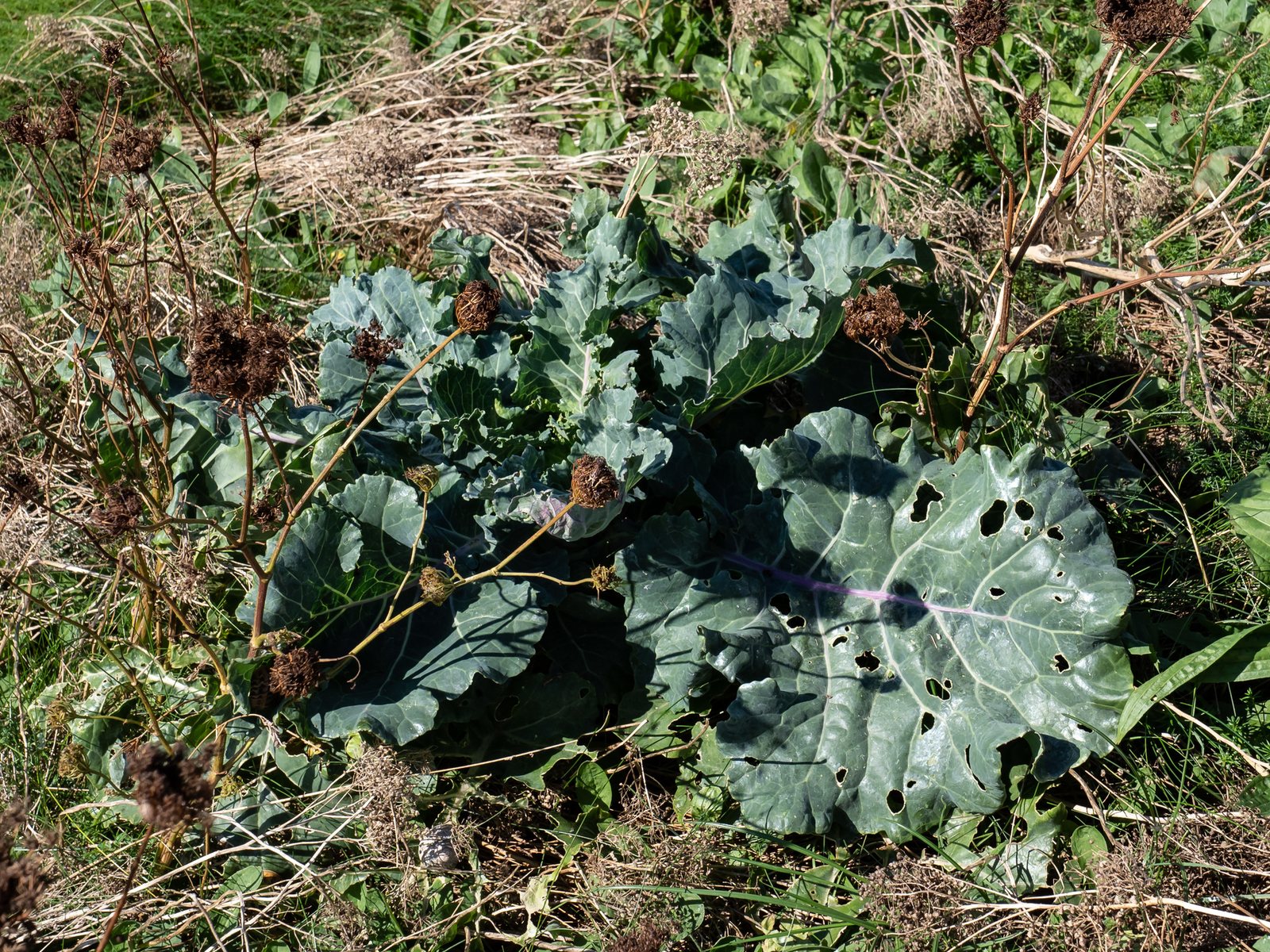
- Large, waxy blue-green leaves surround and partly shelter the central green head.
- Growth
- Fast in cool conditions; harvest timing varies considerably with variety and planting season.
- Care needed
- Medium
The year at a glance
- Low allergen
- Edible
| J | F | M | A | M | J | J | A | S | O | N | D | |
|---|---|---|---|---|---|---|---|---|---|---|---|---|
| Flowers | ||||||||||||
| Fruit | ||||||||||||
| Plant |
Northern hemisphere months. In Australia, shift them by six.
- Difficulty
- Moderate
- Toughness
- Needs looking after
Will it suit your garden?
Pick your zone, country, light and whether you have pets.
Full sun is 6 or more hours of direct sun a day, part shade 3 to 6 hours, shade under 3.
How it grows
Planting day
0.5 ft (0.15 m)
After 1 year
2.2 ft (0.68 m)
full size
Full size in one season.
From a typical nursery size, at an average rate for this kind of plant. A rule of thumb, not a forecast.
Good to know
- Cats and dogs
- Safe
- Native to
- the UK
- Growth rate
- Fast
Care
Jobs through the year
- WaterApr–May, Sep–Nov, every 7 days
- Supply about 25–38 mm weekly including rain; water seedlings more often and never let developing heads dry out.
- WaterJun–Aug, every 3 days
- Check moisture and water at soil level as needed to maintain even moisture without waterlogging.
- FeedApr–May, Jul–Aug
- Incorporate compost and apply balanced vegetable fertilizer at planting; feed again during leafy growth only if needed.
- MulchMay, Aug
- Mulch established plants to retain moisture, leaving stems clear.
- ProtectApr–Oct
- Cover crops with securely sealed insect mesh; use fleece against severe frost on young transplants.
- HarvestJun–Jul, Sep–Nov
- Cut the single main head with protective leaves while the spiral cones remain firm and tightly packed.
- Mix mature compost into the bed before planting and space plants about 2 ft (0.6 m) apart.
- Water at soil level before the root zone dries out, especially while heads develop.
- Apply a balanced vegetable fertiliser at planting, following the label; feed again during leafy growth if needed.
- Mulch around established plants to conserve moisture, keeping mulch clear of the stems.
- Cover young plants with insect mesh, leaving room for growth and securing the edges.
Pruning. No routine pruning is needed. Remove badly damaged or diseased leaves, but retain healthy foliage to support head growth.
Harvest
Cut the main head when its spiral cones are firm and tightly packed, before they loosen or flower buds begin to open. Use a sharp knife to cut the stem below the head, retaining a few protective leaves; unlike sprouting broccoli, Romanesco usually gives one main harvest.
Through the year
- Late winter
- In cool regions, sow indoors for a spring crop only if the variety suits spring planting.
- Spring
- Harden off young plants and transplant into prepared soil; protect them from severe frost and cover against insects.
- Summer
- Sow autumn-cropping varieties according to local guidance; keep seedlings cool, moist and growing steadily.
- Late summer
- Transplant autumn crops in cool and temperate regions, allowing enough time for heads to mature before severe cold.
- Autumn
- Check developing heads frequently and harvest while the cones remain tight.
- Winter
- In mild, frost-light regions, maintain winter crops; elsewhere remove spent plants and plan a rotation away from brassicas.
In the garden
- Plant in orderly rows in a kitchen garden, where the blue-green leaves give structure before heads form.
- Use as a seasonal centrepiece in a raised edible bed, with low lettuces around the edges.
- Repeat small groups through a potager for a rhythm of broad foliage and sculptural green heads.
- Grow in a large container with fertile compost and reliable watering for a temporary courtyard food crop.
Garden styles it suits: Potager (kitchen garden), Edible landscape, Homestead, Farmhouse, Architectural minimal and Green on green.
Plant it with: Lettuce, Spinach, Spring onions, Beetroot, Calendula and Sweet alyssum.
Wildlife: Leaves feed cabbage butterfly and moth caterpillars. Plants allowed to flower provide nectar and pollen for bees and other insects, although the edible head is then lost.
Problems to watch for
- Cabbage caterpillars: inspect leaf undersides and remove eggs and larvae; use well-sealed insect mesh before butterflies and moths lay eggs.
- Flea beetles: small holes can severely check young plants; protect seedlings with fine insect mesh and maintain steady watering.
- Clubroot: swollen roots and wilting indicate this persistent soil disease; remove affected plants, avoid moving contaminated soil and use a different growing area.
- Small, loose or missing heads: heat, drought, root disturbance or checked seedling growth can spoil the crop; choose a locally suitable variety and planting season, and maintain even moisture.
Safety
The head and leaves are edible and are not generally considered toxic to people, cats or dogs in ordinary food amounts, though large portions may cause digestive upset. Romanesco is not generally regarded as a poisonous garden plant for horses, but large quantities of brassica foliage can cause digestive and other health problems; do not offer it as bulk feed.
Easily confused with
Cauliflower (Brassica oleracea Botrytis Group)
Most cauliflower has a rounded, densely curded head rather than Romanesco's pointed cones arranged in obvious spirals; some cauliflower varieties are also green.
Broccoli (Brassica oleracea Italica Group)
Broccoli usually has rounded clusters of visible green flower buds on branching stalks rather than a compact head of lime-green spiral cones.
The name
Romanesco means 'Roman' or 'of Rome' in Italian, referring to its association with the Rome region.
Propagation. Grow from seed, usually in modules before transplanting while young. Use the seed supplier's local sowing window, as varieties differ in their seasonal requirements; saved seed may cross with other flowering Brassica oleracea crops and may not come true.
Checked against open data
- Accepted botanical name
- Brassica oleracea
- In the US and Canada
- Introduced in the lower 48 states, Pacific Basin and Puerto Rico.
- Native range
- France, Great Britain and Spain.
- Measured
- Soil pH 7 to 7.5. Average height 50 cm.
Sources: GBIF (CC BY 4.0), USDA PLANTS and Trefle (CC BY 4.0). The care and design notes are LandscapeGPT's own.
See it in your own yard.
Upload a photo of your yard and see it redesigned with plants that suit your climate, each checked against your zone.