Rose of Sharon St John's wort
Hypericum calycinum. Family Hypericaceae. Groundcover.
Also called Aaron's beard, Creeping St John's wort, Great St John's wort, Rose of Sharon.
Hypericum calycinum is a low, spreading woody groundcover grown for its large yellow summer flowers and dense foliage. It covers banks and the ground beneath open shrubs, but its underground runners can overwhelm smaller plants. It is evergreen in mild climates and partly or fully deciduous in colder winters.
At a glance
- Sun
- Full sun to partial shade; tolerates deeper shade but flowers less freely there. Afternoon shade helps in hot, dry climates.
- Water
- Water regularly during the first growing season. Once established, it tolerates moderate drought; water during prolonged dry spells if leaves wilt or scorch.
- Soil
- Adaptable to most well-drained soils, including clay, chalk and sandy soil. Avoid ground that stays waterlogged.
- Height
- 1-2 ft (0.3-0.6 m)
- Spread
- 2-3 ft (0.6-0.9 m) initially; spreads indefinitely by underground runners if unchecked
- Flowers
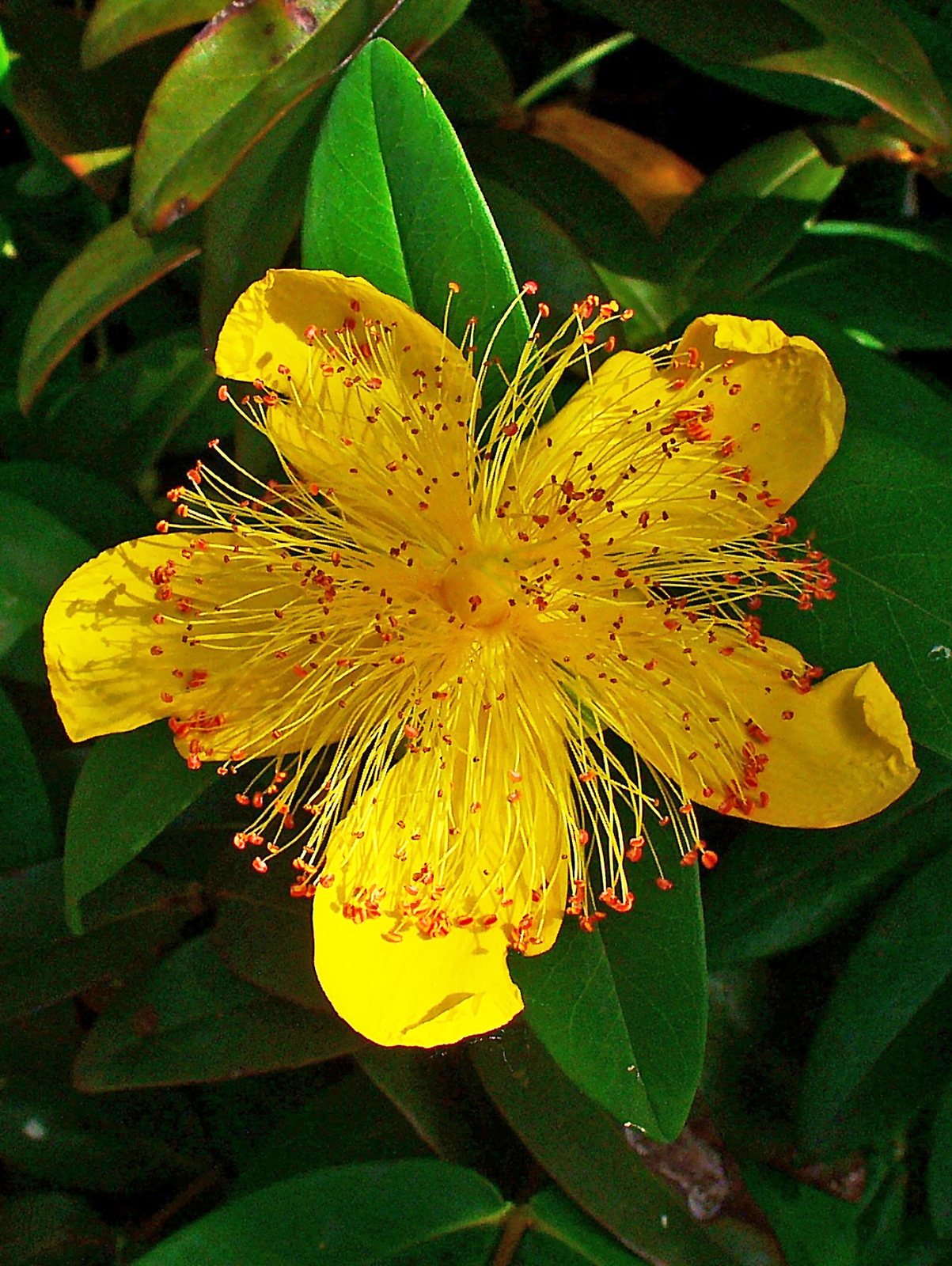
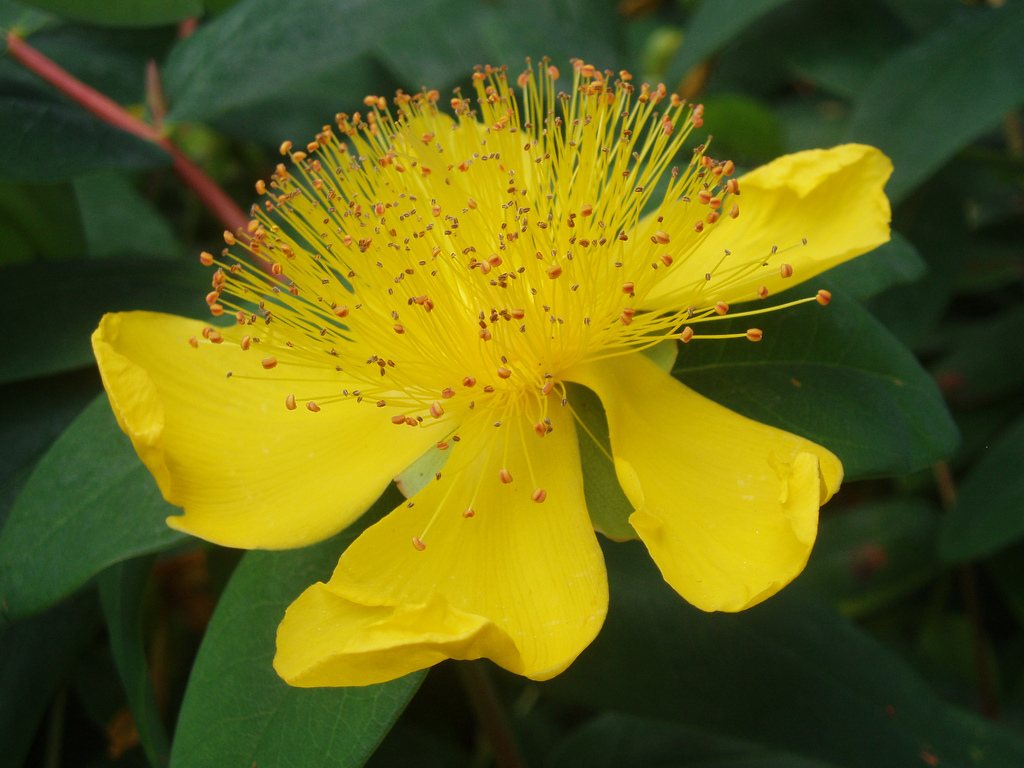
- Summer into early autumn; large, golden-yellow flowers with a prominent brush of long stamens
- Foliage
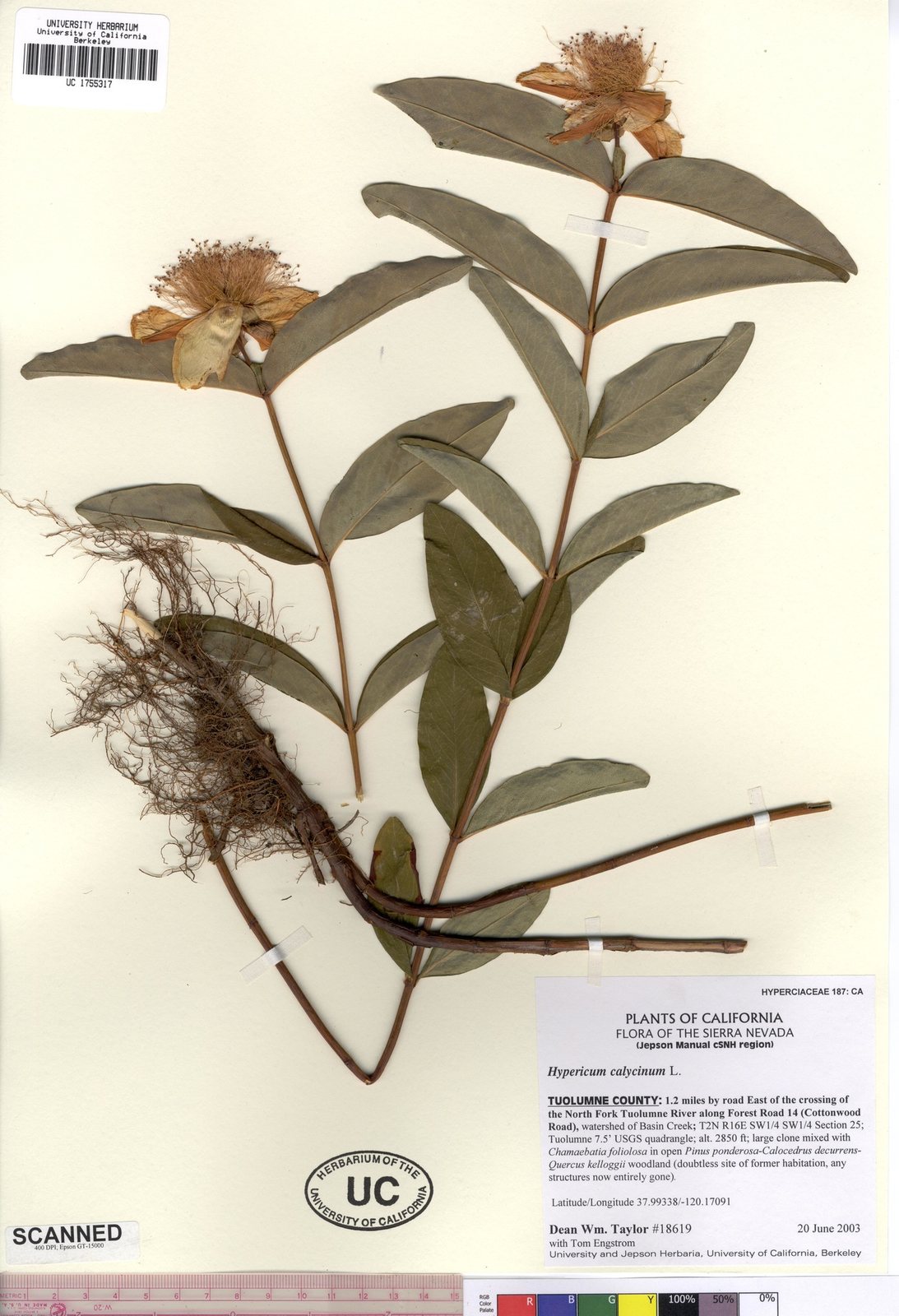
- Opposite, oval to oblong, dark green leaves; evergreen in mild winters, semi-evergreen or deciduous in colder areas.
- Growth
- Fast once established
- Care needed
- Medium
The year at a glance
- Pollinators
- Deer resistant
- Drought tolerant
- Heat tolerant
- Wildlife
- Low allergen
| J | F | M | A | M | J | J | A | S | O | N | D | |
|---|---|---|---|---|---|---|---|---|---|---|---|---|
| Flowers | ||||||||||||
| Plant |
Northern hemisphere months. In Australia, shift them by six.
- Difficulty
- Easy
- Toughness
- Very tough
Will it suit your garden?
Pick your zone, country, light and whether you have pets.
Full sun is 6 or more hours of direct sun a day, part shade 3 to 6 hours, shade under 3.
How it grows
Planting day
0.4 ft (0.11 m)
After 1 year
1.1 ft (0.32 m)
After 2 years
1.5 ft (0.45 m)
full size
About 2 years to full size.
From a typical nursery size, at an average rate for this kind of plant. A rule of thumb, not a forecast.
Good to know
- Cats and dogs
- Toxic
- Invasive in
- the US and Australia
- In the garden
- Spreads vigorously: plan to contain it.
- Growth rate
- Fast
Care
Jobs through the year
- WaterApr–May, Sep–Oct, every 14 days
- Water established plants only during prolonged dry spells; water new plants more often.
- WaterJun–Aug, every 14 days
- Water deeply if the root zone is dry or leaves wilt; avoid waterlogging.
- PruneFeb–Mar
- Cut established growth to 8–15 cm before new shoots emerge; remove diseased debris.
- PruneMay–Sep, every 30 days
- Dig out rooted runners beyond bed edges, removing roots rather than just clipping.
- MulchApr
- Apply a thin organic mulch, keeping it away from stem bases.
- FeedMar–Apr
- Add a light compost dressing only if growth is weak; skip routine feeding.
- DivideMar–Apr, Sep
- Divide only to renew or propagate patches; avoid hot, dry weather.
- Water deeply through the first growing season, allowing the surface soil to dry slightly between waterings.
- Apply a thin mulch after planting, keeping it away from the stems.
- Skip routine feeding on ordinary garden soil; add a light dressing of compost in spring if growth is weak.
- Remove rooted runners at bed edges before they spread into neighbouring plants.
- Keep it out of poorly drained hollows and away from natural woodland where it could escape.
Pruning. In late winter or early spring, cut established plants back to about 3-6 in (8-15 cm) before new growth starts. This removes weather-damaged foliage and encourages fresh flowering shoots.
Through the year
- Late winter
- Cut back old stems before new shoots emerge; remove cuttings and fallen diseased leaves.
- Spring
- Plant or divide in workable soil, then water thoroughly.
- Late spring
- Check bed edges and dig out runners extending beyond the intended planting area.
- Summer
- Water new plants during dry weather and inspect foliage for rust.
- Early autumn
- Plant or divide in mild climates while the soil remains warm; avoid dividing during hot, dry weather.
- Late autumn
- Check drainage and clear debris from around plants on wet sites.
In the garden
- Mass on a contained bank to form a low carpet with bright summer flowers.
- Plant beneath open-canopied shrubs where partial shade limits other flowering groundcovers.
- Use beside paved paths or retaining walls that provide a clear, maintainable boundary.
- Combine with robust ferns, ornamental grasses or bergenias for contrasting leaf shapes; keep it away from delicate perennials.
Garden styles it suits: Woodland, Traditional, Low-maintenance, Urban city garden, Pollinator garden and Pacific Northwest woodland.
Plant it with: Bergenia, Soft shield fern, Japanese forest grass, Lenten rose and Lilyturf.
Wildlife: The open flowers provide pollen for bees and other visiting insects. Dense growth offers ground-level shelter, but escaped colonies can displace more diverse vegetation.
Problems to watch for
- Rust: orange or brown pustules and premature leaf fall can disfigure plants. Remove affected foliage and debris, improve airflow and water at soil level; replace repeatedly affected plantings.
- Unwanted spread: underground runners invade neighbouring beds. Dig out runners with their roots and inspect boundaries regularly; small fragments may regrow.
- Winter damage: cold or drying winds can brown leaves and kill shoots. Wait until late winter or early spring, then cut back damaged growth.
- Root decline in wet soil: yellowing, dieback and poor growth can follow prolonged waterlogging. Improve drainage or move plants to a better-drained site.
Safety
Do not let people, cats, dogs or horses eat it. Hypericum species can contain compounds that cause digestive upset and sunlight-sensitive skin reactions after ingestion, potentially serious in grazing animals. Evidence specific to Hypericum calycinum is limited, so treat leaves, stems and flowers as potentially harmful rather than assuming it is safe.
Where it spreads. Spreads aggressively by underground runners. It is reported as invasive or an environmental weed in parts of the Pacific Northwest of the United States, California, and southeastern Australia, including Victoria and Tasmania. Avoid planting beside natural vegetation and check local weed guidance before planting.
Easily confused with
Common St John's wort (Hypericum perforatum)
An upright herbaceous plant with clusters of much smaller yellow flowers, black dots along petal edges and tiny translucent dots visible when a leaf is held to the light.
Tutsan (Hypericum androsaemum)
A taller, upright shrub with smaller yellow flowers followed by conspicuous berries that turn from red to dark purple-black.
Rose of Sharon (Hibiscus syriacus)
A tall, upright deciduous shrub with toothed, often lobed leaves and large hibiscus flowers in white, pink, purple or blue shades; it is unrelated despite sharing the common name.
The name
The species name calycinum refers to the conspicuous calyx, the ring of sepals beneath each flower, while Aaron's beard describes the long, brush-like stamens.
Propagation. Divide rooted sections in spring or early autumn, or take semi-ripe cuttings in summer. Keep divisions watered until established, and dispose of unwanted rooted material where it cannot grow.
Checked against open data
- Accepted botanical name
- Hypericum calycinum
- In the US and Canada
- Introduced in the lower 48 states.
- Native range
- Bulgaria, Turkey and Turkey-in-Europe.
- Measured
- Soil pH 5.5 to 7.5. Average height 24 cm.
Sources: GBIF (CC BY 4.0), USDA PLANTS and Trefle (CC BY 4.0). The care and design notes are LandscapeGPT's own.
See it in your own yard.
Upload a photo of your yard and see it redesigned with plants that suit your climate, each checked against your zone.