Rosebay rhododendron
Rhododendron maximum. Family Ericaceae. Shrub.
Also called Great rhododendron, Great laurel, American rhododendron.
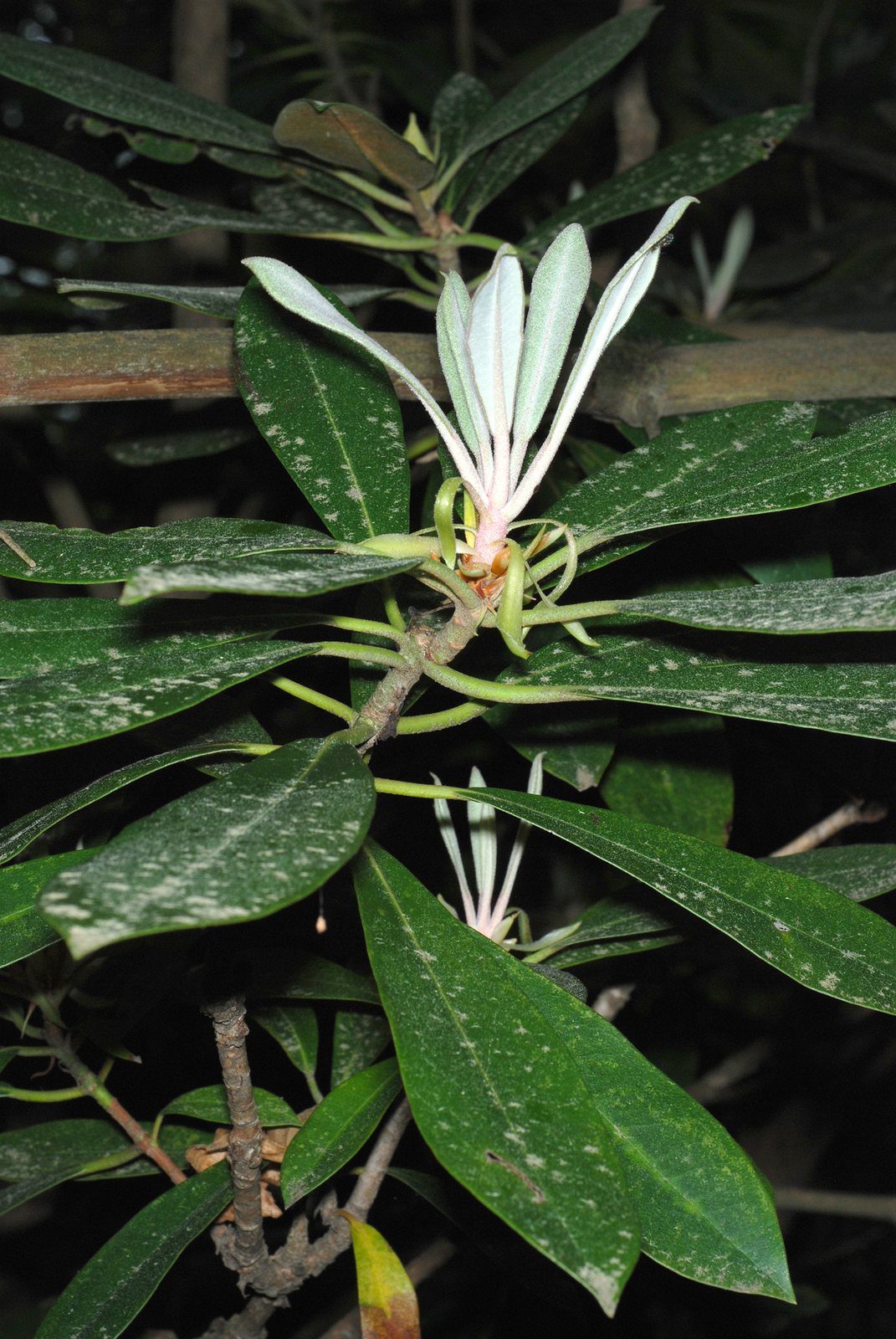
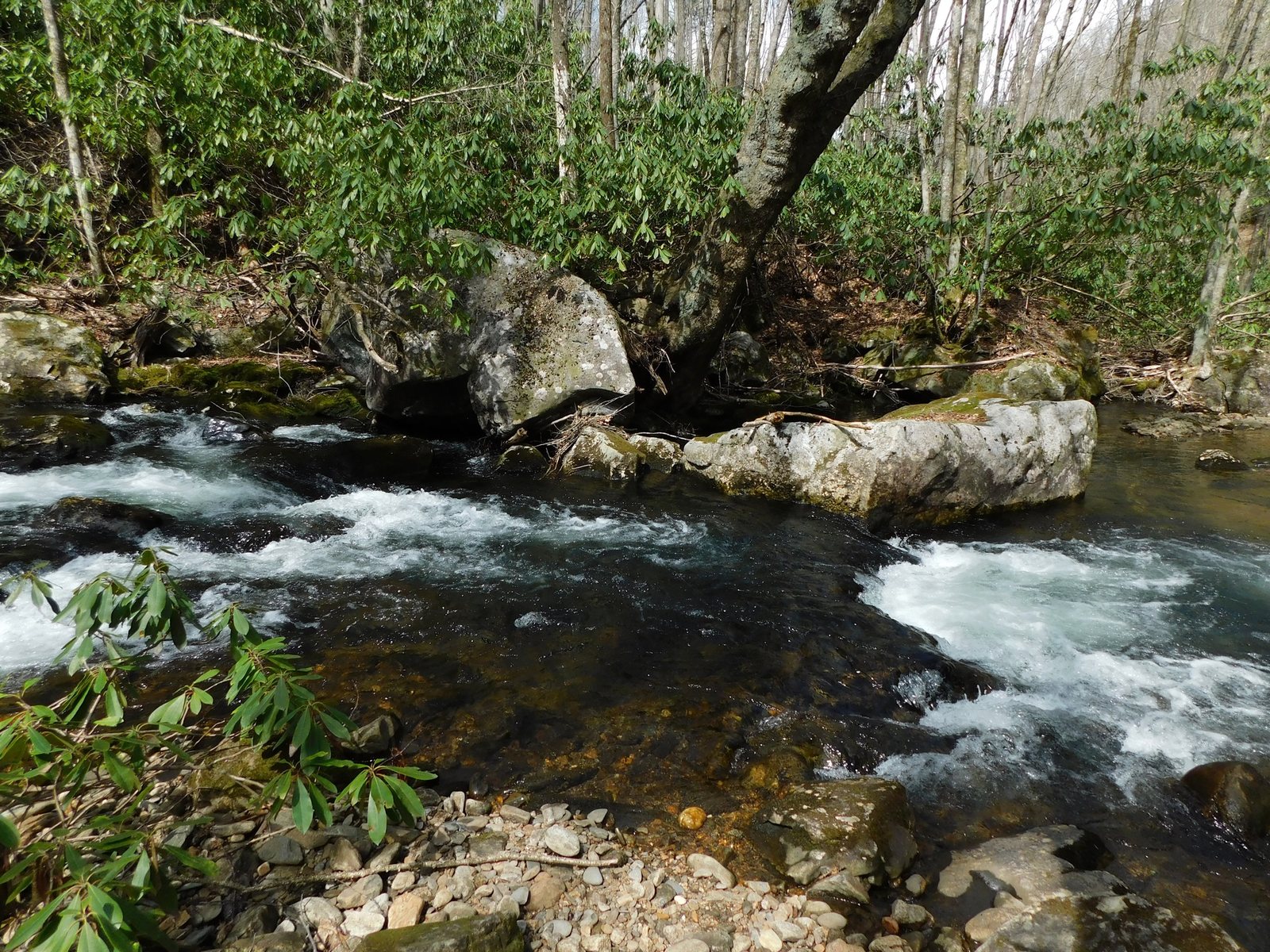
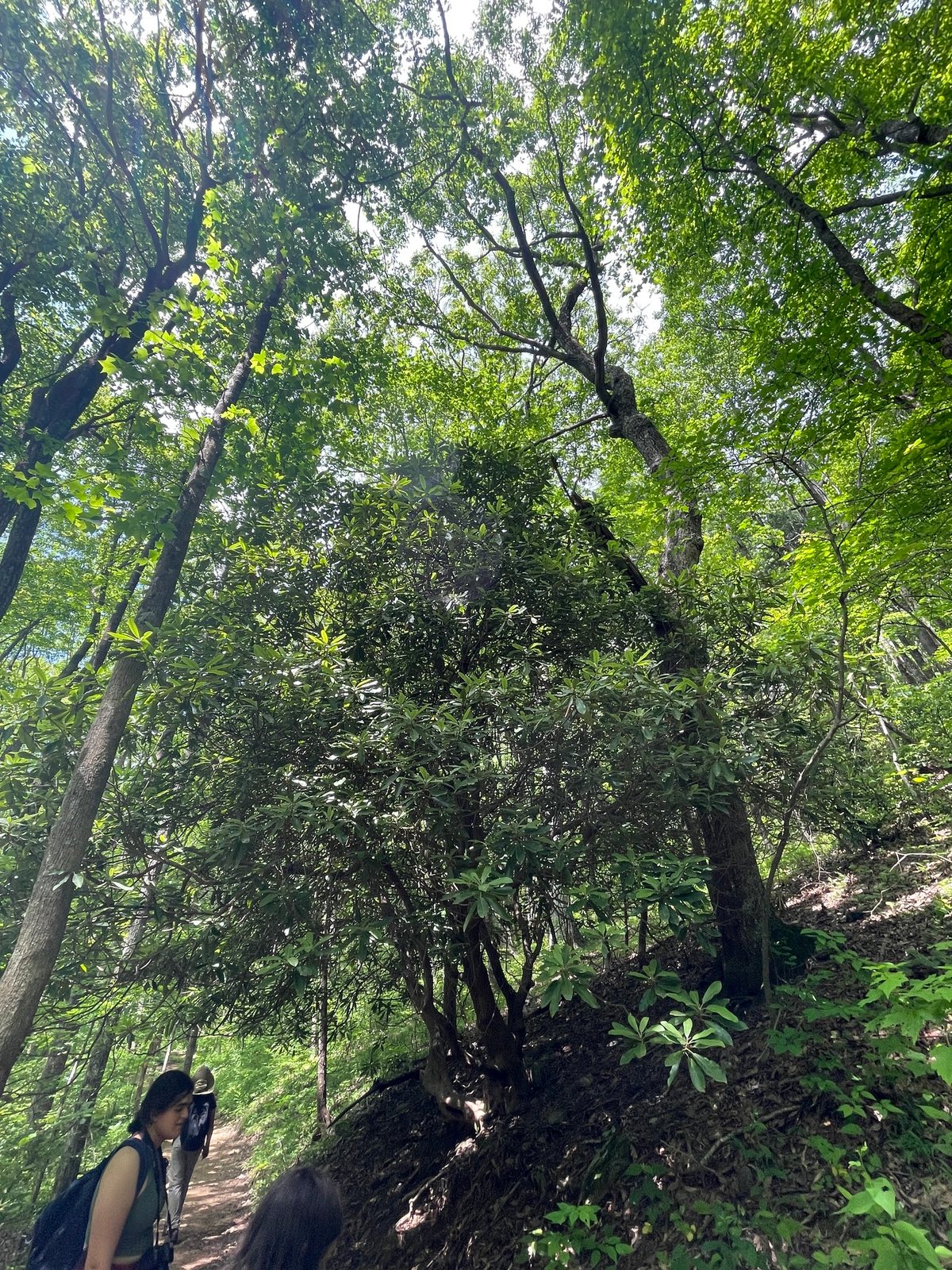
An evergreen shrub native to eastern North America, rosebay rhododendron has large, leathery leaves and rounded clusters of white to pale pink flowers. Gardeners grow it for woodland screening and relatively late rhododendron flowers, but it needs acidic soil, steady moisture and room to spread.
At a glance
- Sun
- Partial shade or dappled woodland light; protect from hot afternoon sun and drying winds. Deep shade reduces flowering.
- Water
- Keep the shallow root zone evenly moist but never waterlogged. Water during dry spells, including dry autumn weather.
- Soil
- Acidic, humus-rich, moisture-retentive soil with good drainage; aim for pH 4.5-6.0. Avoid chalky soil and heavy, waterlogged clay.
- Height
- 5-15 ft (1.5-4.6 m) in gardens; old plants in favourable woodland can exceed 30 ft (9 m)
- Spread
- 5-12 ft (1.5-3.7 m), becoming wider where branches root into the ground
- Flowers
- Late spring to midsummer, usually later than many garden rhododendrons; white to pale pink flowers with greenish or yellowish spotting.
- Foliage
- Evergreen. Large, dark green, leathery leaves held in clusters near the shoot tips. Leaves often curl and droop in freezing weather, which is a normal response.
- Growth
- Slow to moderate
- Care needed
- Medium
The year at a glance
- Pollinators
- Cold hardy
- Wildlife
- Low allergen
| J | F | M | A | M | J | J | A | S | O | N | D | |
|---|---|---|---|---|---|---|---|---|---|---|---|---|
| Flowers | ||||||||||||
| Plant |
Northern hemisphere months. In Australia, shift them by six.
- Difficulty
- Moderate
- Toughness
- Fairly tough
Will it suit your garden?
Pick your zone, country, light and whether you have pets.
Full sun is 6 or more hours of direct sun a day, part shade 3 to 6 hours, shade under 3.
How it grows
Planting day
1.6 ft (0.5 m)
After 1 year
2.9 ft (0.89 m)
After 2 years
4 ft (1.3 m)
After 3 years
6 ft (1.7 m)
After 5 years
8 ft (2.5 m)
About 7 years to full size.
From a typical nursery size, at an average rate for this kind of plant. A rule of thumb, not a forecast.
Good to know
- Cats and dogs
- Toxic
- Native to
- the US and Canada
- Growth rate
- Slow
Care
Jobs through the year
- WaterMar–May, Sep–Nov, every 10 days
- Water established shrubs if soil beneath the canopy is drying; new plants need closer attention.
- WaterJun–Aug, every 7 days
- Water deeply in dry weather, keeping shallow roots moist but not saturated.
- WaterJan–Feb, Dec, every 21 days
- During dry winters, water only when soil is dry and unfrozen.
- MulchMar, Oct
- Maintain 5–8 cm of leaf mould or composted pine bark, clear of stems.
- FeedApr
- Use a light ericaceous feed only for weak growth or a confirmed nutrient deficiency.
- PruneJun–Jul
- Immediately after flowering, remove damaged or misplaced branches back to leafy side shoots.
- DeadheadJun–Jul
- If practical, snap off spent flower clusters without damaging new shoots.
- ProtectJan–Feb, Nov–Dec
- Shelter exposed shrubs from drying winds with a breathable windbreak.
- Plant with the top of the root ball level with, or slightly above, the surrounding soil; do not bury the stem.
- Water deeply during dry spells, checking beneath the foliage where rain may not reach the roots.
- Apply 2-3 in (5-8 cm) of leaf mould or composted pine bark, keeping mulch clear of the stems.
- Avoid digging or hoeing around its shallow roots.
- Feed lightly in spring with an ericaceous fertiliser only if growth is weak or soil testing shows a need; avoid late-season feeding.
Pruning. Prune immediately after flowering, removing dead, damaged or badly placed branches and cutting back to a leafy side shoot. If an old shrub needs substantial reduction, spread the work over several years rather than cutting everything back at once.
Through the year
- Late winter
- Check for wind damage and drought during frost-free periods; do not mistake temporary leaf curling for dead growth.
- Early spring
- Plant when the soil is workable and not waterlogged; check that established plants have adequate mulch.
- Spring
- Check new growth for yellowing and inspect leaf undersides for lace bugs.
- After flowering
- Prune only where needed; remove spent flower clusters carefully if practical, without damaging the new shoots.
- Summer
- Water through dry spells and keep competing weeds away from the shallow root zone.
- Autumn
- Replenish organic mulch and water well before winter if the soil is dry.
In the garden
- Use as a broad evergreen screen beneath tall, open-canopied trees where soil moisture is reliable.
- Plant behind ferns and foamflowers to give a woodland border a permanent leafy backdrop.
- Group along a shaded boundary, allowing enough space for mature branches rather than clipping into a narrow hedge.
- Combine with earlier-flowering rhododendrons and mountain laurel to extend the flowering season in an acidic-soil garden.
Garden styles it suits: Woodland, Traditional, Grand estate, Pacific Northwest woodland, Mountain lodge and Green on green.
Plant it with: Mountain laurel, Christmas fern, Foamflower, Wintergreen, Japanese pieris and Red maple.
Wildlife: Flowers attract bumblebees and other visiting insects. Dense evergreen branches provide shelter for birds, although heavy shade beneath mature thickets can limit smaller plants.
Problems to watch for
- Rhododendron lace bugs cause pale stippling above and dark specks beneath leaves. Reduce drought stress, avoid exposed hot sites and treat leaf undersides with insecticidal soap where locally approved.
- Phytophthora root rot causes wilting and dieback despite moist soil. Improve drainage, avoid overwatering and remove severely affected plants; do not replant into the same poorly drained conditions.
- Yellow leaves with green veins often indicate overly alkaline soil. Test the soil and irrigation water; correct the growing conditions rather than repeatedly adding fertiliser.
- Winter scorch produces browned leaf edges on exposed plants. Shelter from drying winds, maintain autumn moisture and wait for spring growth before removing damaged shoots.
Safety
All parts, including leaves, flowers and nectar, contain grayanotoxins and are poisonous to people, cats, dogs and horses if eaten. Poisoning can cause vomiting, weakness, abnormal heart rhythms and potentially death; seek urgent medical or veterinary advice after ingestion.
Easily confused with
Catawba rhododendron (Rhododendron catawbiense)
Usually has shorter, broader leaves and purple to lilac flowers earlier in the season; rosebay generally has longer leaves and white to pale pink flowers.
Pontic rhododendron (Rhododendron ponticum)
Usually bears purple-violet flowers earlier than rosebay and has narrower-looking leaves. Garden hybrids can blur these differences, so flower colour alone is not a reliable identification.
Mountain laurel (Kalmia latifolia)
Has smaller leaves and distinctive shallow, cup-shaped flowers with ten little pockets holding the anthers, rather than open, funnel-shaped rhododendron flowers.
The name
Rhododendron comes from Greek words meaning 'rose tree', while maximum is Latin for 'largest' or 'greatest', referring to the plant's large size.
Propagation. Layer a low branch into moist acidic soil, leaving it attached until it has rooted well. Seed is another option but produces slow-growing plants that take years to flower; semi-ripe cuttings require controlled humidity and can be difficult to root.
Checked against open data
- Accepted botanical name
- Rhododendron maximum
- In the US and Canada
- Native in Canada and the lower 48 states.
- Native range
- Alabama, Connecticut, Delaware, Georgia, Kentucky, Maine, Maryland, Masachusettes, New Hampshire, New Jersey, New York and North Carolina.
- Measured
- Soil pH 4 to 5.5. Average height 631 cm.
Sources: GBIF (CC BY 4.0), USDA PLANTS and Trefle (CC BY 4.0). The care and design notes are LandscapeGPT's own.
See it in your own yard.
Upload a photo of your yard and see it redesigned with plants that suit your climate, each checked against your zone.