Ruffled fan palm
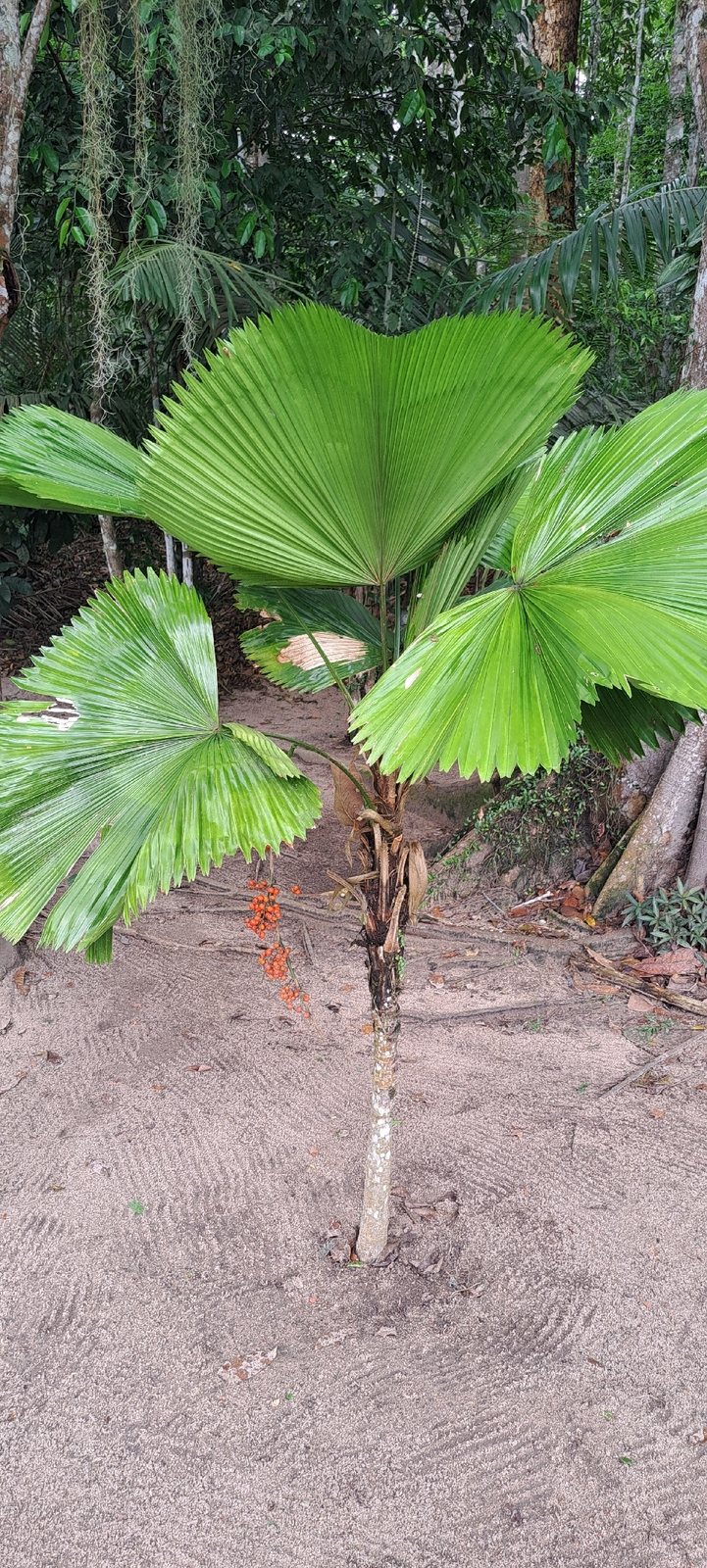
Licuala grandis. Family Arecaceae. Tree.
Also called Ruffled palm, Vanuatu fan palm.
A slow-growing tropical palm with a slender single trunk and nearly circular, pleated leaves. Gardeners grow it for its bold foliage in sheltered, shaded gardens or large containers; outside frost-free climates, it needs a warm greenhouse or bright indoor space for winter.
At a glance
- Sun
- Partial shade or bright filtered light; protect from strong midday sun, especially when young or grown indoors.
- Water
- Keep evenly moist but not waterlogged. Water when the surface begins to dry, allowing container drainage to run freely.
- Soil
- Humus-rich, moisture-retentive but well-drained soil, preferably slightly acidic; use a free-draining palm potting mix in containers.
- Height
- 6-10 ft (1.8-3 m), occasionally taller in tropical conditions; usually smaller indoors
- Spread
- 5-8 ft (1.5-2.4 m)
- Foliage
- Evergreen. Glossy green, nearly circular fan leaves with strong pleats and a shallowly toothed edge; leaf stalks carry sharp spines.
- Growth
- Slow
- Care needed
- Medium
The year at a glance
- Heat tolerant
| J | F | M | A | M | J | J | A | S | O | N | D | |
|---|---|---|---|---|---|---|---|---|---|---|---|---|
| Plant |
Northern hemisphere months. In Australia, shift them by six.
- Difficulty
- Hard
- Toughness
- Needs looking after
Will it suit your garden?
Pick your zone, country, light and whether you have pets.
Full sun is 6 or more hours of direct sun a day, part shade 3 to 6 hours, shade under 3.
How it grows
Planting day
7 ft (2 m)
After 1 year
7 ft (2 m)
After 2 years
7 ft (2 m)
After 3 years
7 ft (2 m)
After 5 years
7 ft (2.1 m)
About 32 years to full size.
From a typical nursery size, at an average rate for this kind of plant. A rule of thumb, not a forecast.
Good to know
- Cats and dogs
- Safe
- Growth rate
- Slow
Care
Jobs through the year
- WaterJun–Aug, every 4 days
- Grow in a pot in this climate; check moisture and water when the surface begins drying, then drain fully.
- WaterMar–May, Sep–Oct, every 7 days
- Check pots weekly; keep evenly moist without allowing the pot to stand in water.
- WaterJan–Feb, Nov–Dec, every 10 days
- Check indoor pots and water as needed; never let the root ball dry out.
- FeedApr–Aug, every 30 days
- Use a liquid palm fertiliser with magnesium and trace elements at its labelled container rate.
- PruneJan–Dec
- Wear gloves and remove only fully brown fronds; protect the central growing spear.
- ProtectJan–May, Sep–Dec
- Keep indoors above 10°C in bright filtered light, away from cold glass and heating vents.
- ProtectJun–Aug
- Summer outside only in warm, sheltered shade; protect large leaves from wind and strong sun.
- Shelter from drying winds, which split and scorch the large leaves.
- Water thoroughly when the soil surface starts to dry; never leave the pot standing in water.
- Feed during active growth with a palm fertiliser containing magnesium and trace elements, following the label rate.
- Mulch outdoor plants to conserve moisture, keeping mulch clear of the trunk.
- Move container plants into warmth before autumn nights fall below 50°F (10°C).
- Repot in spring only when roots crowd the container, disturbing the root ball as little as possible.
Pruning. Remove fully brown fronds close to the trunk as needed, using gloves to avoid the spiny leaf stalks. Leave green or partly green fronds in place and never cut the central growing spear.
Through the year
- Spring
- Check drainage and repot root-bound container plants into a slightly larger pot.
- Spring
- Begin feeding when steady new growth starts.
- Early summer
- Move indoor plants outside only once nights stay above 50°F (10°C), gradually introducing them to sheltered shade.
- Summer
- Check moisture frequently and inspect leaf undersides for mites and scale.
- Autumn
- Bring pots under warm cover before cold nights and reduce feeding as growth slows.
- Winter
- Provide bright indirect light, keep away from cold glass and heating vents, and water less often without letting the root ball dry out.
In the garden
- Use as a single foliage specimen in a sheltered tropical courtyard.
- Grow in a large container beside a shaded patio, leaving clearance from paths for the spiny leaf stalks.
- Combine with ferns and broad-leaved shade plants for contrasting leaf shapes.
- Use beneath a high, open tree canopy where filtered light reaches its pleated leaves.
Garden styles it suits: Modern tropical, Tropical, Architectural minimal, Modern courtyard, Luxury resort and Balinese.
Plant it with: Bird's nest fern, Bromeliads, Peace lily, Calathea and Cast iron plant.
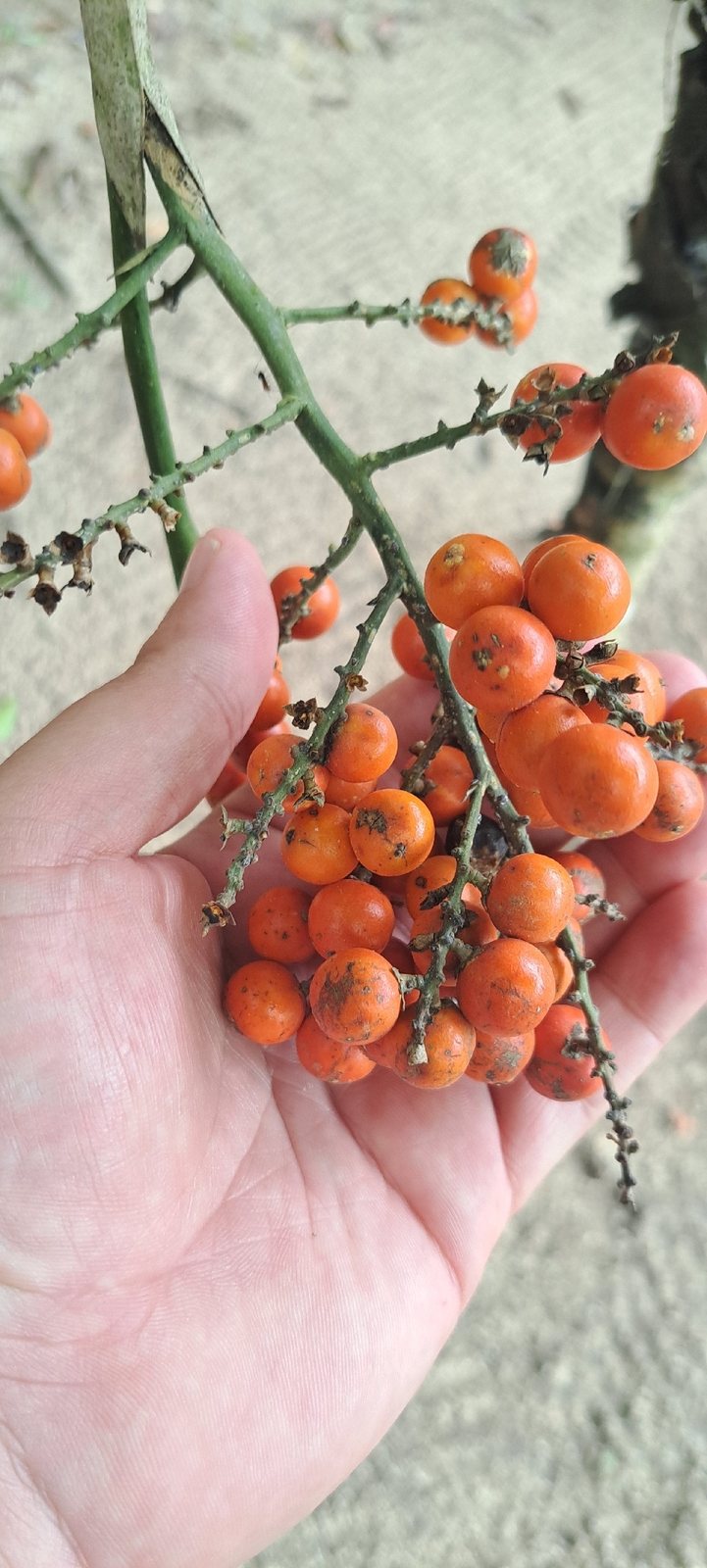
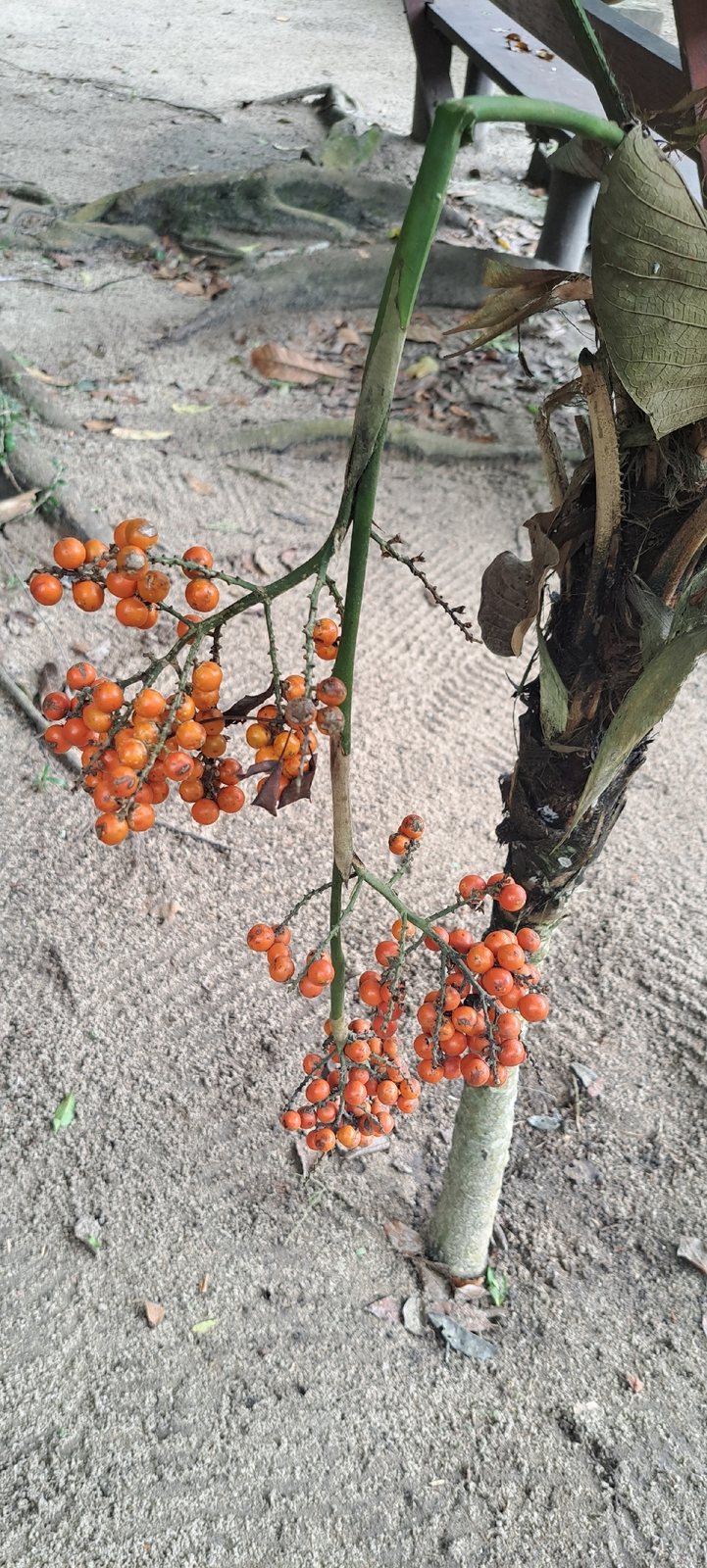
Wildlife: Flowers and ripe fruits can provide food for insects and fruit-eating birds in tropical gardens, although container plants seldom flower or fruit.
Problems to watch for
- Spider mites cause pale stippling and fine webbing, especially indoors: rinse leaf undersides and treat persistent infestations with insecticidal soap according to the label.
- Scale insects form bumps on stalks and leaves: wipe off small infestations and use a labelled horticultural oil if needed.
- Root rot causes yellowing and decline in soggy soil: improve drainage, empty saucers and allow the surface to begin drying between waterings.
- Brown or torn leaves often follow strong sun, wind, cold or drying out: move to sheltered filtered light and maintain even moisture; damaged tissue will not recover.
Safety
Not known to be toxic to people, cats, dogs or horses, though species-specific toxicity information is limited. The sharp spines on the leaf stalks can puncture skin; keep them away from children, pets and busy paths.
Easily confused with
Mangrove fan palm (Licuala spinosa)
Forms a clump of stems and has fans divided into separate wedge-shaped segments, rather than the mostly undivided circular leaves of ruffled fan palm.
Chinese fan palm (Livistona chinensis)
Has deeply divided fans with long, drooping segment tips and eventually becomes a much larger tree.
The name
The species name grandis means large, while ruffled fan palm describes the broad, strongly pleated leaves.
Propagation. Grow from fresh seed in a warm, consistently moist, free-draining medium. Germination can take several months and is uneven; this single-stemmed palm cannot be divided.
Checked against open data
- Accepted botanical name
- Licuala grandis
- Native range
- Santa Cruz Is. and Vanuatu.
- Measured
- Average height 250 cm.
Sources: GBIF (CC BY 4.0) and Trefle (CC BY 4.0). The care and design notes are LandscapeGPT's own.
See it in your own yard.
Upload a photo of your yard and see it redesigned with plants that suit your climate, each checked against your zone.