Runner bean
Phaseolus coccineus. Family Fabaceae. Climber.
Also called Scarlet runner bean, Multiflora bean.
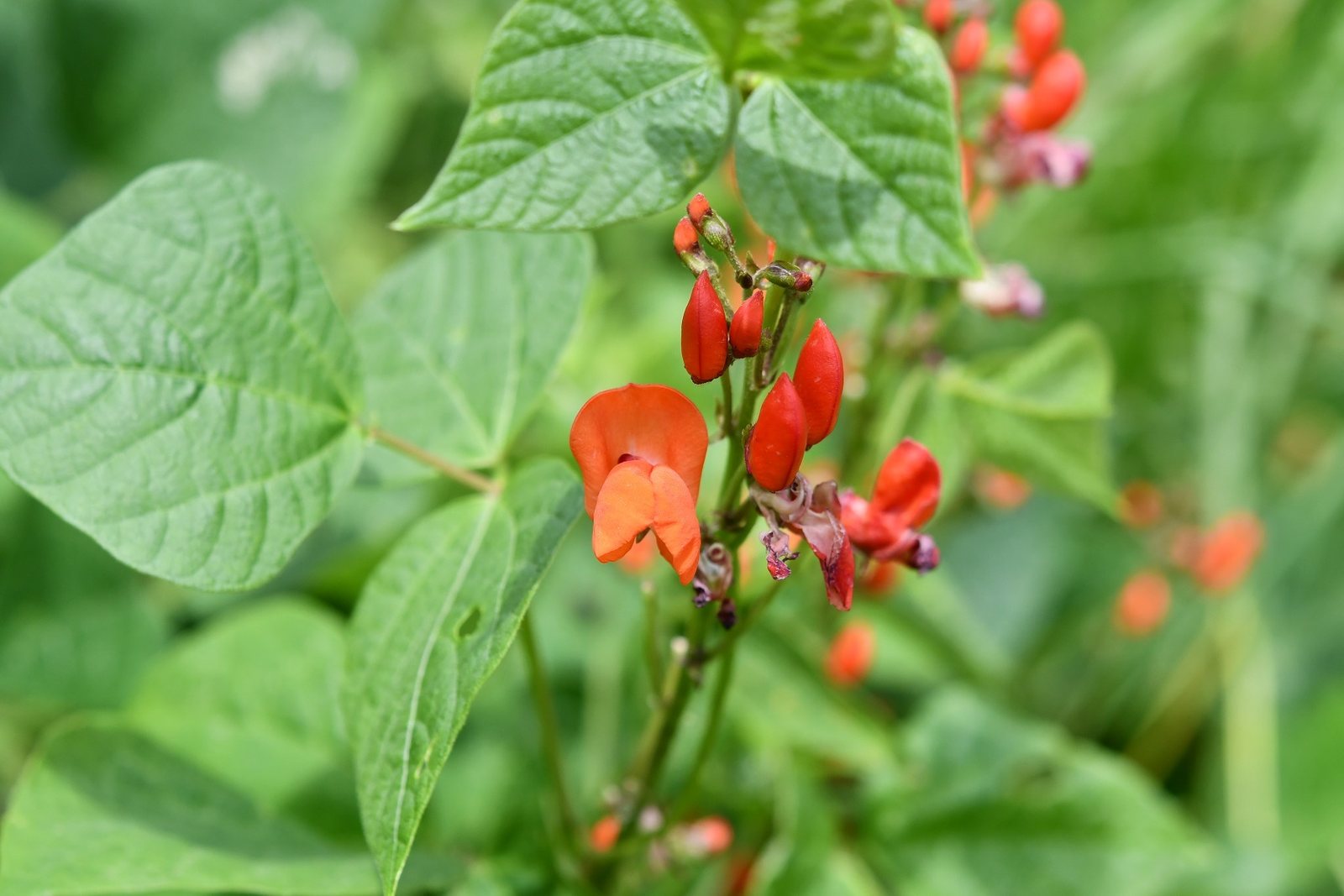
Runner bean is a vigorous twining climber grown for its edible pods and sprays of red, white or bicoloured flowers. It is usually grown as an annual, although its tuberous roots can survive for several years in frost-free conditions. It crops best where summers are moderately warm rather than persistently hot.
At a glance
- Sun
- Full sun; light afternoon shade can help in hot districts. Choose a position sheltered from strong winds.
- Water
- Keep the root zone evenly moist, especially during flowering and pod development; avoid waterlogged soil.
- Soil
- Fertile, moisture-retentive but well-drained soil enriched with mature compost; slightly acidic to neutral soil is ideal.
- Height
- 6-10 ft (1.8-3 m), sometimes taller with a long growing season
- Spread
- 2-3 ft (0.6-0.9 m) per climbing plant when supported
- Flowers
- Summer to early autumn; red, white, pink or red-and-white flowers, depending on the variety.
- Foliage
- Large green leaves divided into three pointed leaflets, carried on twining stems.
- Growth
- Fast
- Care needed
- Medium
The year at a glance
- Pollinators
- Low allergen
- Edible
| J | F | M | A | M | J | J | A | S | O | N | D | |
|---|---|---|---|---|---|---|---|---|---|---|---|---|
| Flowers | ||||||||||||
| Fruit | ||||||||||||
| Plant |
Northern hemisphere months. In Australia, shift them by six.
- Difficulty
- Moderate
- Toughness
- Fairly tough
Will it suit your garden?
Pick your zone, country, light and whether you have pets.
Full sun is 6 or more hours of direct sun a day, part shade 3 to 6 hours, shade under 3.
How it grows
Planting day
2 ft (0.6 m)
After 1 year
3 ft (1.1 m)
After 2 years
5 ft (1.5 m)
After 3 years
6 ft (1.8 m)
full size
About 3 years to full size.
From a typical nursery size, at an average rate for this kind of plant. A rule of thumb, not a forecast.
Good to know
- Cats and dogs
- Toxic
- Growth rate
- Fast
Care
Jobs through the year
- MulchMay–Jun
- Mulch moist soil with compost once seedlings are established.
- WaterMay–Jun, every 7 days
- Water deeply if rain is insufficient; check newly planted seedlings more often.
- WaterJul–Aug, every 3 days
- Keep soil evenly moist during flowering and pod growth; adjust for rainfall and soil drainage.
- WaterSep–Oct, every 7 days
- Continue deep watering in dry weather while plants are cropping.
- ProtectMay–Jun
- Install strong supports before planting after frost, and protect seedlings from slugs.
- PruneJun–Jul
- Pinch out growing tips once vines reach the top of their supports.
- HarvestJul–Oct
- Pick tender pods before seeds bulge, supporting the vine while cutting or pinching.
- PruneOct–Nov
- After frost kills growth, cut stems at soil level and clear the supports.
- Install a sturdy trellis, bean frame or tall wigwam before planting; the mature foliage becomes heavy in wind.
- Sow or plant outside only after frost risk has passed and the soil has warmed.
- Water deeply during dry spells, especially once flowers and pods appear.
- Mulch moist soil with compost or another organic mulch to reduce drying.
- Avoid heavy nitrogen feeding, which encourages leaves at the expense of flowers.
- Pick young pods every few days before the seeds swell and the pods become stringy.
Pruning. Pinch out the growing tips when stems reach the top of their supports to encourage manageable side growth. After frost kills the foliage, cut the stems at soil level and remove them from the supports.
Harvest
Pick young runner bean pods about 10–14 weeks after sowing, usually through summer and autumn until frost stops growth. Most varieties are ready at 6–8 inches (15–20 cm) long, while pods are tender and snap easily, before the seeds bulge or the pods become stringy. Pick every 2–3 days, snipping or pinching off pods while supporting the vine to avoid damaging it.
Through the year
- Early spring
- Prepare the planting bed with mature compost and plan sturdy supports.
- Mid-spring
- Sow individual seeds in deep pots under cover a few weeks before your last expected frost.
- Late spring
- Harden off young plants and plant out after frost, or direct-sow into warm soil.
- Early summer
- Guide young stems onto supports, mulch the root zone and begin regular watering.
- Summer
- Harvest tender pods frequently and check shoot tips and leaf undersides for pests.
- Autumn
- Let selected healthy pods dry for seed if the weather allows; clear annual crops after frost.
In the garden
- Train over a sturdy wigwam as a flowering focal point in a vegetable garden.
- Grow along a sunny fence or trellis for a temporary summer screen.
- Use on a strong arch between beds to combine flowers with an accessible harvest.
- Place behind lower annual flowers and herbs in a mixed edible border.
Garden styles it suits: Cottage garden, Potager (kitchen garden), Edible landscape, Homestead, Pollinator garden and Family-friendly.
Plant it with: Pot marigold, Nasturtium, Sweet alyssum, Swiss chard, Lettuce and Borage.
Wildlife: Flowers attract bees, including bumblebees; hummingbirds also visit red-flowered forms in North America. Some bees take nectar through holes at the flower base without pollinating it.
Problems to watch for
- Black bean aphids cluster on tender tips: check frequently, wash off small colonies and encourage ladybirds and other predators.
- Slugs and snails can destroy seedlings: inspect after dark, remove hiding places and use locally approved slug controls if needed.
- Red spider mites cause pale stippling and fine webbing in hot, dry conditions: keep plants watered and rinse leaf undersides regularly.
- Flowers drop without setting pods during heat, drought or poor pollination: maintain even moisture, avoid excessive nitrogen and provide afternoon shade in hot climates.
Safety
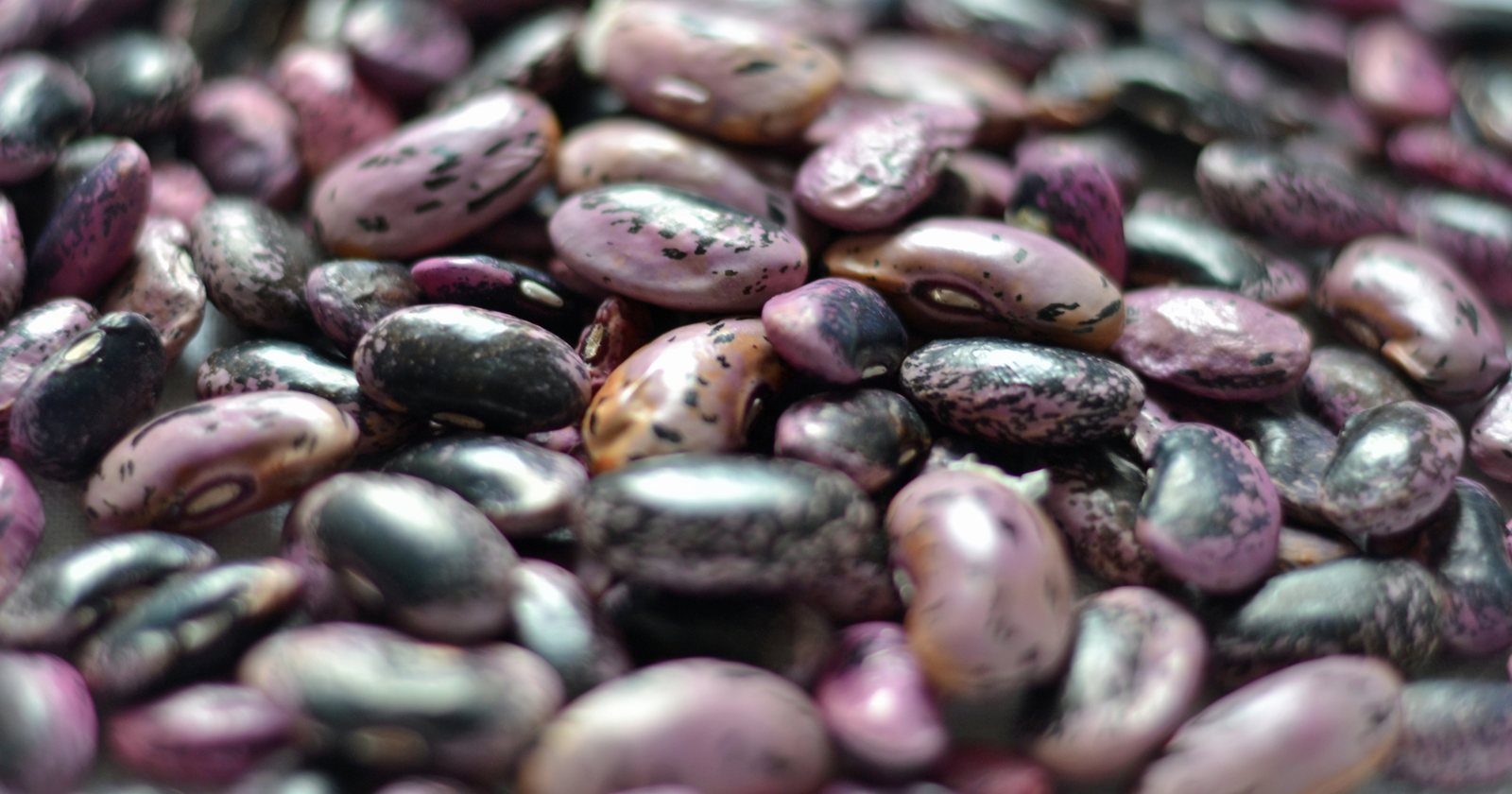
Raw or undercooked seeds contain lectins that can cause substantial nausea, vomiting and diarrhoea in people and may poison cats, dogs or horses if eaten. Do not feed raw beans to pets or livestock, and keep seed packets out of reach. Cook pods and seeds thoroughly before eating; dried seeds need soaking and proper boiling, not slow-cooking alone.
Easily confused with
Common bean (Phaseolus vulgaris)
Climbing forms have a similar habit, but generally have smaller flower clusters and smoother pods. Runner bean seedlings leave their seed leaves below ground, while common beans lift them above the soil.
Hyacinth bean (Lablab purpureus)
Often has purple-tinged stems, purple or white flowers and broad, flattened, frequently purple pods rather than the long green pods typical of runner beans.
The name
The species name coccineus means scarlet, referring to the flowers of the typical red-flowered form.
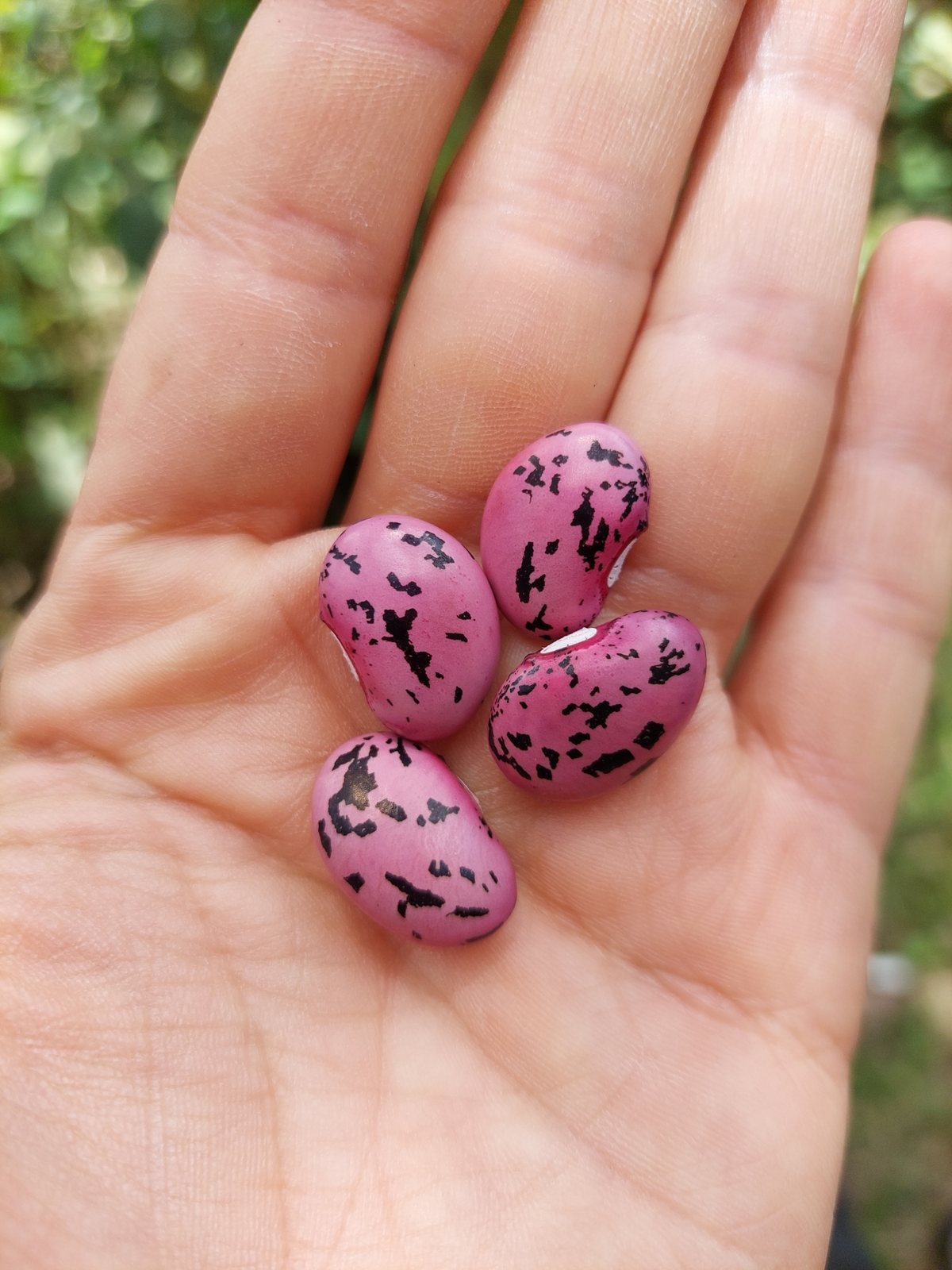
Propagation. Grow from seed sown directly into warm soil or in individual deep pots for transplanting. Save fully mature, dry seeds from healthy plants; varieties may cross-pollinate, so saved seedlings may differ from their parents.
Checked against open data
- Accepted botanical name
- Phaseolus coccineus
- In the US and Canada
- Introduced in the lower 48 states, Pacific Basin and US Virgin Islands.
- Native range
- Guatemala, Honduras, Mexico Central, Mexico Gulf, Mexico Northeast, Mexico Northwest, Mexico Southeast, Mexico Southwest, Nicaragua and Panamá.
- Measured
- Average height 141 cm.
Sources: GBIF (CC BY 4.0), USDA PLANTS and Trefle (CC BY 4.0). The care and design notes are LandscapeGPT's own.
See it in your own yard.
Upload a photo of your yard and see it redesigned with plants that suit your climate, each checked against your zone.