Rusty foxglove
Digitalis ferruginea. Family Plantaginaceae. Perennial.
Also called Rust-coloured foxglove.
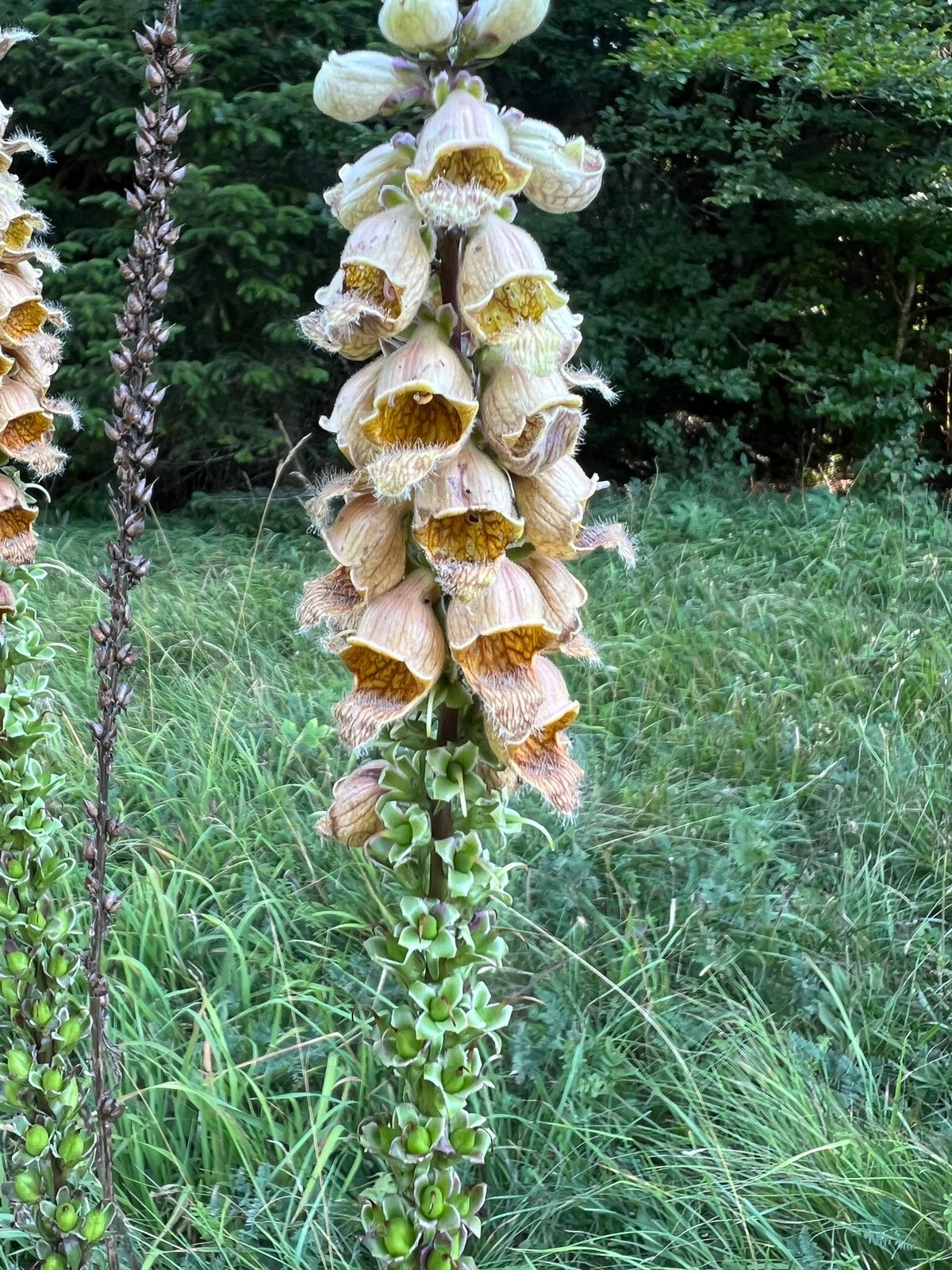
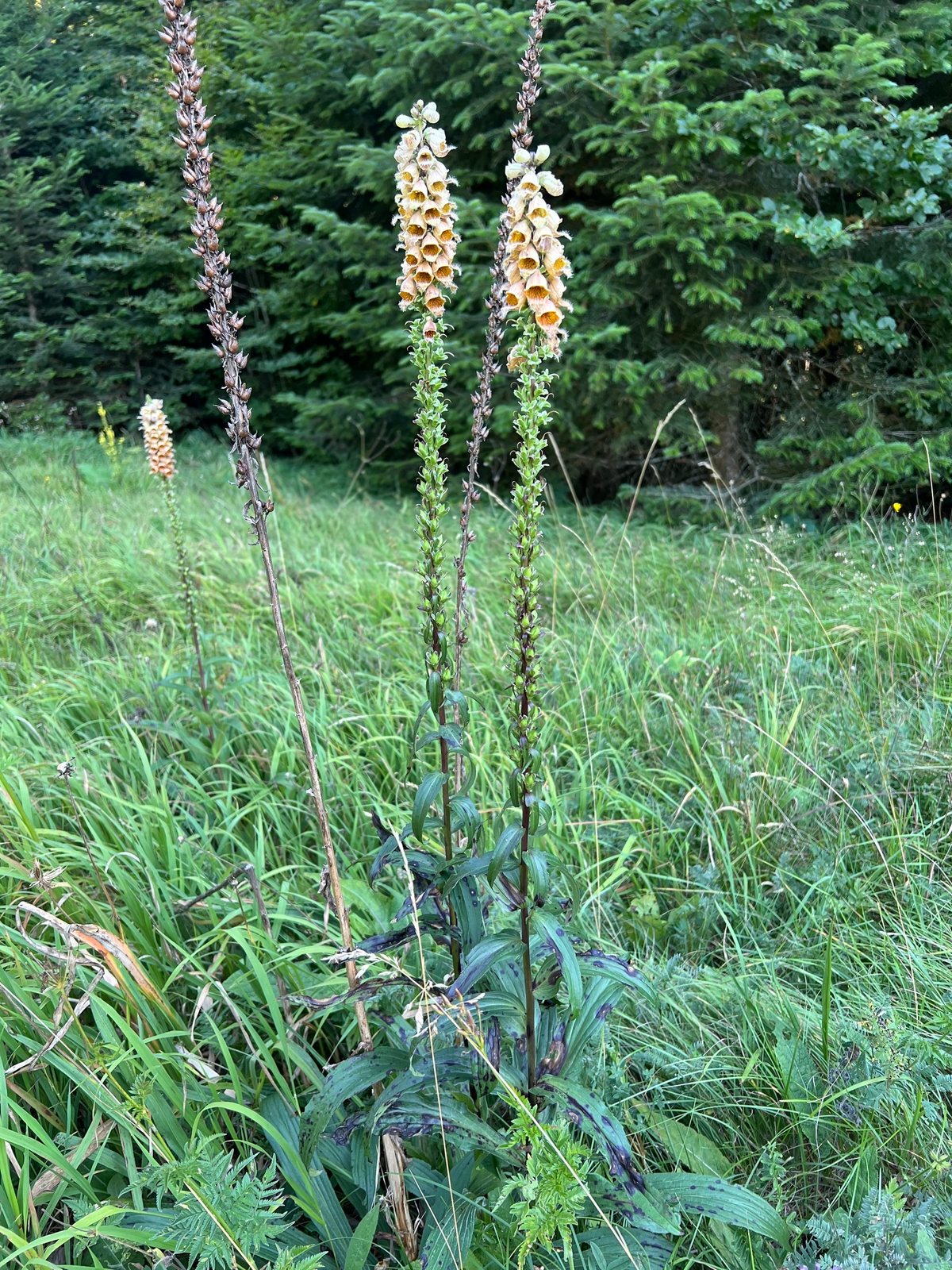
Rusty foxglove is a biennial or short-lived perennial grown for tall, slender spikes of small, rusty yellow-brown flowers. Its upright stems add height without much bulk, and self-sown seedlings can keep it present after the original plants die.
At a glance
- Sun
- Full sun to partial shade; afternoon shade is helpful in hot summers.
- Water
- Moderate; keep young plants evenly moist and water established plants during prolonged dry spells.
- Soil
- Well-drained, humus-rich soil; tolerates a range of soil types and pH levels but dislikes winter waterlogging.
- Height
- 3-5 ft (0.9-1.5 m)
- Spread
- 1-1.5 ft (0.3-0.45 m)
- Flowers
- Early to midsummer; densely packed, small tubular flowers in ochre, rusty yellow and brown, with darker veining.
- Foliage
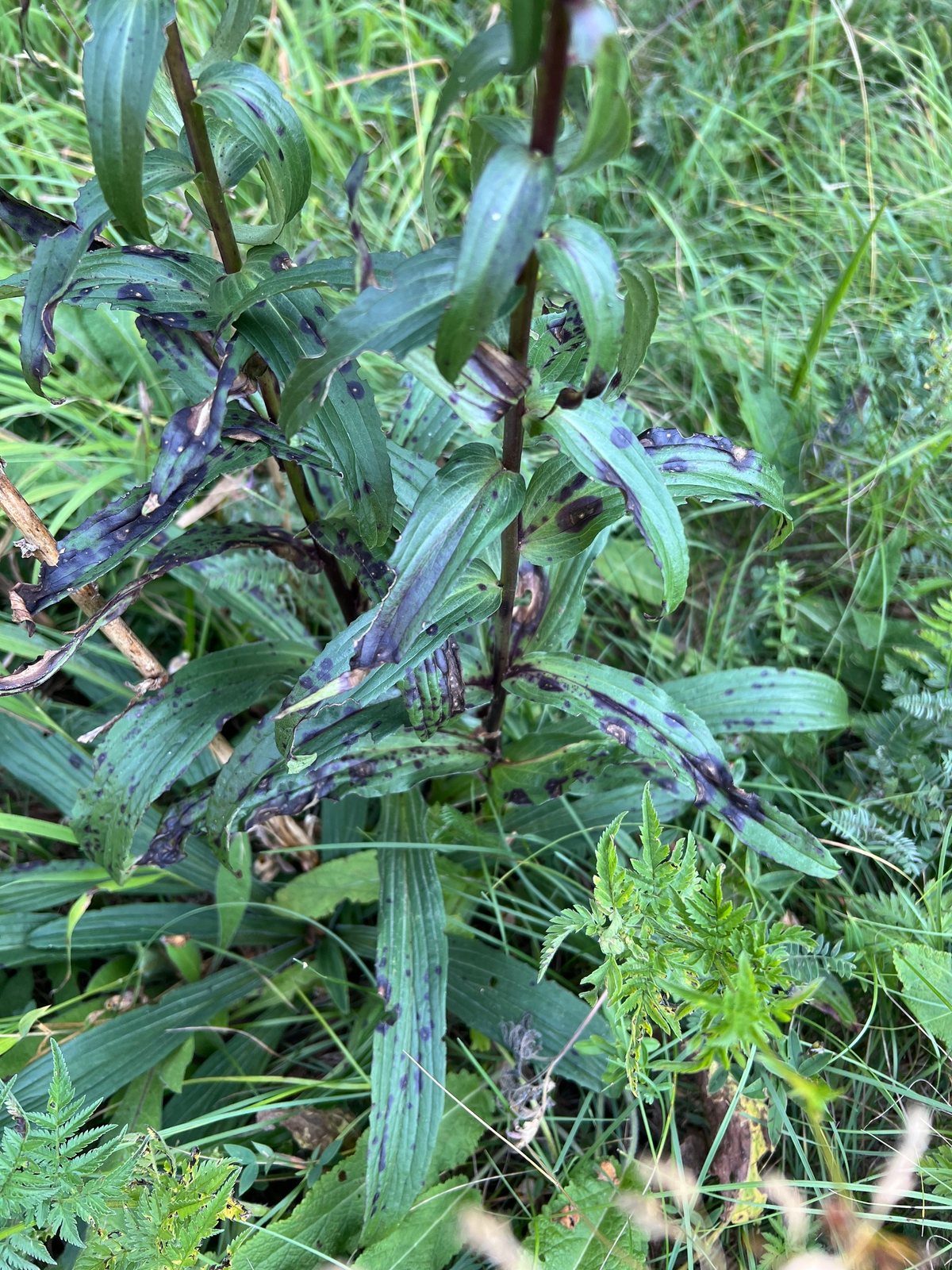
- Evergreen. Narrow, dark green leaves form basal rosettes, with smaller leaves up the flowering stems. Rosettes usually remain green in mild winters but may lose foliage in severe cold.
- Growth
- Moderate; usually forms a leaf rosette in its first year and flowers in its second.
- Care needed
- Low
The year at a glance
- Pollinators
- Deer resistant
- Cold hardy
- Low allergen
| J | F | M | A | M | J | J | A | S | O | N | D | |
|---|---|---|---|---|---|---|---|---|---|---|---|---|
| Flowers | ||||||||||||
| Fruit | ||||||||||||
| Plant |
Northern hemisphere months. In Australia, shift them by six.
- Difficulty
- Easy
- Toughness
- Fairly tough
Will it suit your garden?
Pick your zone, country, light and whether you have pets.
Full sun is 6 or more hours of direct sun a day, part shade 3 to 6 hours, shade under 3.
How it grows
Planting day
1 ft (0.3 m)
After 1 year
2 ft (0.6 m)
After 2 years
3 ft (0.9 m)
After 3 years
4 ft (1.2 m)
full size
About 3 years to full size.
From a typical nursery size, at an average rate for this kind of plant. A rule of thumb, not a forecast.
Good to know
- Cats and dogs
- Toxic
- Growth rate
- Moderate
Care
Jobs through the year
- WaterApr–May, Sep–Oct, every 14 days
- Water established plants during prolonged dry spells; keep newly planted rosettes evenly moist.
- WaterJun–Aug, every 7 days
- Water established plants deeply during extended dry weather without saturating the crown.
- MulchMar–Apr
- Spread a thin compost layer around rosettes, keeping crowns clear.
- PruneFeb–Mar
- Remove dead or damaged rosette leaves; wear gloves because all parts are toxic.
- DeadheadJul–Aug, every 14 days
- Cut spent stems to the base, retaining a few seed heads if replacement seedlings are wanted.
- ProtectApr–May
- Stake tall flowering stems early in windy or exposed sites.
- ProtectMar–May, every 7 days
- Check young rosettes for slugs and snails and thin crowded seedlings.
- ProtectJan–Feb, Oct–Dec, every 14 days
- Keep fallen leaves off rosettes and check that water drains away from crowns.
- Water newly planted rosettes regularly until established; avoid keeping the soil saturated.
- Apply a thin layer of compost in spring rather than heavy doses of fertiliser.
- Keep mulch clear of the crown to reduce winter rot.
- Stake tall flower stems early if the site is windy or exposed.
- Leave a few seed heads if you want replacement plants, and thin seedlings to prevent crowding.
Pruning. After flowering, cut stems to the base to prevent self-seeding, or leave selected stems until their seed has dispersed. Remove dead or damaged rosette leaves in late winter or early spring.
Through the year
- Early spring
- Remove dead leaves, check crowns for rot and spread a thin layer of compost around healthy rosettes.
- Spring
- Plant young rosettes and thin self-sown seedlings to about 1-1.5 ft (0.3-0.45 m) apart.
- Late spring
- Add discreet stakes before flower stems become tall in exposed positions.
- Summer
- Water during prolonged dry weather and remove spent stems unless seed is wanted.
- Late summer
- Collect ripe seed as capsules turn brown, or let a few stems shed seed naturally.
- Autumn
- Move small self-sown rosettes into their final positions and keep fallen leaves from smothering their crowns.
In the garden
- Place among lower perennials in a mixed border to create narrow vertical accents.
- Combine with ornamental grasses for a loose, naturalistic planting with contrasting flower and leaf shapes.
- Use against a dark hedge or shrub backdrop so the ochre flower spikes stand out.
- Allow small groups to self-sow through cottage borders or along bright woodland edges.
Garden styles it suits: Cottage garden, English country, New perennial (prairie), Woodland, Pollinator garden and Modern rustic.
Plant it with: Lady's mantle, Meadow cranesbill, Catmint, Masterwort, Tufted hair grass and Purple coneflower.
Wildlife: The tubular flowers provide nectar and pollen for bees, especially bumblebees. Avoid insecticide sprays on flowering plants.
Problems to watch for
- Slugs and snails can damage young rosettes; inspect during damp evenings, remove hiding places and protect vulnerable seedlings.
- Crown or root rot develops in waterlogged soil; improve drainage and keep mulch away from the crown.
- Powdery mildew or leaf spots may affect crowded plants; improve airflow, water at soil level and remove badly affected leaves.
- Plants may die after flowering; retain a few seed heads or raise replacement seedlings rather than relying on individual plants to persist.
Safety
All parts, including leaves, flowers and seeds, are highly toxic if eaten by people, cats, dogs or horses. Cardiac glycosides can cause vomiting, dangerous heart-rhythm disturbances and death; seek urgent medical or veterinary advice after suspected ingestion. Do not grow where grazing animals can reach it, and wear gloves when handling if your skin is sensitive.
Easily confused with
Woolly foxglove (Digitalis lanata)
Has conspicuously woolly flower spikes and cream flowers with brown netting and a prominent pale lower lip; rusty foxglove has a less woolly spike and a more consistently rusty yellow-brown appearance.
Yellow foxglove (Digitalis grandiflora)
Has larger, broader, pale yellow bells arranged more loosely along the stem, rather than the small, densely packed rusty flowers of rusty foxglove.
Common foxglove (Digitalis purpurea)
Usually has much larger purple, pink or white bells with strongly spotted throats, and broader, softly hairy basal leaves.
The name
Digitalis comes from the Latin for finger, referring to the finger-shaped flowers, while ferruginea means rust-coloured.
Propagation. Grow from seed sown on the surface of moist seed compost in late spring or summer; do not bury it, as light helps germination. Transplant seedlings while small, or move young self-sown rosettes in spring or autumn. Most plants flower the following year.
Checked against open data
- Accepted botanical name
- Digitalis ferruginea
- Native range
- Albania, Bulgaria, Greece, Hungary, Italy, Lebanon-Syria, North Caucasus, Romania, Transcaucasus, Turkey, Turkey-in-Europe and Yugoslavia.
Sources: GBIF (CC BY 4.0) and Trefle (CC BY 4.0). The care and design notes are LandscapeGPT's own.
See it in your own yard.
Upload a photo of your yard and see it redesigned with plants that suit your climate, each checked against your zone.