Sassafras
Sassafras albidum. Family Lauraceae. Tree.
Also called White sassafras, Sassafras tree.
Sassafras is a deciduous tree native to eastern North America, grown for its unusually shaped leaves, aromatic foliage and yellow, orange and red autumn colour. It makes an attractive woodland-edge tree but often sends up root suckers, so give it room to form a small grove or plan to control its spread.
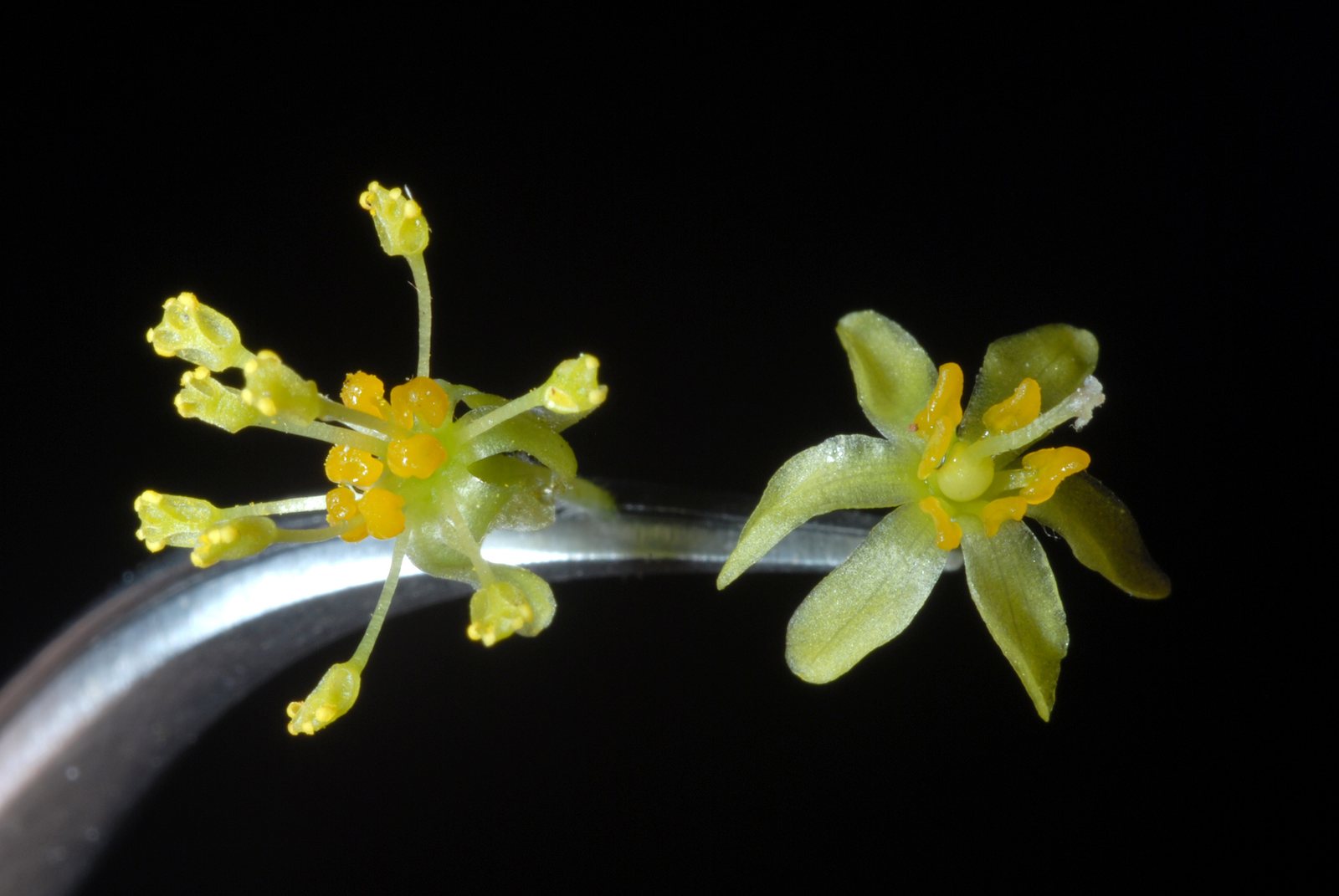
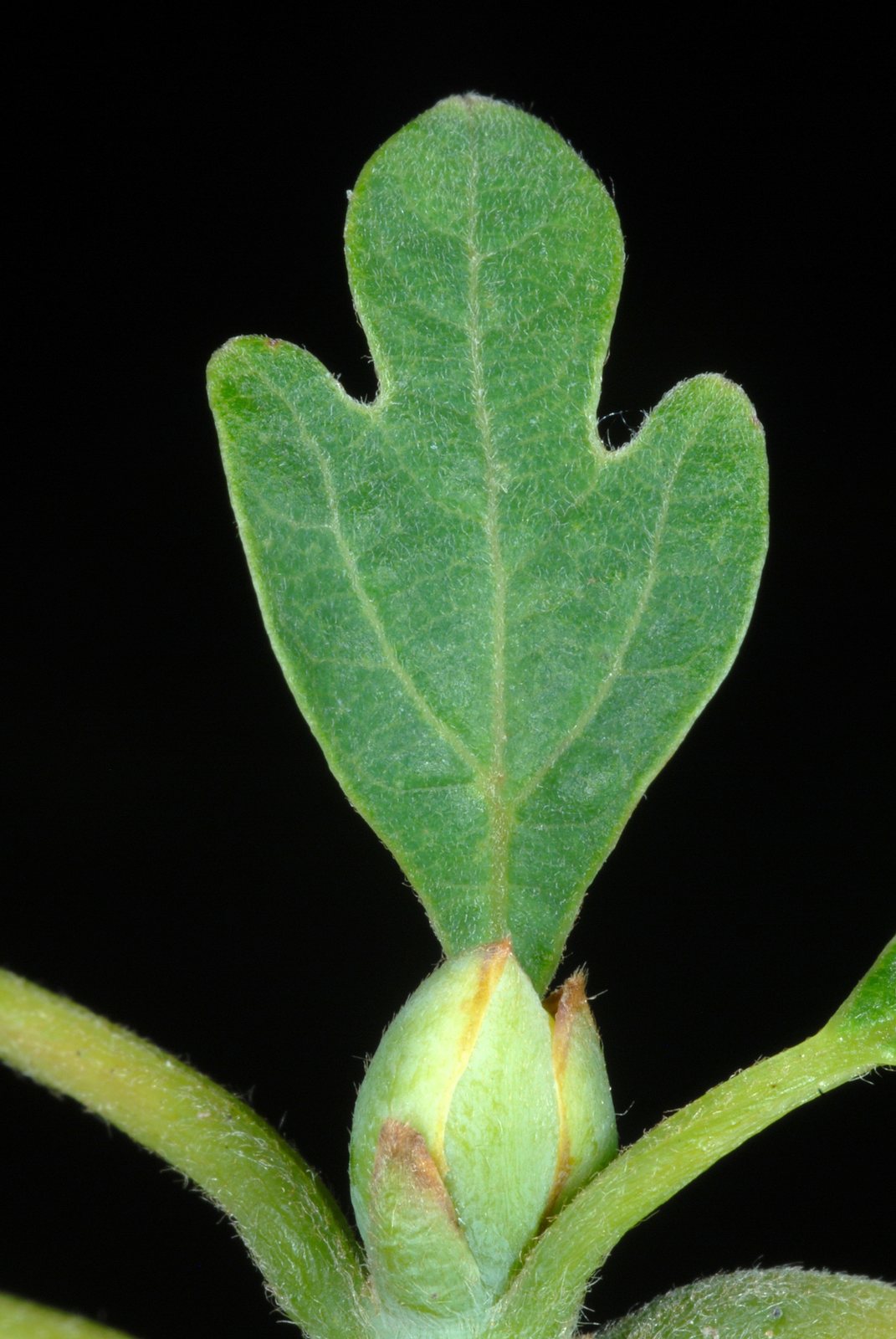
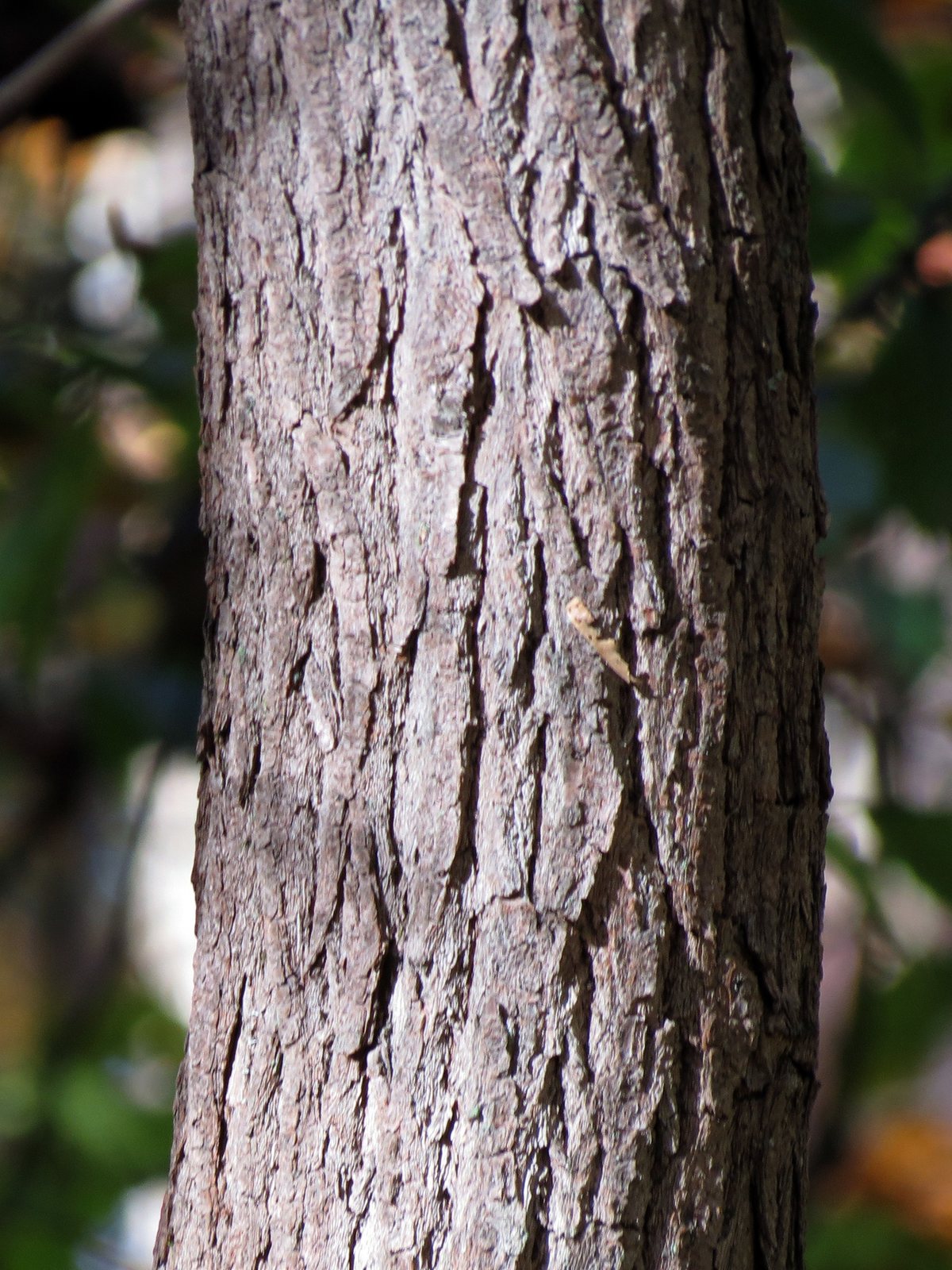
At a glance
- Sun
- Full sun to partial shade; autumn colour is usually strongest in sun.
- Water
- Moderate; water young trees during dry spells. Established trees tolerate some drought in well-drained soil.
- Soil
- Moist but well-drained, acidic sandy loam is ideal. Avoid waterlogged ground and strongly alkaline soil.
- Height
- 30-60 ft (9-18 m)
- Spread
- 25-40 ft (7.6-12 m), with root suckers potentially extending farther
- Flowers
- Small yellow-green flowers in early to mid-spring, before or as the leaves open.
- Foliage
- Aromatic green leaves occur in three shapes on the same tree: unlobed, mitten-shaped and three-lobed. Autumn foliage turns yellow, orange, scarlet or purple.
- Growth
- Moderate to fast when young in suitable soil
- Care needed
- Medium
The year at a glance
- Pollinators
- Drought tolerant
- Cold hardy
- Heat tolerant
- Wildlife
- Low allergen
- Fragrant
| J | F | M | A | M | J | J | A | S | O | N | D | |
|---|---|---|---|---|---|---|---|---|---|---|---|---|
| Flowers | ||||||||||||
| Fruit | ||||||||||||
| Plant |
Northern hemisphere months. In Australia, shift them by six.
- Difficulty
- Moderate
- Toughness
- Very tough
Will it suit your garden?
Pick your zone, country, light and whether you have pets.
Full sun is 6 or more hours of direct sun a day, part shade 3 to 6 hours, shade under 3.
How it grows
Planting day
7 ft (2 m)
After 1 year
9 ft (2.7 m)
After 2 years
11 ft (3.4 m)
After 3 years
14 ft (4.2 m)
After 5 years
18 ft (5.6 m)
About 16 years to full size.
From a typical nursery size, at an average rate for this kind of plant. A rule of thumb, not a forecast.
Good to know
- Cats and dogs
- Toxic
- Native to
- the US and Canada
- In the garden
- Spreads vigorously: plan to contain it.
- Growth rate
- Fast
Care
Jobs through the year
- WaterApr–May, Sep–Oct, every 14 days
- Water established trees deeply only if soil is dry; young trees need more for two growing seasons.
- WaterJun–Aug, every 14 days
- Water established trees during prolonged drought; water young trees more often as soil dries.
- MulchMay
- Maintain 5–8 cm of organic mulch over roots, clear of the trunk.
- PruneFeb–Mar
- Remove damaged or crossing branches and select a leader if needed; keep cuts small.
- PruneMay–Sep, every 30 days
- Cut unwanted young suckers at ground level without disturbing roots.
- Plant a small, container-grown tree in its permanent position; established trees are difficult to transplant because of their deep roots.
- Water deeply during dry spells for the first two growing seasons, allowing the soil surface to dry between waterings.
- Apply 2-3 in (5-8 cm) of organic mulch over the root area, keeping it away from the trunk.
- Avoid routine fertilising; feed only if a soil test identifies a deficiency.
- Cut unwanted root suckers at ground level while young, and avoid digging or repeatedly disturbing the roots.
Pruning. Prune in late winter while dormant, removing dead, damaged or crossing branches and selecting a main leader if you want a single-trunk tree. Keep cuts small; heavy pruning and root injury can encourage suckering.
Through the year
- Late winter
- Remove damaged or crossing branches and lightly shape young trees.
- Spring
- Plant container-grown trees once the soil is workable, then water thoroughly.
- Late spring
- Renew mulch without piling it against the trunk.
- Summer
- Water young trees during dry weather and cut unwanted suckers.
- Autumn
- Leave fallen leaves beneath the canopy as mulch where practical, keeping paths clear.
In the garden
- Use as a specimen in a generous lawn or open border where its branching and autumn colour can be seen.
- Allow a suckering grove at a woodland edge for a loose, naturalistic effect.
- Combine with serviceberry, flowering dogwood and ferns for a layered deciduous woodland planting.
- Include in an eastern North American native wildlife garden for host foliage and bird food.
Garden styles it suits: Woodland, Wildlife garden, Autumn colour, Rewilded, Traditional and Sensory garden.
Plant it with: Serviceberry, Flowering dogwood, Eastern redbud, Witch hazel, Christmas fern and Wild ginger.
Wildlife: In its native range, the leaves feed spicebush swallowtail and other caterpillars. Birds eat the dark blue fruits, which are produced on female trees when a male tree is nearby for pollination; flowers also attract small insects.
Problems to watch for
- Unwanted root suckers: remove shoots promptly and give the tree a wide planting area; root disturbance can stimulate more shoots.
- Yellow leaves on alkaline soil: test soil pH and nutrient levels; a naturally acidic site is a better long-term solution than repeated treatments.
- Root decline in wet soil: improve drainage before planting and avoid low spots where water stands.
- Laurel wilt, especially in the southeastern United States: sudden wilting and brown foliage need prompt professional diagnosis. There is no reliable homeowner cure; follow local advice on removal and do not transport affected wood.
Safety
Roots and bark contain safrole, especially concentrated in sassafras essential oil. Swallowing the oil can cause serious poisoning, and safrole has caused cancer in laboratory animals; do not make root or bark teas or use the oil internally. Toxicity from ordinary garden exposure to leaves is not well established for cats, dogs or horses, so prevent chewing and keep all sassafras preparations away from animals and children.
Where it spreads. Spreads by root suckers and can form persistent colonies in its native eastern North American range, particularly in open ground and along woodland edges. This local spread is not the same as being a listed invasive alien species.
Easily confused with
Red mulberry (Morus rubra)
It can also have lobed and unlobed leaves, but mulberry leaves have toothed margins and often rough upper surfaces; sassafras leaves have smooth margins and an aromatic scent when crushed.
Spicebush (Lindera benzoin)
Another aromatic native with yellow spring flowers, but it is usually a shrub with consistently unlobed leaves and red rather than dark blue fruit.
The name
The species name albidum means 'whitish', referring to the pale undersides of the leaves.
Propagation. Sow fresh, cleaned seed outdoors in autumn for natural cold stratification, protecting it from rodents. Root cuttings taken during dormancy are another option; moving established suckers is often unsuccessful because they may have few independent roots.
Checked against open data
- Accepted botanical name
- Sassafras albidum
- In the US and Canada
- Native in Canada and the lower 48 states.
- Native range
- Alabama, Arkansas, Connecticut, Delaware, District of Columbia, Florida, Georgia, Illinois, Indiana, Iowa, Kansas and Kentucky.
- Measured
- Soil pH 4.5 to 7.3. Average height 770 cm.
Sources: GBIF (CC BY 4.0), USDA PLANTS and Trefle (CC BY 4.0). The care and design notes are LandscapeGPT's own.
See it in your own yard.
Upload a photo of your yard and see it redesigned with plants that suit your climate, each checked against your zone.